
Dr. Lori Fenton’s primary research interests include aeolian geomorphology, recent and ongoing climate changes, and the mobility of wind-blown sand and dust.
planetaryscience
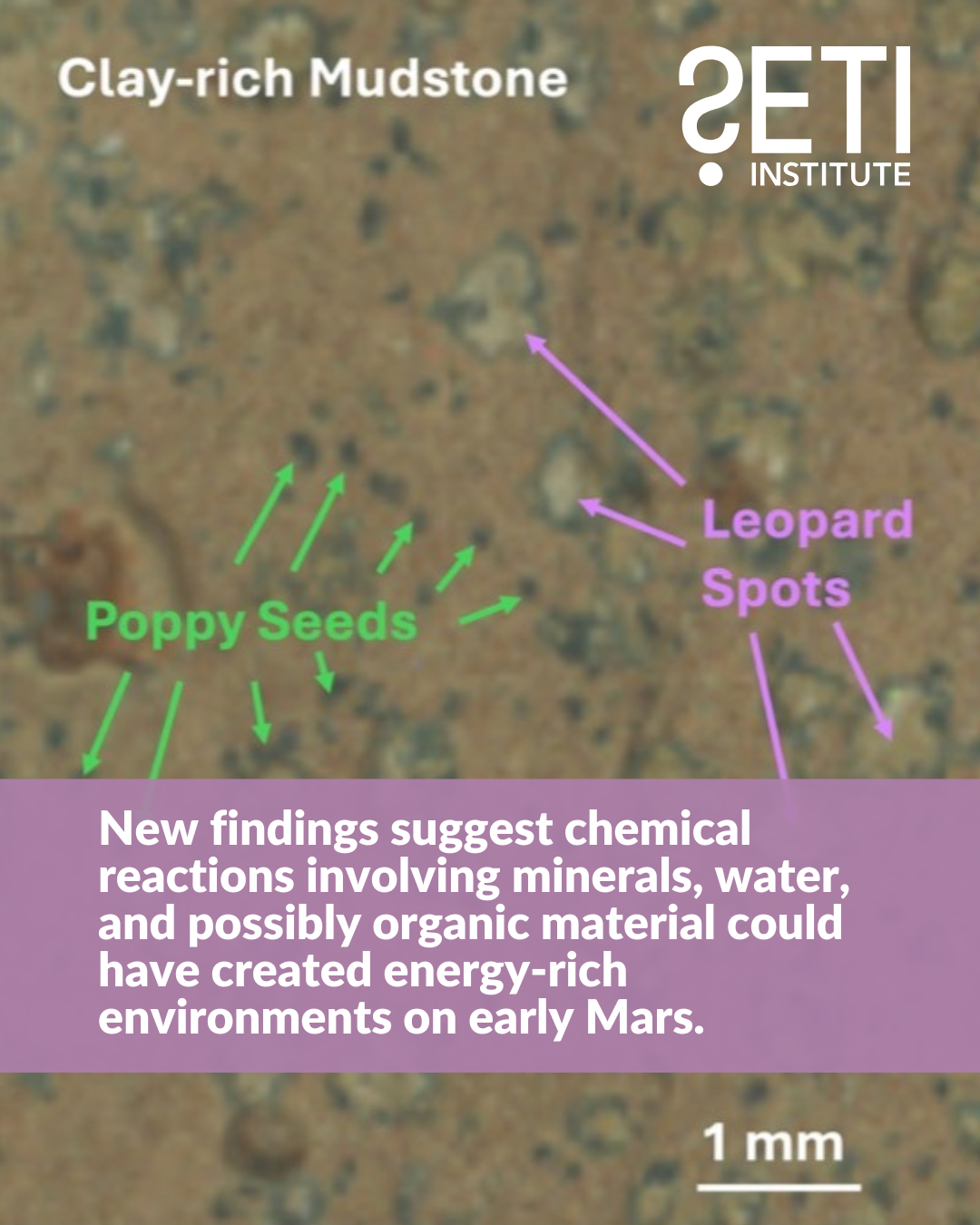
PRESS RELEASE: https://www.seti.org/news/perseverance-rover-uncovers-clues-to-ancient-martian-chemistry/
SETI Institute Senior Research Scientist Janice Bishop and University of Massachusetts Engineering Professor Mario Parente analyzed orbital hyperspectral images from the Compact Imaging Spectrometer for Mars (CRISM) aboard the Mars Reconnaissance Orbiter, producing a detailed mineral map at the tens-of-meters scale of the crater documenting deposits of clays and carbonates signaling abundant water on ancient Mars.

Planetary science fans on the Fedi, big news! 🥳
The Planetary Research Cooperative, a non-profit promoting planetary science, has created a PeerTube server and uploaded hundreds of science videos:
➡️ https://solarsystem.video/videos/browse
You can also follow the server's accounts:
@europlanet_media
@issi_media
@lightcurvefilms_socialmedia
@openplanetary_media
@planetary_research_media
(Accounts may look blank as they're new, follow them to help them federate!)
cc @space
Edited 1y ago
How do we find new trans-Neptunian objects, given that they are small and distant? Astronomer Dr. Rosemary E. Pike explains the necessary observations taken before, during, and after the expected place in the sky. Listen to the latest #SETILive #podcast: https://feeds.libsyn.com/462636/rss
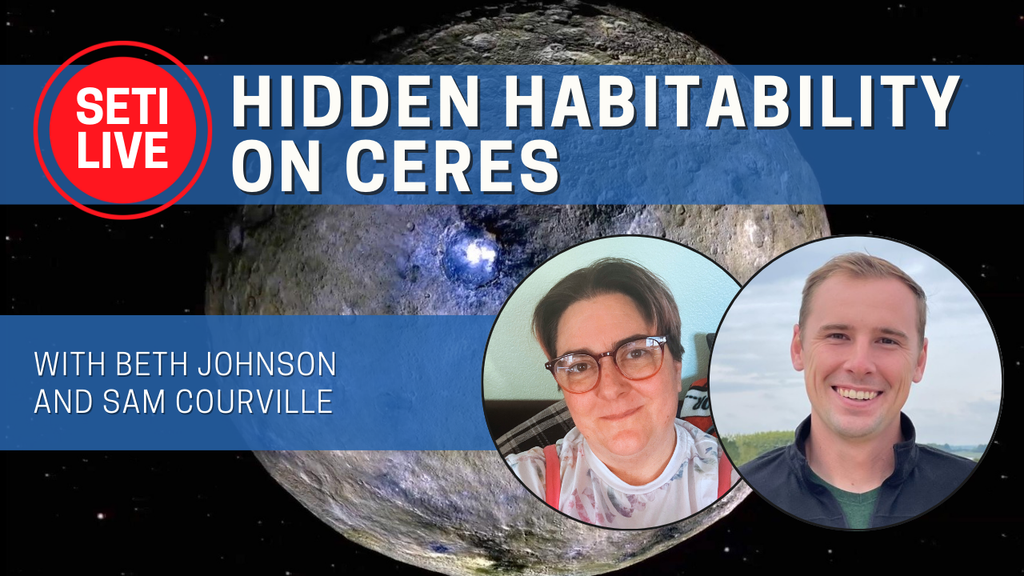
Next #SETILive: Hidden Habitability on Ceres
Thursday, 2 October 2025, 2:30 pm PDT / 5:30 pm EDT
Join host Beth Johnson and guest Dr. Sam Courville, lead author of a new study on Ceres, as they dive into the possibility that the dwarf planet may have had the energy needed to support habitability for much longer than once believed. Could this small world in the asteroid belt have been more habitable than we ever imagined?
WATCH LIVE: https://www.youtube.com/live/AMxbk9foXcw
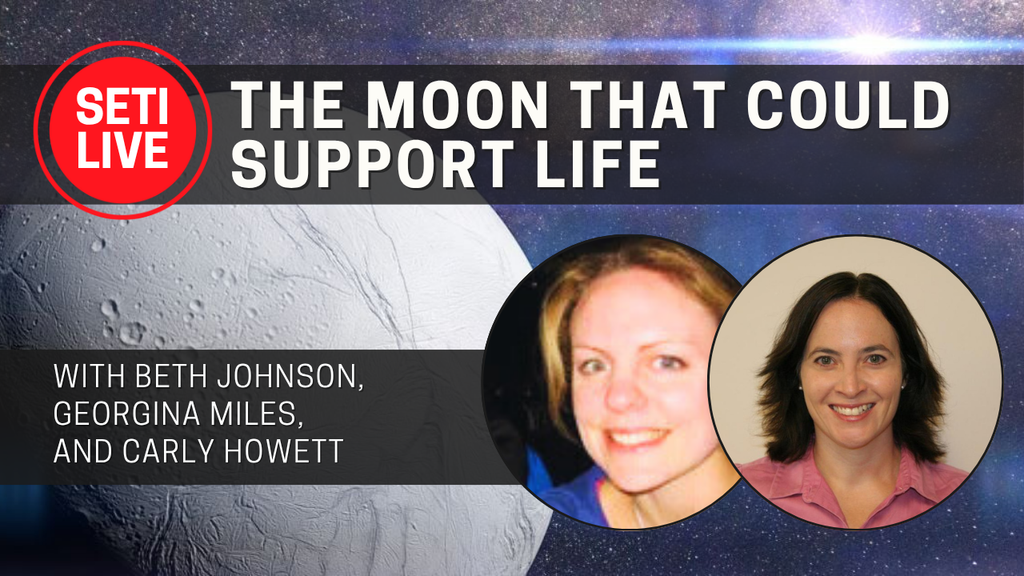
Next #SETILive: The Moon that Could Support Life
TODAY, 20 November, 11 am PST / 2 pm EST
Join host Beth Johnson for a fascinating episode of SETI Live, featuring planetary scientists Dr Georgina Miles and Dr Carly Howett from the University of Oxford. We’ll be unpacking their groundbreaking study showing that Enceladus — one of Saturn’s icy moons — may harbor a stable subsurface ocean capable of supporting life.
WATCH LIVE: https://youtube.com/live/fDf0VQ_S-Bs
#PPOD: Martian 'Spiderwebs' Up Close
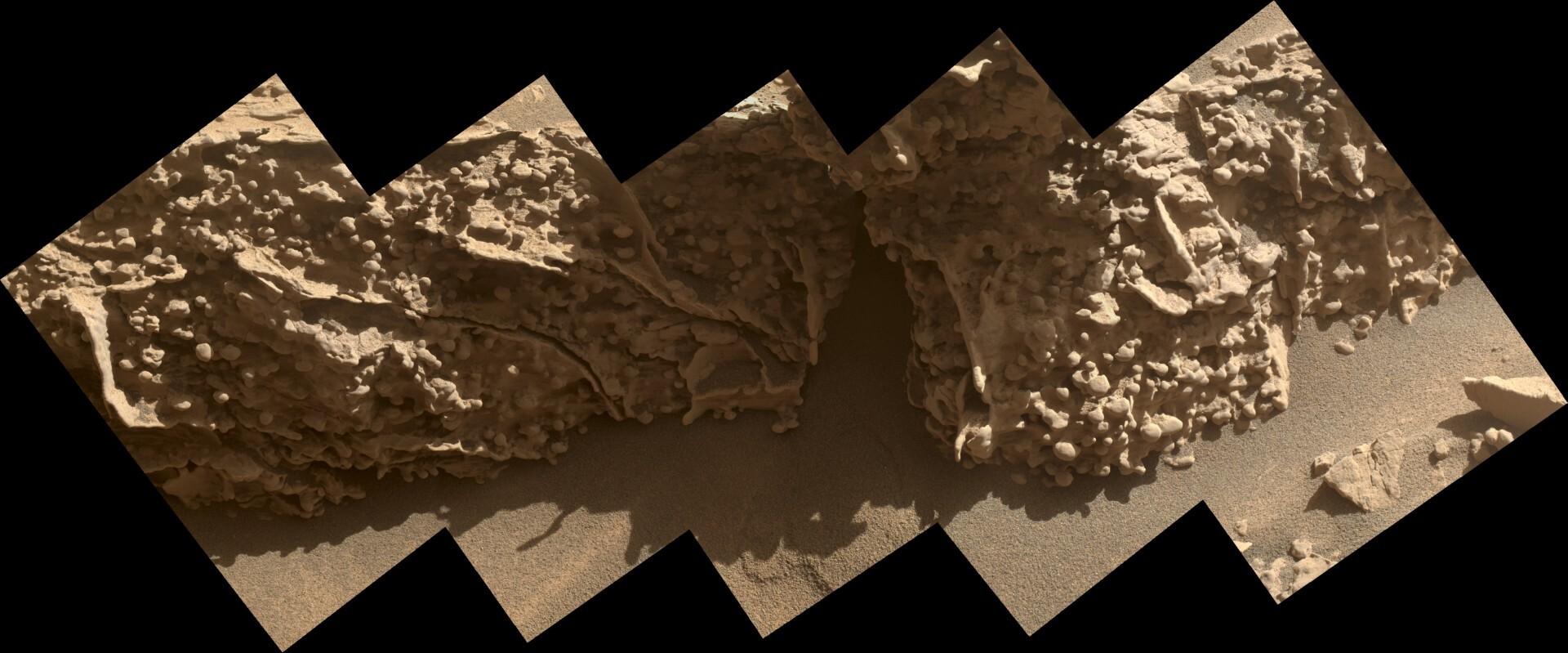
From orbit, parts of Mars look like sprawling spiderwebs etched across the hillsides. These patterns may record a time when groundwater flowed through large fractures in the rock, leaving minerals behind. Over time, those minerals hardened into ridges while the surrounding rock—lacking that reinforcement—was slowly worn away by wind.
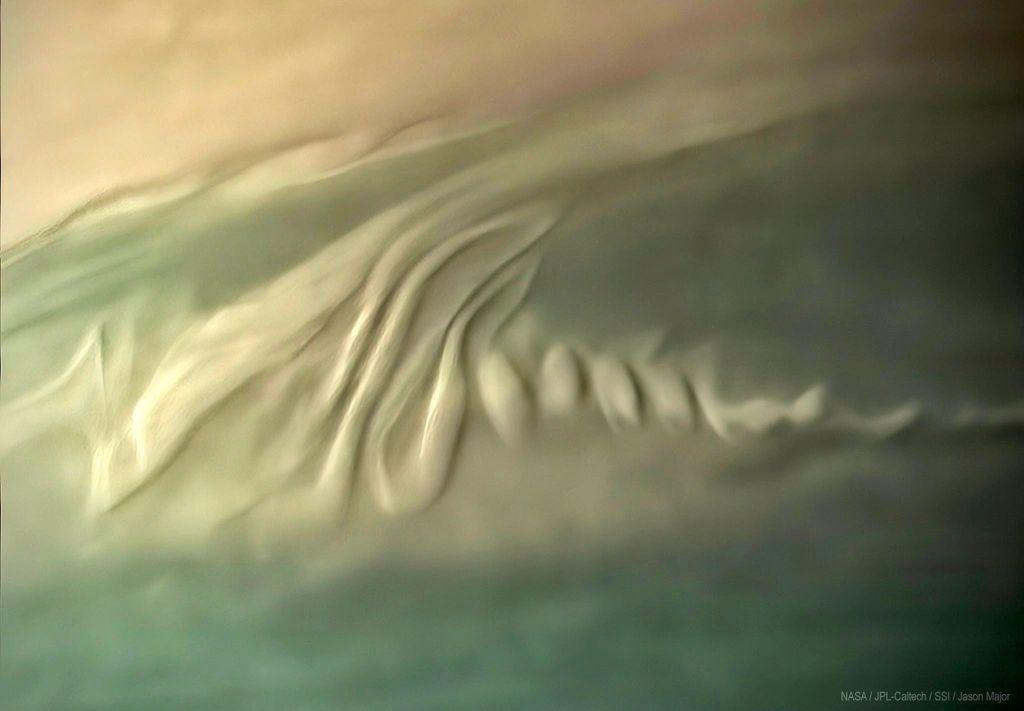
#PPOD: This very impressive, and little-known, image of a meandering squiggle of high-altitude clouds on Saturn was captured by the Cassini spacecraft on July 18, 2010. It almost looks like one of these fancy latte art designs! Credit: NASA/JPL-Caltech/SSI/CICLOPS/Jason Major
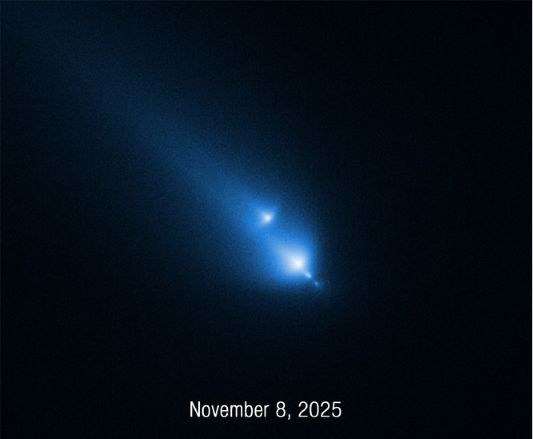
#PPOD: This series of images from NASA’s Hubble Space Telescope of the fragmenting #comet C/2025 K1 (ATLAS) was taken over the course of three consecutive days: Nov. 8, 9, and 10, 2025. This is the first time Hubble has witnessed a comet so early in the process of breaking up. Credit: NASA, ESA, Dennis Bodewits (AU); Processing: Joseph DePasquale (STScI)
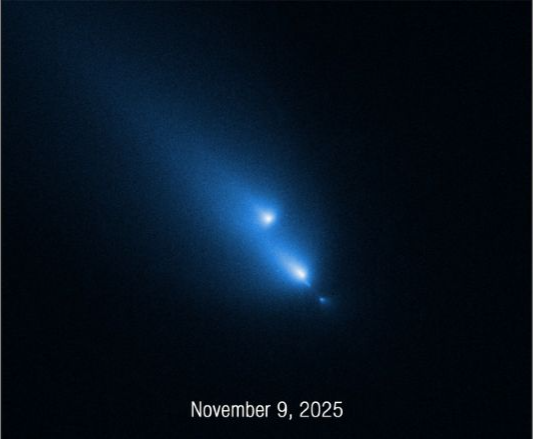
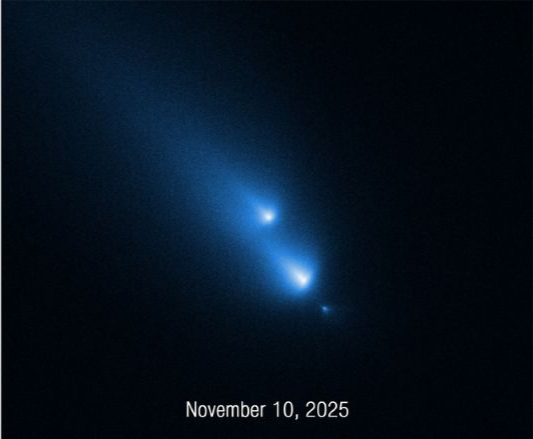
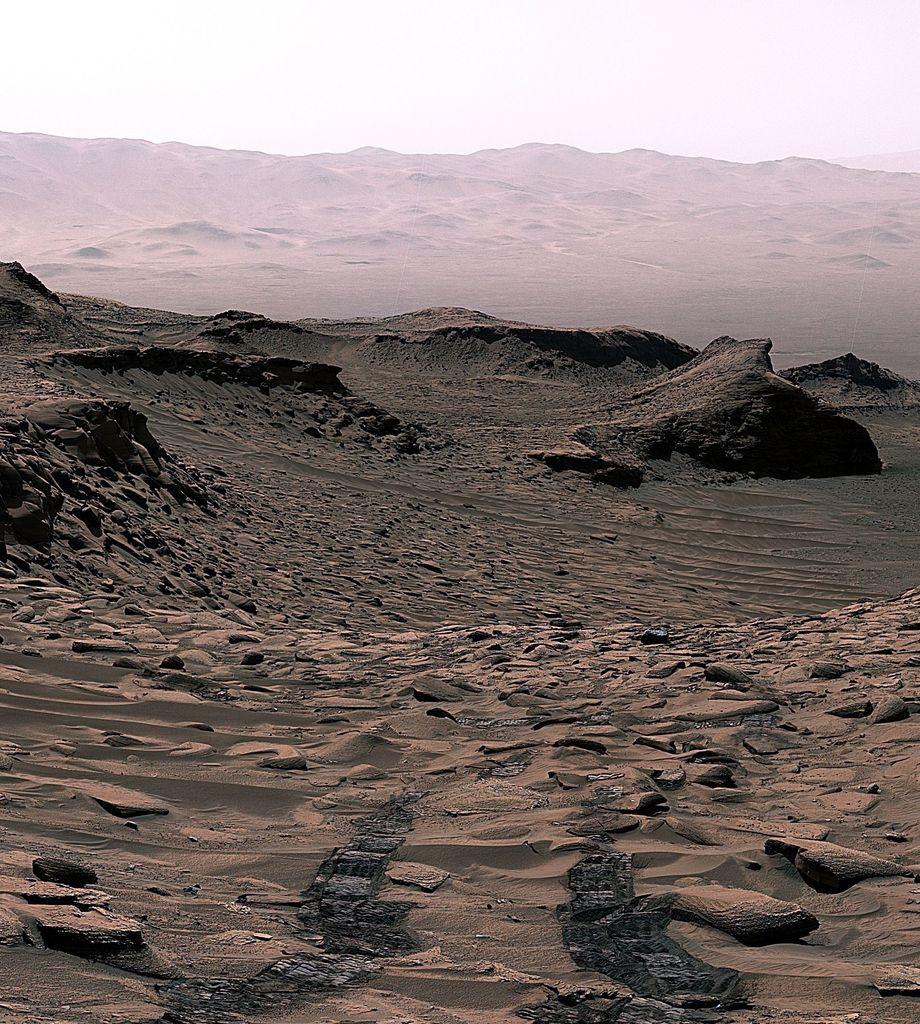
#PPOD: NASA’s Curiosity Mars rover sees its tracks receding into the distance at a site nicknamed “Ubajara” on April 30, 2023. This site is where Curiosity made the discovery of siderite, a mineral that may help explain the fate of the planet’s thicker ancient atmosphere. Credit: NASA/JPL-Caltech/MSSS
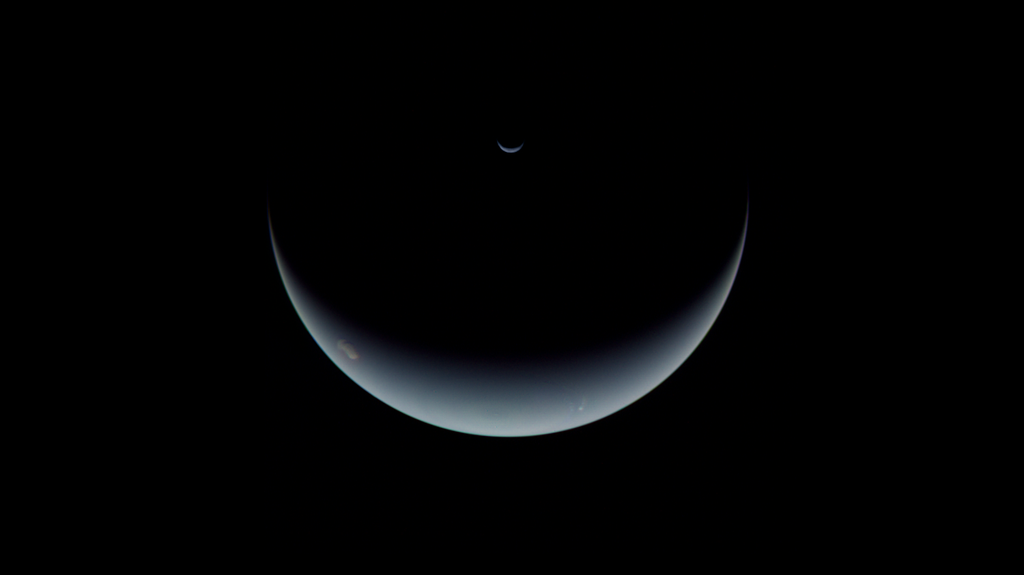
#PPOD: This image of Neptune and Triton was captured by Voyager 2 as it departed the Neptune system on 31 August 1989. Voyager 2's flyby over Neptune's northern hemisphere bent the spacecraft's trajectory downwards out of our solar system's orbital plane. Credit: NASA / JPL-Caltech / Justin Cowart

Starter packs for geosciences, astronomy and physics (partly Germany-centric):
Earth and Geoscience: https://fedidevs.com/s/OTk1/ by @pikarl
Astronomy and Space: https://fedidevs.com/s/NjA2/
Physics: https://fedidevs.com/s/ODg2/
As I find I am running into limits with pinned posts, I've decided to consolidate three starter packs I like to recommend into this one single post. Enjoy!
#FollowFriday #StarterPacks #Science #Physics #Astrodon #Astronomy #Astrophysics #Geosciences #Geology #EarthSciences #PlanetaryScience

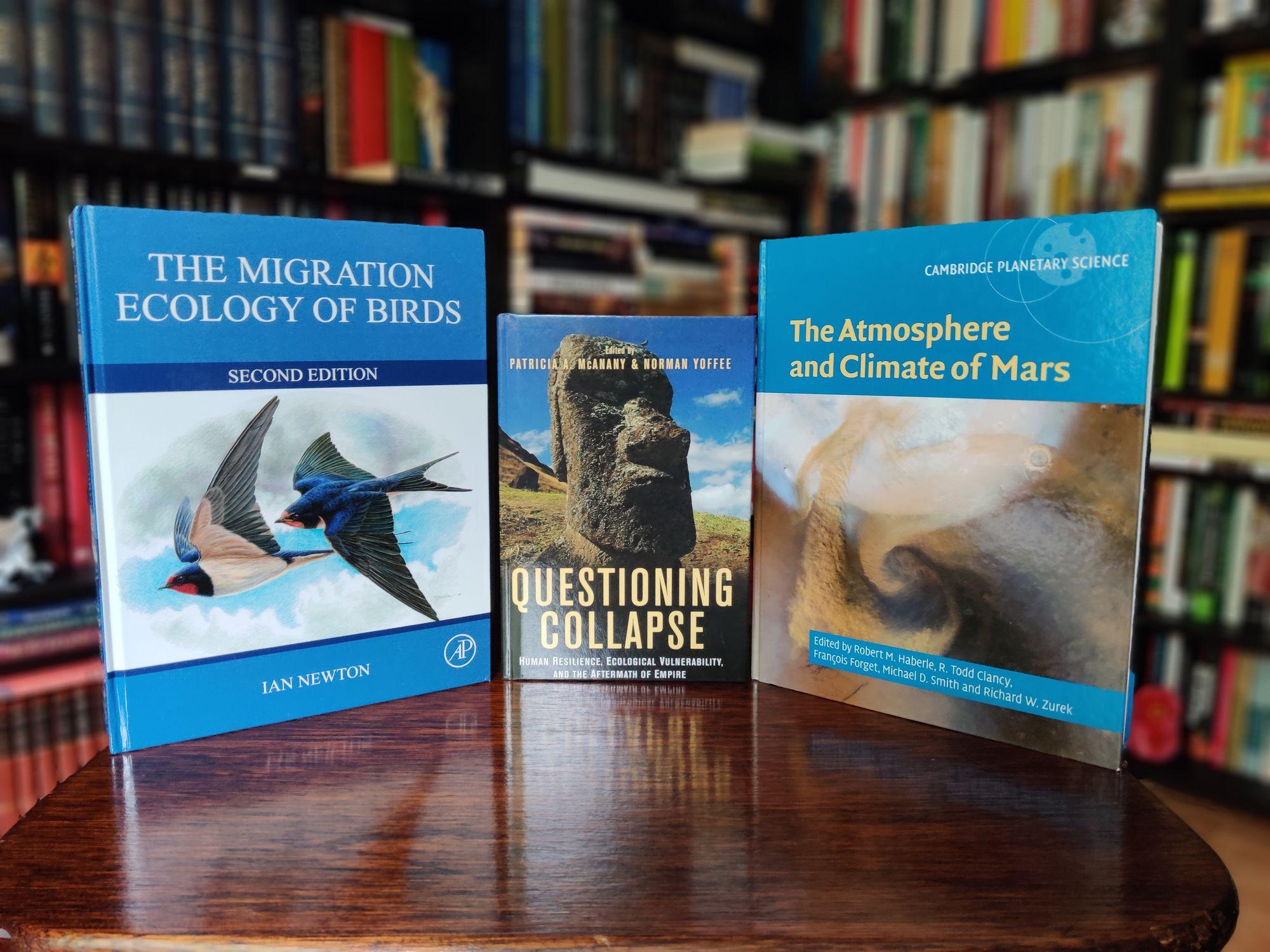
This week's #NewBooks at the library:
- I adopted a damaged copy of Ian Newton's second edition of The Migration #Ecology of #Birds, published by Academic Press
I bought two books by Cambridge University Press second-hand
- Patricia A. McAnany & Norman Yoffee's Questioning #Collapse: Human Resilience, Ecological Vulnerability, and the Aftermath of Empire,
- and The #Atmosphere and #Climate of #Mars in their Cambridge #PlanetaryScience series
#Books #Bookstodon #Scicomm #Ornithology #Astronomy @bookstodon
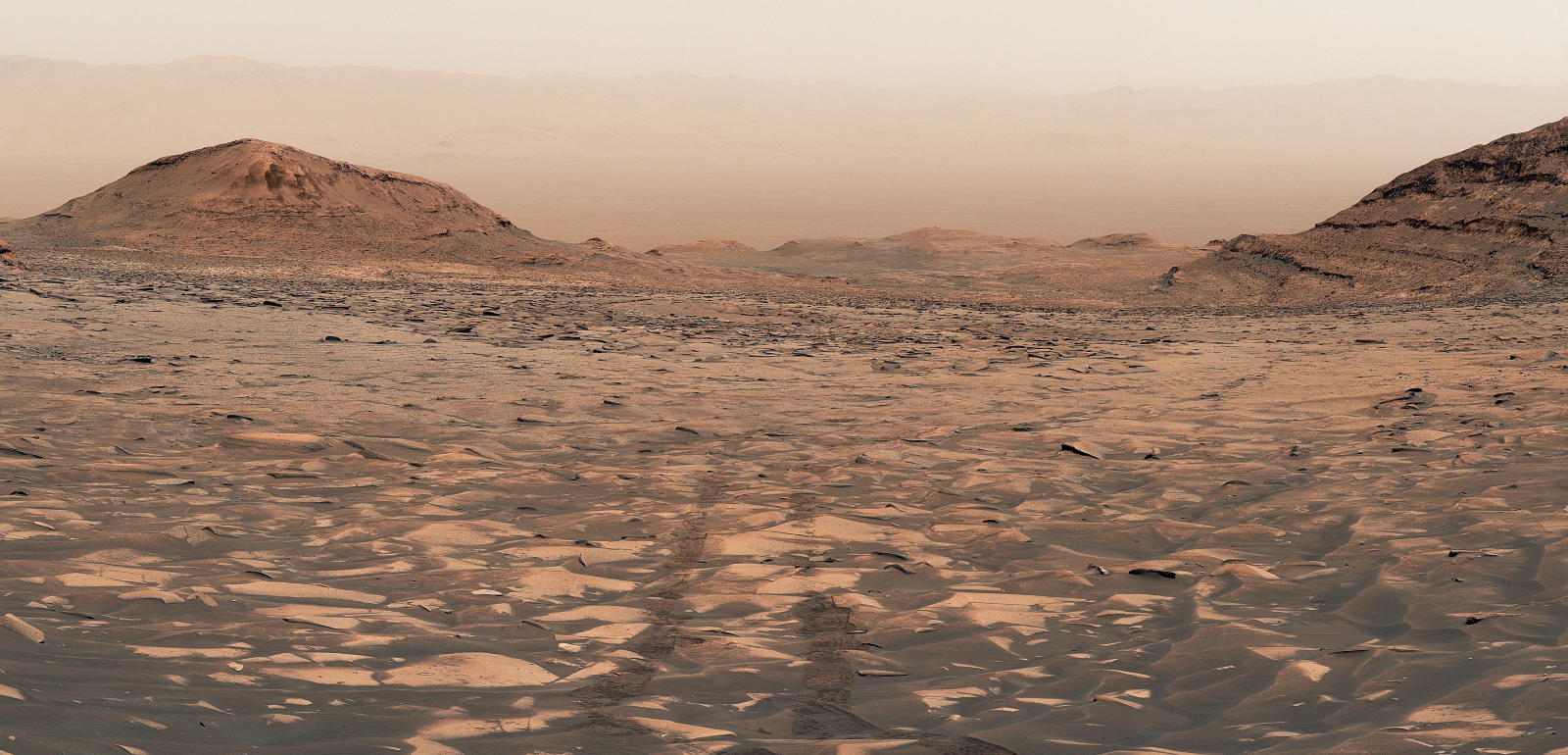
#PPOD: NASA’s Curiosity rover has climbed a full kilometer (0.62 miles) in elevation since landing in Gale Crater 14 years ago. This view looks back down Mount Sharp from “Valle Grande,” with Curiosity’s tracks stretching toward the crater floor through the dusty Martian atmosphere. The rover has been climbing Mount Sharp since 2014, exploring rocks that preserve billions of years of Martian history. Credit: NASA/JPL-Caltech/MSSS
🦠 Could microbes someday help us build habitats on Mars?
Pioneer Labs engineered a bacterium designed to use resources derived from Martian dirt, water, and atmosphere to produce bioplastics inside a protected bioreactor.
And planetary protection is part of the design: it can’t sustain growth on the Martian surface.
https://blog.pioneer-labs.org/p/announcing-the-first-microbe-for