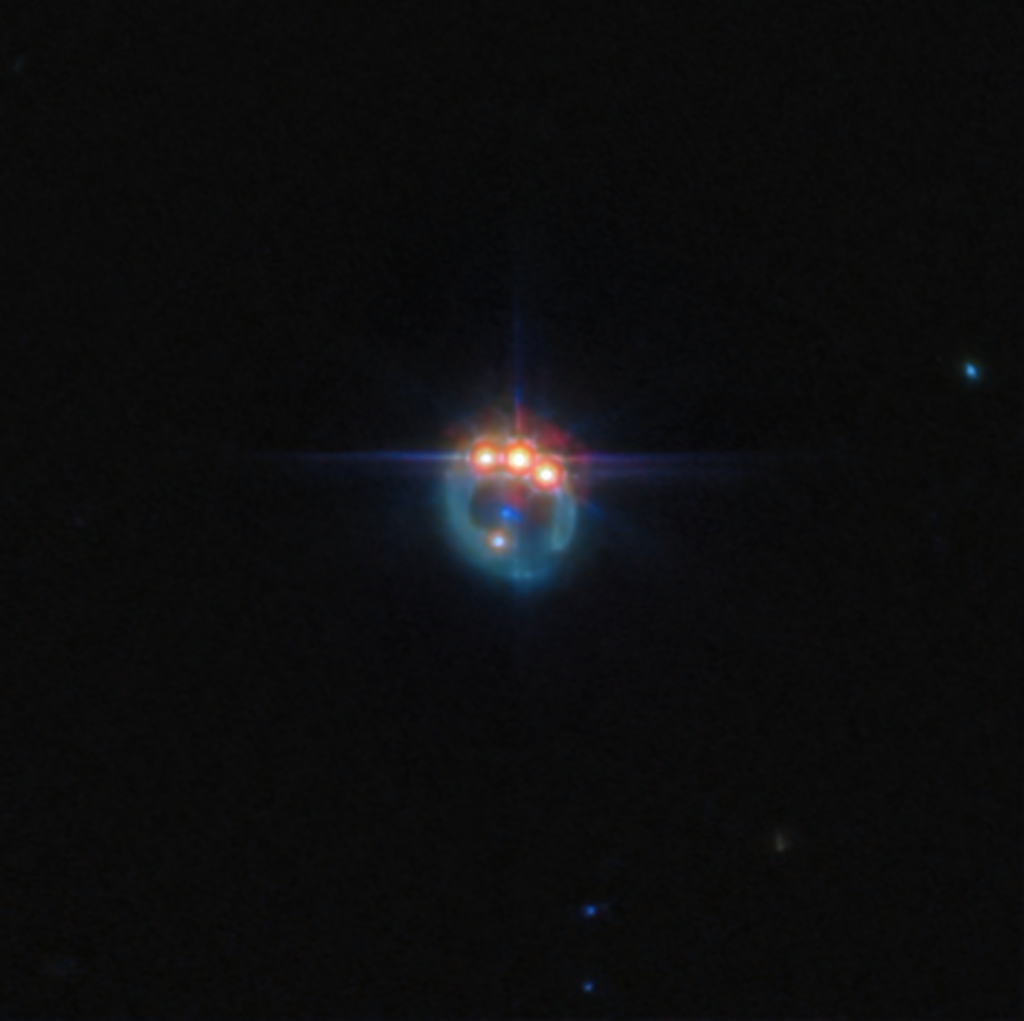
#PPOD: This picture from the NASA/ESA/CSA James Webb Space Telescope features the gravitational lensing of the quasar known as RX J1131-1231, located roughly six billion light-years from Earth in the constellation Crater. It is considered one of the best lensed quasars discovered to date, as the foreground galaxy distorts the image of the background quasar into a bright arc, creating four images of the object. Credit: ESA/Webb, NASA & CSA, A. Nierenberg
ppod
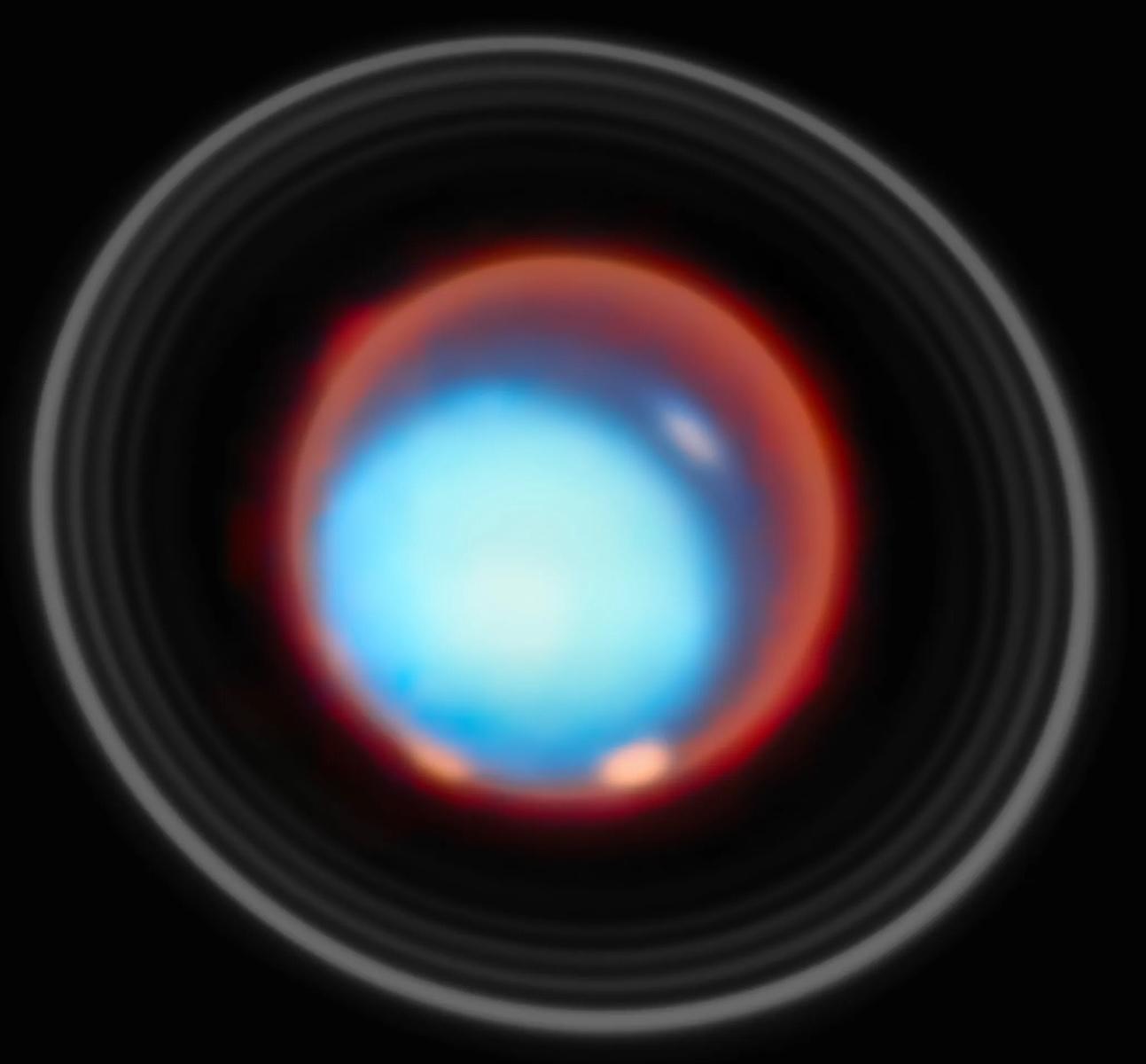
#PPOD: NASA’s JWST provided the first vertical view of Uranus’s ionosphere in this image released on Feb. 19, 2026, revealing auroras shaped by its tilted magnetic field.
Getting a look at the structure of the region where the atmosphere interacts strongly with the planet’s magnetic field is giving us the most detailed portrait yet of where its auroras form, how the magnetic field influences them, and also data on how Uranus’s atmosphere has continued to cool since the 1990s.
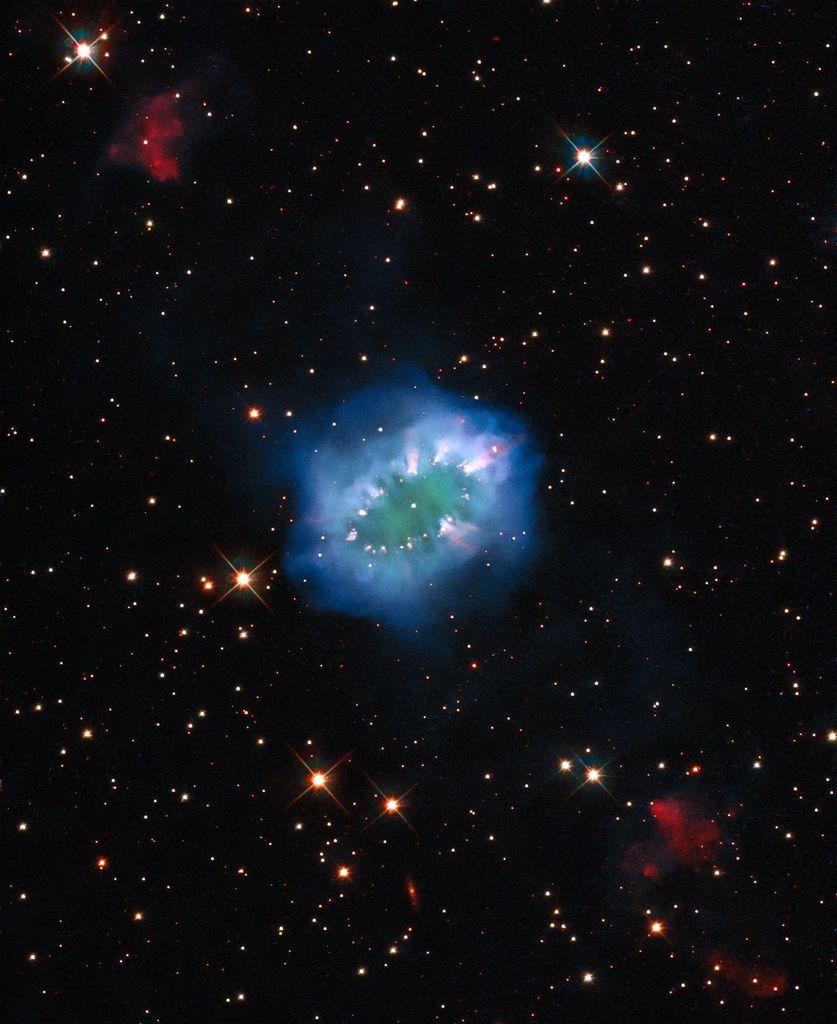
#PPOD: The interaction of two doomed stars has created this spectacular ring adorned with bright clumps of gas – a diamond necklace of cosmic proportions. Fittingly known as the “Necklace Nebula,” this planetary nebula is located 15,000 light-years away from Earth in the small, dim constellation of Sagitta (the Arrow). Credit: ESA/Hubble & NASA, K. Noll
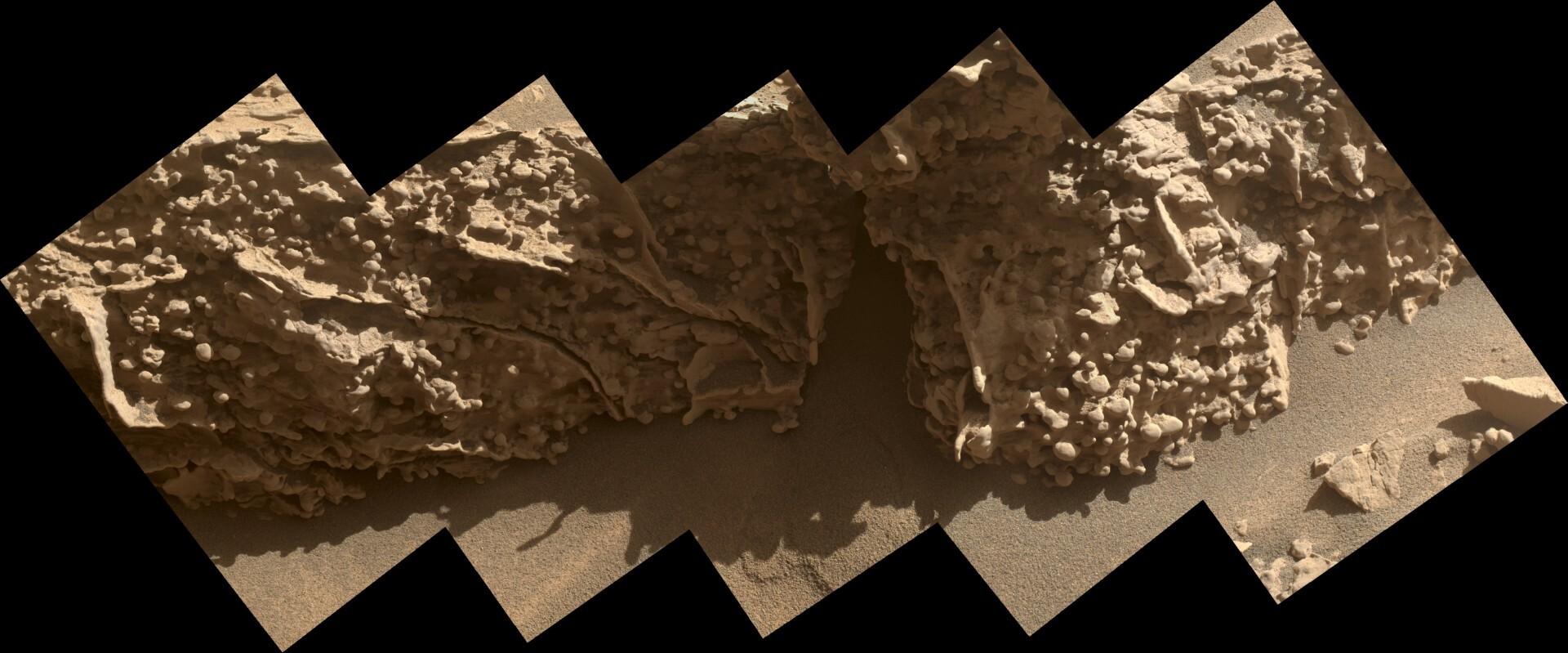
#PPOD: Martian 'Spiderwebs' Up Close
From orbit, parts of Mars look like sprawling spiderwebs etched across the hillsides. These patterns may record a time when groundwater flowed through large fractures in the rock, leaving minerals behind. Over time, those minerals hardened into ridges while the surrounding rock—lacking that reinforcement—was slowly worn away by wind.
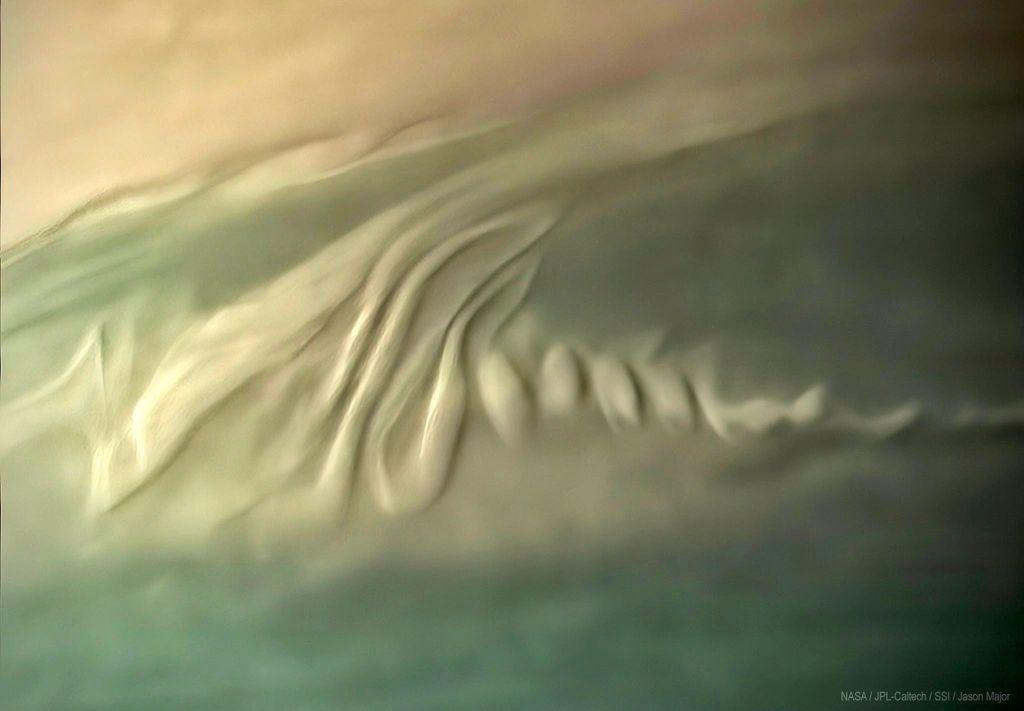
#PPOD: This very impressive, and little-known, image of a meandering squiggle of high-altitude clouds on Saturn was captured by the Cassini spacecraft on July 18, 2010. It almost looks like one of these fancy latte art designs! Credit: NASA/JPL-Caltech/SSI/CICLOPS/Jason Major
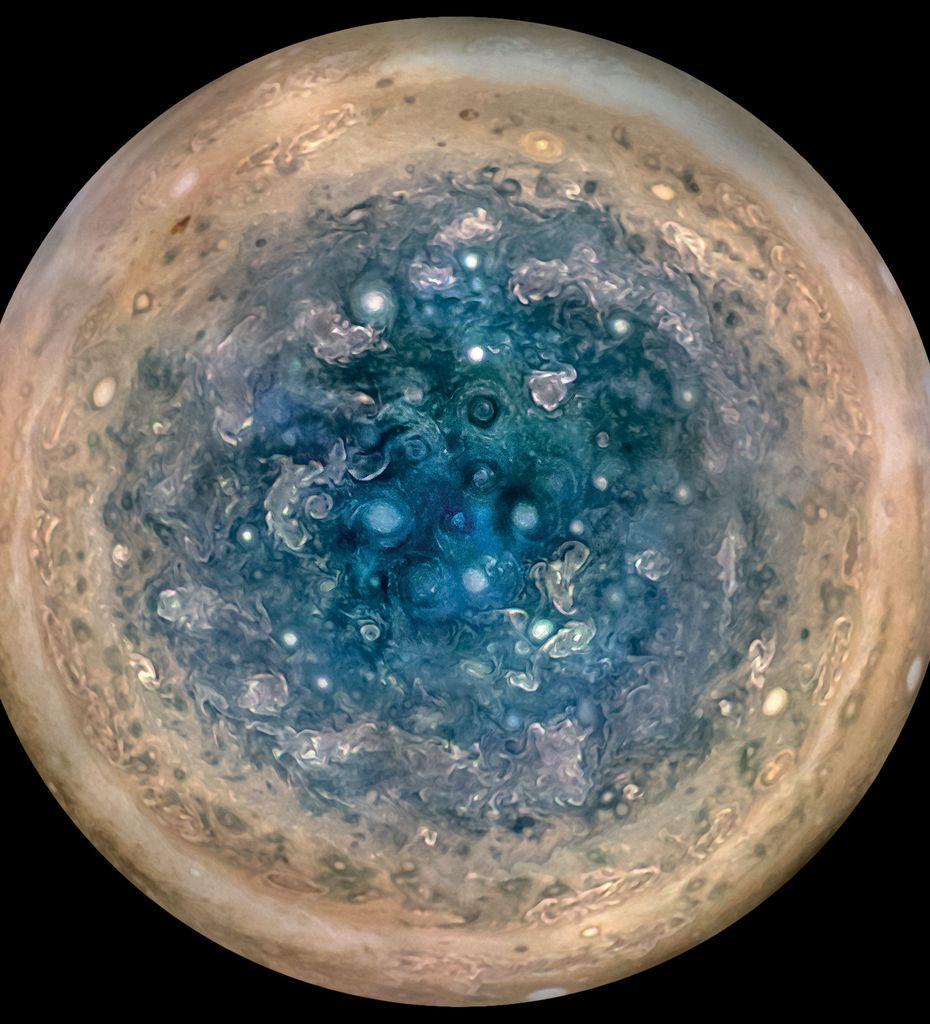
#PPOD: Jupiter’s south pole, as seen by NASA’s Juno spacecraft from an altitude of 52,000 kilometers. The oval features are cyclones, up to 1,000 kilometers in diameter. Multiple images taken with the JunoCam instrument on three separate orbits were combined to show all areas in daylight, enhanced color, and stereographic projection. Credit: NASA/JPL-Caltech/SwRI/MSSS/Betsy Asher Hall/Gervasio Robles
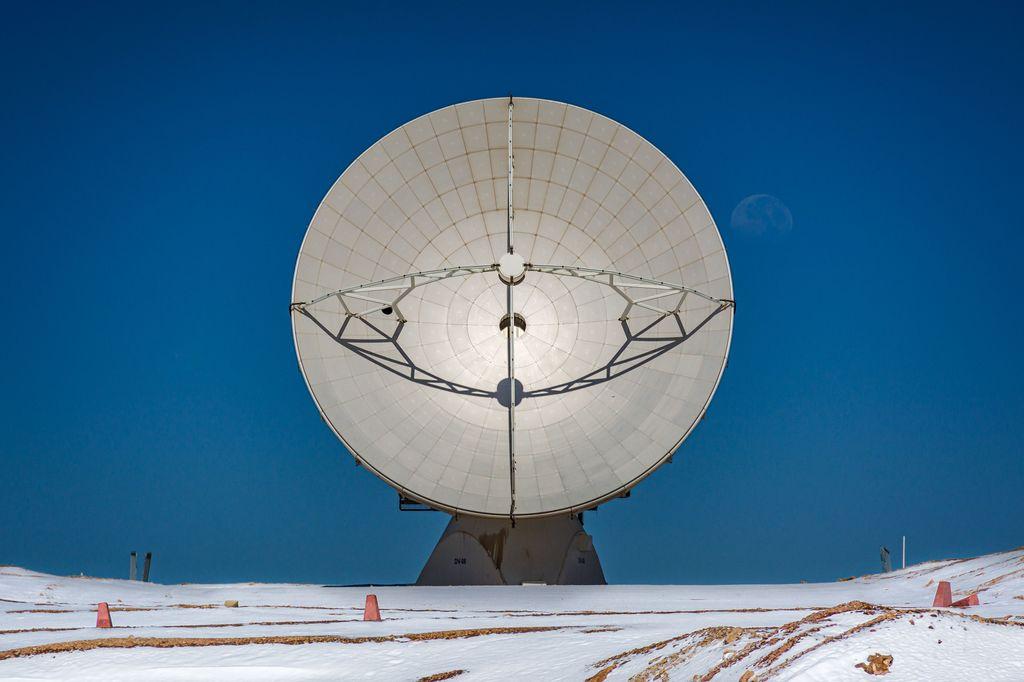
#PPOD: Two large, pale discs can be seen in today's PPOD: one of them in the Atacama Desert, the other orbiting the Earth 384,000 km away. The latter is our ever-present Moon, faintly hanging in the clear blue sky. Next to it is the real star of the image: one of the antennas of the Atacama Large Millimeter/submillimeter Array (ALMA). Credit: Y. Villalon/ESO
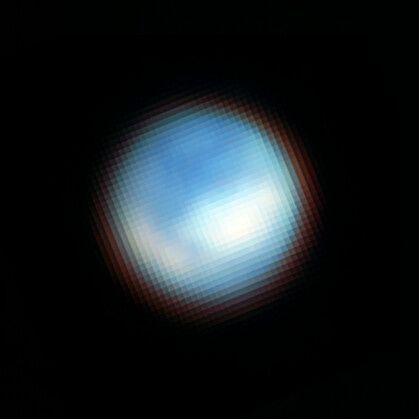
#PPOD: JWST's NIRCam captured this picture of the surface of Jupiter’s moon Europa. JWST identified carbon dioxide on the icy surface of Europa, which likely originated in the moon’s subsurface ocean. This discovery has important implications for the potential habitability of Europa’s ocean. The moon appears blue primarily because it is brighter at shorter infrared wavelengths. Credit: NASA, ESA, CSA, G. Villanueva (NASA/GSFC), S. Trumbo (Cornell Univ.), A. Pagan (STScI)
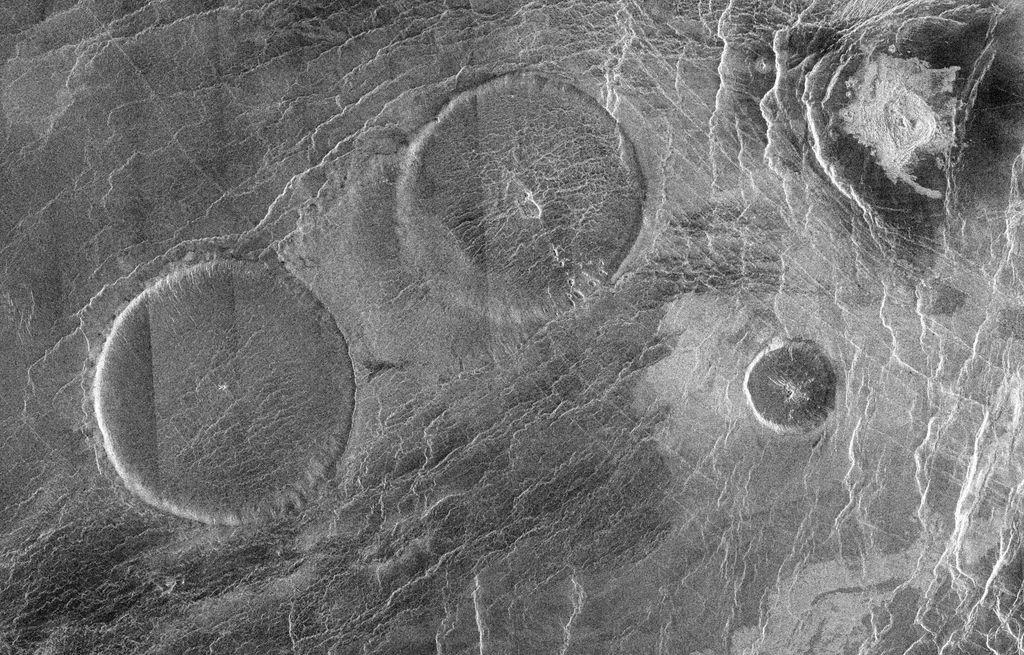
#PPOD: This Magellan full-resolution mosaic shows an area 160 kilometers by 250 kilometers in the Eistla region of Venus. The prominent circular features are volcanic domes, 65 kilometers in diameter, with broad, flat tops less than one kilometer in height. Sometimes called 'pancake' domes, they represent a unique category of volcanic extrusions on Venus formed from viscous (sticky) lava. Credit: NASA/JPL
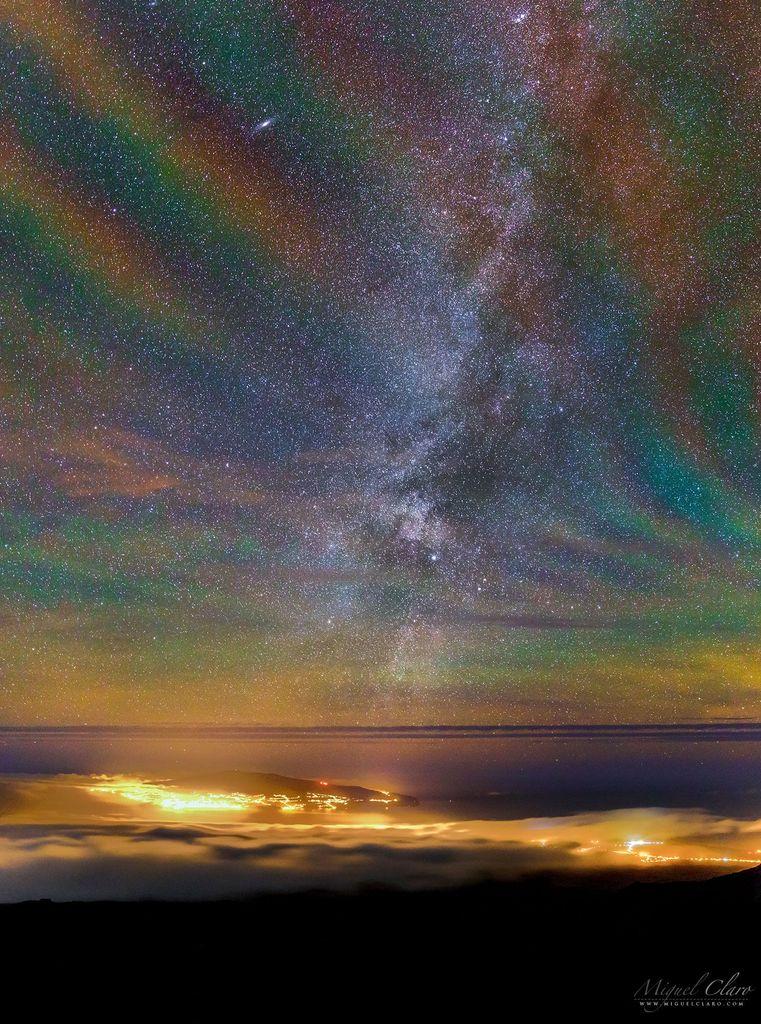
#PPOD: Due to airglow, which is usually hard to see, the sky can glow like a giant rainbow. Disturbances like storms cause gravity waves, making airglow visible. The colors likely originate from various molecules: deep red from OH molecules at 87 km high, and orange and green from sodium and oxygen atoms higher up. This image was captured on Mount Pico in the Azores, Portugal, with Faial Island's lights in view. Credit: Miguel Claro | Dark Sky® Alqueva
#PPOD: This video, made from images taken by Parker Solar Probe’s WISPR instrument during its record-breaking flyby of the Sun on Dec. 25, 2024, shows the solar wind racing out from the Sun’s outer atmosphere, the corona. Credit: NASA/Johns Hopkins APL/Naval Research Lab
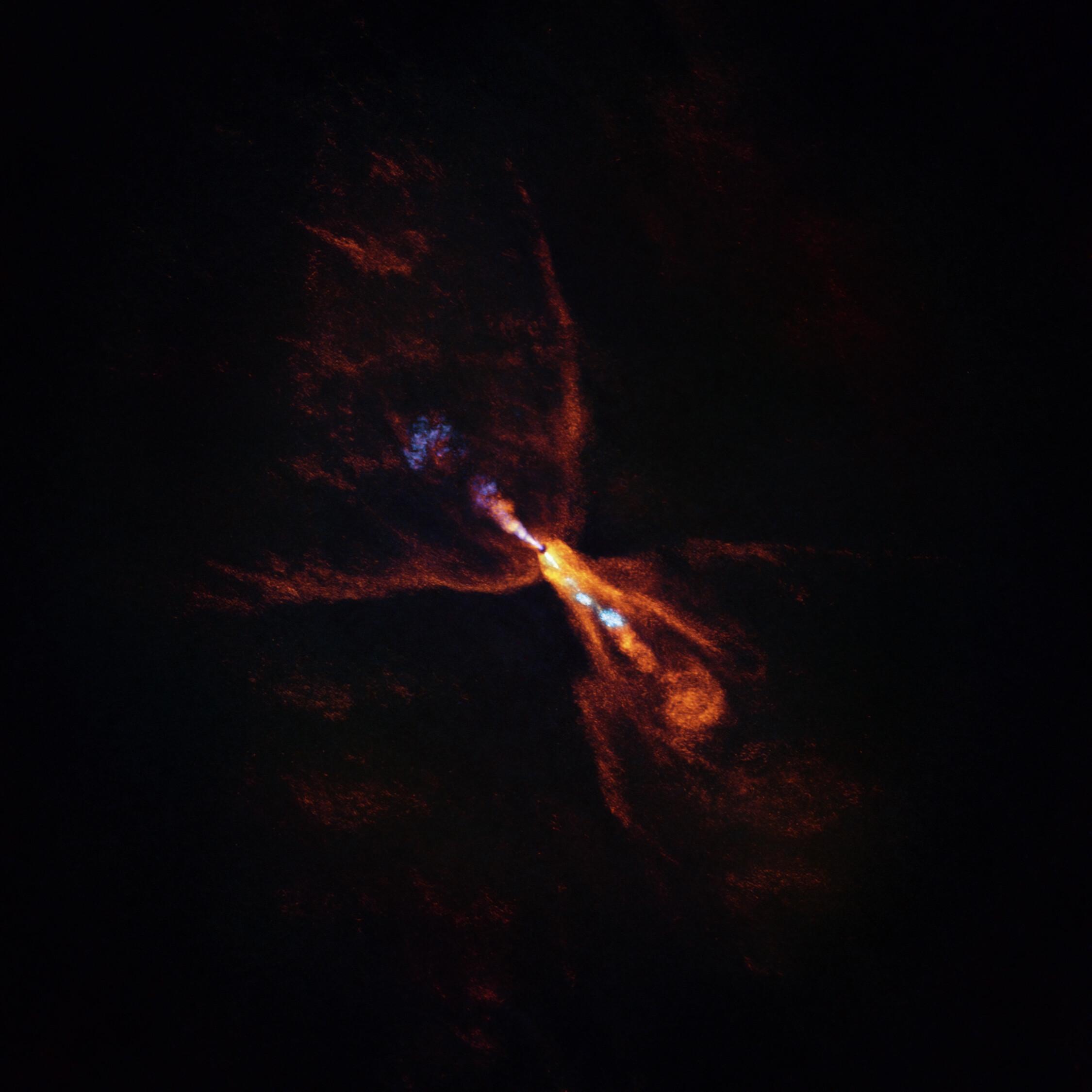
#PPOD: HOPS-315 is a baby star where astronomers have observed early planet formation. The image from the Atacama Large Millimeter/submillimeter Array (ALMA) and JWST data shows hot minerals starting to solidify.
In orange, we see the distribution of carbon monoxide, blowing away from the star in a butterfly-shaped wind. In blue, we see a narrow jet of silicon monoxide, also beaming away from the star.
Credit: ALMA(ESO/NAOJ/NRAO)/M. McClure et al.
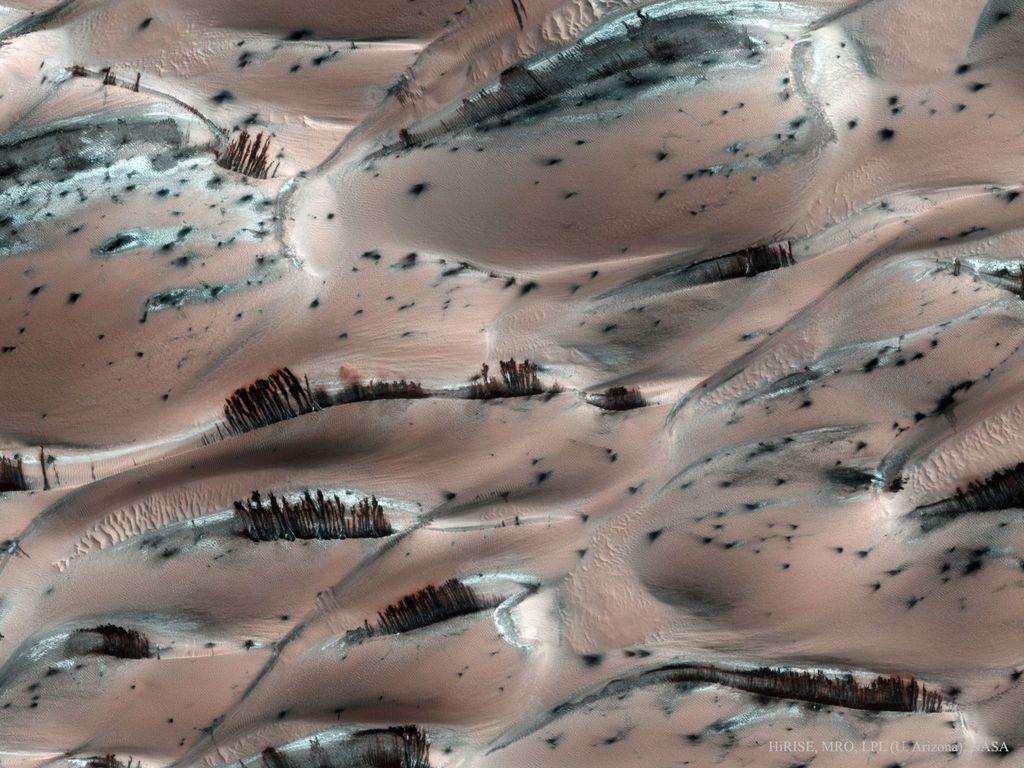
#PPOD: Naturally erupting dust streaks on Mars create structures that look surprisingly like trees near the planet's north pole. These streaks are dark basaltic sand pushed to the surface of sand dunes by sun-heated solid carbon dioxide ice, or dry ice, sublimating directly into vapor. The sand dunes form a nearly complete ring around Mars' north pole and are covered by a thin layer of reddish Martian dust and patches of dry ice. Credit: NASA, HiRISE, MRO, LPL (U. Arizona)
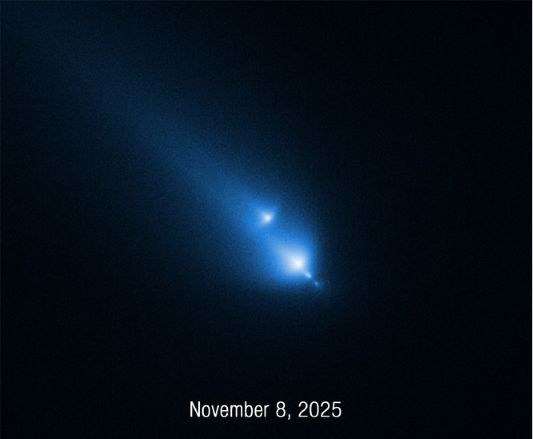
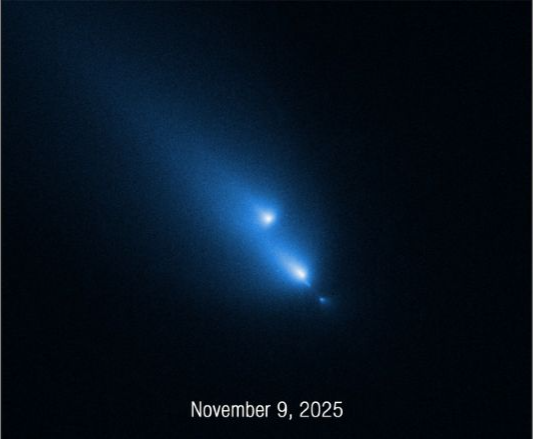
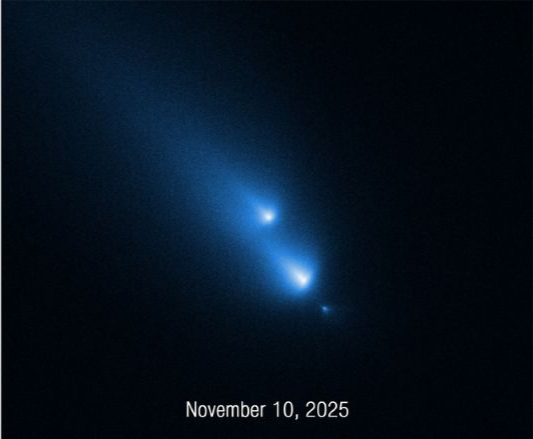
#PPOD: This series of images from NASA’s Hubble Space Telescope of the fragmenting #comet C/2025 K1 (ATLAS) was taken over the course of three consecutive days: Nov. 8, 9, and 10, 2025. This is the first time Hubble has witnessed a comet so early in the process of breaking up. Credit: NASA, ESA, Dennis Bodewits (AU); Processing: Joseph DePasquale (STScI)
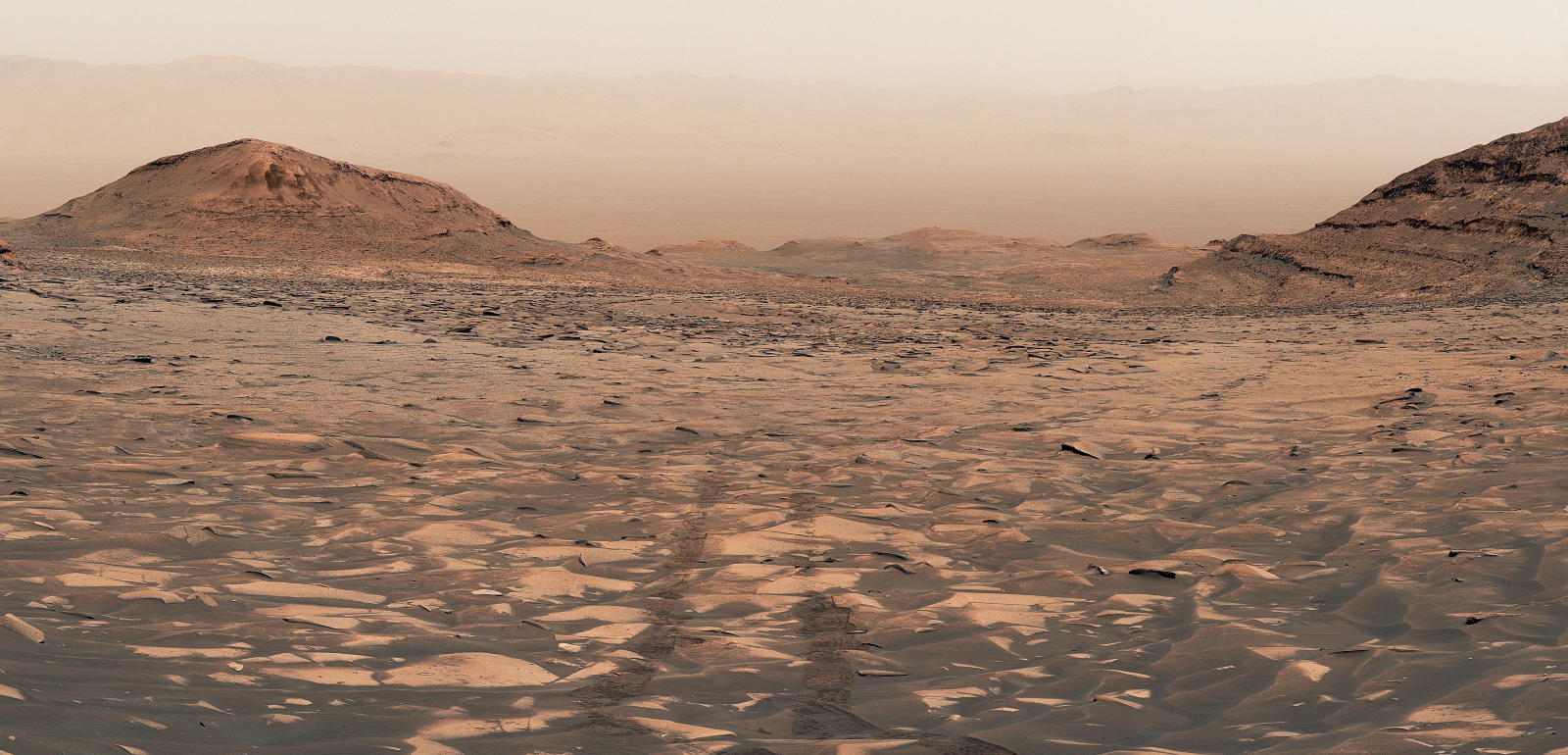
#PPOD: NASA’s Curiosity Mars rover sees its tracks receding into the distance at a site nicknamed “Ubajara” on April 30, 2023. This site is where Curiosity made the discovery of siderite, a mineral that may help explain the fate of the planet’s thicker ancient atmosphere. Credit: NASA/JPL-Caltech/MSSS
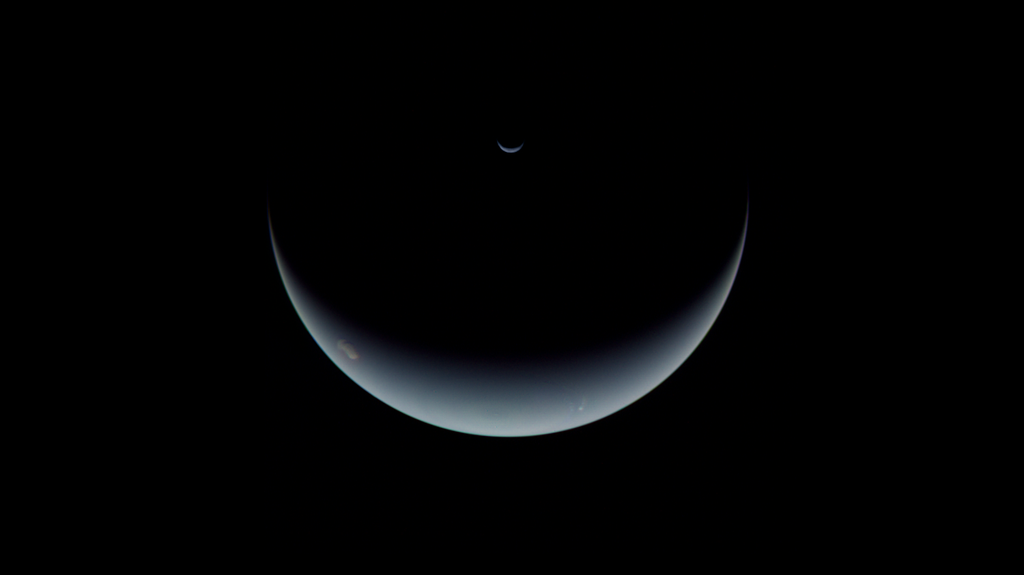
#PPOD: This image of Neptune and Triton was captured by Voyager 2 as it departed the Neptune system on 31 August 1989. Voyager 2's flyby over Neptune's northern hemisphere bent the spacecraft's trajectory downwards out of our solar system's orbital plane. Credit: NASA / JPL-Caltech / Justin Cowart
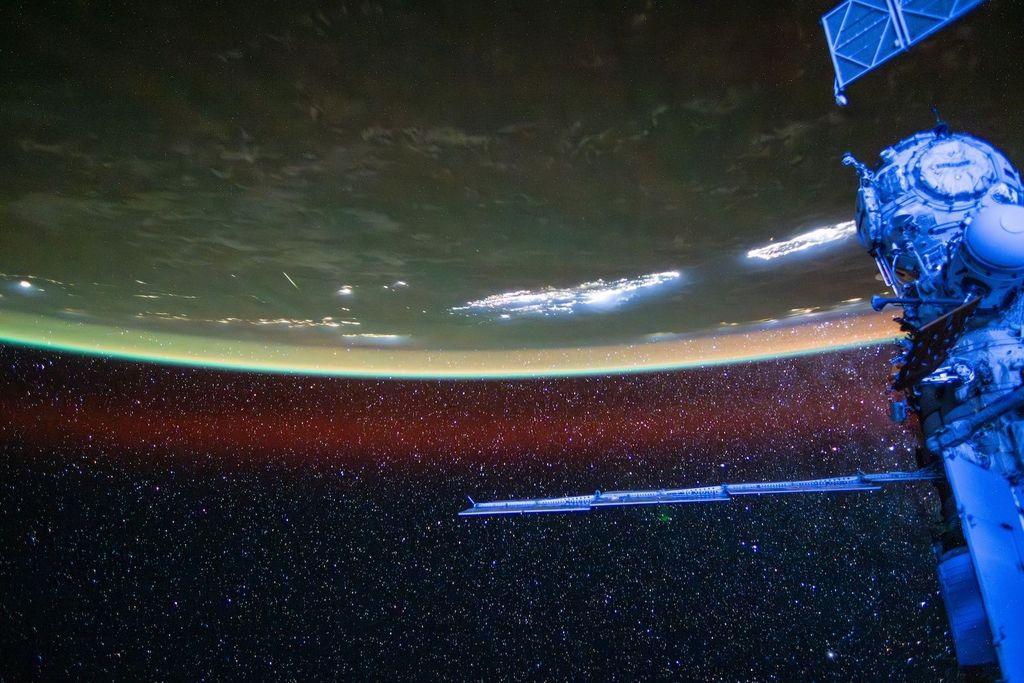
#PPOD: The Expedition 74 crew on the International Space Station turned into meteor chasers as Earth passed through a cloud of dust and small debris left behind by comet Thatcher in 1861. ESA astronaut Sophie Adenot set up a camera to automatically capture thousands of images in hopes of catching a shooting star from the Lyrid meteor shower, an elusive event that often lasts only a fraction of a second. Credit: NASA/ESA – S. Adenot
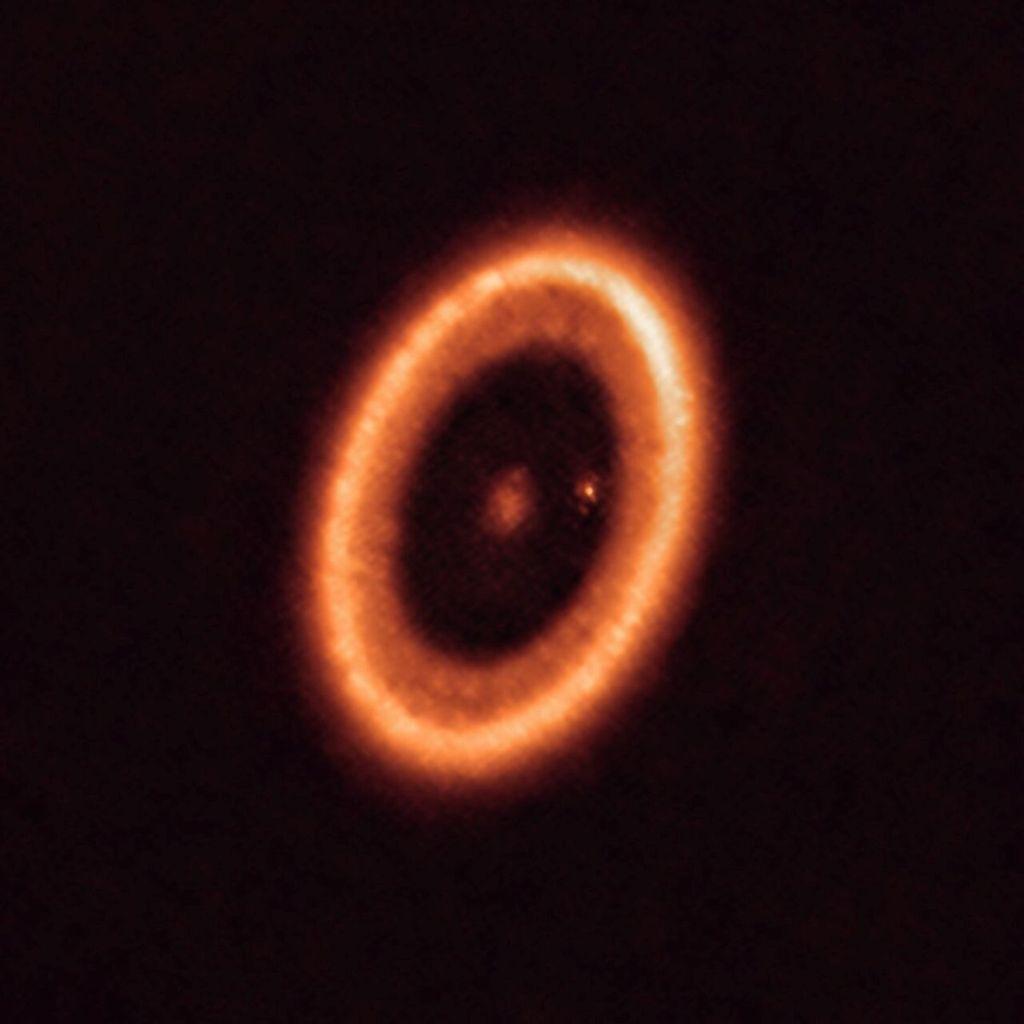
#PPOD: This image is quite extraordinary, and it's not the big disk that's attracting the most attention. Although the planet PDS 70c (just inside the disk) is newly formed and, interestingly, similar in size and mass to Jupiter, it's the fuzzy patch around it that's causing the commotion. That fuzzy patch is thought to be itself a dusty disk that is now forming into moons -- and that has never been seen before. Credit: ALMA (ESO/NAOJ/NRAO)/Benisty et al.
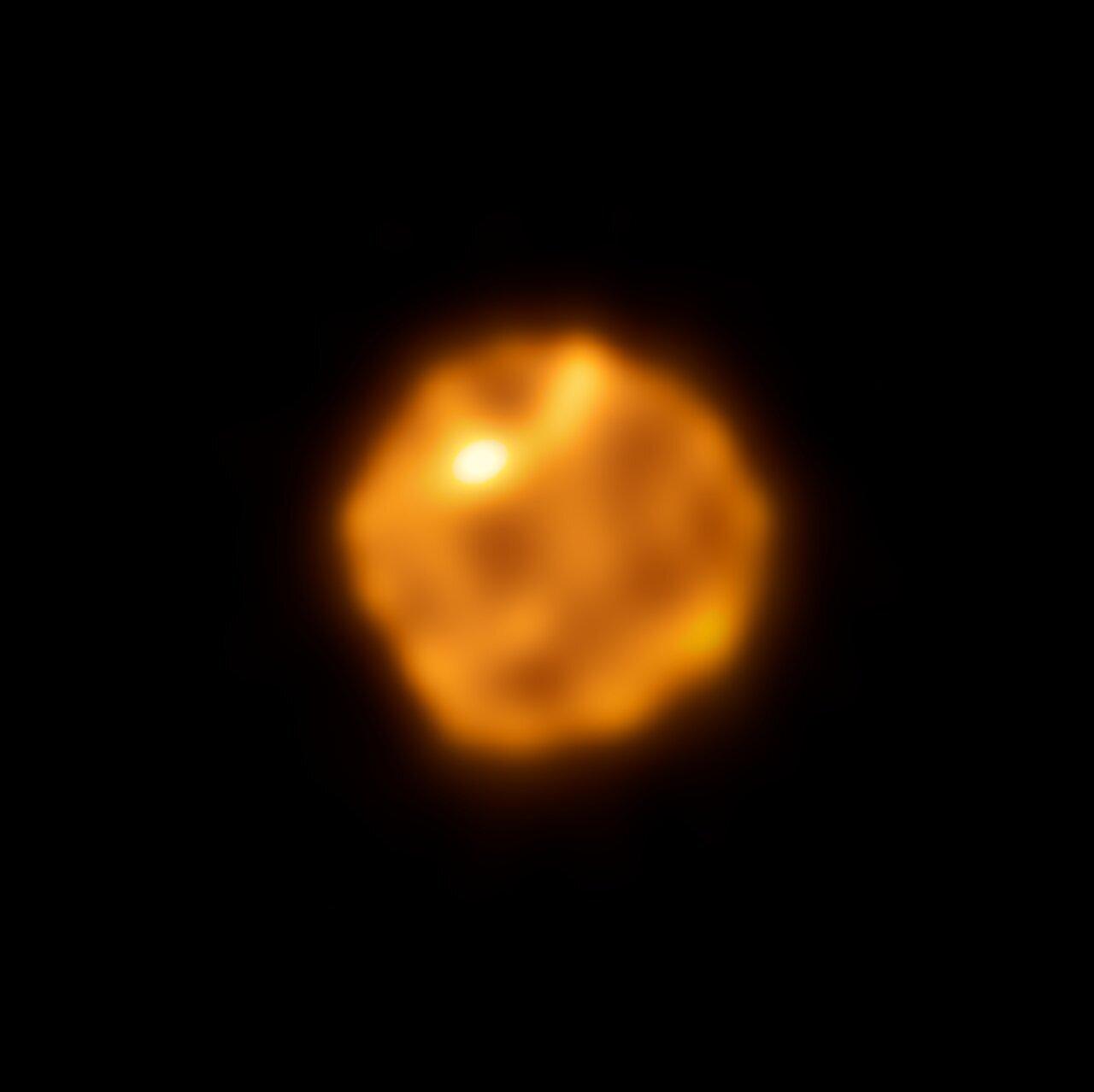
#PPOD: This remarkably detailed view of #Betelgeuse, captured by the Atacama Large Millimeter/submillimeter Array (ALMA), reveals the uneven, bubbling surface of the famous red supergiant about 600 light-years away. Nearly 800 times larger than the Sun, Betelgeuse is covered by enormous regions of hot gas rising from deep within the star, creating the bright hotspots seen across its surface. Credit: ALMA (ESO/NAOJ/NRAO)/W. Dent et al.
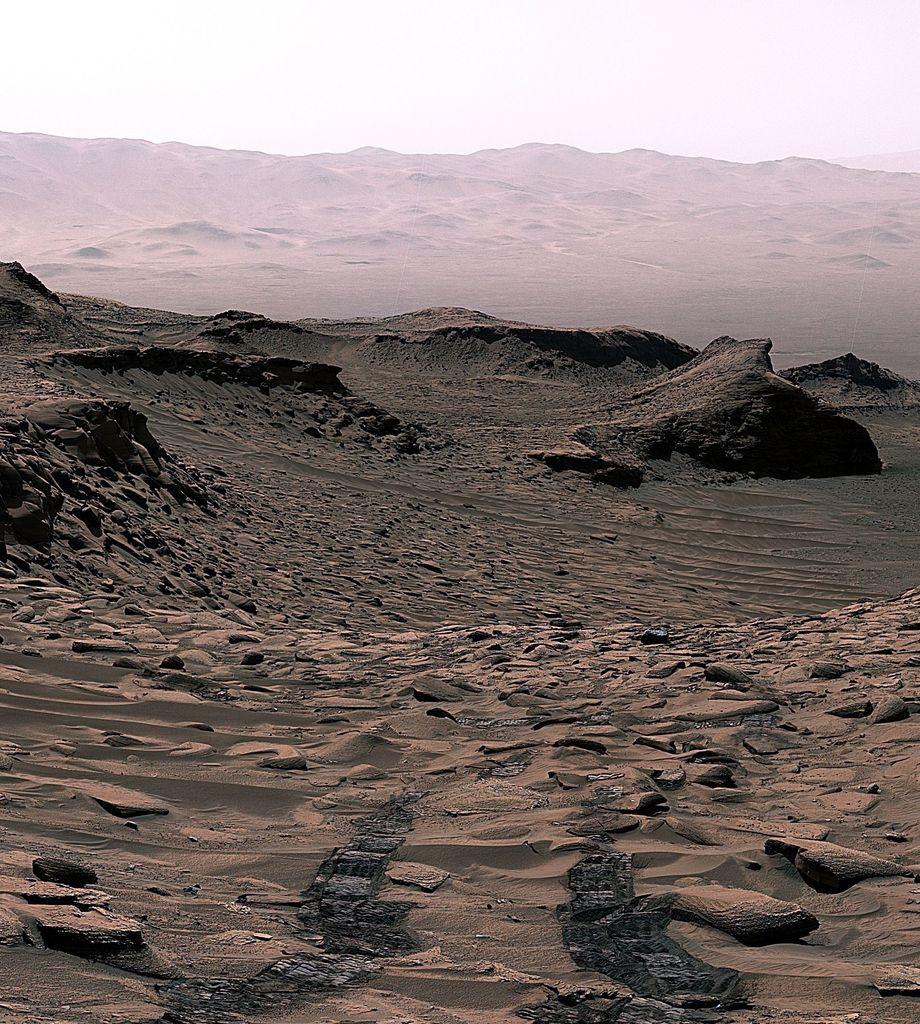
#PPOD: NASA’s Curiosity rover has climbed a full kilometer (0.62 miles) in elevation since landing in Gale Crater 14 years ago. This view looks back down Mount Sharp from “Valle Grande,” with Curiosity’s tracks stretching toward the crater floor through the dusty Martian atmosphere. The rover has been climbing Mount Sharp since 2014, exploring rocks that preserve billions of years of Martian history. Credit: NASA/JPL-Caltech/MSSS
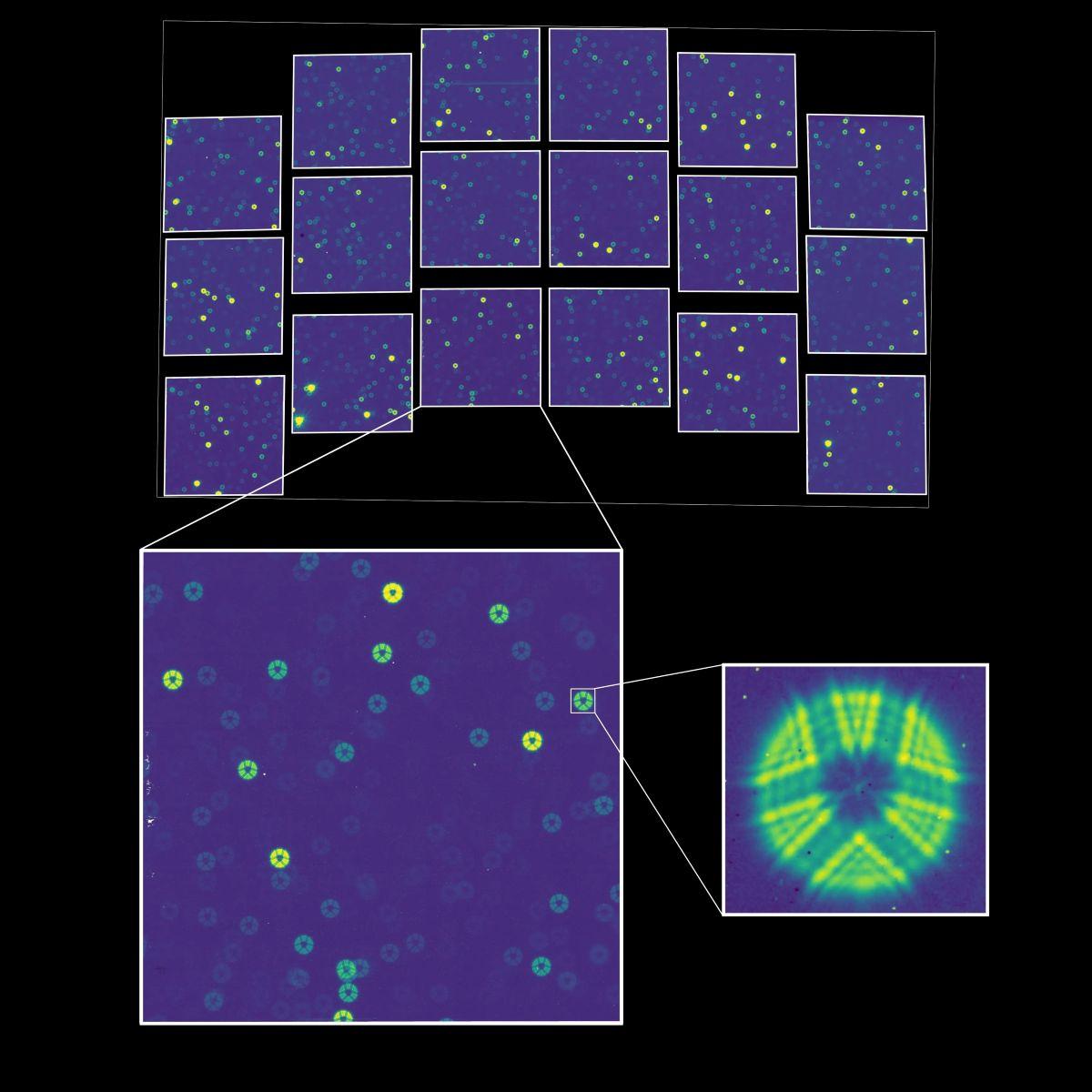
#PPOD: Roman has opened its eyes!
These fuzzy rings are the first photons of starlight captured by the Nancy Grace Roman Space Telescope’s 300-megapixel Wide Field Instrument.
And yes, they’re supposed to look like that—for now. The instrument was still stowed in its launch position and far from best focus when engineers took this test image. It gives the team a baseline for aligning Roman’s optics and bringing the universe into sharp focus.
Credit: NASA Goddard, Tyler Desjardins (STScI)
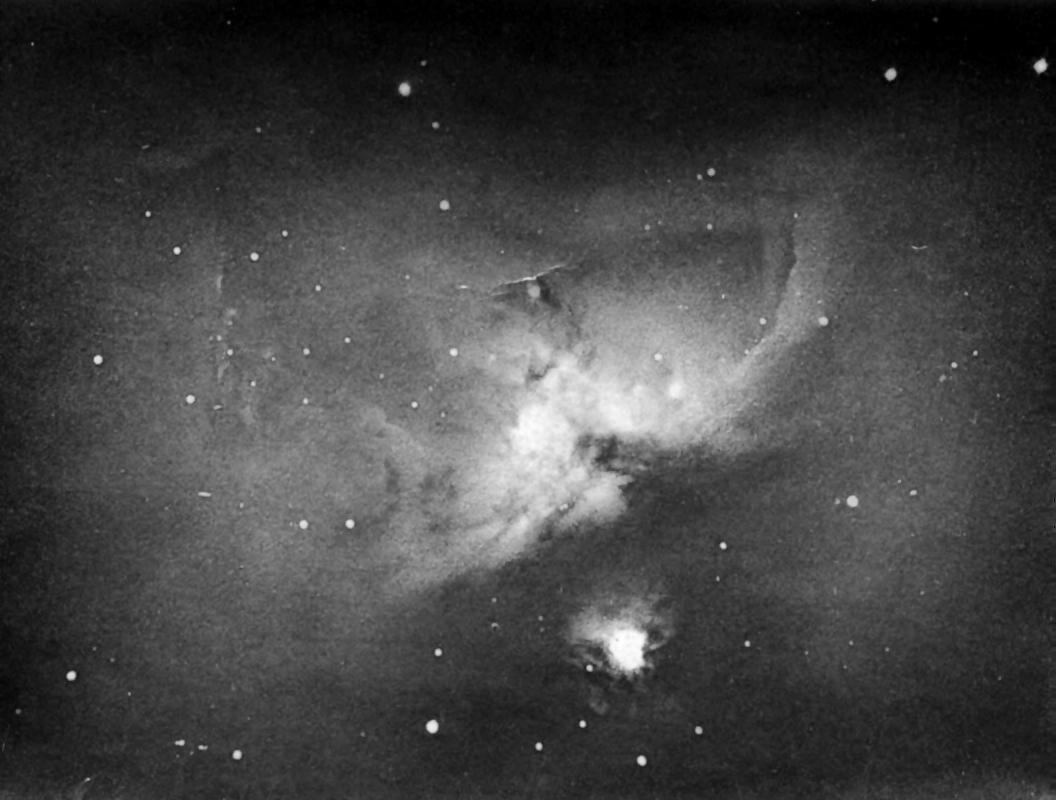
#PPOD: Just three years after Henry Draper captured the first photograph of the Orion Nebula, British amateur astronomer Andrew Ainslie Common transformed what photography could reveal about the night sky. On February 26, 1883, Common exposed a photographic plate for 60 minutes using a 36-inch reflecting telescope in the garden of his home in Ealing, London. Credit: Andrew Ainslie Common