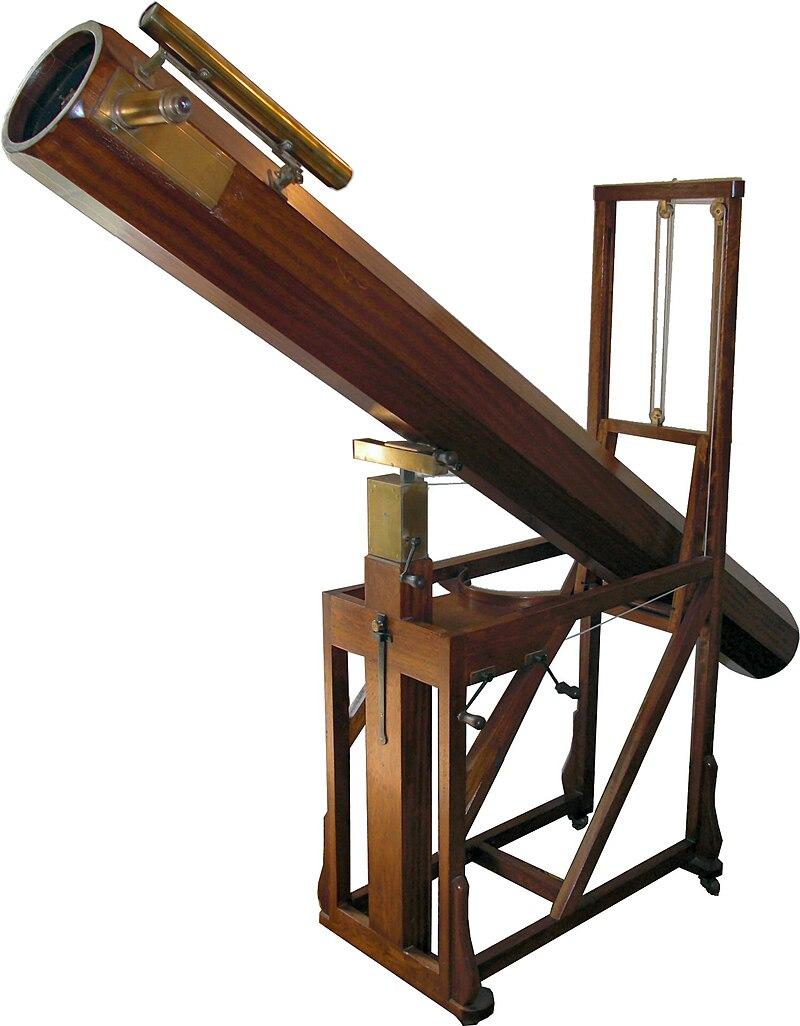
<p><a href="/tags/otd/" rel="tag">#OTD</a> in 1787.</p><p>William Herschel discovers Titania and Oberon, two moons of Uranus.</p><p>Orbiting at a much greater distance from Uranus are the ten known irregular moons. The planet's magnetosphere is highly asymmetric and has many charged particles, which may be the cause of the darkening of its rings and moons.</p><p><a href="https://en.wikipedia.org/wiki/Uranus" rel="nofollow"><span class="invisible">https://</span>en.wikipedia.org/wiki/Uranus</a></p><p><a href="/tags/science/" rel="tag">#science</a> <a href="/tags/astronomy/" rel="tag">#astronomy</a></p>
science
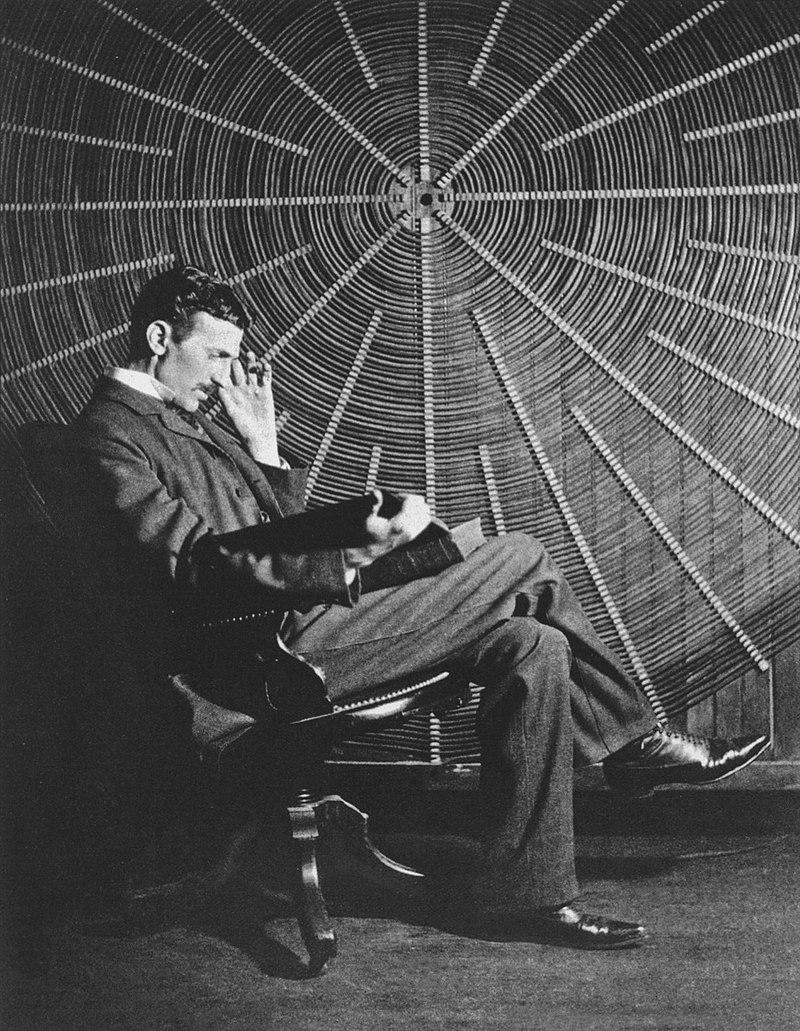
<p>"Throughout space there is energy. Is this energy static or kinetic! If static our hopes are in vain; if kinetic — and this we know it is, for certain — then it is a mere question of time when men will succeed in attaching their machinery to the very wheelwork of nature."</p><p>Serbian-American inventor and engineer Nikola Tesla died <a href="/tags/otd/" rel="tag">#OTD</a> in 1943.</p><p><a href="https://en.wikipedia.org/wiki/Nikola_Tesla" rel="nofollow" class="ellipsis" title="en.wikipedia.org/wiki/Nikola_Tesla"><span class="invisible">https://</span><span class="ellipsis">en.wikipedia.org/wiki/Nikola_T</span><span class="invisible">esla</span></a></p><p>Books by Nikola Tesla at PG:<br><a href="https://www.gutenberg.org/ebooks/author/5067" rel="nofollow" class="ellipsis" title="www.gutenberg.org/ebooks/author/5067"><span class="invisible">https://</span><span class="ellipsis">www.gutenberg.org/ebooks/autho</span><span class="invisible">r/5067</span></a></p><p><a href="/tags/books/" rel="tag">#books</a> <a href="/tags/science/" rel="tag">#science</a> <a href="/tags/technology/" rel="tag">#technology</a></p>
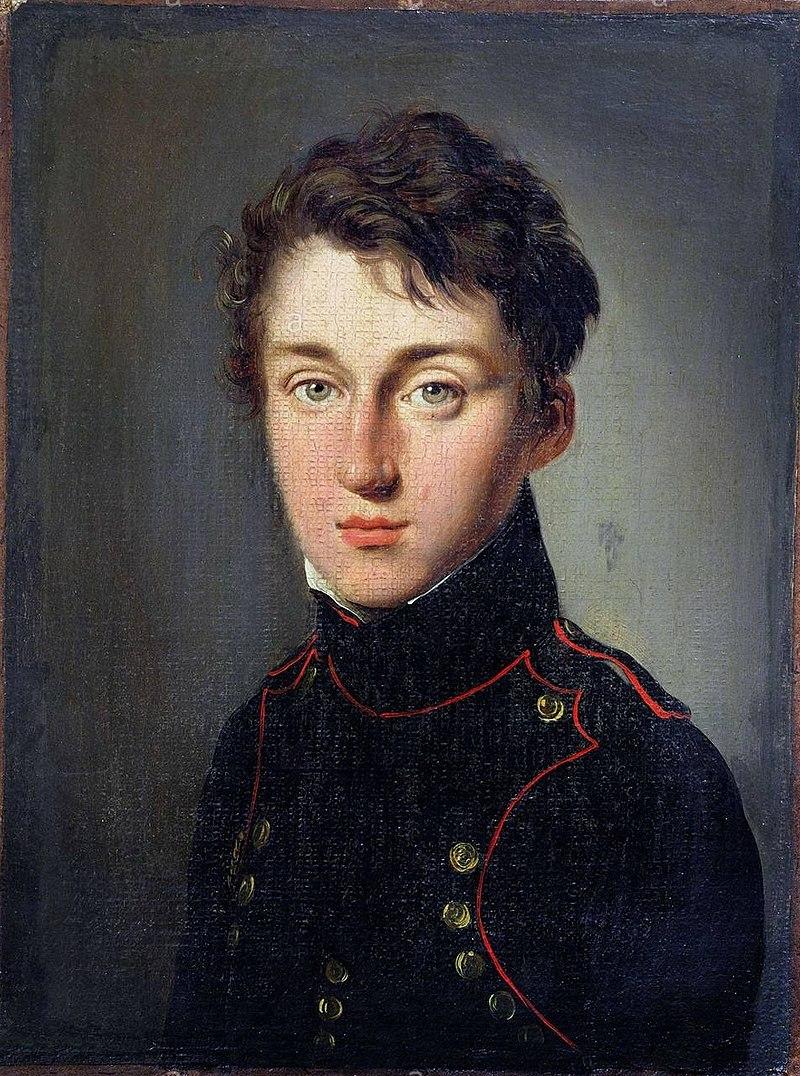
<p>What Is Entropy? A Measure of Just How Little We Really Know.</p><p>Exactly 200 years ago, a French engineer introduced an idea that would quantify the universe’s inexorable slide into decay. But entropy, as it’s currently understood, is less a fact about the world than a reflection of our growing ignorance. Embracing that truth is leading to a rethink of everything from rational decision-making to the limits of machines.</p><p>By Zack Savistky</p><p><a href="https://www.quantamagazine.org/what-is-entropy-a-measure-of-just-how-little-we-really-know-20241213/" rel="nofollow" class="ellipsis" title="www.quantamagazine.org/what-is-entropy-a-measure-of-just-how-little-we-really-know-20241213/"><span class="invisible">https://</span><span class="ellipsis">www.quantamagazine.org/what-is</span><span class="invisible">-entropy-a-measure-of-just-how-little-we-really-know-20241213/</span></a></p><p><a href="/tags/books/" rel="tag">#books</a> <a href="/tags/science/" rel="tag">#science</a> <a href="/tags/physics/" rel="tag">#physics</a> <a href="/tags/entropy/" rel="tag">#entropy</a></p>

<p>In a recent <a href="/tags/setilive/" rel="tag">#SETILive</a> conversation, SETI Institute Communications Specialist Beth Johnson and SETI Institute Senior Planetary Astronomer Dr. Franck Marchis discussed the missions, milestones, and observations that define space science in 2026. Their discussion placed individual missions within a broader scientific framework focused on planetary systems, cosmic environments, and humanity’s place in the universe. </p><p>Learn more: <a href="https://www.seti.org/news/what-to-expect-in-space-science-2026/" rel="nofollow" class="ellipsis" title="www.seti.org/news/what-to-expect-in-space-science-2026/"><span class="invisible">https://</span><span class="ellipsis">www.seti.org/news/what-to-expe</span><span class="invisible">ct-in-space-science-2026/</span></a></p><p><a href="/tags/space/" rel="tag">#space</a> <a href="/tags/science/" rel="tag">#science</a></p>
<p>PRESS RELEASE<br>The SETI Institute announced that nominations are now open for the 2026 Tarter Award for Innovation in the Search for Life Beyond Earth. The Tarter Award recognizes individuals whose projects or ideas significantly advance humanity’s search for extraterrestrial life and intelligence. </p><p>The nomination period opens on January 15, 2026, with a deadline of March 31, 2026.</p><p>Learn more: <a href="https://www.seti.org/news/seti-institute-opens-call-for-nominations-for-the-2026-tarter-award/" rel="nofollow" class="ellipsis" title="www.seti.org/news/seti-institute-opens-call-for-nominations-for-the-2026-tarter-award/"><span class="invisible">https://</span><span class="ellipsis">www.seti.org/news/seti-institu</span><span class="invisible">te-opens-call-for-nominations-for-the-2026-tarter-award/</span></a></p><p><a href="/tags/science/" rel="tag">#science</a> <a href="/tags/seti/" rel="tag">#seti</a></p>
<p>On Wednesday, Jan. 28, 2026, at 7 pm (PST), Dr. Bruce Macintosh (Director of the University of California Observatories) will give a free, illustrated, non-technical lecture entitled:</p><p>"Pictures of Distant Worlds"</p><p>in the Smithwick Theater at Foothill College, in Los Altos (see directions below).</p><p>The talk is part of the Silicon Valley Astronomy Lecture Series, now in its 26th year.</p><p>Learn more: <a href="https://www.seti.org/events/pictures-of-distant-worlds/" rel="nofollow" class="ellipsis" title="www.seti.org/events/pictures-of-distant-worlds/"><span class="invisible">https://</span><span class="ellipsis">www.seti.org/events/pictures-o</span><span class="invisible">f-distant-worlds/</span></a> </p><p><a href="/tags/space/" rel="tag">#space</a> <a href="/tags/science/" rel="tag">#science</a></p>
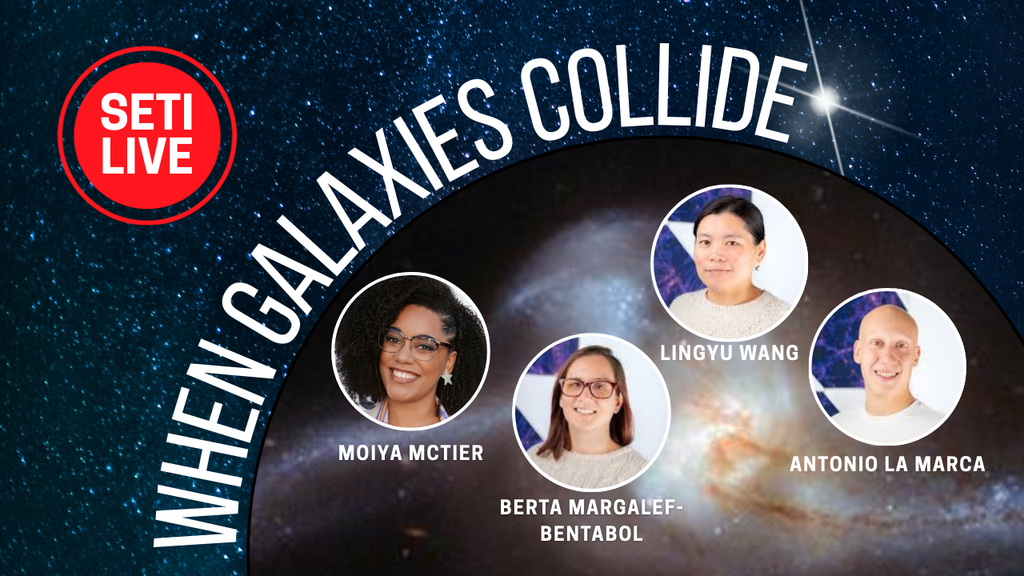
<p>Next <a href="/tags/setilive/" rel="tag">#SETILive</a>: When Galaxies Collide<br>TODAY, 15 January, 11 am PST</p><p>Dr. Moiya McTier will explore two new Euclid studies that combine vast sky surveys, machine learning, and multi-wavelength observations to uncover when and why active galactic nuclei (AGN) ignite. The results show that galaxies in the midst of mergers are far more likely to host actively feeding black holes — and that the brightest AGN are almost always found in cosmic collisions. </p><p>WATCH LIVE: <a href="https://www.youtube.com/watch?v=YMm_KOVN4k0" rel="nofollow" class="ellipsis" title="www.youtube.com/watch?v=YMm_KOVN4k0"><span class="invisible">https://</span><span class="ellipsis">www.youtube.com/watch?v=YMm_KO</span><span class="invisible">VN4k0</span></a> </p><p><a href="/tags/science/" rel="tag">#science</a></p>
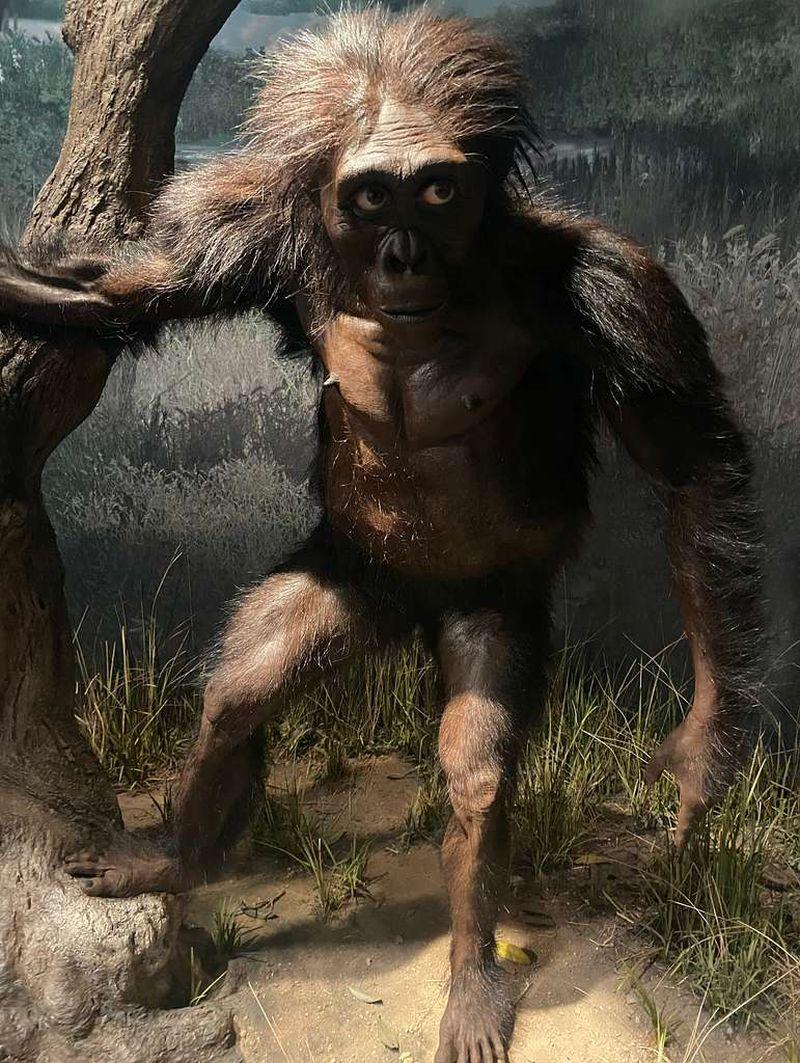
<p>We now know much more about how our ancestor 'Lucy' lived — and died</p><p>"Fifty years after a fossil skeleton of Australopithecus afarensis was unearthed in Ethiopia, we know so much more about how this iconic species lived and died."</p><p><a href="https://www.livescience.com/archaeology/we-now-know-much-more-about-how-our-ancestor-lucy-lived-and-died" rel="nofollow" class="ellipsis" title="www.livescience.com/archaeology/we-now-know-much-more-about-how-our-ancestor-lucy-lived-and-died"><span class="invisible">https://</span><span class="ellipsis">www.livescience.com/archaeolog</span><span class="invisible">y/we-now-know-much-more-about-how-our-ancestor-lucy-lived-and-died</span></a></p><p><a href="/tags/anthropology/" rel="tag">#anthropology</a> <a href="/tags/science/" rel="tag">#science</a></p>

<p>I am once again begging people who know nothing about <a href="/tags/math/" rel="tag">#math</a> or <a href="/tags/physics/" rel="tag">#physics</a> to stop writing about quantum systems. This is one of the most bizarre and absurd papers I've read in years.<br> <br>What an embarassment for the PBS show "Closer to Truth" for publishing it</p><p><a href="https://loc.closertotruth.com/essay/behind-the-fabric-of-spacetime-the-physics-of-consciousness-in-a-hyperdimensional-universe" rel="nofollow" class="ellipsis" title="loc.closertotruth.com/essay/behind-the-fabric-of-spacetime-the-physics-of-consciousness-in-a-hyperdimensional-universe"><span class="invisible">https://</span><span class="ellipsis">loc.closertotruth.com/essay/be</span><span class="invisible">hind-the-fabric-of-spacetime-the-physics-of-consciousness-in-a-hyperdimensional-universe</span></a></p><p><a href="/tags/science/" rel="tag">#science</a></p>
<p>Data from NASA’s Kepler mission revealed that planets between Earth and Neptune in size, particularly compact systems of closely packed worlds, are extraordinarily common. Yet the Solar System contains none.</p><p>In a recent SETI Live conversation, Moiya McTier spoke with exoplanet scientist Dr. John H. Livingston about a newly characterized young planetary system that may represent the long-sought evolutionary bridge. </p><p>Learn more: <a href="https://www.seti.org/news/missing-link-found/" rel="nofollow" class="ellipsis" title="www.seti.org/news/missing-link-found/"><span class="invisible">https://</span><span class="ellipsis">www.seti.org/news/missing-link</span><span class="invisible">-found/</span></a></p><p><a href="/tags/space/" rel="tag">#space</a> <a href="/tags/science/" rel="tag">#science</a></p>
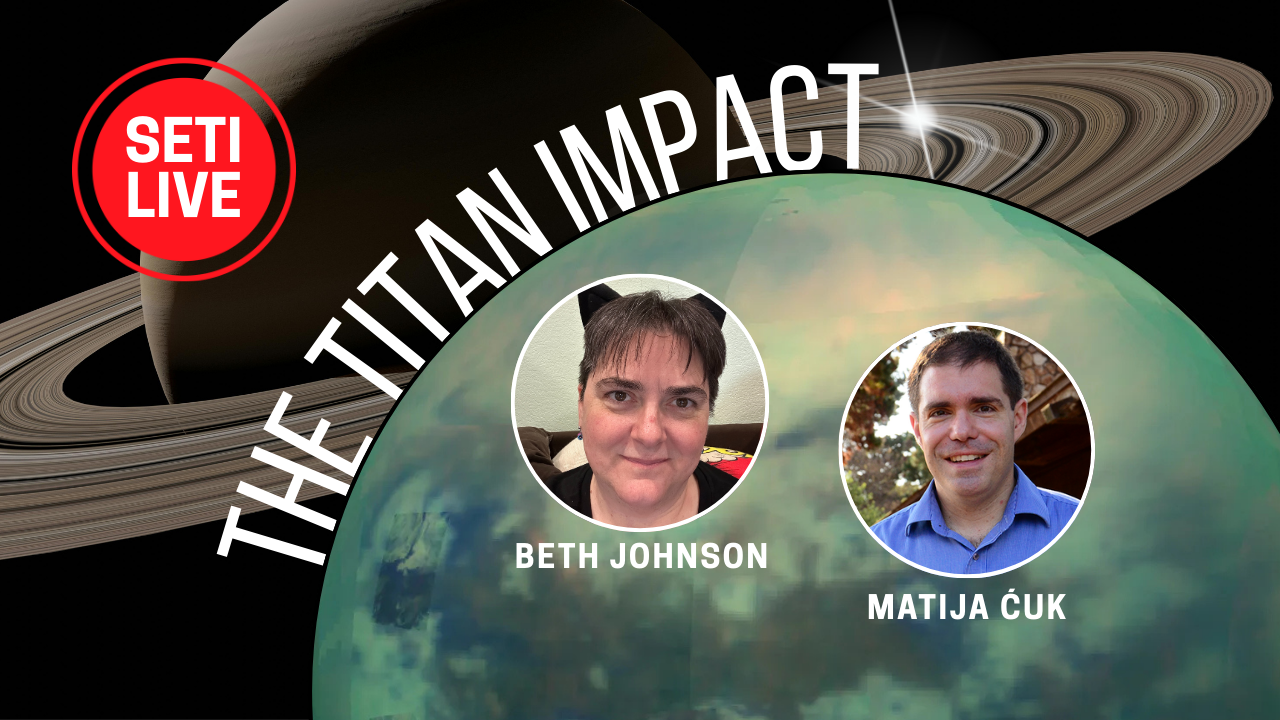
<p>What if Saturn’s largest moon is the survivor of a colossal cosmic crash?</p><p>New research suggests Titan formed when two ancient moons merged, potentially setting off the chain of events that created Saturn’s rings.</p><p>Join us live with planetary dynamicist Matija Ćuk to explore this dramatic new model of the Saturn system.</p><p>📅 TODAY, March 12, 2:30 pm PDT / 5:30 pm EDT<br>🔗 <a href="https://youtube.com/live/MVyn_bfZsaI" rel="nofollow"><span class="invisible">https://</span>youtube.com/live/MVyn_bfZsaI</a> </p><p><a href="/tags/space/" rel="tag">#space</a> <a href="/tags/science/" rel="tag">#science</a></p>

<p>This week's net.wars, "Split", notes Keir Starmer's reversal on digital ID and ponders the row over Grok's clothing-removal capabilities and its collateral damage to the Royal Society: <a href="https://netwars.pelicancrossing.net/2026/01/16/split/" rel="nofollow" class="ellipsis" title="netwars.pelicancrossing.net/2026/01/16/split/"><span class="invisible">https://</span><span class="ellipsis">netwars.pelicancrossing.net/20</span><span class="invisible">26/01/16/split/</span></a> <a href="/tags/netwars/" rel="tag">#NetWars</a> <a href="/tags/ai/" rel="tag">#AI</a> <a href="/tags/digitalid/" rel="tag">#digitalID</a> <a href="/tags/science/" rel="tag">#science</a></p>
<p><a href="/tags/otd/" rel="tag">#OTD</a> in 1959.</p><p>American physicist Richard Feynman gave a speech entitled "There's Plenty of Room at the Bottom" at Caltech, anticipating the field of nanotechnology. Feynman considered the possibility of direct manipulation of individual atoms as a more robust form of synthetic chemistry than those used at the time.</p><p><a href="https://en.wikipedia.org/wiki/There%27s_Plenty_of_Room_at_the_Bottom" rel="nofollow" class="ellipsis" title="en.wikipedia.org/wiki/There%27s_Plenty_of_Room_at_the_Bottom"><span class="invisible">https://</span><span class="ellipsis">en.wikipedia.org/wiki/There%27</span><span class="invisible">s_Plenty_of_Room_at_the_Bottom</span></a></p><p><a href="/tags/science/" rel="tag">#science</a> <a href="/tags/physics/" rel="tag">#physics</a></p>
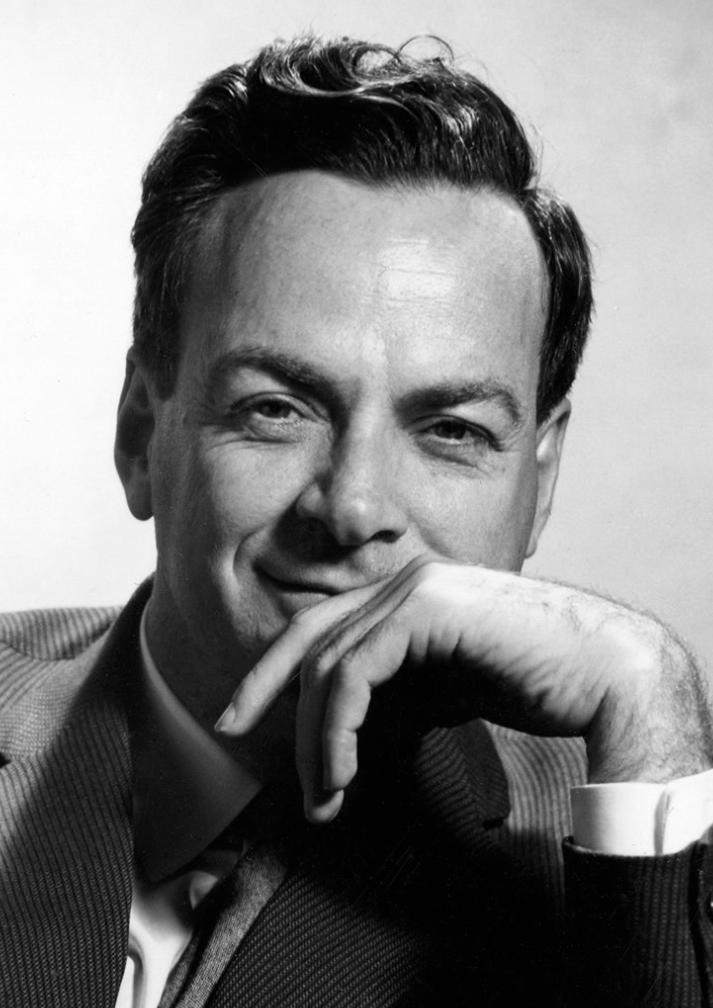
<p>A light from the periphery</p><p>The life of Indian physicist Satyendra Nath Bose illuminates how scientific genius can emerge from the most unexpected quarters</p><p>by Somaditya (Soma) Banerjee</p><p><a href="https://aeon.co/essays/why-satyendra-nath-bose-was-more-than-einsteins-sidekick?utm_source=Aeon+Newsletter&utm_campaign=fbc94eca5e-EMAIL_CAMPAIGN_2026_01_13_COPY_01&utm_medium=email&utm_term=0_-4ef8a26106-72664972" rel="nofollow" class="ellipsis" title="aeon.co/essays/why-satyendra-nath-bose-was-more-than-einsteins-sidekick?utm_source=Aeon+Newsletter&utm_campaign=fbc94eca5e-EMAIL_CAMPAIGN_2026_01_13_COPY_01&utm_medium=email&utm_term=0_-4ef8a26106-72664972"><span class="invisible">https://</span><span class="ellipsis">aeon.co/essays/why-satyendra-n</span><span class="invisible">ath-bose-was-more-than-einsteins-sidekick?utm_source=Aeon+Newsletter&utm_campaign=fbc94eca5e-EMAIL_CAMPAIGN_2026_01_13_COPY_01&utm_medium=email&utm_term=0_-4ef8a26106-72664972</span></a></p><p>More about Nath Bose;<br><a href="https://en.wikipedia.org/wiki/Satyendra_Nath_Bose" rel="nofollow" class="ellipsis" title="en.wikipedia.org/wiki/Satyendra_Nath_Bose"><span class="invisible">https://</span><span class="ellipsis">en.wikipedia.org/wiki/Satyendr</span><span class="invisible">a_Nath_Bose</span></a></p><p><a href="/tags/books/" rel="tag">#books</a> <a href="/tags/physics/" rel="tag">#physics</a> <a href="/tags/science/" rel="tag">#science</a></p>


<p>Safe, less systemically expensive, more efficient than induction wireless power transfer; I've invested over 40 years attempting to cultivate support for mundane application of beamed power instead of launching rockets, powering surveillance drones, or satellite solar power mega projects.</p><p>I have repeatedly been humiliated in public by white electric vehicle advocates, supremacist sycophants dedicated to the Oligarch status quo, ready to trade Oil Barons for Battery Barons, the new boss same as the old boss.</p><p>I have a fun, evidenced-based, economically and environmentally sustainable proof of concept project for Smart-Grid to Smart-Road (including Silviculture, Agroforestry, Motorsports) that I am working on alone.</p><p>Join me if you can prove you're not another cynical, glad-handing frenemy, competitor, predator seeking to win my trust and sabotage the work.</p><p>Future of Microwave Power Beaming • USNRL<br><a href="/tags/science/" rel="tag">#Science</a> <a href="/tags/engineering/" rel="tag">#Engineering</a> <a href="/tags/power/" rel="tag">#Power</a> <a href="/tags/wirelesspower/" rel="tag">#WirelessPower</a> <a href="/tags/beamedenergy/" rel="tag">#BeamedEnergy</a> <a href="/tags/transportation/" rel="tag">#Transportation</a> <br><a href="https://www.youtube.com/watch?v=JGuPaYtcJx8" rel="nofollow" class="ellipsis" title="www.youtube.com/watch?v=JGuPaYtcJx8"><span class="invisible">https://</span><span class="ellipsis">www.youtube.com/watch?v=JGuPaY</span><span class="invisible">tcJx8</span></a></p>
Edited 1y ago
<p>You read that right. 75% of scientists are considering leaving the US. Forgive me (not really) if I'm struggling to understand exactly how this is making the US anything other than diminished, stupid, and ill.</p><p><a href="https://www.nature.com/articles/d41586-025-00938-y" rel="nofollow" class="ellipsis" title="www.nature.com/articles/d41586-025-00938-y"><span class="invisible">https://</span><span class="ellipsis">www.nature.com/articles/d41586</span><span class="invisible">-025-00938-y</span></a></p><p><a href="/tags/nsf/" rel="tag">#NSF</a> <br><a href="/tags/nih/" rel="tag">#NIH</a> <br><a href="/tags/uspol/" rel="tag">#USPol</a><br><a href="/tags/science/" rel="tag">#Science</a></p>

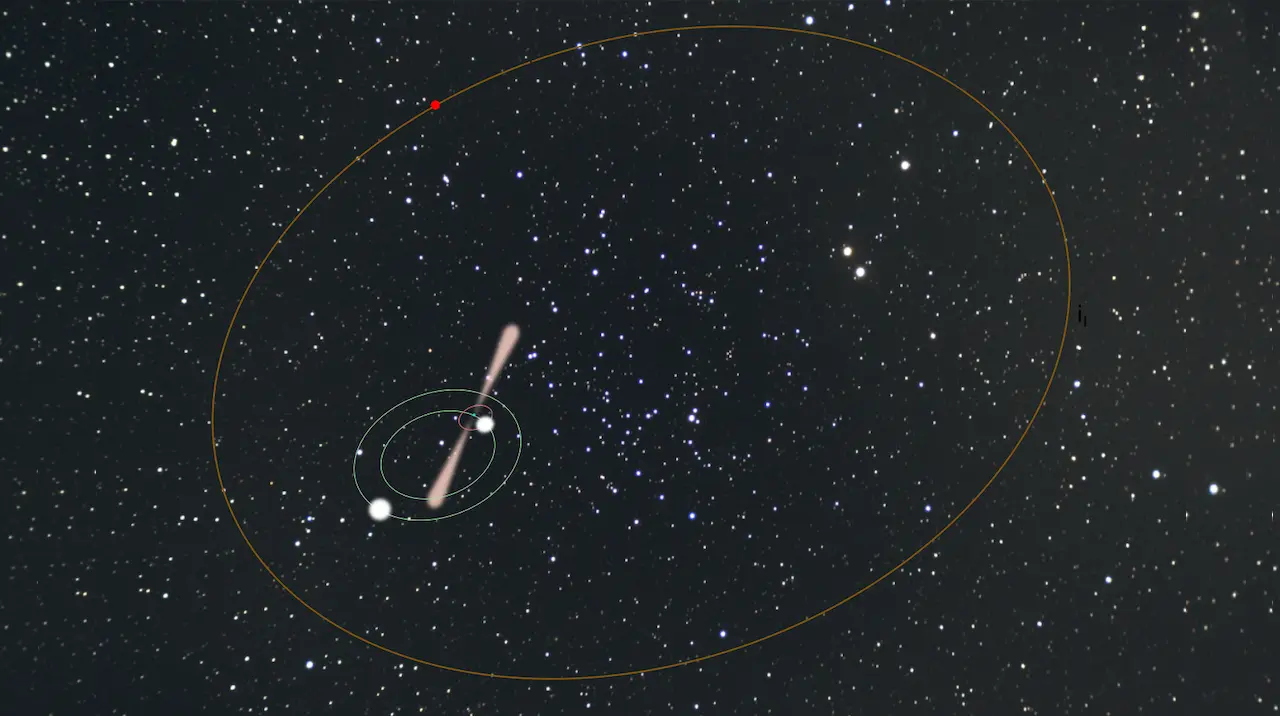
<p>This may be the strangest planet yet discovered. It seems to be a Pluto-size world circling the remains of three dead stars: two white dwarfs & a pulsar, as massive as the Sun but no bigger than Brooklyn. </p><p>If confirmed, it would also be the smallest exoplanet known.</p><p><a href="https://astrobiology.com/2025/01/have-we-discovered-the-smallest-extra-solar-planet.html" rel="nofollow" class="ellipsis" title="astrobiology.com/2025/01/have-we-discovered-the-smallest-extra-solar-planet.html"><span class="invisible">https://</span><span class="ellipsis">astrobiology.com/2025/01/have-</span><span class="invisible">we-discovered-the-smallest-extra-solar-planet.html</span></a> <a href="/tags/space/" rel="tag">#space</a> <a href="/tags/science/" rel="tag">#science</a> <a href="/tags/astronomy/" rel="tag">#astronomy</a> <a href="/tags/nature/" rel="tag">#nature</a></p>
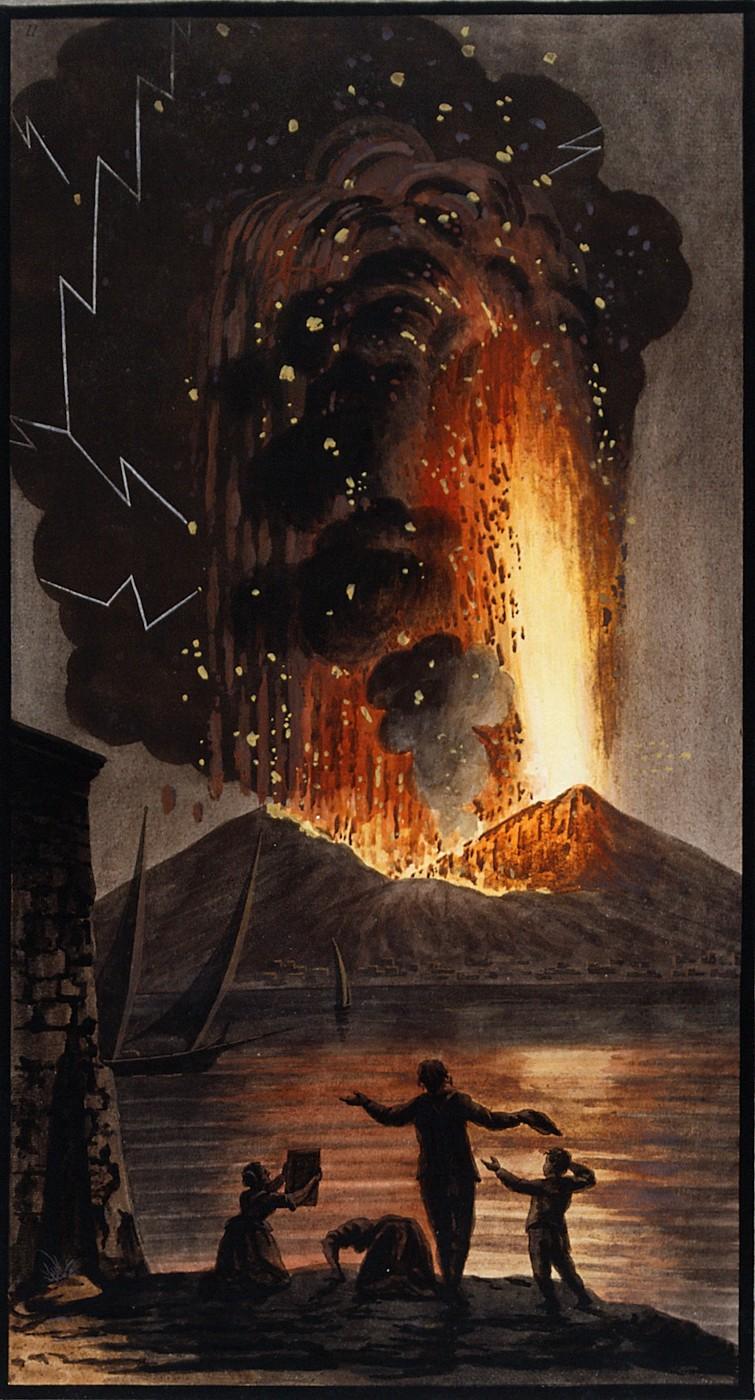
<p>Like the more famous Pompei, Herculaneum was destroyed by Mount Vesuvius in 79 A.D. </p><p>In 1752, workmen discovered charred papyri and excavations of them started later. Over the years, attempts have been made to open and read them, but they have disintegrated.</p><p>Now, using volumetric scanning, the scrolls are beginning to be "unrolled."</p><p><a href="https://en.wikipedia.org/wiki/Herculaneum_papyri" rel="nofollow" class="ellipsis" title="en.wikipedia.org/wiki/Herculaneum_papyri"><span class="invisible">https://</span><span class="ellipsis">en.wikipedia.org/wiki/Herculan</span><span class="invisible">eum_papyri</span></a></p><p><a href="/tags/science/" rel="tag">#science</a> <a href="/tags/archelogy/" rel="tag">#archelogy</a></p>

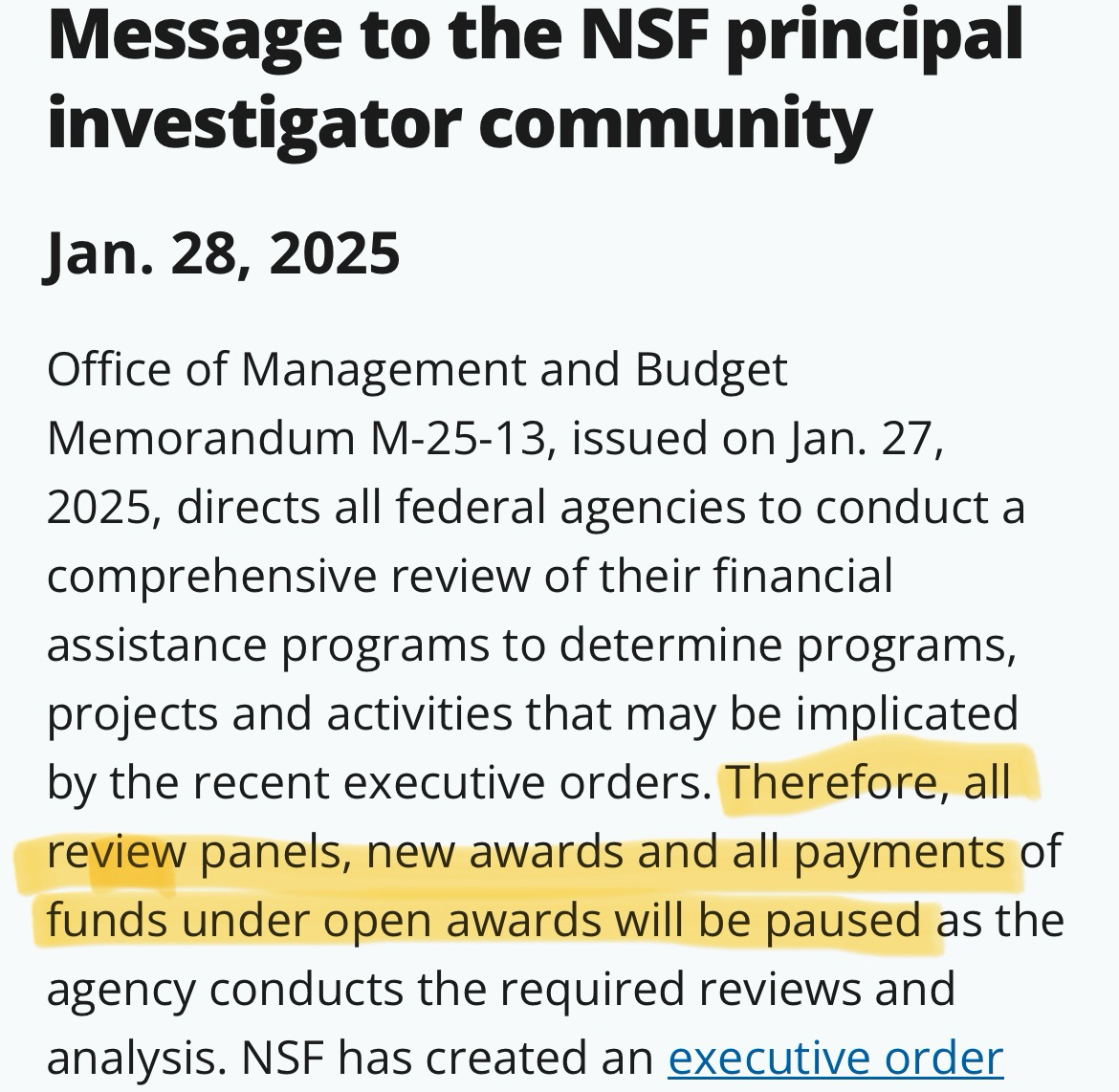
<p>The National Science Foundation funds a huge amount of science in the US, and this appeared on their website 7 hours ago (at <a href="https://new.nsf.gov/executive-orders" rel="nofollow"><span class="invisible">https://</span>new.nsf.gov/executive-orders</a> )</p><p>This is telling people to stop work on existing grants if the work might touch on equality or diversity considerations (keep reading down). </p><p>I’m pretty sure that every grant application had to have a section on how those considerations were being addressed. This is mindblowingly disruptive and destructive. </p><p><a href="/tags/nsf/" rel="tag">#NSF</a> <a href="/tags/science/" rel="tag">#science</a></p>
<p>Through partnerships with the SETI Institute and Unistellar, the initiative mobilizes citizen scientists to generate valuable data on events like meteor showers and asteroids that professional observatories might miss. This collaborative approach transforms individuals from passive observers into active participants who help catalogue the cosmos alongside major scientific efforts.</p><p>Learn more: <a href="https://www.seti.org/news/from-the-dawn-of-time-to-your-backyard-how-citizens-are-mapping-the-universe-alongside-the-jwst/" rel="nofollow" class="ellipsis" title="www.seti.org/news/from-the-dawn-of-time-to-your-backyard-how-citizens-are-mapping-the-universe-alongside-the-jwst/"><span class="invisible">https://</span><span class="ellipsis">www.seti.org/news/from-the-daw</span><span class="invisible">n-of-time-to-your-backyard-how-citizens-are-mapping-the-universe-alongside-the-jwst/</span></a></p><p><a href="/tags/space/" rel="tag">#space</a> <a href="/tags/citizenscience/" rel="tag">#citizenscience</a> <a href="/tags/science/" rel="tag">#science</a></p>

<p>Vera Rubin Was a Pioneering Female Astronomer. Her Federal Bio Now Doesn’t Mention Efforts to Diversify Science.<br>—</p><p>The edits to the webpage offer a glimpse into how far the Trump administration will go in refusing to acknowledge today’s inequalities as it purges federal initiatives promoting diversity, equity and inclusion.</p><p><a href="https://www.propublica.org/article/vera-rubin-astronomer-dei-trump?utm_source=mastodon&utm_medium=social&utm_campaign=mastodon-post" rel="nofollow" class="ellipsis" title="www.propublica.org/article/vera-rubin-astronomer-dei-trump?utm_source=mastodon&utm_medium=social&utm_campaign=mastodon-post"><span class="invisible">https://</span><span class="ellipsis">www.propublica.org/article/ver</span><span class="invisible">a-rubin-astronomer-dei-trump?utm_source=mastodon&utm_medium=social&utm_campaign=mastodon-post</span></a></p><p><a href="/tags/news/" rel="tag">#News</a> <a href="/tags/government/" rel="tag">#Government</a> <a href="/tags/dei/" rel="tag">#DEI</a> <a href="/tags/science/" rel="tag">#Science</a> <a href="/tags/astronomy/" rel="tag">#Astronomy</a> <a href="/tags/space/" rel="tag">#Space</a> <a href="/tags/trump/" rel="tag">#Trump</a></p>
Edited 1y ago
<p><a href="https://www.ted.com/talks/lisa_kaltenegger_are_we_alone_in_the_universe_we_re_close_to_finding_out" rel="nofollow" class="ellipsis" title="www.ted.com/talks/lisa_kaltenegger_are_we_alone_in_the_universe_we_re_close_to_finding_out"><span class="invisible">https://</span><span class="ellipsis">www.ted.com/talks/lisa_kaltene</span><span class="invisible">gger_are_we_alone_in_the_universe_we_re_close_to_finding_out</span></a></p><p>Astrophysicist Lisa Kaltenegger explores the thrilling possibility of discovering life beyond Earth, highlighting how cutting-edge technology like the James Webb Space Telescope lets us analyze distant planets for signs of life in unprecedented detail. Could examining these "alien earths" uncover evidence of new life forms and transform our understanding of the cosmos? We may be closer than ever to finding out.</p><p><a href="/tags/arewealone/" rel="tag">#arewealone</a> <a href="/tags/science/" rel="tag">#science</a> <a href="/tags/scicomm/" rel="tag">#scicomm</a></p>
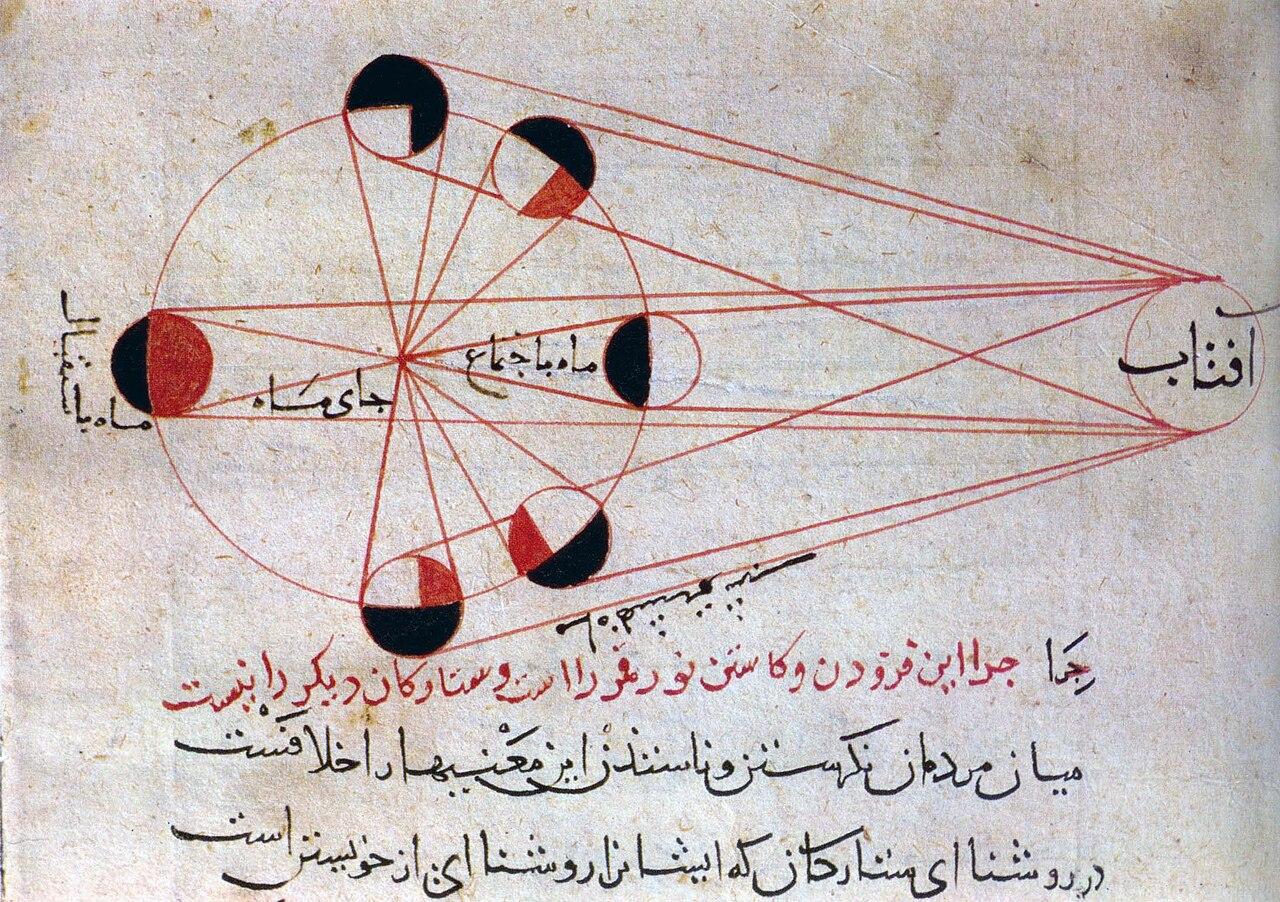
<p>Before Newton: How the Islamic Golden Age Shaped the Physics We Know</p><p>Remarkable discoveries were made during the Islamic Golden Age, which laid the foundation for the study of physics as we know it.</p><p>by Matt Whittaker</p><p><a href="https://www.thecollector.com/how-did-physics-begin-islamic-golden-age/" rel="nofollow" class="ellipsis" title="www.thecollector.com/how-did-physics-begin-islamic-golden-age/"><span class="invisible">https://</span><span class="ellipsis">www.thecollector.com/how-did-p</span><span class="invisible">hysics-begin-islamic-golden-age/</span></a></p><p>Books in Physics at PG:<br><a href="https://www.gutenberg.org/ebooks/bookshelf/103" rel="nofollow" class="ellipsis" title="www.gutenberg.org/ebooks/bookshelf/103"><span class="invisible">https://</span><span class="ellipsis">www.gutenberg.org/ebooks/books</span><span class="invisible">helf/103</span></a></p><p><a href="/tags/books/" rel="tag">#books</a> <a href="/tags/science/" rel="tag">#science</a> <a href="/tags/physics/" rel="tag">#physics</a> <a href="/tags/history/" rel="tag">#history</a></p>
Edited 76d ago
<p>I've been reading up on the Lottery Ticket Hypothesis, which is super interesting.</p><p>Basically, the observation is that these days we build vast neural networks with billions of parameters, but most of the parameters aren't needed. That is, after training, you can just throw away 95% of the network (pruning), and it will still work fine.</p><p>The LTH paper is asking: could we start with a network just 5% of the size, and get comparable results? If so, that would be a huge performance win for Deep Learning.</p><p>What's interesting is that you can do this, but only by training the full network (perhaps several times) to see which neurons are needed. They argue that training a neural network isn't so much creating a model, as finding a lucky sub-network (a lottery ticket) from the randomly initialized network, a bit like a sculpter "finding" the bust hidden in a block of marble.</p><p>Initial LTH paper: <a href="http://arxiv.org/abs/1803.03635" rel="nofollow"><span class="invisible">http://</span>arxiv.org/abs/1803.03635</a><br>Follow-up with major clarifications: <a href="http://arxiv.org/abs/1905.01067" rel="nofollow"><span class="invisible">http://</span>arxiv.org/abs/1905.01067</a></p><p><a href="/tags/science/" rel="tag">#science</a> <a href="/tags/ai/" rel="tag">#ai</a> <a href="/tags/machinelearning/" rel="tag">#machinelearning</a></p>
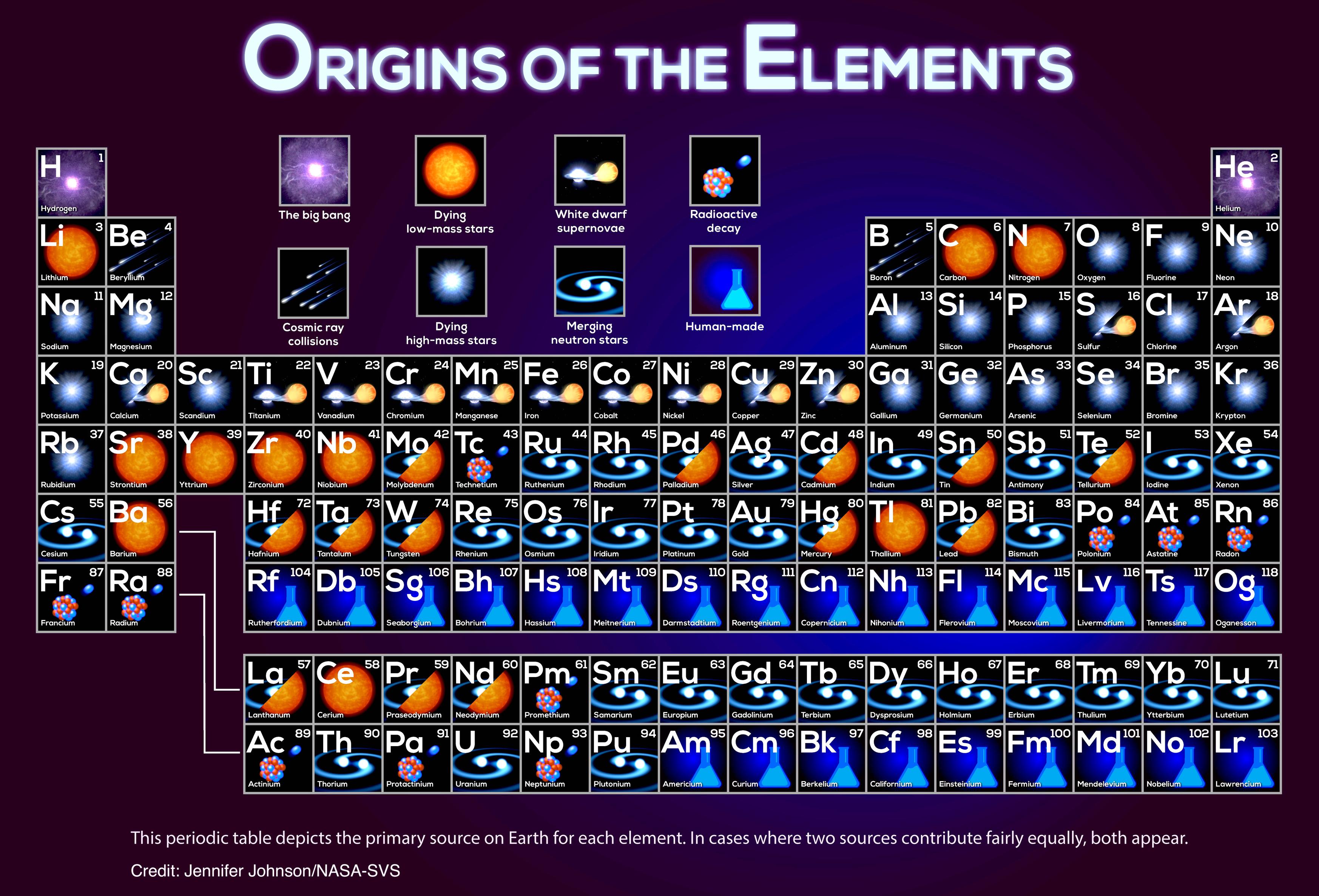
<p>You've probably heard that "we are stardust," but this graphic breaks it down further & tells you what kind of stars your dust came from--and which elements didn't come from stars at all. </p><p><a href="https://svs.gsfc.nasa.gov/13873/" rel="nofollow"><span class="invisible">https://</span>svs.gsfc.nasa.gov/13873/</a> <a href="/tags/science/" rel="tag">#science</a> <a href="/tags/nature/" rel="tag">#nature</a> <a href="/tags/space/" rel="tag">#space</a></p>