What are dwarf planets — and how many are there?
https://www.livescience.com/space/astronomy/what-are-dwarf-planets-and-how-many-are-there
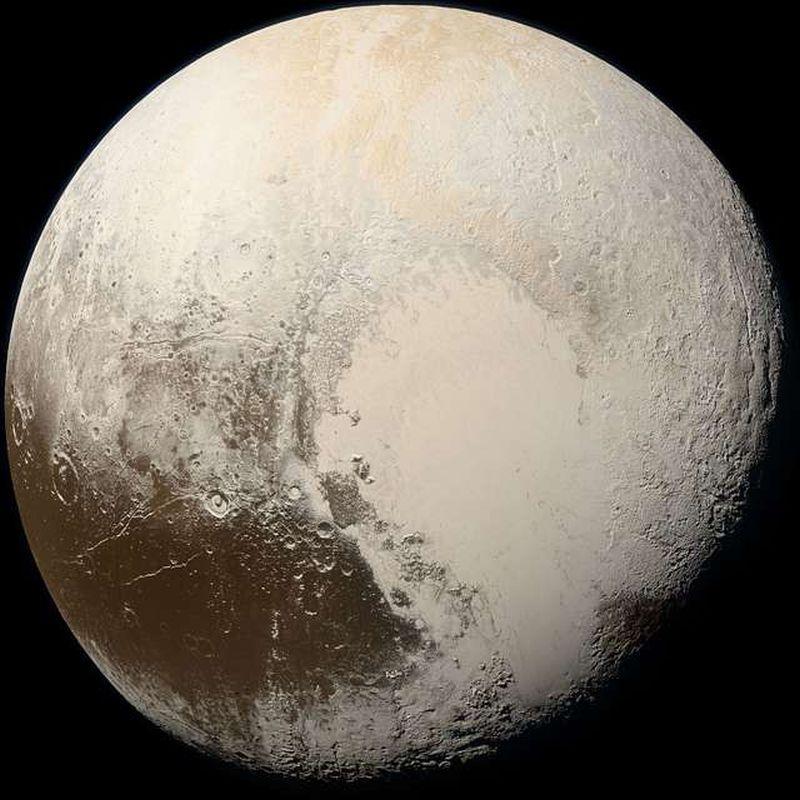
Pluto
What are dwarf planets — and how many are there?
https://www.livescience.com/space/astronomy/what-are-dwarf-planets-and-how-many-are-there
Pluto
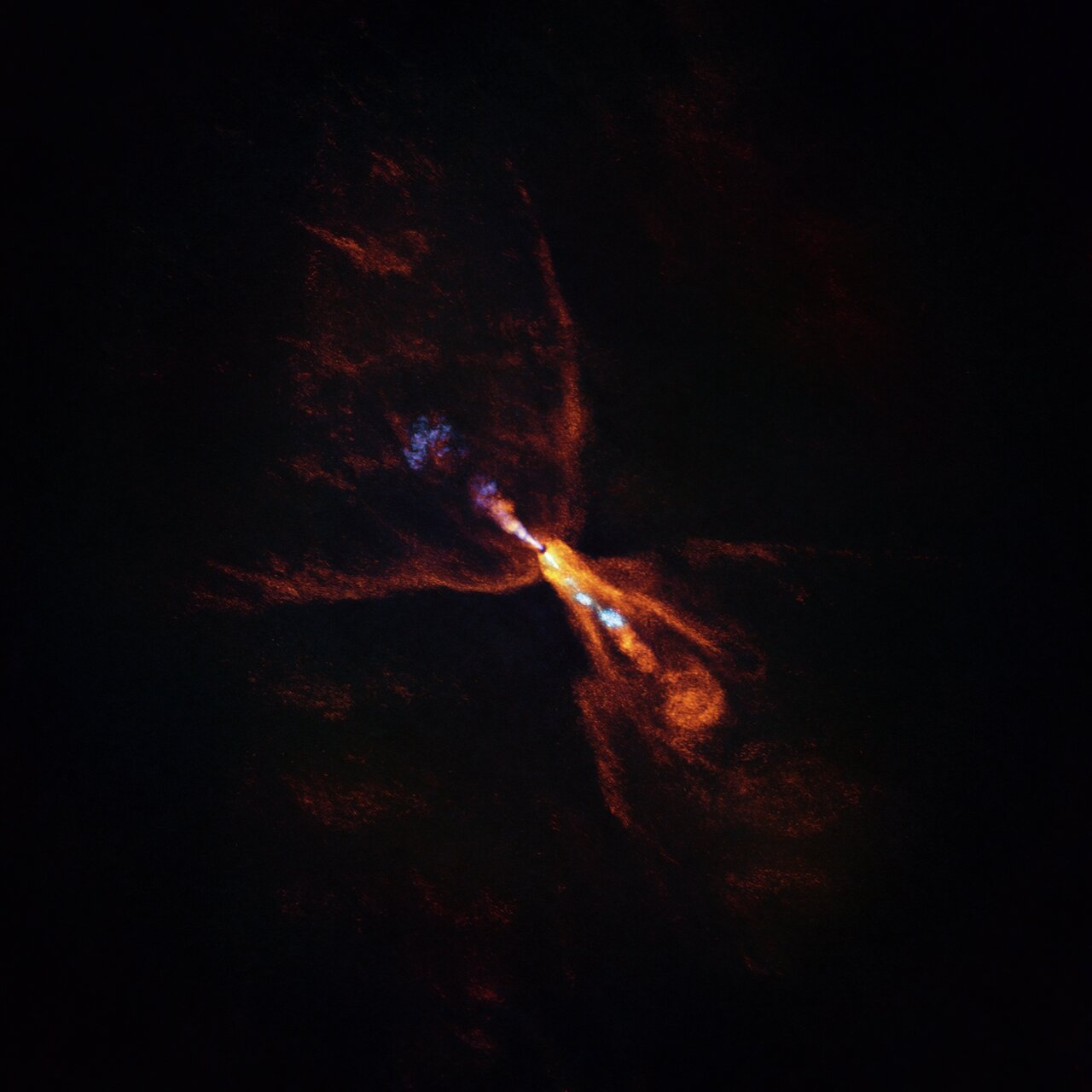
🚨 Astronomers have witnessed the dawn of a new solar system!
Using ALMA and JWST they observed the first specks of planet-forming material — hot minerals beginning to solidify around HOPS-315, a baby star 1300 light-years away.
This marks the first time a planetary system has been identified at such an early stage in its formation – a window to the past of our own Solar System.
https://www.eso.org/public/images/eso2512a/
#astrodon #astronomy #astrophysics #space #science
📷 ALMA(ESO/NAOJ/NRAO)/M. McClure et al
New instance, new #introduction !
Hi #fediverse ! We’re the European Southern Observatory, and we design, build and operate ground-based telescopes.
One of them is our Extremely Large Telescope, currently under construction in #Chile. It will have a 39 m mirror, and its rotating enclosure will weigh 6100 tonnes, or about 700 mastodons!
We’re looking forward to chatting with all of you about #astronomy
And many thanks to @sebinthestars for running our former instance!
📷 ESO/G. Vecchia
#Travel #Photography #Cruise #SciFi #BadMovies #RugbyLeague #NFL #Patriots #MST3K #Architecture #Brutalism #ArtDeco #Science #Astronomy #Archaeology #History #Portsmouth
Ignore this post. I need to pin my bio hashtags in a post because the bio links frustratingly break out of the advanced web view in this Mastodon build and they're my shortcut way of browsing posts. Hoping they fix this in a later build.
Seo mi, ma tha sibh gam aithnicheadh, neo fiù’s mura h-eil,
a’ coimhead oirrbh bho oir an rìan-grèine,
mar gum b’e aonaran a bh’unnam
a’ fuireach a-muigh ràthad na mòintich
le prosbaig aig gach uinneag…
—Pàdraig MacAoidh, “Pluto”
Today, 18 February, is Pluto Day!
https://www.scottishpoetrylibrary.org.uk/poem/pluto/
#Scottish #literature #poem #poetry #Gaidhlig #Gaelic #Pluto #PlutoDay #planet #minorplanet #solarsystem #astronomy
Early visions of Mars: Meet the 19th-century astronomer who used science fiction to imagine the red planet
Parisian astronomer Camille Flammarion brought used science fiction to bring Mars to life
By Matthew Shindell
Camille Flammarion at PG:
https://www.gutenberg.org/ebooks/author/8763
Christiaan Huygens and the Scientific Secrets of Saturn
Seventeenth-century science was so competitive that Christiaan Huygens used a cipher to conceal his Saturn observations when sharing them with interlocutors.
By: Danny Robb
https://daily.jstor.org/christiaan-huygens-and-the-scientific-secrets-of-saturn/
Christiaan Huygens at PG:
https://www.gutenberg.org/ebooks/author/5648
Rare 'planetary parade' will return to the evening sky this week — but you'll have to look at exactly the right time
By Jamie Carter
Six planets will shine together in the evening sky on Feb. 28. Here's how to get the best view before they disappear.
Maria Mitchell: America’s First Woman Astronomer and Mentor to Women in Science
As Vassar College’s first astronomy professor, Maria Mitchell advanced opportunities for women in science and mentored a generation of students using one of the country’s finest observatories.
By Deb Warner
Maria Mitchell at PG:
https://www.gutenberg.org/ebooks/author/3377
A Scholar Recognized the Inscriptions in the Margins of This Manuscript. The Scribbles Turned Out to Be Galileo’s Handwritten Notes
Found in a 16th-century copy of an ancient astronomy treatise, the annotations suggest that the trailblazing scientist studied Earth-centric models before lending his support to heliocentrism
by Christian Thorsberg
Galileo at PG:
https://www.gutenberg.org/ebooks/subject/6741
Hubble telescope still delivering the goods. So cool! 🔭 #astronomy
https://www.esa.int/Science_Exploration/Space_Science/The_Crab_Nebula_largest_Hubble_mosaic_ever_made
What Would Happen if the Sun Stopped? Part 2: Kelvin and Helmholtz at the Ready
By Paul Sutter
About Kelvin-Helmholtz mechanism:
https://en.wikipedia.org/wiki/Kelvin%E2%80%93Helmholtz_mechanism
Books by Baron Kevin and Helmholtz at PG
https://www.gutenberg.org/ebooks/author/48139
https://www.gutenberg.org/ebooks/author/59039
Why ‘little red dots’ pose a big mystery about the Universe
by Jenny Greene
Original paper here:
https://arxiv.org/abs/2306.07320
Astronomy at PG:
https://www.gutenberg.org/ebooks/bookshelf/101
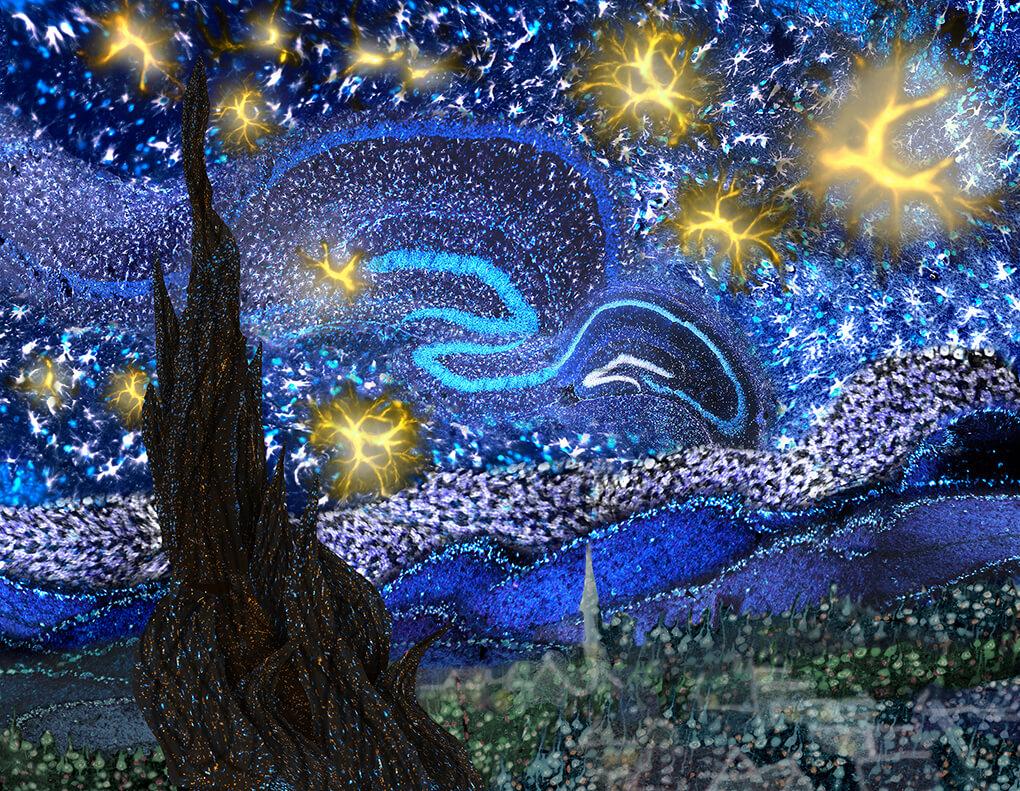
This is a piece of art done by Sean Keating in 2022, then a PhD student at the University of Queensland. Neurons and stars, my two favorite things!
This week's #NewBooks at the library: A toss-up of three different titles
- Having reviewed a biography about Edgar Allan Poe, I determined that Thomas Olive Mabbott's version, originally published by Belknap Press, is probably one of the more authoritative collections of Poe's work. I managed to find a 1979 hardback original of the first volume via eBay.
- I found a very affordable second-hand version of Cambridge University Press's Meteoroids: Sources of Meteors on Earth and Beyond in their Cambridge Planetary Science series.
- One more book from my employer's January clearance sale is Muhammad H. Zaman's Biography of Resistance: The Epic Battle Between People and Pathogens, published by Harper Wave.
#Books #Bookstodon #Scicomm #Gothic #Poetry #Astronomy #Astrodon #Microbiology #Disease @bookstodon
The Moon isn’t just a natural object—it’s a cultural one.
Only about 2% of named lunar craters honor women, revealing how even our maps of space reflect historical bias.
As Artemis missions mark a new era of exploration, this is a chance to rethink representation beyond Earth.
🔗 https://www.seti.org/news/women-with-impact-reclaiming-the-moons-missing-half/
God said: Let the dark be dark.
Let the stars shine properly.
And let darkness with no stars
heal the damage caused by light…
—Robin Fulton Macpherson, “In the Dark”
Today, 13 April, is the start of International Dark Sky Week
#Scottish #literature #poem #poetry #DarkSkies #DarkSky #astronomy #InternationalDarkSkyWeek
We’re going live in 1 hour.
Join Lauren Sgro and Franck Marchis for a live demonstration of SkyMapper, a newly launched global network connecting telescopes, observatories, and citizen scientists.
This session will explore how decentralized, real-time access to astronomical data is opening new pathways for research, education, and public engagement.
🔴 5pm PDT
WATCH LIVE: https://youtube.com/live/czTy4wDGpFg