
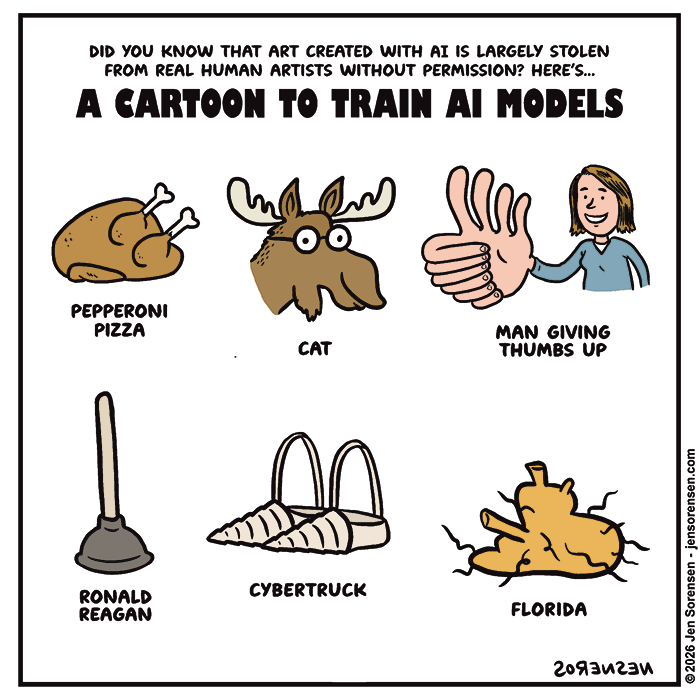
We are in the early days of the AI era, the birth pangs of a new technology that is so powerful and effective that it has divided the world and has left governments rushing to update their governing laws and regulations. However, there is one area that is less talked about in the AI discourse, Copyright.
Copyright, Trademark, Trade Secret, Patent, or collectively, Intellectual Property Rights protection, is important. It is everywhere around us. Many works or products have IP protection, especially when it comes to Copyright, protection is automatic the moment a work is saved, recorded, or stored in any medium.
\[!tip] Disclaimer
I am not a lawyer. The information in this article is for general informational purposes only and does not constitute legal advice. No attorney-client relationship is formed. Please consult a licensed professional for your specific situation.
What is Copyright
To understand how copyright applies to AI and Large Language Models (LLMs), we must understand that it is a system of law that grants legal ownership of an original work to an author.
Authorship
An author or creator is defined as a human being who holds the rights to the two parts of a Copyright, namely, Moral Rights and Economic Rights.
While countries like the USA allow entities to be treated as legal "authors" under the Work Made for Hire doctrine, US law still requires a human creator (like an employee) to create the work. Most countries handle it by only allowing the transfer of the economic rights to the entity and an "author" is strictly a human.
A good example is the Philippines. Under Section 178 of the Intellectual Property Code of the Philippines, if an employee creates a work as part of their regular duties, the economic rights automatically belong to the employer. For commissioned works, Philippine law states that the client owns the finished work or product but the copyright itself remains with the human creator unless explicitly transferred in writing.
The Berne Convention established the Moral Rights of an author, and in countries with civil law traditions, these rights are strictly inherent to and inseparable from a human creator. They cannot be transferred to an entity or be granted to a machine, clearly establishing that authorship in a copyright sense can only belong to a human creator.
Ideas
Copyright laws, as agreed upon under the TRIPS Agreement and WIPO Copyright Treaty, clearly define that ideas are not eligible for copyright protection. This is very important to remember.
What this means for AI works
If copyright laws and conventions clearly state that:
An author or creator is strictly human; and
Ideas are not eligible for copyright protection.
An AI output does not qualify for copyright protection because:
An AI is not a human; and
A prompt is only an idea.
The most common confusion is with AI prompts. Some argue that an AI prompt involves human creativity and so the AI output was touched by human creativity, making it eligible for copyright protection. But as it currently stands in most signatories to various copyright conventions, a prompt is only an idea.
A prompt is only an idea
Think of AI prompts as writing prompts that are common these days. The writing prompts are only ideas to give writers a starting point. The work these writers penned, or typed, are the expressions of those writing prompt ideas. Similarly, an AI prompt is an idea that is fed into an AI tool. The AI tool uses it to create an expression of that idea.
Both prompts are the same: an idea. But the ones who expressed those ideas from a prompt are different: one is a human and the other is an AI. The human work is eligible for copyright protection, but the AI work is not.
The human touch
Let's be honest, not all prompts are the same and not all AI users simply copy-paste an AI output. In fact, not everyone who uses AI uses it in the same way. To make this easier to understand, we will borrow the categorization made by IPOPHIL (Intellectual Property Office of the Philippines) based on this draft: AI-Assisted Work, AI-Enhanced Work, Hybrid Work, and AI-Generated Output.
AI-Assisted Work
For an AI-Assisted Work, AI may be used as a tool during the creative process, but the human author must contribute original expression to the resulting work. For example, a writer may ask AI to suggest alternative wording or help organize a manuscript, then select the suggestions, rewrite portions, and arrange the final text. In this case, the copyrightable part would be the original expression contributed by the writer.
AI-Assisted Work examples
A programmer asks an AI to create the base for their next project and builds everything else by themselves.
A graphic designer asks an AI to brainstorm color combinations but draws and outlines everything manually.
AI-Enhanced Work
An AI-Enhanced Work starts with a work created by a human and is later modified or enhanced using AI. A photographer, for example, may use AI to remove unwanted objects, restore damaged portions, or enhance a photograph they took. The copyright protection may cover the original photograph and any human-created additions or modifications that contain original expression.
AI-Enhanced Work examples
An audio engineer finds an old recording and uses an AI tool to clean the audio track and enhance it.
A human artist uses an AI to add realistic shadow elements to their original human-made work.
Hybrid Work
A Hybrid Work combines human-authored and AI-generated elements. For example, a songwriter may write the lyrics while using AI to generate the melody. If the human contribution meets the requirements for copyright protection, the resulting work may be registered as a musical composition. However, registration would not give copyright protection to AI-generated elements that do not qualify for protection.
Hybrid Work examples
An animation or live-action production uses an AI tool for complex scenes as well as scenarios the screenwriter and director agree are better than the ideas they have.
A novelist, for whatever reason, can no longer finish a project on time and the deadline is fast approaching; the novelist feeds their current draft and asks the AI to finish it.
AI-Generated Output
By contrast, an AI-Generated Output without sufficient human creative contribution would not qualify for copyright registration to the extent that it lacks original human expression. For example, if a person gives AI a general prompt and submits the resulting image without making further creative contributions to its expressive elements, simply registering or recording the image would not give the person copyright protection over the AI-generated output.
de minimis
This is not exactly a category, and defining it as such defeats what a de minimis is about. Basically, these are AI uses where it is small and often negligible. For example, a writer asks an AI to check for typos and grammatical errors. Or, there was a trivial bug in a program—which usually is not a priority—and uses an AI to fix it quickly. These are so small and negligible that they legally do not warrant identification and disclosure, and the entire work can be 100% human-copyrighted.
It is global
While the IPOPHIL categories are unique, and the first to be codified in this way, the underlying test of identifying human creativity remains the same everywhere. The differences begin whenever there are old existing laws, like in New Zealand and the UK, or when courts are involved, like in China. Another source of difference is cultural, like in Japan, they give more leeway to AI use and ownership of the output as long as it passes their requirements for human creativity.
Think of it as a spectrum.
On the left are strict human-centric countries like the US and the Philippines. These jurisdictions draw a hard line between human and AI expressions, and only human expressions are copyrightable, which includes the modified parts of an AI output while the rest are in the public domain.
In the middle are flexible countries like Japan and the EU bloc. If an author uses AI as a tool to express their human creativity, the output can be copyrighted to them, however, the automated elements are not protected.
On the right are countries like the UK, New Zealand, and South Africa. These countries have old laws that allow a machine-generated output to be copyrighted to the human who set it up. It is important to note that both New Zealand and the UK are actively reviewing these laws to align with the global sentiment that copyright requires human creativity and that authors must strictly be human beings.
What's in it for you
Everything! Peace of mind, enforcement, and copyright protection. It gives you a legal standing to pursue any individual or entity that violates your moral rights and economic rights. Without copyright protection, you cannot legally demand your moral rights (like attribution) and enforce your economic rights (like commercial use).
If you are a creator who uses AI heavily, this should prompt (pun intended) you to actively participate in your jurisdiction's discourse about copyright and AI. For example, you might want to push for making prompts copyrightable because until that changes, prompts will remain an idea only.
Finally, this also serves as a reminder that existing laws and conventions always trump personal interpretations and demands. If using an AI for typo and grammar detection is globally treated as de minimis, and the law does not require disclosing or identifying such uses, then public harassment and shaming creators is legally dangerous.
This discourse goes far beyond the pro-AI vs. anti-AI debate. This is simply the world we live in today, what the current copyright laws and conventions we have state. More and more countries are either done or nearing their public consultations about copyright and AI. Once these are codified in your country, they will become the governing guidelines for all creative works where an AI tool was used in some degree or entirely.
\[!tip] Disclaimer
I am not a lawyer. The information in this article is for general informational purposes only and does not constitute legal advice. No attorney-client relationship is formed. Please consult a licensed professional for your specific situation.
Cover image: 〈Ai Copyright Infringement〉 by mohamed mahmoud hassan is marked CC0 1.0 Universal.
〈Are AI Outputs Covered by Copyright Laws?〉 © 2026 Yohan Yukiya Sese Cuneta (ISNI | ORCID iD).
License: Creative Commons Attribution-ShareAlike 4.0 International (CC-BY-SA-4.0), except where noted.
technology
Oh look, Tech Bros show how profoundly ignorant they are, yet again. https://lists.gnu.org/archive/html/emacs-devel/2026-11/msg00128.html #Tech #Technology #OpenSource #FOSS

My new video is up!
It's a tech-related gift guide to help you all find cool things for your loved ones this Christmas season. (13 total items on the list.)
Some are fun. Some are functional. Some are downright silly. Hopefully there's something here for everyone.
If you like the video, please give it a like as that helps us tiny creators out tremendously. Thank you!

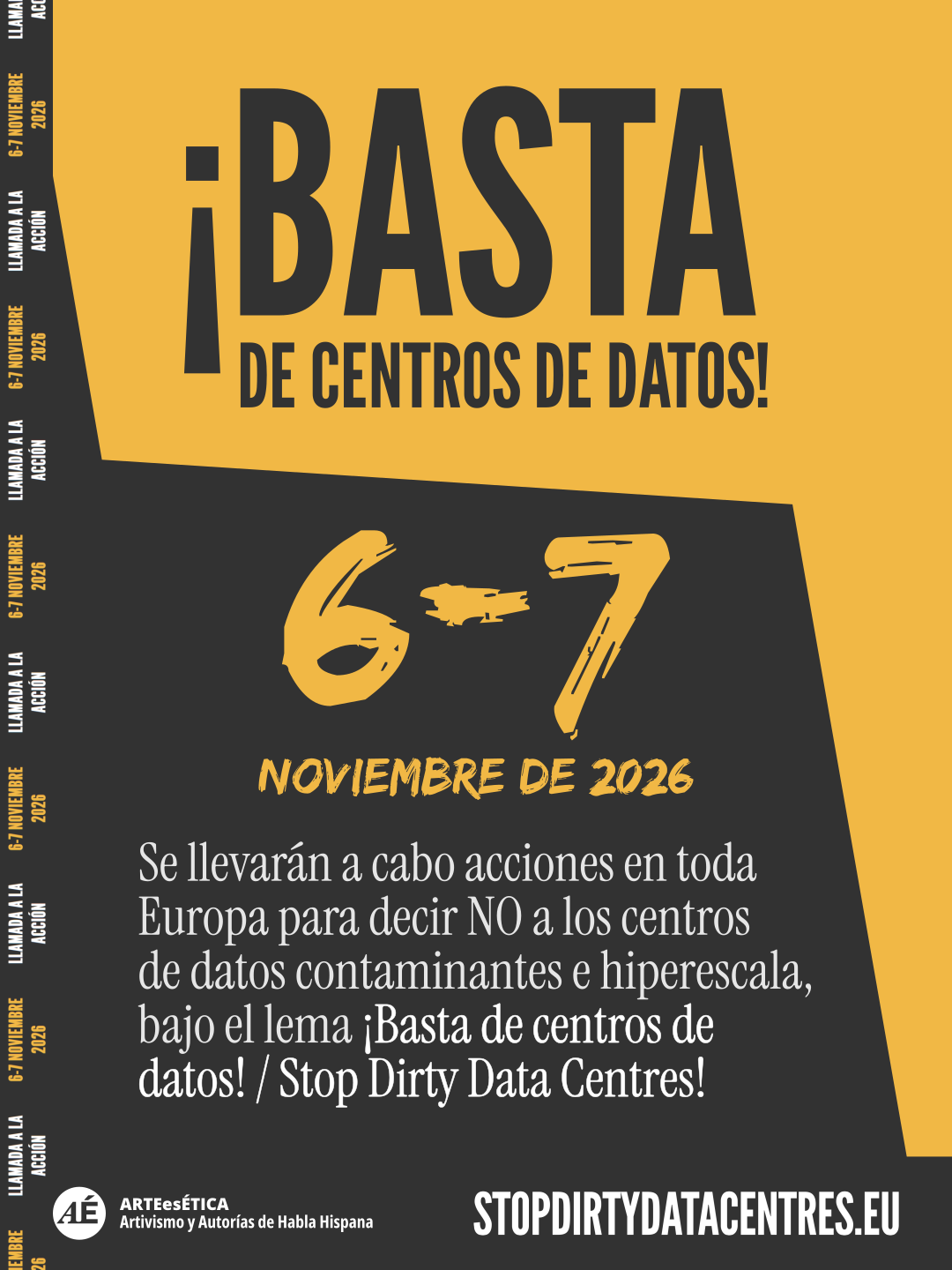
¡BASTA DE CENTROS DE DATOS! Arte es Ética se suma a la campaña europea STOP DIRTY DATA CENTRES! ✊🔥 organizada por Global Action Plan y Green Web Foundation para decir NO a la construcción masiva y a la expansión descontrolada de centros de datos a hiperescala, destinados al entrenamiento de la IA y de la IA generativa.
MÁS INFO: https://arteesetica.org/bastadecentrosdedatos/
Web Oficial: https://stopdirtydatacentres.eu/es/
#AI #genAI #datacenter #data #tech #technology #environment #strike #europe
If someone tries to tell you there are good guys in tech, https://drewdevault.com/weird-guys/#justinmk #Tech #Technology #OpenSource

NEW EPISODE: Can Europe save the world from the AI apocalypse?
Can European AI like Mistral really compete with US and Chinese giants? Can the EU's AI Act protect our jobs and keep runaway models in check? And what does "winning" the AI race even mean?
We put these questions to Polish AI researcher Aleksandra Przegalińska.
https://www.europeanspodcast.com/all-episodes/can-europe-save-the-world-from-the-ai-apocalypse

VWestlife makes fun and clear videos about retro technology and other topics, you can follow his video account at:
(Don't worry if the account looks blank to you, that just means no one from your server follows it yet. Follow the account and its videos will start gradually showing up on your server too.)
You can also follow VWestlife's non-video account at @vwestlife
#FeaturedPeerTube #RetroTech #RetroTechnology #Tech #Technology #PeerTube

"Nuclear War: A Scenario" by Annie Jacobsen. My rating: 5 out of 5 stars. Published in 2024.
Book description: Annie Jacobsen gives us a vivid picture of what could happen if our nuclear guardians fail. There is only one scenario other than an asteroid strike that could end the world as we know it in a matter of nuclear war. And one of the triggers for that war would be a nuclear missile inbound toward the United States. Every generation, a journalist has looked deep into the heart of the nuclear military the technologies, the safeguards, the plans, and the risks. These investigations are vital to how we understand the world we really live in—where one nuclear missile will beget one in return, and where the choreography of the world’s end requires massive decisions made on seconds’ notice with information that is only as good as the intelligence we have.
This is a most disturbing book for our times, but I'm glad I read it. It is a combination of scenario and known fact.
#nonfiction #history #NuclearWar #technology #politics #secrecy #books #reading @bookstodon

Hello everyone! I am redoing my introduction post. It’s been forever since I’ve updated mine and it’s gotten quite old. I am 26 years of age, I will turn 27 on October 19 this year. Some of my interests include, reading, listening to music, technology, and watching TV shows. I also enjoy getting to know new people, and saying hello to others around. While I may not post often, you’ll see me lurking around, and I will sometimes reply to posts or topics that interest me. When it comes to reading, I like to read a lot of science fiction novels. Things like the Martian, Project Hail Mary, and I am always looking for book recommendations of that type. As far as music goes, I listen to a little bit of everything depending on my mood. If I am in the mood to party, then I’ll probably listen to EDM. if I want to relax, I will listen to classical music and if I want comfort, I will listen to gospel music. For TV shows, I like to watch medical dramas like Chicago fire, 911, and that’s sort of thing. I also enjoy watching StarTrek Deep Space 9, StarTrek the next generation and StarTrek Voyager. My technology interests include, artificial intelligence, reading up on the latest technology, and so much more. This is who I am and if you would like to get to know me, feel free to follow me and message me anytime or just write me a post.
Go read this! This. What more needs to be said? I can’t express how much I hate every single mentioned twat in this explainer, not the author. I don’t want to give them the benefit of the doubt, I don’t want to hear their thoughts and opinions, I don’t even want to sit next to them on a fucking park bench. I hate, utterly hate, the entirety of the tech industry. I never hate minority hackers as an example. If someone even imagines typing to me that I am in an echo chamber, you’re a detective dipshit. I’m not explaining the abundance of ways I have to see differing opinions.
Casey Newton And John Gruber Slink Back To Elon Musk’s Right-Wing Propaganda Machine https://karlbode.com/casey-newton-and-john-gruber-slink-back-to-elon-musks-right-wing-propaganda-machine/ #Tech #Technology #SocialMedia

For a long time we have made our selves gradually more and more dependent on Big Tech. This applies when it comes to operating system, to browsers, to various services, to storage and now when it comes to AI.
More and more are realizing this was and is wrong.
You can take the first steps to be independent as a person or company. Obviously, given that you are here, you have already taken some steps. Here are some suggestions:
1. Switch browser... to Vivaldi. :)
2. Switch desktop OS. Personally I have switched to Linux. Currently running Kubuntu, Ubuntu and Zorin on different computers.
3. Switch mail service. Proton and Fastmail are good services, but there are others. Choose one that allows use of a mail client.
4. Switch calendar service. Most mail services also offer a calendar service.
5. Switch office package. Personally I use LibreOffice.
6. Switch Web conferencing software. Personally I use Whereby.
7. Switch search. Startpage, Ecosia, Qwant and DDG are great alternatives.
There are a lot of other great choices. The point is to start taking those steps away from Big Tech and Silicon Valley.
#Windows #Linux #Apple #MacOS #BigTech #Politics #Technology #Vivaldi

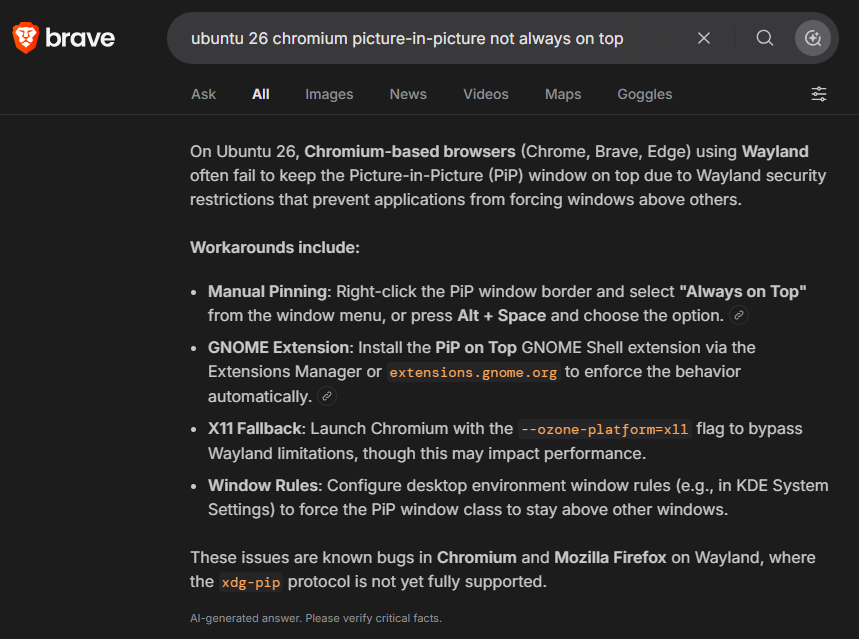
Linux users are not allowed to make fun of Microsoft for breaking things and making the user experience generally worse as long as Wayland exists
#Linux #Ubuntu #Wayland #Tech #Technology

Oopsie daisy! An AI agent that was granted access to the server of a Swedish TV production company has deleted the entire edited version of the upcoming series of reality show "The Challenge." It's now been pushed to 2027, weeks before it was due to premiere. Here's @Gizmodo with the details.

Microsoft drops huge AI datacentre project in Essex over power supply concerns https://www.theguardian.com/uk-news/2026/oct/18/microsoft-drops-huge-ai-datacentre-project-in-essex-over-power-supply-concerns #DatacentresUk #AiArtificialIntelligence #Microsoft #Computing #Technology #UkNews #Business #Essex #Infrastructure
Good morning, all.
My new video is up! In this one I talk about the allegations that ChatGPT and Anthropic stole prominent researchers' work via the users' inputs into their AI models as well as options you have to protect your data when using LLM's.
If you like the video, please tap the like button. This helps us smaller Youtubers out tremendously. Thank you!
#Technology #Tech #AI #LLM #Anthropic #ChatGPT #Fraud #Youtube #Video