
And that's a wrap! Our last #SETILive for the year has ended. We'll be back in 2025 with all new shows, guests, and science. Thank you for a wonderful 2024!
setilive
In a recent #SETILive conversation, SETI Institute Communications Specialist Beth Johnson and SETI Institute Senior Planetary Astronomer Dr. Franck Marchis discussed the missions, milestones, and observations that define space science in 2026. Their discussion placed individual missions within a broader scientific framework focused on planetary systems, cosmic environments, and humanity’s place in the universe.
Learn more: https://www.seti.org/news/what-to-expect-in-space-science-2026/
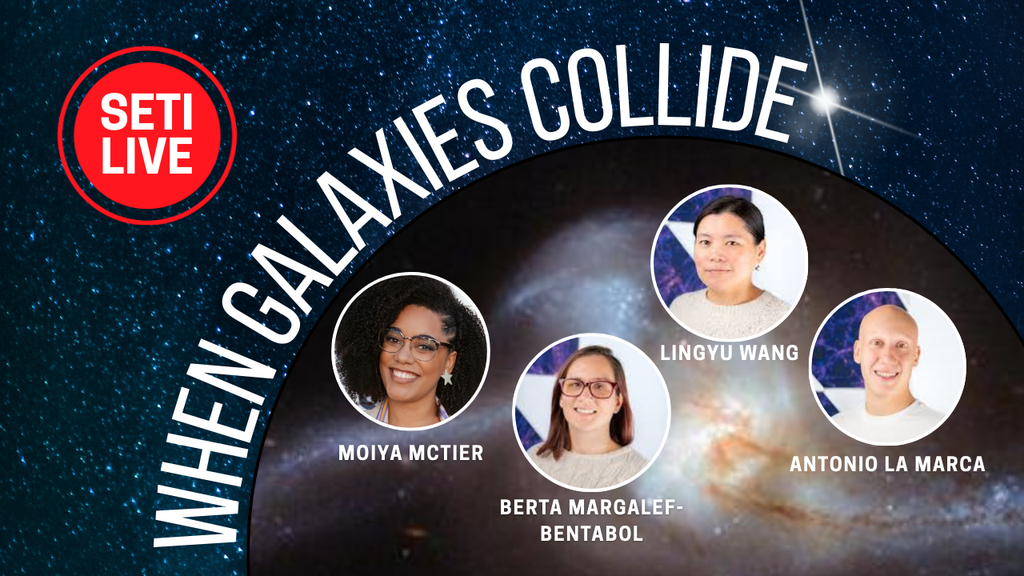
Next #SETILive: When Galaxies Collide
TODAY, 15 January, 11 am PST
Dr. Moiya McTier will explore two new Euclid studies that combine vast sky surveys, machine learning, and multi-wavelength observations to uncover when and why active galactic nuclei (AGN) ignite. The results show that galaxies in the midst of mergers are far more likely to host actively feeding black holes — and that the brightest AGN are almost always found in cosmic collisions.
WATCH LIVE: https://www.youtube.com/watch?v=YMm_KOVN4k0
#ICYMI: The Kaçar Lab, led by Dr. Betül Kaçar at the University of Wisconsin-Madison, is challenging the assumptions about life as we know it, its origins, and its future. Beth chatted with Dr. Kaçar in this week's #SETILive, and wow, we all learned a lot! Watch the full interview: https://youtube.com/live/hLw4olNyBng
Next #SETILive: A Cookbook of Life
TODAY, Thursday, May 15, 2025 12:00 PM PDT
Join Beth Johnson as we explore groundbreaking research from the University of Wisconsin–Madison. Scientists have identified over 270 self-replicating chemical reactions that may have sparked life not just on Earth but potentially anywhere in the universe. Led by astrobiologist Dr. Betül Kaçar, this study reframes our understanding of how life can emerge from simple chemistry.
WATCH LIVE: https://youtube.com/live/hLw4olNyBng

In a new study using #JWST, scientists have discovered a hidden population of tiny asteroids in our solar system. These objects might be a more significant threat than we ever realized.
In a recent #SETILive episode, Senior Planetary Astronomer Dr. Franck Marchis and the study's lead authors, Dr. Artem Y. Burdanov and Dr. Julien de Wit, discussed the role of minor asteroids and what they can reveal about potential threats to Earth.
Learn more: https://www.seti.org/tiny-asteroids-big-threats-how-jwst-uncovering-hidden-worlds-our-solar-system
In a recent #SETILive episode hosted by Beth Johnson, Dr. Ben Tutolo, an associate professor at the University of Calgary and a participating scientist on NASA's Curiosity Rover team, unveiled how an unassuming iron carbonate - siderite - is the key to unlocking #Mars's atmospheric secrets.
Learn more: https://www.seti.org/marss-ancient-carbon-cycle-how-rocks-mars-tell-story-vanishing-climate
Next #SETILive: Could Aliens See Us?
TODAY, Thursday, Jun 12, 2025 2:30 PM PDT / 5:30 PM PDT
Join senior planetary astronomer Dr. Franck Marchis for a fascinating conversation with Dr. Jacob Haqq-Misra, astrobiologist and lead author of a groundbreaking study exploring 10 possible futures for Earth’s technosphere—the global network of our technologies—and what these futures mean for the search for extraterrestrial intelligence (SETI).
WATCH LIVE: https://youtube.com/live/aOs7WU8Gd4c

Next #SETILive: A Vaporizing Planet
TODAY, Jul 17, 2025 | 3:30 PM PDT / 6:30 PM EDT
Join communications specialist Beth Johnson for a live interview with astrophysicist Marc Hon (MIT), lead author of a new study revealing one of the most extreme exoplanets ever discovered — a small, rocky world that's literally disintegrating as it orbits its star.
WATCH LIVE: https://www.youtube.com/live/kcMRyGUYR_g?si=NAl-ASSBYvkBlXOZ

No new #SETILive #podcast this week, so let's go back to April 1 and an interesting exoplanet called HD 20794 d with an eccentric orbit. The temperature differences make it a great place to study a planet's potential habitability! Listen to the whole show: https://sites.libsyn.com/462636/super-earth-laboratory-using-hd-20794-d-to-understand-habitability
Our upcoming #SETILive interviews look at a new #LaserSETI exhibit and observatory location, the stunning artwork created in honor of this year's #DrakeAward recipients, and new science that reveals how #Ceres froze. Subscribe to our YouTube channel for notifications: https://www.youtube.com/SETIInstitute

How do scientists search for extraterrestrial intelligence?
Astronomer Jason Wright joins #SETILive to discuss his new textbook on the science of SETI — from radio signals to technosignatures.
📡 Join us live! TODAY, March 19, at 2:30 pm PDT / 5:30 pm EDT
WATCH HERE: https://youtube.com/live/3n7SUuG-eZo

On this week's #SETILive, we learned about the evidence of a planet-planet collision in a distant star system, including drops in the star's brightness and increases in the infrared glow. Watch the full episode: https://youtube.com/live/eW0dJu8xv1E
We’re going live in 1 hour.
Join Lauren Sgro and Franck Marchis for a live demonstration of SkyMapper, a newly launched global network connecting telescopes, observatories, and citizen scientists.
This session will explore how decentralized, real-time access to astronomical data is opening new pathways for research, education, and public engagement.
🔴 5pm PDT
WATCH LIVE: https://youtube.com/live/czTy4wDGpFg

In a recent #SETILive discussion, astrophysicist Dr. Moiya McTier spoke with astrophysicist Anastasios (Andy) Tzanidakis, a final-year astronomy Ph.D. candidate at the University of Washington. They shared evidence for a system called Gaia GIC1 (also referred to as Gaia20ehk), which may represent an ongoing planetary-scale collision.
Learn more: https://www.seti.org/news/planet-crash-cosmic-collision-caught-in-action/
#ICYMI: This week on #SETILive, Lauren chatted with Adam Schneider about the Backyard Worlds #citizenscience project and its recent paper on the discovery of 3,000 brown dwarfs. Watch the full interview: https://youtube.com/live/_kROzAny2mw
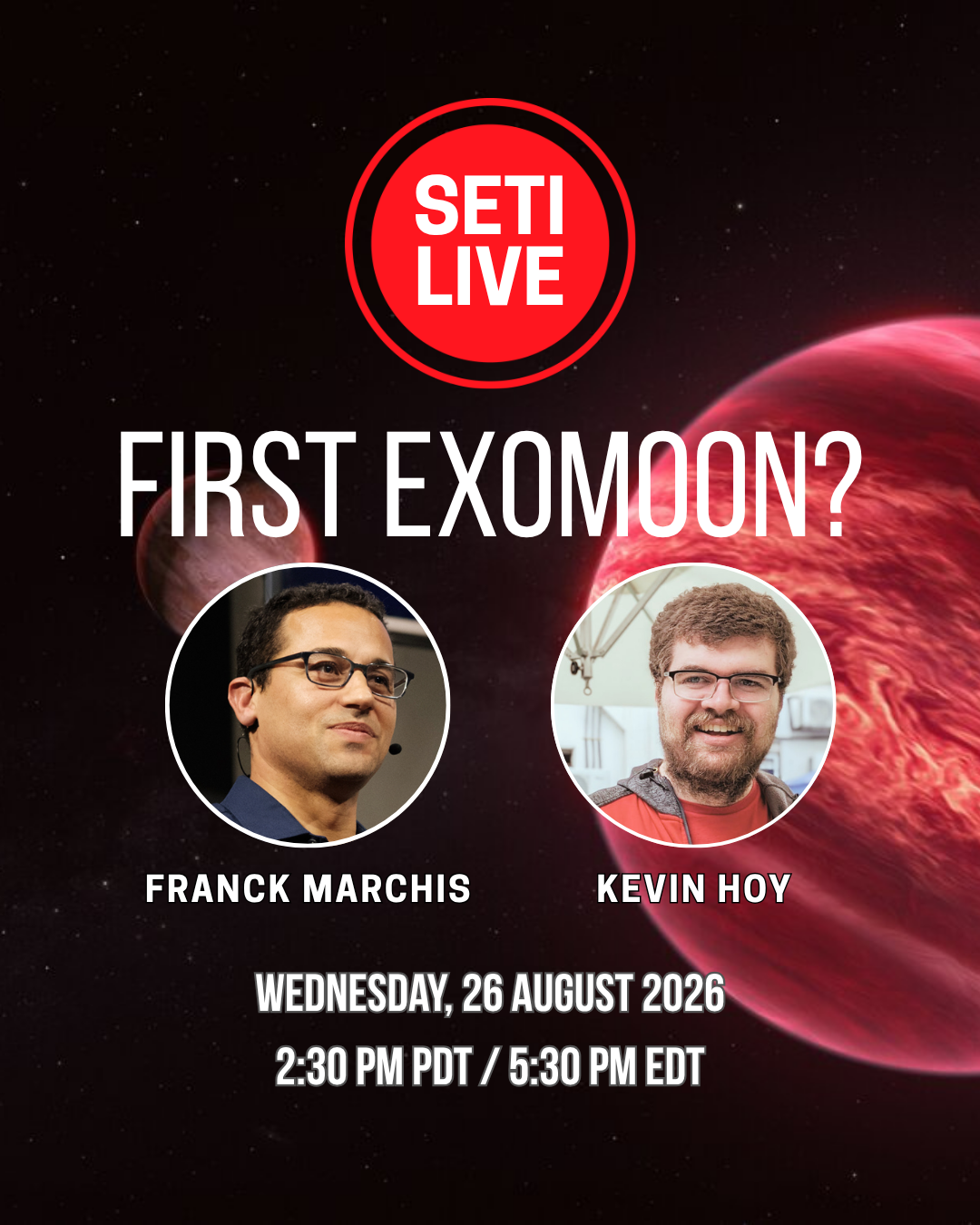
🌕 Is this the first exomoon?
Astronomers have detected evidence of a Jupiter-mass object orbiting a brown dwarf that itself orbits a star.
Moon? Planet? Exosatellite?
Join Dr. Franck Marchis and lead author Kevin Hoy on SETI Live to unpack this wonderfully weird system.
📅 Wednesday, August 26
⏰ 2:30 p.m. PDT
📺 Live on SETI Institute channels
🚀 We're LIVE in 2 hours!
Celebrate 50 years of Mars surface exploration with Dr. Simon Steel and Dr. Pascal Lee as they revisit Viking 1, today's Mars missions, and the future of robotic exploration.
⏰ 2:30 PM PDT
▶️ Join us live: https://youtube.com/live/mQelZROEZeg
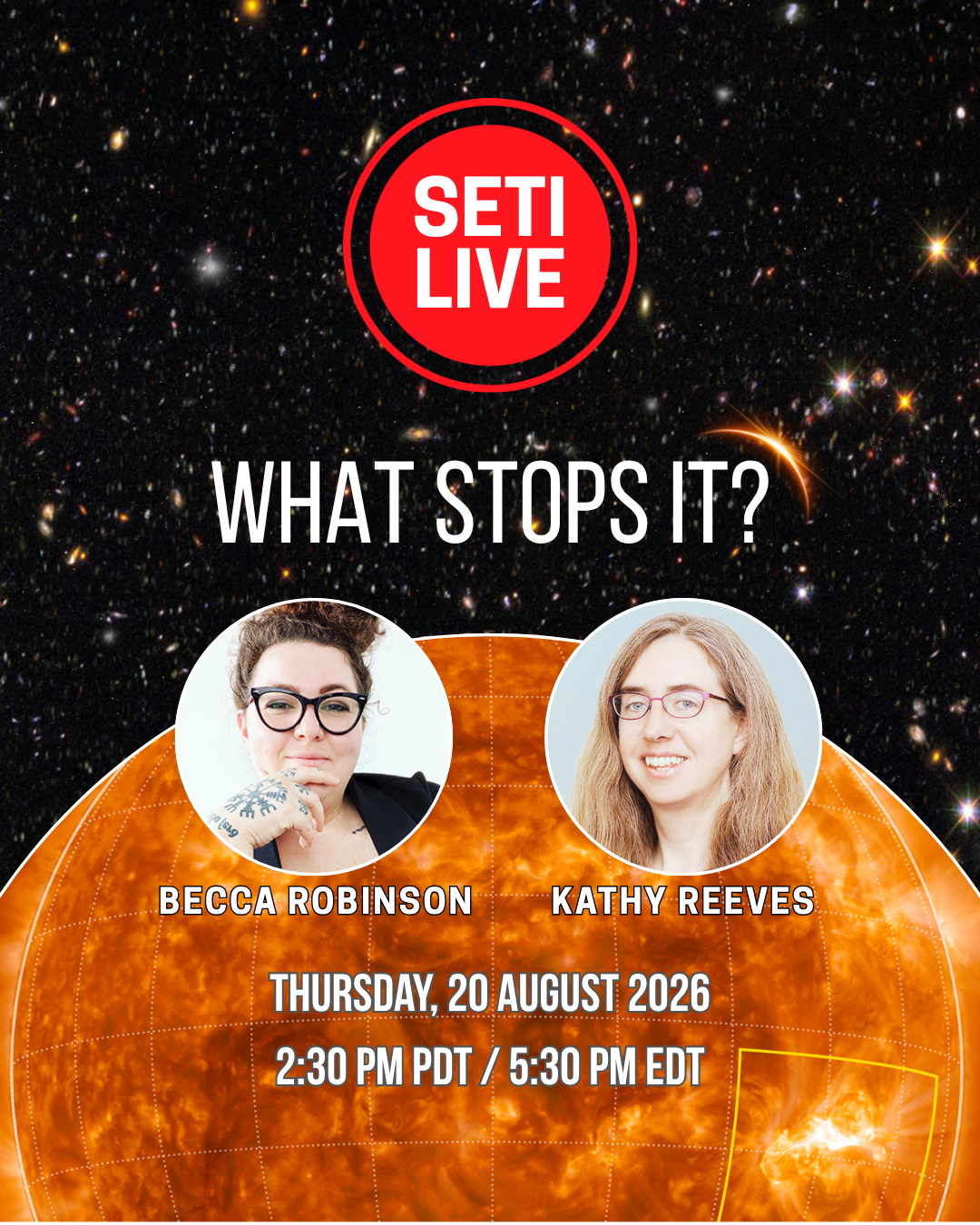
What stops a solar eruption from escaping the Sun? ☀️
On the next #SETILive, Dr. Becca Robinson talks with Dr. Kathy Reeves about new research on a solar eruption that rose—then collapsed—and the magnetic forces that stopped it.
📅 Aug. 20 | 2:30 pm PDT
🔴 https://youtube.com/live/N214VE49Lf0
🌕 Is this the first exomoon?
Astronomers have detected a Jupiter-mass object orbiting a brown dwarf — and it’s challenging what we even mean by “moon.”
TODAY at 2:30 p.m. PDT, Kevin Hoy joins Dr. Franck Marchis on #SETILive.
Bring your questions! 🔭
Did Triton destroy Neptune’s original moons? 🔵💥
New JWST observations suggest Neptune’s small inner moons may be remnants of larger icy worlds shattered billions of years ago — possibly during Triton’s arrival.
TODAY on #SETILive, Dr. Moiya McTier talks with lead author Dr. Ryleigh Davis about Neptune’s strange moons and what they reveal about its ancient past.
🕝 2:30 pm PDT
🔴 Watch live and bring your questions! https://youtube.com/live/gHhjz7Csnjg
🌎 A rocky world in another star’s habitable zone has an atmosphere — a first for astronomy.
What can LHS 1140 b tell us about potentially habitable worlds?
🔴 TODAY at 2:30 pm PDT, Dr. Franck Marchis talks with lead author Dr. Collin Cherubim on #SETILive.

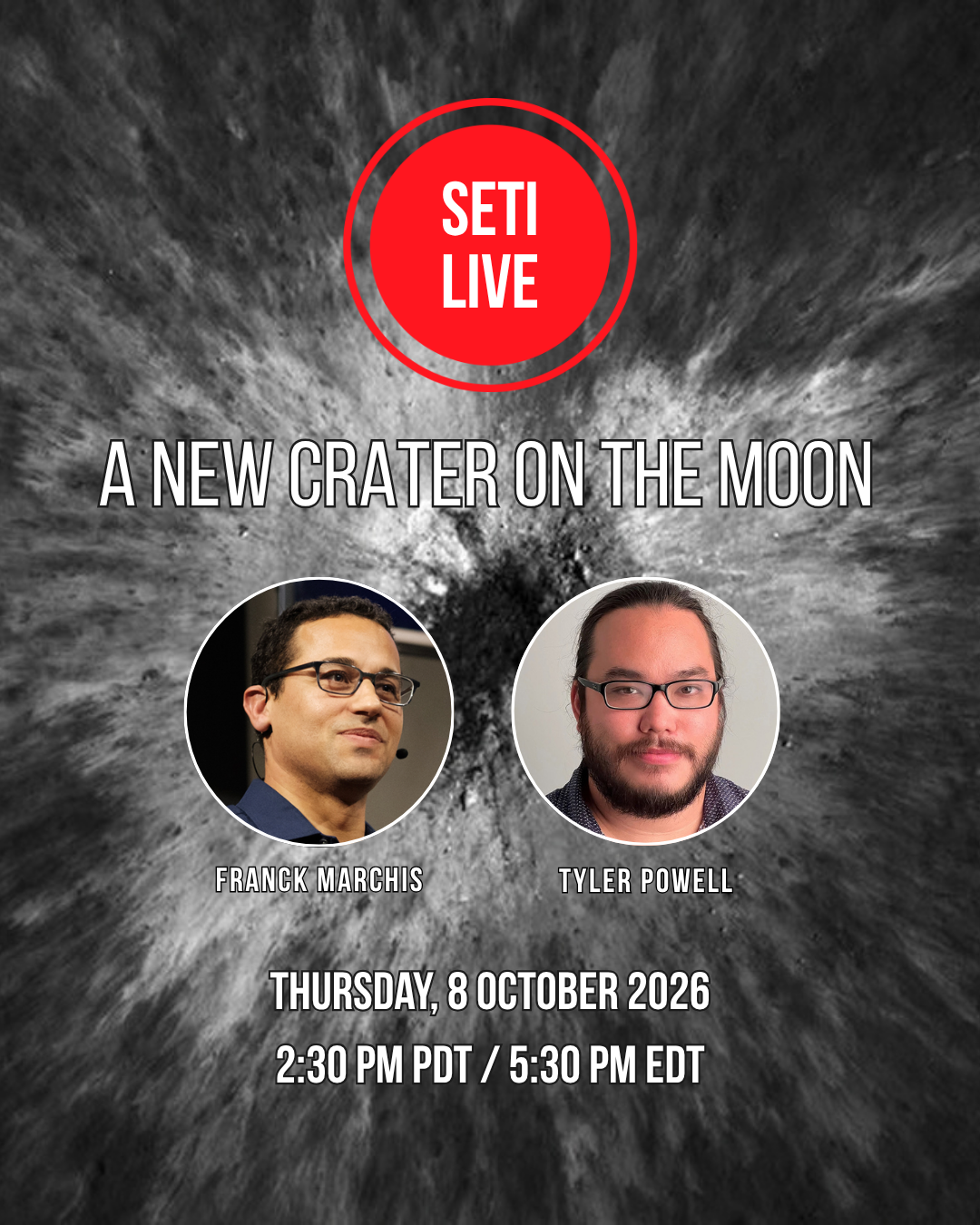
🌕 A new crater on the Moon is revealing some surprising science!
The crater measures just 222 meters across, but the impact changed the lunar surface kilometers away.
Join Dr. Franck Marchis and Dr. Tyler M. Powell TODAY at 2:30 p.m. PDT to explore the discovery on #SETILive!
🚀 Could one spacecraft survey resources across the Solar System?
SETI Institute scientist Pablo Sobron is exploring Interworld Slingshot, a concept for identifying minerals on the Moon, asteroids, and Mars' moons using lasers—without landing!
🎥 Watch Pablo's explainer: https://youtu.be/awrkEafQyjU
Then join Pablo and host Simon Steel for SETI Live tomorrow, November 5, at 2:30 p.m. PST!