AI-generated stories rated better quality than human-written ones, study finds
cross-posted from: beehaw.org/post/27795833
In a study published in the journal Judgment and Decision Making, 1,682 adults were asked to read one of six short stories, three of which were written by humans and three by ChatGPT. Each AI story had a similar theme to one of the human-authored works.
The team told participants whether their story was written by a human or AI, but this information was not always correct. The researchers then asked participants to rate how absorbing and engaging they found the story, and its quality.
Participants who read an AI-generated story rated it as more absorbing and of higher quality than those who read a story written by a human. However, participants gave higher ratings to stories they had been told were written by people.
Dr Deena Skolnick Weisberg, a senior author of the research from Villanova University in Pennsylvania, said: “AI systems can already generate short stories that are seen as being at least as good as – if not better than – human-written stories. We should update our views of AI’s abilities accordingly.”
However, Weisberg, who is herself a creative writer, said that did not mean writing should be left to AI, noting that novels produced by tech were probably going to be different from those written by humans.
“We may need to make room for AI-generated novels, and for AI/human co-written novels, but that doesn’t mean that there’s no longer space for us to appreciate the process of human creativity,” she said.
Page
· lemmy.dbzer0.com
<p>cross-posted from: <a href="https://beehaw.org/post/27795833" rel="nofollow">beehaw.org/post/27795833</a></p><p><p><p>In a study published in the journal Judgment and Decision Making, 1,682 adults were asked to read one of six short stories, three of which were written by humans and three by ChatGPT. Each AI story had a similar theme to one of the human-authored works.</p><p>The team told participants whether their story was written by a human or AI, but this information was not always correct. The researchers then asked participants to rate how absorbing and engaging they found the story, and its quality.</p><p>Participants who read an AI-generated story rated it as more absorbing and of higher quality than those who read a story written by a human. However, participants gave higher ratings to stories they had been told were written by people.</p><p>Dr Deena Skolnick Weisberg, a senior author of the research from Villanova University in Pennsylvania, said: “AI systems can already generate short stories that are seen as being at least as good as – if not better than – human-written stories. We should update our views of AI’s abilities accordingly.”</p><p>However, Weisberg, who is herself a creative writer, said that did not mean writing should be left to AI, noting that novels produced by tech were probably going to be different from those written by humans.</p><p>“We may need to make room for AI-generated novels, and for AI/human co-written novels, but that doesn’t mean that there’s no longer space for us to appreciate the process of human creativity,” she said.</p></p></p><p>AI-generated stories rated better quality than human-written ones, study finds</p><p><a href="https://lemmy.dbzer0.com/post/73458968" rel="nofollow"><span class="invisible">https://</span>lemmy.dbzer0.com/post/73458968</a></p>
books
<p>TL;DR: No it wasn't. Yes you should.</p><p><a href="/tags/reading/" rel="tag">#reading</a> <a href="/tags/books/" rel="tag">#books</a> <a href="/tags/writing/" rel="tag">#writing</a> <a href="/tags/socialmedia/" rel="tag">#socialMedia</a></p>
Edited 101d ago
<p>Please sir, can I have some more, book based comedy 😁</p><p><a href="/tags/funny/" rel="tag">#Funny</a> <a href="/tags/books/" rel="tag">#Books</a> <a href="/tags/fyp/" rel="tag">#fyp</a> <a href="/tags/standup/" rel="tag">#Standup</a> <a href="/tags/notoc/" rel="tag">#NotOC</a></p><p> </p><p>By BK Sharad</p>
Review: Requiem for French Theory--Transatlantic Funeral Dirge in a Marxist Key
[2026-07-22] Greg Godels
](substackcdn.com/…/https%3A%2F%2Fsubstack-post-med…)
During the 1960s and 1970s, it was an oft-repeated quip that the European left was long on theory and short on practice, while the North American left was strong on action, but allergic to theory.
In West Germany, Italy, and France, young leftists would often passionately debate theoretical questions deep into the night, while seldom coming to a common commitment to action the next day.
Their youthful US counterparts–revived after the retreat from High McCarthyism-- counted on spontaneous action and a firm commitment to common, inherited political values rather than the ideas buried in deep theoretical tracts.
But those observations were far from completely true. The often student-driven US New Left developed a thirst for a broader, deeper explanation of the injustices that they were rejecting. Many of those committed to action turned to left classics-- quite often a reconsidered Marx-- and others favored a wave of West European radical-oriented thinkers.
It is the rise and importation to the US of one particularly influential “brand” of European theory to which Aymeric Monville and Gabriel Rockhill’s new book is devoted. In Requiem for French Theory: Transatlantic Funeral Dirge in a Marxist Key (New York, Monthly Review Press, 2026, $22.00, 168 pp.), Monville and Rockhill show that what became known as “French Theory” in the US was both a calculated interruption of the rediscovery and study of Marxism and an intellectual trend hostile to anti-capitalist and socialist currents.
John Bellamy Foster’s excellent introduction (to be found in the March, 2026 issue of Monthly Review as well) locates D-Day for the invasion of French Theory as October 18, 1966 at the Humanities Center at Johns Hopkins University. On that day, a sizable number of French philosophers and social critics arrived to attend a three-day conference. This seemingly innocuous event introduced a veritable menu of acclaimed, celebrated (in France), radical-poseurs to an emerging left-intellectual crowd hungry for something new and anti-establishment. This moment arguably gave birth to the wave of postmodernist thought that subsequently swept through elite universities. Bellamy Foster gives due discredit to French Theory’s unfortunate affinity toward the fascistic influences of philosophers Friedrich Nietzsche and Martin Heidegger.
Despite the sales-pitch of being radical, this traveling snake-oil show bore a strong antipathy to Marxism. They portrayed Marxism as staid, passé, or simply evil, and of having little relevance today. This was a sure-fire way to be welcomed into a US academic, intellectual community weaned on anti-Communism.
Foster calls on a semi-insider, Frederic Jameson, to affirm that French Theory-- despite its once celebrity-status in the French media-- was then on the wane in France just as US graduate students were enthusiastically drinking the Kool-Aid.
*****
Requiem for French Theory is organized in two parts and a brief conclusion: 1. An exposure of the origins, evolution, sponsorship, and the service of French Theory toward the goal of undermining Marxism and 2. an appeal to revitalize Marxism by shedding the moth-eaten garment of French Theory and embracing the traditions of authentic Marxist theory and practice.
The book employs a question-and-answer structure, with Jennifer Ponce de León asking intelligent, challenging questions that invite equally intelligent and insightful answers. The three engage in a kind of Socratic trialogue.
Both Monville and Rockhill speak to the legitimacy of French Theory as insiders. Both have higher degrees from the cathedrals of French Theory and have known its leading bishops intellectually as well as personally.
Monville and Rockhill employ a semi-division of labor in their assault on the academic fortress of French Theory. Monville offers argument after argument against the intellectual roots of French Theory, its axioms, and its content. He meets French Theory directly as a Marxist philosopher.
Rockhill, on the other hand, also explains French Theory as a particularly malicious player in the multinational idea industry (Rockhill calls it the “knowledge industry,” but I recoil from this characterization because I was schooled in the philosophical tradition that argues that “knowledge” is a success-term!). Rockhill meets French Theory as a Marxist political economist. From this perspective, Rockhill chronicles French Theory’s promotion in elite US universities, the numerous publishing houses that sell it, and most importantly, the numerous foundations that put sums of money behind the intellectual infrastructure that supported French Theory in France and its importation to the Anglophone world.
Rockhill’s industrial model of intellectual production, a model that seeks to show who and what are rewarded with academic success and a public soapbox, challenges the legitimacy of those who made the Faustian choice to harness their careers and reputation to French Theory. His model stands on the shoulders of Marx’s famous observation that:
The class which has the means of material production at its disposal has control at the same time over the means of mental production, so that thereby, generally speaking, the ideas of those who lack the means of mental production are subject to it. The ruling ideas are nothing more than the ideal expression of the dominant material relationships, the dominant material relationships grasped as ideas. (The German Ideology)
Understandably, this approach has rankled many. Just as Rockhill’s earlier assault on the Frankfort school-- a Euro-American collection of philosophers and social critics who emphasize cultural critique-- angered many academics heavily invested in Adorno, Horkheimer, and Marcuse, this new book will likely generate a strong backlash to his charge that French Theory owes its popularity, at least in part, to its sponsorship by and compatibility with wealth and power. fn.1
Monville, Rockhill, and Ponce de León fervently argue for a return to Marx. They defend the Communist tradition that shaped the course of almost the entire twentieth century. They defend real-existing-socialism, fully aware of its failings and missteps, but embracing the great achievements won in the years since the Bolshevik Revolution.
The authors cite the inestimable Michael Parenti:
To say that “socialism doesn’t work” is to overlook the fact that it did. In Eastern Europe, Russia, China, Mongolia, North Korea, and Cuba, revolutionary communism created a life for the mass of people that was far better than the wretched existence they had endured under feudal lords, military bosses, foreign colonizers, and Western capitalists. The end result was a dramatic improvement in living conditions for hundreds of millions of people on a scale never before or since witnessed in history. (Quoted from Blackshirts and Reds: Rational Fascism and the Overthrow of Communism)
Monville and Rockhill cleverly turn Marx’s Theses on Feuerbach on its head by charging that advocates of French Theory and their ilk believe that “Communists have only changed the world, in various ways (with negative, even disastrous, consequences); the point, however, is to interpret it!”
Rockhill states plainly what is at stake: “This is no longer–if it ever was-- a time to indulge in the theoretical games of the petty-bourgeois intellectual.” Monville adds: “It’s up to readers to have the last word, as referees. Put simply, that’s the rule [in poker]: at some point you have to lay your cards on the same table, because there is only one game, one table, one world.”
*****
Requiem for French Theory is an important book. It is an element of a larger project-- a long-overdue project-- of recognizing how ruling classes throw ideological sand in the eyes of the most militant, advanced workers and their class allies. The project exposes how institutions protective of the interests of capitalism (including the security services) devote vast sums of money to promote ideas counter to those ideas that empower workers. The project calls out the enablers-- institutions and influencers-- that hustle theories, perspectives, and critiques meant to misdirect, mislead, or simply muddy the ideological waters. It also exposes the witting and unwitting consumers-- activists and academics-- of these tainted products, who should know better.
Those consumers-- the career-oriented academics looking for an iconoclastic book theme, the young students seeking the next “hip” deep thinker, or the many earnestly searching desperately outside the mainstream for new answers-- are seduced by these snake-oil merchants by, in Rockhill’s Leninesque words:
…a heavy dose of pseudo-poetic obscurantism, empty phrase-mongering, signature neologisms, interrogative skepticism devoid of denotative statements, and a proliferation of bourgeois cultural references in order to kick enough discursive dirt into readers‘ eyes that they might have trouble immediately recognizing your radical discourse for what it is: an idealist theoretical practice grounded in the petty-bourgeois politics of a magical third way, which is devoid of rigorous materialist analysis and a grounding in real collective struggles.
Unfortunately, this imported nonsense masking as deep thinking intimidates many innocent victims afraid to call it out for what it is. Similarly, the credibility of so-called Analytical Marxism-- another misdirection-- rests on a profound fear of and inexperience with symbolic representation, giving its “findings” an undeserved legitimacy. Where obscurantism and mystification are French Theory’s secret sauce, symbols and equations serve the same function in Analytical Marxism.
To the objection that exposing the forces behind French Theory and its ilk is conspiratorial: why would it be surprising that those with power and wealth would use their resources to misdirect and delegitimize movements and programs that challenge power and wealth? Even the most dedicated mainstream rational-choice practitioner would insist that slandering Marxism-Leninism and offering toothless “radical” alternatives to Marxism are obviously the rational and self-interested actions for capitalist elites to take. Not only is it logical, but the rise of fascism between the World Wars factually demonstrates the lengths to which a ruling class-- desperately afraid of Marxism-- will go.
Exposing these machinations is exactly what is needed at a time when the revitalization of the Marxist left is most urgent.
Rockhill, Monville, and Ponce de León are leaders in this project, pioneered by non-Marxists like Frances Stonor Saunders and Hugh Wilford. As insiders in one of the more influential intellectual schools and as Marxists, Monville and Rockhill are uniquely positioned to see how “enemy” philosophies in the idea industry function to undermine social advances.
Their work might be strengthened by linking the effort to undermine Marxism today to its historical antecedent in the post-war anti-Communist hysteria, as John McCumber does with his explanation of the practice of US professional philosophy (Time in the Ditch).
Also, it is not clear why the authors feel compelled to locate the sins of French Theory within a conceptual framework that they call “Western Marxism.” Clearly, it emerges from their justified respect for the late Italian philosopher, Domenico Losurdo, who continued to defend Marxism when most of his colleagues scurried like rats to dissociate from Marx in the post-Soviet era. However, Losurdo’s gathering of the various threads of recent history’s revisionism and opportunism under the geographically limiting and misleading rubric of “Western” Marxism seems unnecessary. Opportunism is opportunism; it doesn’t need a new, and somewhat ill-fitting, name.
Ponce de León, Monville, and Rockhill (and Bellamy Foster) have embarked on a righteous crusade to remove the ideological detours blocking the march to socialism. Their research and writing move us closer to getting a fair hearing for the powerful ideas of Marx, Engels, and Lenin.
1. A review of Rockhill’s earlier book, Who Paid the Pipers of Western Marxism?, by Richard Gilman-Opalsky in the Marx and Philosophy Review of Books, received numerous irate commentaries in this normally placid and civil online journal.
Greg Godels
zzsblogml@gmail.com

Page
· lemmy.ml
<p>[2026-07-22] Greg Godels</p><p><p></p><p>](<a href="https://substackcdn.com/image/fetch/$s_!Jjl_!,f_auto,q_auto:good,fl_progressive:steep/https%3A%2F%2Fsubstack-post-media.s3.amazonaws.com%2Fpublic%2Fimages%2F56275019-8e7e-41e4-9d77-cc8f438ec657_1280x1280.jpeg" rel="nofollow">substackcdn.com/…/https%3A%2F%2Fsubstack-post-med…</a>)</p><p>During the 1960s and 1970s, it was an oft-repeated quip that the European left was long on theory and short on practice, while the North American left was strong on action, but allergic to theory.</p><p>In West Germany, Italy, and France, young leftists would often passionately debate theoretical questions deep into the night, while seldom coming to a common commitment to action the next day.</p><p>Their youthful US counterparts–revived after the retreat from High McCarthyism-- counted on spontaneous action and a firm commitment to common, inherited political values rather than the ideas buried in deep theoretical tracts.</p><p>But those observations were far from completely true. The often student-driven US New Left developed a thirst for a broader, deeper explanation of the injustices that they were rejecting. Many of those committed to action turned to left classics-- quite often a reconsidered Marx-- and others favored a wave of West European radical-oriented thinkers.</p><p>It is the rise and importation to the US of one particularly influential “brand” of European theory to which Aymeric Monville and Gabriel Rockhill’s new book is devoted. In Requiem for French Theory: Transatlantic Funeral Dirge in a Marxist Key (New York, <a href="https://monthlyreview.org/9781685901493/" rel="nofollow">Monthly Review Press</a>, 2026, $22.00, 168 pp.), Monville and Rockhill show that what became known as “French Theory” in the US was both a calculated interruption of the rediscovery and study of Marxism and an intellectual trend hostile to anti-capitalist and socialist currents.</p><p>John Bellamy Foster’s excellent introduction (to be found in the March, 2026 issue of Monthly Review as well) locates D-Day for the invasion of French Theory as October 18, 1966 at the Humanities Center at Johns Hopkins University. On that day, a sizable number of French philosophers and social critics arrived to attend a three-day conference. This seemingly innocuous event introduced a veritable menu of acclaimed, celebrated (in France), radical-poseurs to an emerging left-intellectual crowd hungry for something new and anti-establishment. This moment arguably gave birth to the wave of postmodernist thought that subsequently swept through elite universities. Bellamy Foster gives due discredit to French Theory’s unfortunate affinity toward the fascistic influences of philosophers Friedrich Nietzsche and Martin Heidegger.</p><p>Despite the sales-pitch of being radical, this traveling snake-oil show bore a strong antipathy to Marxism. They portrayed Marxism as staid, passé, or simply evil, and of having little relevance today. This was a sure-fire way to be welcomed into a US academic, intellectual community weaned on anti-Communism.</p><p>Foster calls on a semi-insider, Frederic Jameson, to affirm that French Theory-- despite its once celebrity-status in the French media-- was then on the wane in France just as US graduate students were enthusiastically drinking the Kool-Aid.</p><p>*****</p><p>Requiem for French Theory is organized in two parts and a brief conclusion: 1. An exposure of the origins, evolution, sponsorship, and the service of French Theory toward the goal of undermining Marxism and 2. an appeal to revitalize Marxism by shedding the moth-eaten garment of French Theory and embracing the traditions of authentic Marxist theory and practice.</p><p>The book employs a question-and-answer structure, with Jennifer Ponce de León asking intelligent, challenging questions that invite equally intelligent and insightful answers. The three engage in a kind of Socratic trialogue.</p><p>Both Monville and Rockhill speak to the legitimacy of French Theory as insiders. Both have higher degrees from the cathedrals of French Theory and have known its leading bishops intellectually as well as personally.</p><p>Monville and Rockhill employ a semi-division of labor in their assault on the academic fortress of French Theory. Monville offers argument after argument against the intellectual roots of French Theory, its axioms, and its content. He meets French Theory directly as a Marxist philosopher.</p><p>Rockhill, on the other hand, also explains French Theory as a particularly malicious player in the multinational idea industry (Rockhill calls it the “knowledge industry,” but I recoil from this characterization because I was schooled in the philosophical tradition that argues that “knowledge” is a success-term!). Rockhill meets French Theory as a Marxist political economist. From this perspective, Rockhill chronicles French Theory’s promotion in elite US universities, the numerous publishing houses that sell it, and most importantly, the numerous foundations that put sums of money behind the intellectual infrastructure that supported French Theory in France and its importation to the Anglophone world.</p><p>Rockhill’s industrial model of intellectual production, a model that seeks to show who and what are rewarded with academic success and a public soapbox, challenges the legitimacy of those who made the Faustian choice to harness their careers and reputation to French Theory. His model stands on the shoulders of Marx’s famous observation that:</p><p><p>The class which has the means of material production at its disposal has control at the same time over the means of mental production, so that thereby, generally speaking, the ideas of those who lack the means of mental production are subject to it. The ruling ideas are nothing more than the ideal expression of the dominant material relationships, the dominant material relationships grasped as ideas. (The German Ideology)</p></p><p>Understandably, this approach has rankled many. Just as Rockhill’s earlier assault on the Frankfort school-- a Euro-American collection of philosophers and social critics who emphasize cultural critique-- angered many academics heavily invested in Adorno, Horkheimer, and Marcuse, this new book will likely generate a strong backlash to his charge that French Theory owes its popularity, at least in part, to its sponsorship by and compatibility with wealth and power. fn.1</p><p>Monville, Rockhill, and Ponce de León fervently argue for a return to Marx. They defend the Communist tradition that shaped the course of almost the entire twentieth century. They defend real-existing-socialism, fully aware of its failings and missteps, but embracing the great achievements won in the years since the Bolshevik Revolution.</p><p>The authors cite the inestimable Michael Parenti:</p><p><p>To say that “socialism doesn’t work” is to overlook the fact that it did. In Eastern Europe, Russia, China, Mongolia, North Korea, and Cuba, revolutionary communism created a life for the mass of people that was far better than the wretched existence they had endured under feudal lords, military bosses, foreign colonizers, and Western capitalists. The end result was a dramatic improvement in living conditions for hundreds of millions of people on a scale never before or since witnessed in history. (Quoted from Blackshirts and Reds: Rational Fascism and the Overthrow of Communism)</p></p><p>Monville and Rockhill cleverly turn Marx’s Theses on Feuerbach on its head by charging that advocates of French Theory and their ilk believe that “Communists have only changed the world, in various ways (with negative, even disastrous, consequences); the point, however, is to interpret it!”</p><p>Rockhill states plainly what is at stake: “This is no longer–if it ever was-- a time to indulge in the theoretical games of the petty-bourgeois intellectual.” Monville adds: “It’s up to readers to have the last word, as referees. Put simply, that’s the rule [in poker]: at some point you have to lay your cards on the same table, because there is only one game, one table, one world.”</p><p>*****</p><p>Requiem for French Theory is an important book. It is an element of a larger project-- a long-overdue project-- of recognizing how ruling classes throw ideological sand in the eyes of the most militant, advanced workers and their class allies. The project exposes how institutions protective of the interests of capitalism (including the security services) devote vast sums of money to promote ideas counter to those ideas that empower workers. The project calls out the enablers-- institutions and influencers-- that hustle theories, perspectives, and critiques meant to misdirect, mislead, or simply muddy the ideological waters. It also exposes the witting and unwitting consumers-- activists and academics-- of these tainted products, who should know better.</p><p>Those consumers-- the career-oriented academics looking for an iconoclastic book theme, the young students seeking the next “hip” deep thinker, or the many earnestly searching desperately outside the mainstream for new answers-- are seduced by these snake-oil merchants by, in Rockhill’s Leninesque words:</p><p><p>…a heavy dose of pseudo-poetic obscurantism, empty phrase-mongering, signature neologisms, interrogative skepticism devoid of denotative statements, and a proliferation of bourgeois cultural references in order to kick enough discursive dirt into readers‘ eyes that they might have trouble immediately recognizing your radical discourse for what it is: an idealist theoretical practice grounded in the petty-bourgeois politics of a magical third way, which is devoid of rigorous materialist analysis and a grounding in real collective struggles.</p></p><p>Unfortunately, this imported nonsense masking as deep thinking intimidates many innocent victims afraid to call it out for what it is. Similarly, the credibility of so-called Analytical Marxism-- another misdirection-- rests on a profound fear of and inexperience with symbolic representation, giving its “findings” an undeserved legitimacy. Where obscurantism and mystification are French Theory’s secret sauce, symbols and equations serve the same function in Analytical Marxism.</p><p>To the objection that exposing the forces behind French Theory and its ilk is conspiratorial: why would it be surprising that those with power and wealth would use their resources to misdirect and delegitimize movements and programs that challenge power and wealth? Even the most dedicated mainstream rational-choice practitioner would insist that slandering Marxism-Leninism and offering toothless “radical” alternatives to Marxism are obviously the rational and self-interested actions for capitalist elites to take. Not only is it logical, but the rise of fascism between the World Wars factually demonstrates the lengths to which a ruling class-- desperately afraid of Marxism-- will go.</p><p>Exposing these machinations is exactly what is needed at a time when the revitalization of the Marxist left is most urgent.</p><p>Rockhill, Monville, and Ponce de León are leaders in this project, pioneered by non-Marxists like Frances Stonor Saunders and Hugh Wilford. As insiders in one of the more influential intellectual schools and as Marxists, Monville and Rockhill are uniquely positioned to see how “enemy” philosophies in the idea industry function to undermine social advances.</p><p>Their work might be strengthened by linking the effort to undermine Marxism today to its historical antecedent in the post-war anti-Communist hysteria, as John McCumber does with his explanation of the practice of US professional philosophy (Time in the Ditch).</p><p>Also, it is not clear why the authors feel compelled to locate the sins of French Theory within a conceptual framework that they call “Western Marxism.” Clearly, it emerges from their justified respect for the late Italian philosopher, Domenico Losurdo, who continued to defend Marxism when most of his colleagues scurried like rats to dissociate from Marx in the post-Soviet era. However, Losurdo’s gathering of the various threads of recent history’s revisionism and opportunism under the geographically limiting and misleading rubric of “Western” Marxism seems unnecessary. Opportunism is opportunism; it doesn’t need a new, and somewhat ill-fitting, name.</p><p>Ponce de León, Monville, and Rockhill (and Bellamy Foster) have embarked on a righteous crusade to remove the ideological detours blocking the march to socialism. Their research and writing move us closer to getting a fair hearing for the powerful ideas of Marx, Engels, and Lenin.</p><p>1. A review of Rockhill’s earlier book, Who Paid the Pipers of Western Marxism?, by Richard Gilman-Opalsky in the Marx and Philosophy Review of Books, received numerous irate commentaries in this normally placid and civil online journal.</p><p>Greg Godels</p><p><a href="mailto:zzsblogml@gmail.com" rel="nofollow">zzsblogml@gmail.com</a></p></p><p>Review: Requiem for French Theory--Transatlantic Funeral Dirge in a Marxist Key</p><p><a href="https://lemmy.ml/post/50631083" rel="nofollow"><span class="invisible">https://</span>lemmy.ml/post/50631083</a></p>

<p>Today's <a href="/tags/review/" rel="tag">#review</a> is the Japanese thriller Sisters in Yellow by Mieko Kawakami</p><p><a href="https://www.austcrimefiction.org/review/sisters-in-yellow-mieko-kawakami" rel="nofollow" class="ellipsis" title="www.austcrimefiction.org/review/sisters-in-yellow-mieko-kawakami"><span class="invisible">https://</span><span class="ellipsis">www.austcrimefiction.org/revie</span><span class="invisible">w/sisters-in-yellow-mieko-kawakami</span></a></p><p>Slow moving and extremely intense</p><p><a href="/tags/books/" rel="tag">#Books</a><br><a href="/tags/crimefiction/" rel="tag">#CrimeFiction</a><br><a href="/tags/thriller/" rel="tag">#Thriller</a></p><p><span class="h-card"><a href="https://fedigroups.social/@bookstodon" class="u-url mention" rel="nofollow noopener noreferrer" target="_blank">@<span>bookstodon</span></a></span></p>
<p>I didn't know we got credit for Dune! 😂 </p><p><span class="h-card"><a href="https://fedigroups.social/@reading" class="u-url mention" rel="nofollow noopener noreferrer" target="_blank">@<span>reading</span></a></span> <span class="h-card"><a href="https://fedigroups.social/@bookstodon" class="u-url mention" rel="nofollow noopener noreferrer" target="_blank">@<span>bookstodon</span></a></span> <a href="https://lemmy.world/u/books" rel="nofollow">@books</a> <span class="h-card"><a href="https://fedigroups.social/@humor" class="u-url mention" rel="nofollow noopener noreferrer" target="_blank">@<span>humor</span></a></span> <span class="h-card"><a href="https://lemmy.world/c/humor" class="u-url mention" rel="nofollow noopener noreferrer" target="_blank">@<span>humor@lemmy.world</span></a></span> </p><p><a href="/tags/dune/" rel="tag">#Dune</a> <a href="/tags/scifi/" rel="tag">#Scifi</a><br><a href="/tags/readingmemes/" rel="tag">#ReadingMemes</a> <a href="/tags/meme/" rel="tag">#Meme</a> <a href="/tags/humor/" rel="tag">#Humor</a> <a href="/tags/humour/" rel="tag">#Humour</a> <a href="/tags/funny/" rel="tag">#Funny</a><br><a href="/tags/reading/" rel="tag">#Reading</a> <a href="/tags/readers/" rel="tag">#Readers</a> <a href="/tags/readingcommunity/" rel="tag">#ReadingCommunity</a> <br><a href="/tags/novel/" rel="tag">#Novel</a> <a href="/tags/books/" rel="tag">#Books</a> <a href="/tags/fiction/" rel="tag">#Fiction</a> <a href="/tags/bookstodon/" rel="tag">#Bookstodon</a></p>
<p>Children’s books about Black people’s everyday, joyful lives are sometimes banned – but they help all kids explore what it means to be human</p><p>by Wintre Foxworth Johnson, Brooke Harris Garad, Jennifer D. Turner, Tiffany D. Meadows</p><p><a href="https://theconversation.com/childrens-books-about-black-peoples-everyday-joyful-lives-are-sometimes-banned-but-they-help-all-kids-explore-what-it-means-to-be-human-283944" rel="nofollow" class="ellipsis" title="theconversation.com/childrens-books-about-black-peoples-everyday-joyful-lives-are-sometimes-banned-but-they-help-all-kids-explore-what-it-means-to-be-human-283944"><span class="invisible">https://</span><span class="ellipsis">theconversation.com/childrens-</span><span class="invisible">books-about-black-peoples-everyday-joyful-lives-are-sometimes-banned-but-they-help-all-kids-explore-what-it-means-to-be-human-283944</span></a></p><p>Books in Children´s Literature at PG:<br><a href="https://www.gutenberg.org/ebooks/bookshelf/20" rel="nofollow" class="ellipsis" title="www.gutenberg.org/ebooks/bookshelf/20"><span class="invisible">https://</span><span class="ellipsis">www.gutenberg.org/ebooks/books</span><span class="invisible">helf/20</span></a></p><p><a href="/tags/books/" rel="tag">#books</a> <a href="/tags/literature/" rel="tag">#literature</a></p>
<p>Book Promotion: Epic Sci-Fi & <a href="/tags/fantasy/" rel="tag">#Fantasy</a> books for <a href="/tags/july/" rel="tag">#July</a></p><p>A collection of 75 <a href="/tags/books/" rel="tag">#books</a> for you to read. Read my <a href="/tags/spaceopera/" rel="tag">#spaceopera</a> </p><p><a href="/tags/kindle/" rel="tag">#kindle</a> <a href="/tags/spaceship/" rel="tag">#spaceship</a> <a href="/tags/magic/" rel="tag">#magic</a> <a href="/tags/aliens/" rel="tag">#aliens</a> <a href="/tags/legendary/" rel="tag">#legendary</a> <a href="/tags/fedibookfair/" rel="tag">#fedibookfair</a> <a href="/tags/boost/" rel="tag">#boost</a> <a href="/tags/amreading/" rel="tag">#amreading</a> <a href="/tags/writing/" rel="tag">#writing</a> <a href="/tags/dwarfs/" rel="tag">#dwarfs</a> <a href="/tags/readers/" rel="tag">#readers</a> <a href="/tags/rogue/" rel="tag">#rogue</a> <a href="/tags/heroes/" rel="tag">#heroes</a> <a href="/tags/bookwyrm/" rel="tag">#bookwyrm</a> <a href="/tags/reading/" rel="tag">#reading</a> <a href="/tags/goodbooks/" rel="tag">#goodbooks</a> <a href="/tags/space/" rel="tag">#space</a> <a href="/tags/time/" rel="tag">#time</a> <a href="/tags/dwarves/" rel="tag">#dwarves</a> <a href="/tags/dystopia/" rel="tag">#dystopia</a> <a href="/tags/sorcery/" rel="tag">#sorcery</a> <a href="/tags/monsters/" rel="tag">#monsters</a> <a href="/tags/futurism/" rel="tag">#futurism</a> <a href="/tags/planets/" rel="tag">#planets</a> <a href="/tags/sciencefiction/" rel="tag">#sciencefiction</a> <a href="/tags/science/" rel="tag">#science</a> <a href="/tags/scifi/" rel="tag">#scifi</a> <a href="/tags/writing/" rel="tag">#writing</a> <a href="/tags/young/" rel="tag">#young</a> <a href="/tags/newadults/" rel="tag">#newadults</a> <a href="/tags/teen/" rel="tag">#teen</a> <a href="/tags/teens/" rel="tag">#teens</a> <a href="/tags/ya/" rel="tag">#ya</a> <a href="/tags/books/" rel="tag">#books</a> <a href="/tags/booktoot/" rel="tag">#booktoot</a> <a href="/tags/booksky/" rel="tag">#booksky</a> <a href="/tags/bookfunnel/" rel="tag">#bookfunnel</a> <span class="h-card"><a href="https://fedigroups.social/@bookstodon" class="u-url mention" rel="nofollow noopener noreferrer" target="_blank">@<span>bookstodon</span></a></span> </p><p><a href="https://books.bookfunnel.com/sffjuly0002/pvnv9hgjkv" rel="nofollow" class="ellipsis" title="books.bookfunnel.com/sffjuly0002/pvnv9hgjkv"><span class="invisible">https://</span><span class="ellipsis">books.bookfunnel.com/sffjuly00</span><span class="invisible">02/pvnv9hgjkv</span></a></p>
<p>Book Promotion: First <a href="/tags/book/" rel="tag">#book</a> in a series on <a href="/tags/kindleunlimited/" rel="tag">#KindleUnlimited</a> </p><p>A collection of 118 <a href="/tags/books/" rel="tag">#books</a> for you. Read my <a href="/tags/spaceopera/" rel="tag">#spaceopera</a> </p><p><a href="/tags/ku/" rel="tag">#ku</a> <a href="/tags/spaceship/" rel="tag">#spaceship</a> <a href="/tags/magic/" rel="tag">#magic</a> <a href="/tags/aliens/" rel="tag">#aliens</a> <a href="/tags/kindle/" rel="tag">#kindle</a> <a href="/tags/fedibookfair/" rel="tag">#fedibookfair</a> <a href="/tags/boost/" rel="tag">#boost</a> <a href="/tags/amreading/" rel="tag">#amreading</a> <a href="/tags/writing/" rel="tag">#writing</a> <a href="/tags/dwarfs/" rel="tag">#dwarfs</a> <a href="/tags/readers/" rel="tag">#readers</a> <a href="/tags/rogue/" rel="tag">#rogue</a> <a href="/tags/heroes/" rel="tag">#heroes</a> <a href="/tags/bookwyrm/" rel="tag">#bookwyrm</a> <a href="/tags/reading/" rel="tag">#reading</a> <a href="/tags/goodbooks/" rel="tag">#goodbooks</a> <a href="/tags/space/" rel="tag">#space</a> <a href="/tags/time/" rel="tag">#time</a> <a href="/tags/dwarves/" rel="tag">#dwarves</a> <a href="/tags/dystopia/" rel="tag">#dystopia</a> <a href="/tags/sorcery/" rel="tag">#sorcery</a> <a href="/tags/monsters/" rel="tag">#monsters</a> <a href="/tags/futurism/" rel="tag">#futurism</a> <a href="/tags/planets/" rel="tag">#planets</a> <a href="/tags/sciencefiction/" rel="tag">#sciencefiction</a> <a href="/tags/science/" rel="tag">#science</a> <a href="/tags/scifi/" rel="tag">#scifi</a> <a href="/tags/writing/" rel="tag">#writing</a> <a href="/tags/young/" rel="tag">#young</a> <a href="/tags/newadults/" rel="tag">#newadults</a> <a href="/tags/teen/" rel="tag">#teen</a> <a href="/tags/teens/" rel="tag">#teens</a> <a href="/tags/ya/" rel="tag">#ya</a> <a href="/tags/books/" rel="tag">#books</a> <a href="/tags/booktoot/" rel="tag">#booktoot</a> <a href="/tags/booksky/" rel="tag">#booksky</a> <a href="/tags/bookfunnel/" rel="tag">#bookfunnel</a> <a href="/tags/bookstagram/" rel="tag">#bookstagram</a> <span class="h-card"><a href="https://fedigroups.social/@bookstodon" class="u-url mention" rel="nofollow noopener noreferrer" target="_blank">@<span>bookstodon</span></a></span> </p><p><a href="https://books.bookfunnel.com/kureads-jul/ja5y034d96" rel="nofollow" class="ellipsis" title="books.bookfunnel.com/kureads-jul/ja5y034d96"><span class="invisible">https://</span><span class="ellipsis">books.bookfunnel.com/kureads-j</span><span class="invisible">ul/ja5y034d96</span></a></p>
<p>Book Promotion: Choose a <a href="/tags/book/" rel="tag">#book</a> on <a href="/tags/kindle/" rel="tag">#Kindle</a> Unlimited</p><p>A collection of 117 <a href="/tags/books/" rel="tag">#books</a> for you. Read my <a href="/tags/spaceopera/" rel="tag">#spaceopera</a> </p><p><a href="/tags/ku/" rel="tag">#ku</a> <a href="/tags/spaceship/" rel="tag">#spaceship</a> <a href="/tags/magic/" rel="tag">#magic</a> <a href="/tags/aliens/" rel="tag">#aliens</a> <a href="/tags/legendary/" rel="tag">#legendary</a> <a href="/tags/fedibookfair/" rel="tag">#fedibookfair</a> <a href="/tags/boost/" rel="tag">#boost</a> <a href="/tags/amreading/" rel="tag">#amreading</a> <a href="/tags/writing/" rel="tag">#writing</a> <a href="/tags/dwarfs/" rel="tag">#dwarfs</a> <a href="/tags/readers/" rel="tag">#readers</a> <a href="/tags/rogue/" rel="tag">#rogue</a> <a href="/tags/heroes/" rel="tag">#heroes</a> <a href="/tags/bookwyrm/" rel="tag">#bookwyrm</a> <a href="/tags/reading/" rel="tag">#reading</a> <a href="/tags/goodbooks/" rel="tag">#goodbooks</a> <a href="/tags/space/" rel="tag">#space</a> <a href="/tags/time/" rel="tag">#time</a> <a href="/tags/dwarves/" rel="tag">#dwarves</a> <a href="/tags/dystopia/" rel="tag">#dystopia</a> <a href="/tags/sorcery/" rel="tag">#sorcery</a> <a href="/tags/monsters/" rel="tag">#monsters</a> <a href="/tags/futurism/" rel="tag">#futurism</a> <a href="/tags/planets/" rel="tag">#planets</a> <a href="/tags/sciencefiction/" rel="tag">#sciencefiction</a> <a href="/tags/science/" rel="tag">#science</a> <a href="/tags/scifi/" rel="tag">#scifi</a> <a href="/tags/writing/" rel="tag">#writing</a> <a href="/tags/young/" rel="tag">#young</a> <a href="/tags/newadults/" rel="tag">#newadults</a> <a href="/tags/teen/" rel="tag">#teen</a> <a href="/tags/teens/" rel="tag">#teens</a> <a href="/tags/ya/" rel="tag">#ya</a> <a href="/tags/books/" rel="tag">#books</a> <a href="/tags/booktoot/" rel="tag">#booktoot</a> <a href="/tags/booksky/" rel="tag">#booksky</a> <a href="/tags/bookfunnel/" rel="tag">#bookfunnel</a> <a href="/tags/bookstagram/" rel="tag">#bookstagram</a> <span class="h-card"><a href="https://fedigroups.social/@bookstodon" class="u-url mention" rel="nofollow noopener noreferrer" target="_blank">@<span>bookstodon</span></a></span> </p><p><a href="https://books.bookfunnel.com/kureviews-jul/9kn5y7rgej" rel="nofollow" class="ellipsis" title="books.bookfunnel.com/kureviews-jul/9kn5y7rgej"><span class="invisible">https://</span><span class="ellipsis">books.bookfunnel.com/kureviews</span><span class="invisible">-jul/9kn5y7rgej</span></a></p>
<p>Went to pick up a library hold, which I selected based on the author alone, and when I got it, had to laugh at my tendency not to look up anything about a book, including the page count. It's 1232 pages long. 😂😂😂</p><p>Well, let's call it a challenge, shall we? And of course, I've got other novels ahead of it. Ha! Classic me. 📚📚📚</p><p><a href="/tags/books/" rel="tag">#books</a> <a href="/tags/bookstodon/" rel="tag">#bookstodon</a> <span class="h-card"><a href="https://fedigroups.social/@bookstodon" class="u-url mention" rel="nofollow noopener noreferrer" target="_blank">@<span>bookstodon</span></a></span></p>
Edited 34d ago
<p>Today's book promo: My First Series. <br>It's science fiction, but the friendly kind.<br>Heroes beaten down by the new order team up to save a philanthropist targeted for assassination bc he wants to change the system from within.<br>Hiinks ensue.<br>2 novels, a novella & a wee prequel.</p><p> DRM free ebooks & print direct:<br><a href="https://kmherkes.com/the-bookshop1" rel="nofollow"><span class="invisible">https://</span>kmherkes.com/the-bookshop1</a><br>kindle:<br><a href="https://amazon.com/author/kmherkes" rel="nofollow"><span class="invisible">https://</span>amazon.com/author/kmherkes</a><br>other vendors:<br><a href="https://books2read.com/KMHerkes/" rel="nofollow"><span class="invisible">https://</span>books2read.com/KMHerkes/</a></p><p> <a href="/tags/bookstodon/" rel="tag">#bookstodon</a> <a href="/tags/reading/" rel="tag">#reading</a> <a href="/tags/sciencefiction/" rel="tag">#ScienceFiction</a> <a href="/tags/scifi/" rel="tag">#scifi</a> <a href="/tags/books/" rel="tag">#books</a> <a href="/tags/hopepunk/" rel="tag">#hopepunk</a> <a href="/tags/technothriller/" rel="tag">#technothriller</a></p>
<p>Want a quick scifi read with light romance, a lot of chosen family vibes, and a bunch of characters you'll want to read more about? Of course you do! <br>(Or maybe someone you know wants it.)</p><p>This 2--in-1 tale starts with a summer fling in future San Francisco that ends in a HFN, then picks up later for the HEA after more drama.</p><p>Discounted & DRM-free ebook here: <a href="https://kmherkes.com/the-bookshop1/p/weaving-in-the-ends-ebook1" rel="nofollow" class="ellipsis" title="kmherkes.com/the-bookshop1/p/weaving-in-the-ends-ebook1"><span class="invisible">https://</span><span class="ellipsis">kmherkes.com/the-bookshop1/p/w</span><span class="invisible">eaving-in-the-ends-ebook1</span></a></p><p>Print, audio & ebooks at bookshops online & off: <br><a href="https://books2read.com/WeavingInTheEnds" rel="nofollow" class="ellipsis" title="books2read.com/WeavingInTheEnds"><span class="invisible">https://</span><span class="ellipsis">books2read.com/WeavingInTheEnd</span><span class="invisible">s</span></a></p><p><a href="/tags/books/" rel="tag">#books</a> <a href="/tags/romance/" rel="tag">#Romance</a> <a href="/tags/scifi/" rel="tag">#SciFi</a></p>
<p>Behold my awesome short story collection. It has a little bit of everything, if everything is defined as fantasy AND science fiction. Even my cat likes it.</p><p>Gandalf the Grey Cat is not for sale, but you can buy Relics From a Traveling Show:</p><p><a href="https://kmherkes.com/the-bookshop1/p/relics-from-a-traveling-show-ebook1" rel="nofollow" class="ellipsis" title="kmherkes.com/the-bookshop1/p/relics-from-a-traveling-show-ebook1"><span class="invisible">https://</span><span class="ellipsis">kmherkes.com/the-bookshop1/p/r</span><span class="invisible">elics-from-a-traveling-show-ebook1</span></a></p><p>kindle (DRM free)<br><a href="https://www.amazon.com/dp/B0DJWQRWGY" rel="nofollow"><span class="invisible">https://</span>www.amazon.com/dp/B0DJWQRWGY</a><br>Kobo, Nook & more:<br><a href="https://books2read.com/relicsfromatravelingshow" rel="nofollow" class="ellipsis" title="books2read.com/relicsfromatravelingshow"><span class="invisible">https://</span><span class="ellipsis">books2read.com/relicsfromatrav</span><span class="invisible">elingshow</span></a></p><p>*also on bookshop.org, Hoopla, Overdrive & Biblioboard. Ask your local library to purchase it!</p><p><a href="/tags/books/" rel="tag">#books</a> <a href="/tags/reading/" rel="tag">#reading</a> <a href="/tags/fantasy/" rel="tag">#fantasy</a> <a href="/tags/bookpromo/" rel="tag">#bookpromo</a></p>
<p>This Week in Literary History: Ernest Hemingway is Wounded on the Italian Front</p><p>“When you go to war as a boy you have a great illusion of immortality. Other people get killed; not you.”</p><p><a href="https://lithub.com/this-week-in-literary-history-ernest-hemingway-is-wounded-on-the-italian-front/" rel="nofollow" class="ellipsis" title="lithub.com/this-week-in-literary-history-ernest-hemingway-is-wounded-on-the-italian-front/"><span class="invisible">https://</span><span class="ellipsis">lithub.com/this-week-in-litera</span><span class="invisible">ry-history-ernest-hemingway-is-wounded-on-the-italian-front/</span></a></p><p>Hemingway at PG:</p><p><a href="https://www.gutenberg.org/ebooks/author/50533" rel="nofollow" class="ellipsis" title="www.gutenberg.org/ebooks/author/50533"><span class="invisible">https://</span><span class="ellipsis">www.gutenberg.org/ebooks/autho</span><span class="invisible">r/50533</span></a></p><p><a href="/tags/books/" rel="tag">#books</a> <a href="/tags/literature/" rel="tag">#literature</a></p>
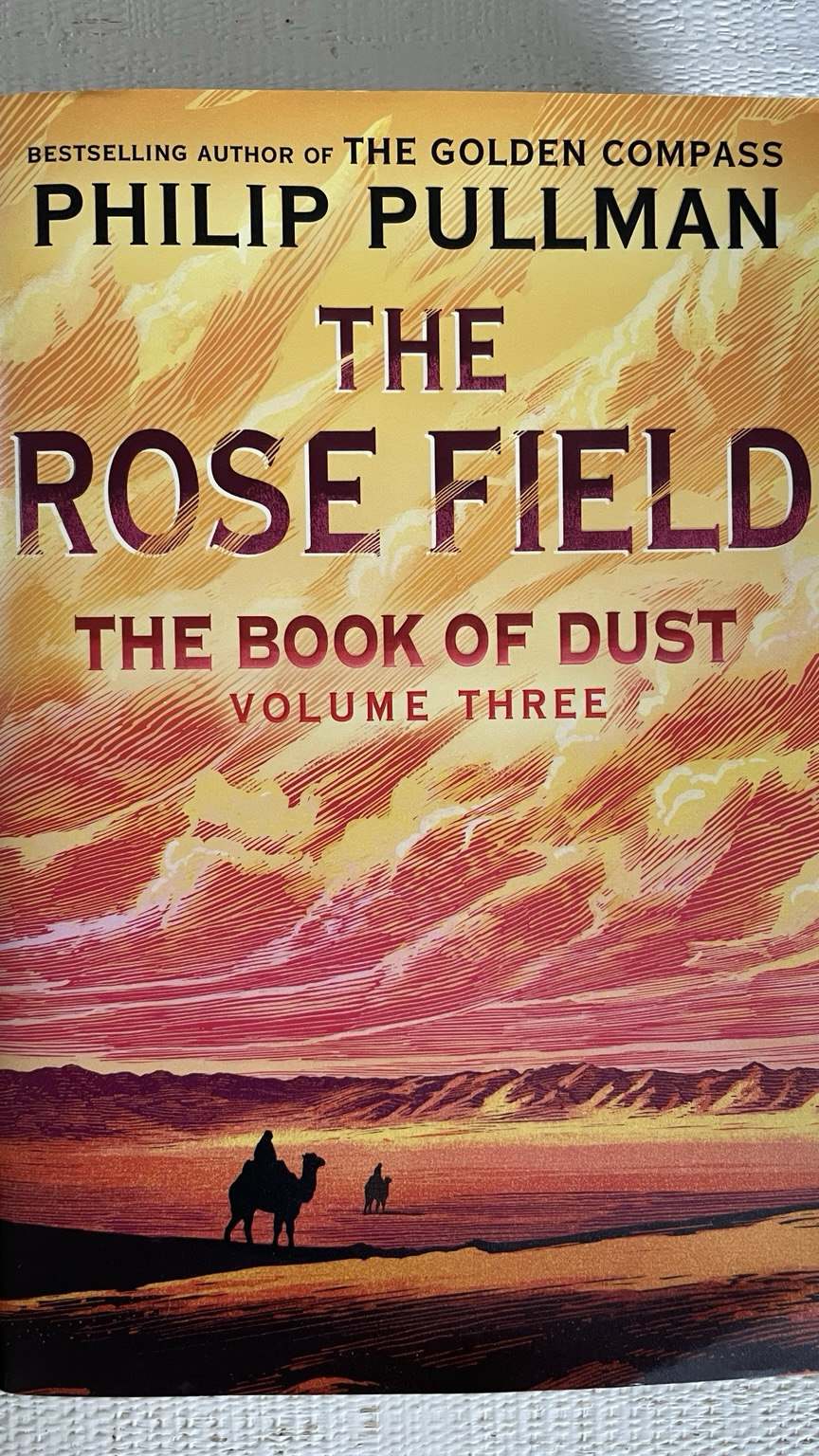
<p>The Rose Field. Philip Pullman.<br>(Book 3 of a trilogy)</p><p>You are a young woman whose animal familiar has left her, so she goes searching for him, as well as the doorway to another world which is also the target of religious authorities; you are trying to figure out what makes life worth living, but that is elusive.</p><p>2 of 5 library cats 🐈 🐈.</p><p><span class="h-card"><a href="https://fedigroups.social/@bookstodon" class="u-url mention" rel="nofollow noopener noreferrer" target="_blank">@<span>bookstodon</span></a></span> <a href="/tags/bookstodon/" rel="tag">#bookstodon</a> <a href="/tags/books/" rel="tag">#books</a> <a href="/tags/reading/" rel="tag">#reading</a> <a href="/tags/fantasy/" rel="tag">#fantasy</a> <a href="/tags/religion/" rel="tag">#religion</a> <a href="/tags/capitalism/" rel="tag">#capitalism</a></p>
<p>The unlikely pen pal who shaped Tolkien’s later years</p><p>When deaf fan Eileen Elgar wrote to the author with notes for improvement, they began a remarkable friendship based on a shared interest in language, revealed in a set of letters now up for auction</p><p>by Lily Isaacs</p><p><a href="https://observer.co.uk/news/national/article/the-unlikely-pen-pal-who-shaped-tolkiens-later-years" rel="nofollow" class="ellipsis" title="observer.co.uk/news/national/article/the-unlikely-pen-pal-who-shaped-tolkiens-later-years"><span class="invisible">https://</span><span class="ellipsis">observer.co.uk/news/national/a</span><span class="invisible">rticle/the-unlikely-pen-pal-who-shaped-tolkiens-later-years</span></a></p><p><a href="/tags/books/" rel="tag">#books</a> <a href="/tags/literature/" rel="tag">#literature</a> <a href="/tags/literarycriticism/" rel="tag">#literaryCriticism</a></p>
<p>The Social Realism of Elizabeth Gaskell Who Went Against Outworn Victorian Values</p><p>Once pigeonholed as “Mrs Gaskell,” a representative of outworn Victorian values, Elizabeth Gaskell is a more radical writer than you might expect.</p><p><a href="https://www.thecollector.com/elizabeth-gaskell-social-realism/" rel="nofollow" class="ellipsis" title="www.thecollector.com/elizabeth-gaskell-social-realism/"><span class="invisible">https://</span><span class="ellipsis">www.thecollector.com/elizabeth</span><span class="invisible">-gaskell-social-realism/</span></a></p><p>Gaskell at PG:</p><p><a href="https://www.gutenberg.org/ebooks/author/220" rel="nofollow" class="ellipsis" title="www.gutenberg.org/ebooks/author/220"><span class="invisible">https://</span><span class="ellipsis">www.gutenberg.org/ebooks/autho</span><span class="invisible">r/220</span></a></p><p><a href="/tags/books/" rel="tag">#books</a> <a href="/tags/literature/" rel="tag">#literature</a></p>
<p>A Review of Planeta: <a href="https://lydiaschoch.com/a-review-of-planeta/" rel="nofollow" class="ellipsis" title="lydiaschoch.com/a-review-of-planeta/"><span class="invisible">https://</span><span class="ellipsis">lydiaschoch.com/a-review-of-pl</span><span class="invisible">aneta/</span></a></p><p><a href="/tags/books/" rel="tag">#Books</a> <a href="/tags/lgbtq/" rel="tag">#LGBTQ</a> <a href="/tags/sciencefiction/" rel="tag">#ScienceFiction</a> <a href="/tags/mystery/" rel="tag">#Mystery</a> <a href="/tags/romance/" rel="tag">#Romance</a> </p><p><span class="h-card"><a href="https://fedigroups.social/@bookstodon" class="u-url mention" rel="nofollow noopener noreferrer" target="_blank">@<span>bookstodon</span></a></span></p>
<p>Sadly the world has lost a woman who never gave into fear, Shahrnush Parsipur was a blunt and outspoken voice for women in Iran and beyond. Imprisoned by both the shah's regime and the Islamic Republic, she immigrated to California in 1994. In her life and writing she kept asking what might happen if women stopped seeking permission to be free.<br><a href="/tags/shahmushparsipur/" rel="tag">#ShahmushParsipur</a> <a href="/tags/rip/" rel="tag">#RIP</a> <a href="/tags/books/" rel="tag">#books</a> <a href="/tags/womenslives/" rel="tag">#WomensLives</a> <span class="h-card"><a href="https://fedigroups.social/@bookstodon" class="u-url mention" rel="nofollow noopener noreferrer" target="_blank">@<span>bookstodon</span></a></span> </p><p><a href="https://theconversation.com/shahrnush-parsipur-iran-has-lost-one-of-its-bravest-and-boldest-literary-voices-287099" rel="nofollow" class="ellipsis" title="theconversation.com/shahrnush-parsipur-iran-has-lost-one-of-its-bravest-and-boldest-literary-voices-287099"><span class="invisible">https://</span><span class="ellipsis">theconversation.com/shahrnush-</span><span class="invisible">parsipur-iran-has-lost-one-of-its-bravest-and-boldest-literary-voices-287099</span></a></p>
<p>Part 2 of Long Reads' discussion with <a href="/tags/bentarnoff/" rel="tag">#BenTarnoff</a> and <a href="/tags/quinnslobodian/" rel="tag">#QuinnSlobodian</a>, authors of <a href="/tags/muskism/" rel="tag">#Muskism</a>: A Guide for the Perplexed </p><p><a href="https://podcasts.apple.com/ca/podcast/long-reads-trillion-dollar-baby-w-quinn-slobodian-and/id791564318?i=1000775222782" rel="nofollow" class="ellipsis" title="podcasts.apple.com/ca/podcast/long-reads-trillion-dollar-baby-w-quinn-slobodian-and/id791564318?i=1000775222782"><span class="invisible">https://</span><span class="ellipsis">podcasts.apple.com/ca/podcast/</span><span class="invisible">long-reads-trillion-dollar-baby-w-quinn-slobodian-and/id791564318?i=1000775222782</span></a></p><p>for Part 1 v. <a href="https://podcasts.apple.com/ca/podcast/long-reads-trillion-dollar-baby-w-quinn-slobodian-and/id791564318?i=1000773249464" rel="nofollow" class="ellipsis" title="podcasts.apple.com/ca/podcast/long-reads-trillion-dollar-baby-w-quinn-slobodian-and/id791564318?i=1000773249464"><span class="invisible">https://</span><span class="ellipsis">podcasts.apple.com/ca/podcast/</span><span class="invisible">long-reads-trillion-dollar-baby-w-quinn-slobodian-and/id791564318?i=1000773249464</span></a></p><p><a href="/tags/musk/" rel="tag">#Musk</a> <a href="/tags/elonmusk/" rel="tag">#ElonMusk</a> <a href="/tags/tech/" rel="tag">#tech</a> <a href="/tags/bigtech/" rel="tag">#BigTech</a> <a href="/tags/techcriticism/" rel="tag">#techCriticism</a> <a href="/tags/techoligarchs/" rel="tag">#techOligarchs</a> <a href="/tags/siliconvalleyright/" rel="tag">#SiliconValleyRight</a> <a href="/tags/books/" rel="tag">#books</a> <span class="h-card"><a href="https://fedigroups.social/@bookstodon" class="u-url mention" rel="nofollow noopener noreferrer" target="_blank">@<span>bookstodon</span></a></span></p>
<p>📚 Into the Wild by: Jon Krakauer</p><p>In April 1992, a young man from a well-to-do family hitchhiked to Alaska and walked alone into the wilderness north of Mt. McKinley. His name was Christopher Johnson McCandless. He had given $25,000 in savings to charity, abandoned his car and most of his possessions, bu...</p><p><a href="https://bookblabla.com/book/into-the-wild" rel="nofollow" class="ellipsis" title="bookblabla.com/book/into-the-wild"><span class="invisible">https://</span><span class="ellipsis">bookblabla.com/book/into-the-w</span><span class="invisible">ild</span></a></p><p><span class="h-card"><a href="https://fedigroups.social/@bookstodon" class="u-url mention" rel="nofollow noopener noreferrer" target="_blank">@<span>bookstodon</span></a></span></p><p><a href="/tags/books/" rel="tag">#books</a> <a href="/tags/reading/" rel="tag">#reading</a> <a href="/tags/libraries/" rel="tag">#libraries</a> <a href="/tags/biographyautobiography/" rel="tag">#biographyautobiography</a> <a href="/tags/sociology/" rel="tag">#sociology</a> <a href="/tags/generaltravel/" rel="tag">#generaltravel</a> <a href="/tags/specialinterest/" rel="tag">#specialinterest</a> <a href="/tags/adventuretravel/" rel="tag">#adventuretravel</a></p>
<p>In 19th-century Ireland, a disillusioned doctor and a woman living on the margins of society cross paths in a city shaped by hardship and tradition.</p><p>The Fitzgeralds of Dublin series is a sweeping Irish family saga exploring loyalty, resilience, and choices that echo across generations.</p><p>Begin with A Scarlet Woman - free to read in Kindle Unlimited - Amazon - <a href="http://mybook.to/ascarletwoman" rel="nofollow"><span class="invisible">http://</span>mybook.to/ascarletwoman</a></p><p><a href="/tags/books/" rel="tag">#Books</a> <a href="/tags/booksbylornapeel/" rel="tag">#BooksByLornaPeel</a> <a href="/tags/ireland/" rel="tag">#Ireland</a> <a href="/tags/historicalfiction/" rel="tag">#HistoricalFiction</a> <a href="/tags/kindleunlimited/" rel="tag">#KindleUnlimited</a> <a href="/tags/historicalromance/" rel="tag">#HistoricalRomance</a> <a href="/tags/romance/" rel="tag">#Romance</a> <span class="h-card"><a href="https://fedigroups.social/@bookstodon" class="u-url mention" rel="nofollow noopener noreferrer" target="_blank">@<span>bookstodon</span></a></span></p>