adhd
Introducing, the #Neurodivergent @popfeed.social@bsky.brid.gy List for movies and TV shows!popfeed.social/list/at://di...Check it out and find your next watch!#Neurospicy #Neuroatypical #Autistm #Autistic #ADHD #AuDHD and more.
Popfeed



Being AuDHD feels a little bit like constantly parenting yourself.
ADHD: Hungry. Sweets.
Autism: Not before the lunch which is ready in 5 minutes.
It’s not even noon and I had such an intensive and inspiring day so far.
I got up at 2:30 am and called a friend who is a night owl, just to realize that I am not able to make phone calls today, he was very tired, so we decided to talk later and I switched to chatting with a friend from another time zone until he had to go bed.
The chat reminded me oft a song from the past (music by John Miles), so I started listen to it while processing the chat. Then I recorded several voice messages and started to make a playlist for another friend who spends a lot of time on the train today and “don’t wants people in her head while listening to music”, while switching to listening to “music” by John Miles in between until I was in a listening to this one song over and over again mode. All this included several pacing and dancing sessions culminating in exploring how fast in circles my office chair is able to spin.
As the chat was still open on my laptop I started to think about a good German word with a “Z”, because my friend is interested in the German language and phonology. I recorded and typed “Zufriedenheit” (satisfaction/contentment) and found it interesting that it contains the word “Frieden”, which means peace. As words have a very strong effect on me, I started to calm down a little bit, which immediately changed when I realized that it is not only 7:30 am already, but also November 24th which meant that my online-therapy session at 9 am was actually today, not tomorrow, so I started my morning routine, went for a walk with Lumi and gave him a good brush afterwards. I just had enough time left to have breakfast, listening to the song again on the balcony and feeding my crow friend.
At the beginning of my therapy session my therapist told me that I scored very high in my ADHD assessment last week, so I am officially AuDHD now. What a surprise.
She is so amazing, I will write another post about the session itself, but it ended with the word “zufrieden”.

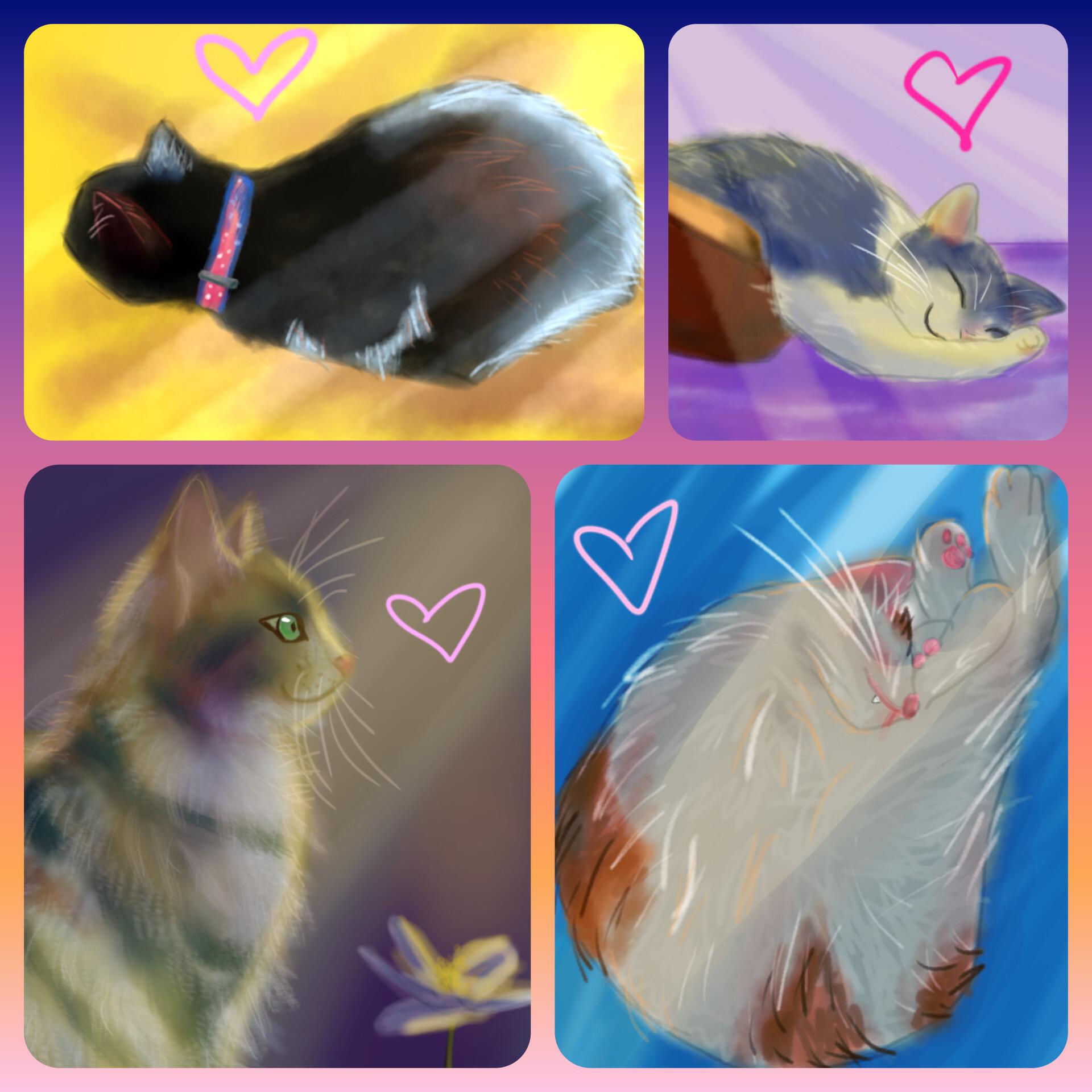
A compilation of my random cat doodles from the past few days.
After last week's doodle of Bunny, I've been on a roll. Not sure how long this will last before the interest fades, but I'm riding the wave for now 
Inspired by all the #CatsOfMastodon that appeared on my feed.



A must read article about #AI detection tools and how #ableist those are, and the very negative effects it has against #neurodivergent persons like #Autistics and #ADHD.
Teachers must especially read this!
https://blog.ewancroft.uk/3m6njxcynds2n
@autistics #ActuallyAutistic #Autism #AutisticActually #AuDHD #education

It's time for a re- #introduction since this instance has changed a lot since being launched.
This instance was set up for testing and playing with Internationalized Domain Names. That experiment has mostly been a success and I've now migrated away from my once-main instance.
I'm a former software developer of over 20 years, working primarily in #opensource and #telephony. I now do #cybersecurity as a profession, after starting to do cybersecurity research as a hobby about a year ago.
In the last year, I've found and disclosed several dozen #vulnerabilities in #govtech platforms like #court and #voter registration systems, which have gotten a not insignificant amount of press coverage. Those disclosures can all be seen at https://govtech.cc
Beyond my #infosec postings, you'll typically find nonsense that I find funny; sometimes I might even say stuff that other people find amusing.
I once self-published a book that I've never read called The Consequences of Being Right (ISBN 979-8880045068). It was entirely written by ChatGPT and was published because I thought it was stupid and funny. Miraculously, I've managed to sell two copies, neither of which have been returned.
I'm #ActuallyAutistic and #ADHD, which is sometimes apparent.
All of my other links and socials can be found at https://linktr.ee/northantara


Now that I've just completed another work week and started another off week, I'm back to reading "ADHD 2.0" (#Hallowell and #Ratey 2021). One issue I'm noticing with it: relentless #extranormativity (normalization of extreme #extraversion and marginalization of #introversion). The authors assume, for example, widespread enthusiasm for entrepreneurship, which would be an absolute nightmare for me: all the schmoozing and networking with people I'd much rather never meet or interact with. This #extranormativity seems to be a pervasive problem with literature on #ADHD in general, as opposed to literature on autism, where if anything #introversion is taken as the norm.
It's reinforcing my impression that #AuDHD is a fundamentally different phenomenon from standalone #ADHD (without autism). Many, perhaps most, of the characteristics #Hallowell and #Ratey list for #ADHD fit me perfectly, but some others might as well be characteristics of Martians, they're so utterly alien to me.


A change of scenery can be good for the mind 💚
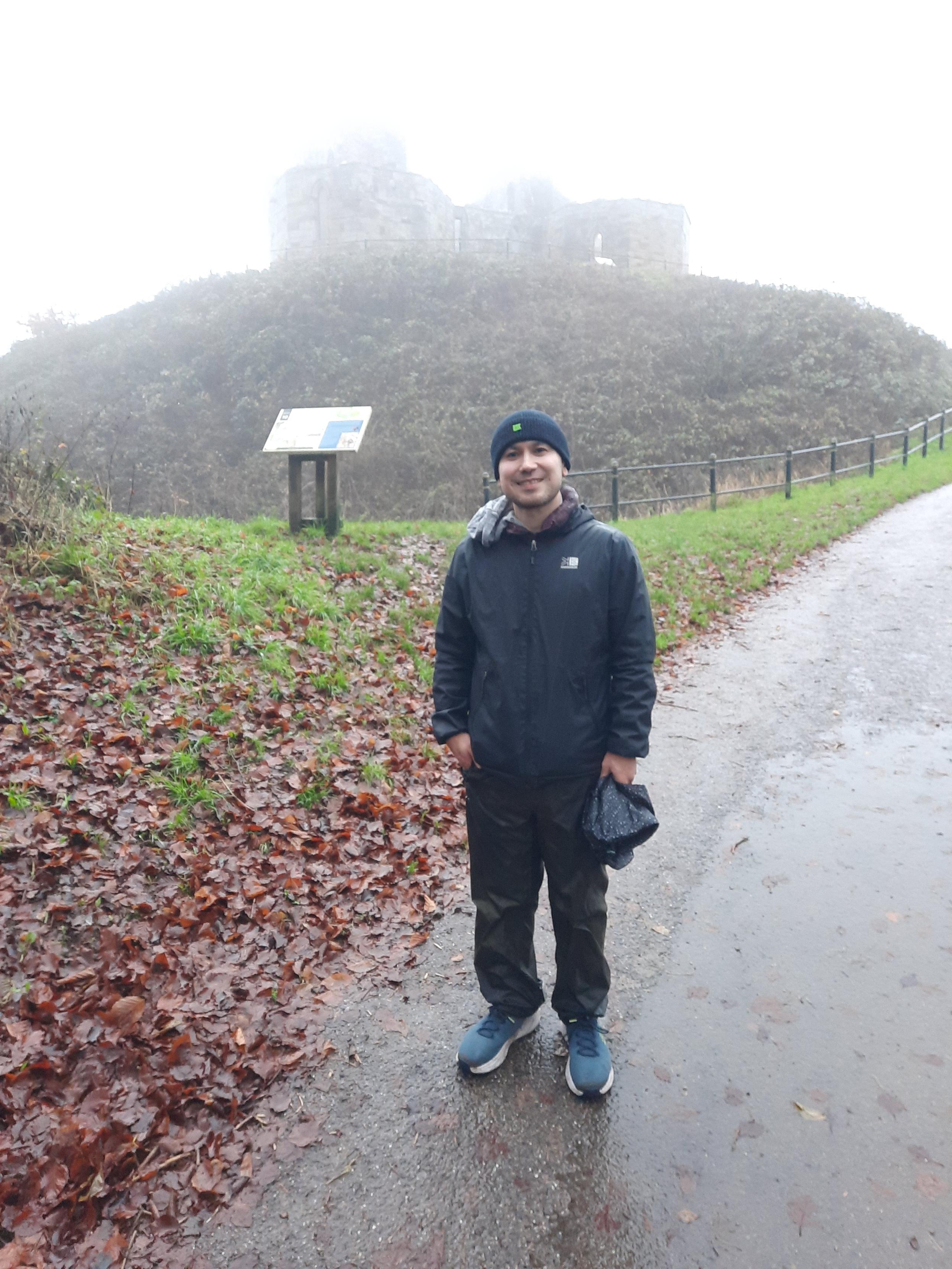
On Thursday, it rained non-stop, but I enjoyed a day out in Stafford. My friend and I had a walk around the castle grounds and wandered through the historic market town. More importantly, it was a chance to escape the daily routine and have a long chat with someone who has a brain that is wired in a similar way to mine. The best thing, however, was the absence of crowds 😁
#neurodivergent #ActuallyAutistic #AuDHD #adhd #neurospicy #mentalhealth #anxiety
I'm now starting Chapter 2 of "ADHD 2.0" (#Hallowell and #Ratey 2021). This is the one where they introduce the supposed neurological underpinnings of #ADHD. I'm noticing a jarring contrast of tone between this book and the autism literature I've read so far, such as Wenn #Lawson's "The Passionate Mind", or Steve #Silberman's "NeuroTribes" (which I'm also still working my way through BTW). The autism literature has more of what I'd consider scientific humility. It's taken for granted that autism is a profound topic, that it isn't easy to make progress with understanding it, and that much remains unsolved. But Hallowell and Ratey make it sound as if "the exciting new science of fMRI" (as they are pleased to call it) has illuminated #ADHD as thoroughly as anyone could wish, that the task-positive network (TPN) and the default mode network (DMN) are the solution to everything. It makes me feel talked down to — and puts me on my guard. This is how hucksters talk.
I'm also reminded of a recent science news article I saw, about a new study purporting to refute the most basic assumption of #fMRI studies (which BTW are NOT new) — namely, that the rate of blood flow in a brain area correlates closely with the level of neural activity. I haven't really looked into this yet, but if it's correct, much of what #fMRI has supposedly demonstrated will have to go back to the drawing board.
Here's a link to the news story on problems with #fMRI:
I've now finished Chapter 2 of "ADHD 2.0" (#Hallowell and #Ratey 2021). I've had some hard things to say about this book so far: its #extranormativity, its tone of pontificating certainty, its overconfident reliance on dubious #fMRI findings, the appalling glimpse of support for #ABA in a skimmed later chapter. But in the second half of Chapter 2, I've found something really interesting and potentially helpful, something that rings true from my experience, quite apart from any #fMRI findings.
The authors point out a way that #anxiety and #depression can arise purely from the #attentional-focus problems definitive of #ADHD, and NOT from the cognitive errors to which #CBT attributes such problems. The idea is that the obsessiveness of #ADHD, when focused on anything negative, creates a self-sustaining, self-amplifying vortex of negativity. Their description makes it sound almost like a bad trip on #psychedelics. The solution is NOT to try to debunk the negative thoughts that make up the vortex, #CBT-style; indeed, that approach might make things worse by reinforcing the focus on the negative thoughts. Instead, try to refocus on — indeed, obsess about! — something positive instead.
Indeed, #anxiety and (especially) #depression were my own psychiatric diagnoses (not counting bipolar disorder, which later psychiatrists rejected decisively as a misdiagnosis). #CBT was worse than useless. Instead, I got help from antidepressant drugs — and I don't think it was an accident that the best one for me turned out to be Wellbutrin (bupropion), which doubles as a third-line #ADHD drug. And the subjective experience of depression, and of recovery from it, matched Hallowell and Ratey's attentional account, rather than the error-correcting story #CBT tells. I suspect that if there were such a thing as "attentional psychotherapy", I might have benefited from getting that instead of #CBT.

Too many blogs full of too many tips on managing To Do lists are unhelpful and overwhelming.
They make me To Don’t.
What’s a good tip you actually use for task management?
Too many blogs full of too many tips on managing To Do lists are unhelpful and overwhelming.
They make me To Don’t.
What’s a good tip you actually use for task management?


I’ve been trying to explain two autistic / AuDHD experiences that I have to a non-autistic loved one for a couple of years now, but I’m finding it really hard!
1. The first: difficulty with uncertainty.
I explain this like it is an anxiety that diminishes the more information I gain that reduces the levels of uncertainty. But the word “anxiety” makes my loved one interpret it as always being about fear, just like anxiety usually means more generally. E.g. fear, on any level, even minor, of a potential negative event happening in the future. But I am not always afraid or worried, so this interpretation doesn’t work. It’s purely the uncertainty itself I find hard to deal with, and I can experience this around things I enjoy and when know there will be no negative outcomes at all. It relates strongly to disliking surprises. E.g. if I am walking from A to B and someone suddenly bumps into me, I HATE that! But if I choose to walk in a busy crowd, I expect people to bump into me and it’s totally fine. I hate being uncertain whether someone will bump into me or not, too.
2. The second topic can be totally separate or experienced together with the first: anticipation!
I have also tried to explain this as like a form of anxiety, but I have frequently felt this anticipation before hugely and purely positive events! It relates to something coming up soon that I am not familiar with. Familiarity in this sense usually only happens when I have either done things so frequently in my life that I can’t forget it, or I’ve experienced it about 3 or so times in the last month. This means revisiting a favourite restaurant that I haven’t been to for a year would cause this type of anticipation. The anticipation often stops me from being able to sleep the night before and my mind is often running through how the event might unfold, planning and so on, even if all the plans are already made and all preparation already done. As I said before, this often happens with purely positive events, so it’s so strange to explain it!
I suspect that these two experiences are very common for autistic people, and the latter, anticipation, probably affects lots of neurodivergent people. I wondered if my ADHD is influencing the anticipation, for example, and maybe I’m just wanting to remember what I need to do for the event since I likely can’t use a routine for something unfamiliar to me? I don’t know! In this case, perhaps anticipation WOULD be classic anxiety since it relates to fear of forgetting something important or losing track of time. But sometimes it’s just an impatient feeling.
What do you think?
Does anyone else experience these two things? Perhaps in a different way to me? If so, how would you describe it to someone who has never experienced it?

Time spent today hacking on a CLI tool to assist me in managing my #Obsidian vault: 2 hours
Time spent manually organizing Obsidian notes and Bases filters, relating to using it for book tracking: 1 hour
Time spent /actually deciding which book to read next after DNF’ing His Majesty’s Dragon/: 0 hours
TFW you might have undiagnosed #ADHD
"It doesn't have to get done,
It just has to be perfect"
— Old #ADHD Proverb
I'm trying to learn #morsecode with LCWO. My #ADHD loves to throw hard timeouts in under 1 minute time intervals. So I can lose my spot even with the shortest test. I'm sure as I get better my endurance will improve.
I end up having to hit refresh and starting over along with taking frequent breaks, but I am making slow progress learning the code. I am writing a journal about the process to keep myself accountable.
Did anyone else here have to fight hard uphill to learn CW for any reason?

- but also, I just feel like a burden and I've now been 'sold' to my wife a lie. I'm not who or what she was expecting when she married me.
I feel like I'd lied to her about who I am (even if I didn't know the truth) .
Share a strategy (any kind) you use to calm yourself down when you are catastrophizing, and why you think it works for you.
#MentalHealth #AuDHD #ADHD #ActuallyAutistic @autistics #ChronicIllness #Disability #AskFedi #Boost4Reach #ChronicPain
"A major new review has put hundreds of alternative autism treatments under the microscope—and most didn’t hold up. Scientists analysed decades of research and found little reliable evidence that popular approaches like probiotics, acupuncture, or music therapy truly work. Alarmingly, safety was often ignored, with many treatments never properly evaluated for side effects."
#Autism
#ADHD
#AuDHD
#neurodiversity
#neurodivergence
https://www.sciencedaily.com/releases/2025/12/251227082722.htm

Dear Fediverse, connect me with fellow neurodivergent people. 🎲

这篇文说,#ADHD 疑是患者们排队太长,占用资源太多。与其消耗这么多资源,不如学校和公司改变一些模式去接纳神经多元人群,这样对大家都好。
The binary view of ADHD is no longer supported by science. Researchers have realised that there is no such thing as the “ADHD brain”.