Stan Brakhage — Director (36)
Delicacies of Molten Horror Synapse (1991) [Movie] TMDB IMDb
Delicacies of Molten Horror Synapse
director: Stan Brakhage
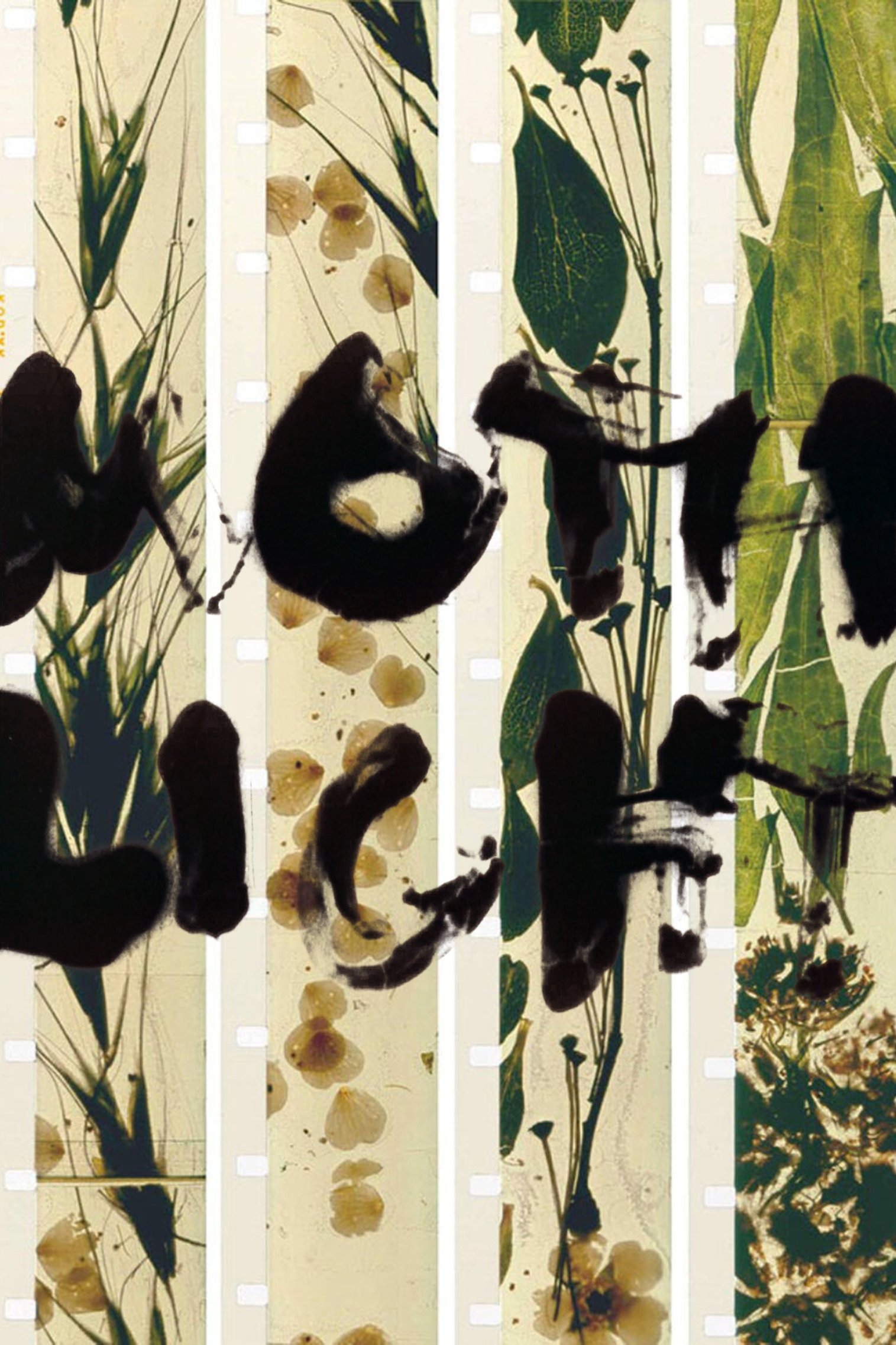
Four superimposed rolls of hand-painted and bi-packed television negative imagery are edited so as to approximate the hypnagogic process whereby the optic nerves resist grotesque infusions of luminescent light.
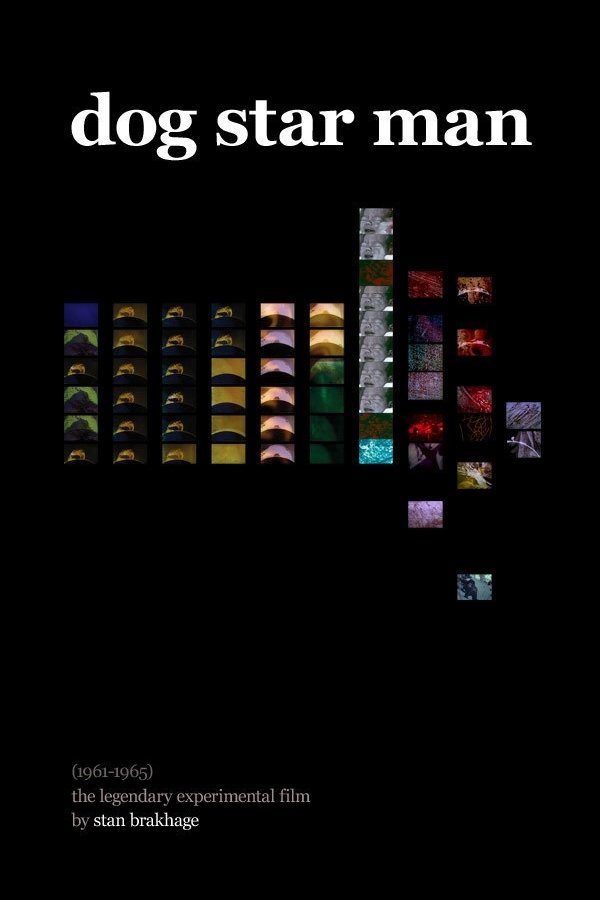
Dog Star Man: Part I (1963) [Movie] TMDB IMDb WikiData
Dog Star Man: Part I
director: Stan Brakhage actor: Stan Brakhage / Jane Wodening
From a murky landscape, a wooded mountain emerges. We watch the sun. We see a bearded man climbing up the mountain through the snow. He carries an ax, and he's accompanied by a dog. His labors continue. There is no soundtrack. Images rush past - water, trees, and surfaces too close up to distinguish. He struggles. A fire burns. Nature, in long shots and magnified, is formidable and silent. It's tough going; he carries on. In a capillary, blood flows.
Seasons... (2002) [Movie] TMDB IMDb
Seasons...
director: Stan Brakhage / Phil Solomon
Brakhage's frame-by-frame hand carvings and etchings directly into the film emulsion, sometimes photographically combined with paint, are illuminated by Solomon's optical printing; this footage was then edited by Solomon into a four part 'seasonal cycle'. This film can be considered to be part of a larger, 'umbrella' work by Brakhage entitled «...» . Seasons... is inspired by the colors and textures found in the woodcuts of Hokusai and Hiroshige, and the playful sense of forms dancing in space from the film works of Robert Breer and Len Lye.
The Riddle of Lumen (1972) [Movie] TMDB IMDb
The Riddle of Lumen
director: Stan Brakhage
“The Riddle of Lumen” presents an evenly paced sequence of images, which seem to follow an elusive logic. As in “Zorns Lemma” the viewer is called upon to recognize or invent a principle of association linking each shot with its predecessor. However, here the connection is nonverbal. A similarity, or an antithesis, of color, shape, saturation, movement, composition, or depth links one shot to another. A telling negative moment occurs in the film when we see a child studying a didactic reader in which simply represented objects are coupled with their monosyllabic names in alphabetical order. –P. Adams Sitney. Preserved by the Academy Film Archive in 2007.
Star Garden (1974) [Movie] TMDB IMDb
Star Garden
director: Stan Brakhage
The "star", as it is singular, is the sun; and it is metaphored, at the beginning of this film, by the projector anyone uses to show forth. Then the imaginary sun begins its course throughout whatever darkened room this film is seen within. At "high noon" (of the narrative) it can be imagined as if in back of the screen, and then to shift its imagined light-source gradually back thru aftertones and imaginings of the "stars" of the film till it achieves a one-to-one relationship with the moon again. This "sun" of the mind's eye of every viewer does not necessarily correspond with the off-screen "pictured sun" of the film; but anyone who plays this game of illumination will surely see the film in its most completely conscious light.
Comingled Containers (1996) [Movie] TMDB WikiData IMDb
Comingled Containers
director: Stan Brakhage
other title: Commingled Containers
Comingled Containers is an experimental short film by Stan Brakhage. "This 'return to photography' (after several years of only painting film) was made on the eve of cancer surgery - a kind of 'last testament,' if you will… an envisionment of the fleeting complexity of worldly phenomenon."
The Way to Shadow Garden (1954) [Movie] TMDB IMDb
The Way to Shadow Garden
director: Stan Brakhage actor: Walter Newcomb
This way madness - or experimental filmmaking - lies. A solitary man in coat and tie enters an apartment. It's midnight. He appears agitated and distraught. He throws a glass of water in his face and laughs. He takes off the coat and tie. His moods swing. He stares at a light bulb. He removes his shirt. He lights a cigarette. He looks at a book. He does something drastic and self-destructive. He opens doors to a garden.
Murder Psalm (1980) [Movie] IMDb TMDB
Murder Psalm
director: Stan Brakhage
Inspired in part by a dream he had of murdering his mother, Brakhage here gives us one of his profoundest meditations on human aggression.
Creation (1979) [Movie] TMDB IMDb
Creation
director: Stan Brakhage
"The ecstatic, mythic montage of Alaskan landscapes" is also "about the act of making" and an antidote to the stodgy notion that life crawled forth from a warm primordial soup.
The Governor (1977) [Movie] TMDB IMDb
The Governor
director: Stan Brakhage
"On July 4, 1976 I and my camera toured the state of Colorado with governor Richard D. Lamm, as he traveled in parades with his children, appeared at dinners, lectured, etc. On July 20, I spent the morning in his office in the state capitol and the afternoon with himself and his wife in a television studio, then with Mrs. Lamm greeting guests to the governor's mansion and finally with Governor Lamm in his office again. These two days of photography took me exactly one year to edit into a film which wove itself thru multiple superimpositions into a study of light and power." - SB
Blue Moses (1962) [Movie] TMDB IMDb WikiData
Blue Moses
director: Stan Brakhage actor: Robert Benson
One of the few Brakhage films featuring spoken dialogue and a central character, this sly and bitter polemic pits an actor (poet? director?) against an unseen audience. Preserved by the Academy Film Archive in 2007.
Chartres Series (1994) [Movie] TMDB IMDb WikiData
Chartres Series
director: Stan Brakhage
other title: The Chartres Series
A year and a half ago the filmmaker Nick Dorsky, hearing I was going to France, insisted I must see the Chartres Cathedral. I, who had studied picture books of its great stained-glass windows, sculpture and architecture for years, having also read Henry Adams' great book three times, willingly complied and had an experience of several hours (in the discreet company of French filmmaker Jean-Michele Bouhours) which surely transformed my aesthetics more than any other single experience. Then Marilyn's sister died; and I, who could not attend the funeral, sat down alone and began painting on film one day, this death in mind ... Chartres in mind. Eight months later the painting was completed on four little films which comprise a suite in homage to Chartres and dedicated to Wendy Jull.
Interim (1952) [Movie] WikiData TMDB IMDb
Interim
director: Stan Brakhage actor: Walter Newcomb / Janice Hubka
A young man meets a young woman under a bridge by a railroad. They shelter from the rain and exchange a kiss. The man grows sullen and leaves. The film starts with him and ends with her. It’s a straightforward anecdote told in traditional ways, the likes of which he’d forsake forever; that is, it uses actors, a soundtrack with music and post-dubbed sound effects, a photographer who frames everything professionally and a coherent edited narrative.
Dog Star Man: Part II (1964) [Movie] TMDB IMDb WikiData
Dog Star Man: Part II
director: Stan Brakhage actor: Stan Brakhage
A man, accompanied by a dog, struggles through snow on a mountain side. We see film stock blister; drawn square shapes appear. Then, we see an infant's face. The images of struggling climber, baby, blurred film stock, large snow flakes, and what may be microscopic details of matter are superimposed on each other, one dominating the frame briefly to be replaced by another. As the man falls in the snow and tries to regain his feet, the baby continues to appear, first with eyes closed. Alternately, images rush by - montages of paper cutouts and life under a microscope.
The Wonder Ring (1955) [Movie] TMDB IMDb
The Wonder Ring
director: Stan Brakhage
An important early film by Stan Brakhage, which Joseph Cornell commissioned as a record of New York's Third Avenue elevated train before it was torn down. Curiously lacking in people, the film focuses on the rhythms of the ride and reflections in train windows, finding a real-world version of the superimpositions Brakhage would later create in the lab. Preserved by the Academy Film Archive in 2005.