Stan Brakhage — Director (36)
Thigh Line Lyre Triangular (1961) [Movie] NeoDB Douban IMDb WikiData TMDB
Thigh Line Lyre Triangular
director: Stan Brakhage actor: Jane Wodening
Only at a crisis do I see both the scene as I've been trained to see it ( that is, with Renaissance perspective, three-dimensional logic–colors as we've been trained to call a color a color, as so forth) and patterns that move straight out from the inside of the mind through the optic nerves... spots before my eyes, so to speak... and it's very intensive, disturbing, but joyful experience. I've seen that every time a child was born... Now none of that was in WINDOW WATER BABY MOVING; and I wanted a childbirth film which expressed all of my seeing at such a time.
Window Water Baby Moving (1959) [Movie] TMDB WikiData IMDb NeoDB Douban
Window Water Baby Moving
director: Stan Brakhage actor: Jane Wodening / Myrrena Brakhage
On a winter's day, a woman stretches near a window then sits in a bathtub of water. She's happy. Her lover is nearby; there are close ups of her face, her pregnant belly, and his hands caressing her. She gives birth: we see the crowning of the baby's head, then the birth itself; we watch a pair of hands tie off and cut the umbilical cord. With the help of the attending hands, the mother expels the placenta. The infant, a baby girl, nurses. We return from time to time to the bath scene. By the end, dad's excited; mother and daughter rest. Preserved by the Academy Film Archive in 2013.
The Garden of Earthly Delights (1981) [Movie] NeoDB Douban TMDB WikiData IMDb
The Garden of Earthly Delights
director: Stan Brakhage
A collage of two-dimensional images of vegetation, each appearing only for a moment, sometimes as a single image, more often with other bits of stem, leaf, bud, or petal. Often we see only the outline of objects against a black background. Black and green are occasionally joined by fragments of orange or of white and blue. The objects in the frame don't move but they are quickly replaced by another collage, giving the feel of rapid motion. Each collage is crisp, its lines etched against the background of black and later of white. Whitman anyone, or Hieronymus Bosch? Although there is no soundtrack, the rapidity of changing images and colors suggests a riot.
Mothlight (1963) [Movie] Douban NeoDB TMDB IMDb WikiData
Mothlight
director: Stan Brakhage
Seemingly at random, the wings and other bits of moths and insects move rapidly across the screen. Most are brown or sepia; up close, we can see patterns within wings, similar to the veins in a leaf. Sometimes the images look like paper cutouts, like Matisse. Green objects occasionally appear. Most wings are translucent. The technique makes them appear to be stuck directly to the film.
The Dante Quartet (1987) [Movie] NeoDB Douban TMDB IMDb WikiData
The Dante Quartet
director: Stan Brakhage
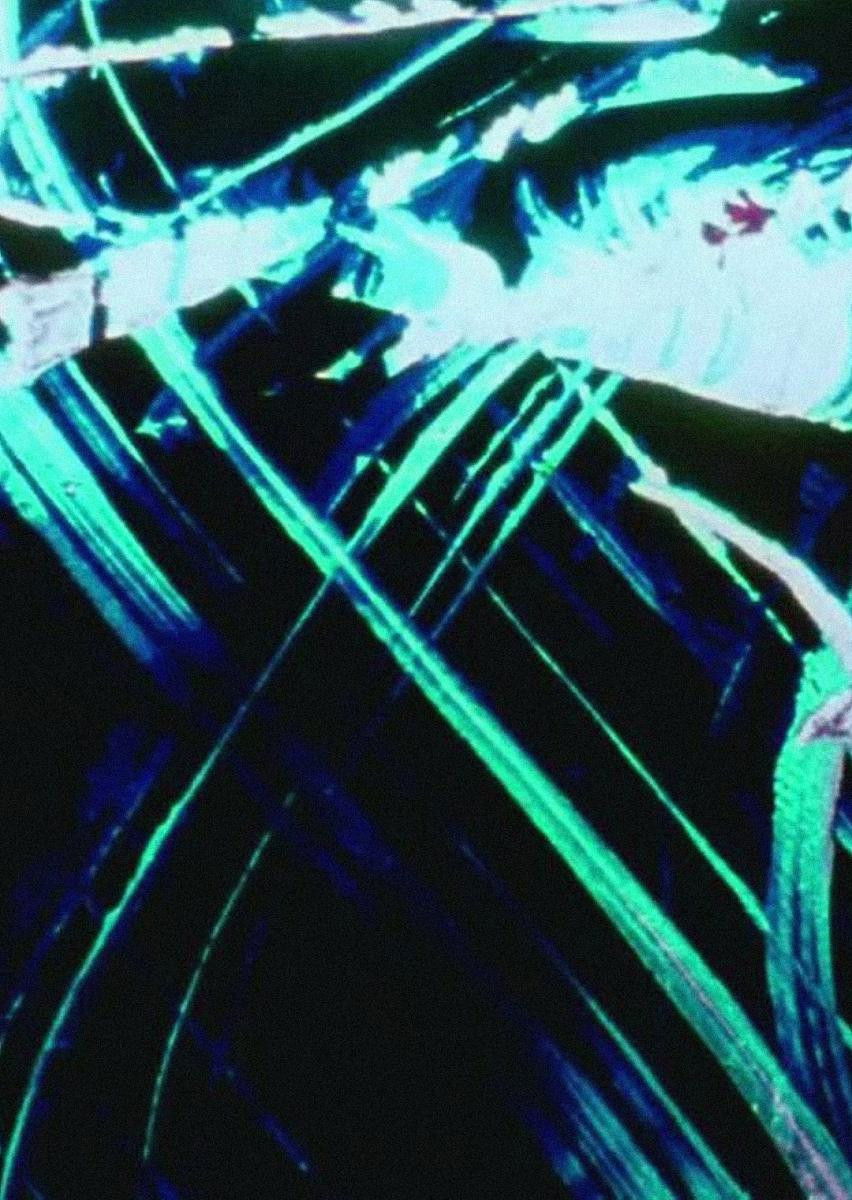
A visual representation, in four parts, of one man's internalization of "The Divine Comedy." Hell is a series of multicolored brush strokes against a white background; the speed of the changing images varies. "Hell Spit Flexion," or springing out of Hell, is on smaller film stock, taking the center of the frame. Montages of color move rapidly with a star and the edge of a lighted moon briefly visible. Purgation is back to full frame; blurs of color occasionally slow down then freeze. From time to time, an image, such as a window or a face, is distinguishable for a moment. In "existence is song," colors swirl then flash in and out of view. Behind the vivid colors are momentary glimpses of volcanic activity.
Reflections on Black (1955) [Movie] NeoDB Douban TMDB IMDb
Reflections on Black
director: Stan Brakhage actor: Don Redlich / Lee Cole
other title: 黑色的省思
A series of terrifying dramas of male-female relationships offset against the background of a New York tenement. Preserved by the Academy Film Archive in partnership with The Film Foundation in 2012.
Eye Myth (1967) [Movie] NeoDB Douban TMDB IMDb WikiData
Eye Myth
director: Stan Brakhage
After the title, a white screen gives way to a series of frames suggestive of abstract art, usually with one or two colors dominating and rapid change in the images. Two figures emerge from this jungle of color: the first, a shirtless man, appears twice, coming into focus, then disappearing behind the bursts and patterns of color, then reappearing; the second figure appears later, in the right foreground. This figure suggests someone older, someone of substance. The myth? Preserved by the Academy Film Archive in 2012.
Night Music (1986) [Movie] NeoDB Douban TMDB IMDb
Night Music
director: Stan Brakhage
Part of Three Hand-Painted Films, Night Music (originally painted on IMAX) attempts to capture the beauty of sadness, as the eyes have it when closed in meditation on sorrow.
Desistfilm (1954) [Movie] IMDb TMDB Douban NeoDB
Desistfilm
director: Stan Brakhage actor: A. Austin / Robert Benson
other title: 停止影像
Four young men and a young woman sit in boredom. She smokes while one strums a lute, one looks at a magazine, and two fiddle with string. The door opens and in comes a young man, cigarette between his lips, a swagger on his face. The young woman laughs. As the four young men continue disconnected activities, the other two become a couple. When the four realize something has changed, first they stare at the couple who have kissed and now are dancing slowly. The four run from the house in a kind of frenzy and return to stare. The power of sex has unnerved them.
I... Dreaming (1988) [Movie] Douban TMDB IMDb WikiData
I... Dreaming
director: Stan Brakhage actor: Stan Brakhage / Bearthm Brakhage
Phrases of Stephen Foster, set to music by Joel Heartling, are set to film in this autobiographical piece: a solitary female voice, occasionally joined by a chorus, sings phrases of sorrow as we watch a solitary man in shadows in an unadorned house: he stretches out, he picks his feet, he walks across a room, he rocks in a chair. Occasionally he watches two young children at play; the film sometimes speeds up. Handwritten words, like "dark void" and "waiting longing," cross the screen. Film and phrases often come in short bursts. Outdoor it looks gray and cold.
Kindering (1987) [Movie] Douban TMDB IMDb
Kindering
director: Stan Brakhage actor: Iona Bartek / Quay Bartek
Refracted images, not unlike those in a funhouse mirror, display two children playing in a backyard, a boy and a girl. There's a dog, a swing, a picket fence, a Big Wheels trike. The grass is green and lush. A soundtrack mixes a chorus, swelling strings, and a child vocalizing. The effect is to idealize the images.
Glaze of Cathexis (1990) [Movie] Douban TMDB IMDb
Glaze of Cathexis
director: Stan Brakhage
”This hand-painted work is easily the most minutely detailed ever given to me to do, for it traces (as best I'm able) the hypnagogic after-effect of psychological cathexis as designated by Freud in his first (and unfinished) book on the subject, Toward a Scientific Psychology." -S.B.
Wedlock House: An Intercourse (1959) [Movie] Douban NeoDB TMDB IMDb
Wedlock House: An Intercourse
director: Stan Brakhage actor: Jane Wodening / Stan Brakhage
We see a film negative of a nude couple embracing in bed. Then, back in regular black and white images, we see them alone and together, clothed, at home. It's night, she sees his reflection in the window, she closes the drapes. After sex, again in a black and white negative, they sit, smoke, have coffee. They kiss, she smiles. They light candles. The images are often quick, the camera angles occasionally are off kilter; the room is sometimes dark and sometimes lit, as if lit by the rotating of a searchlight. The images again appear in negative when they return to bed.
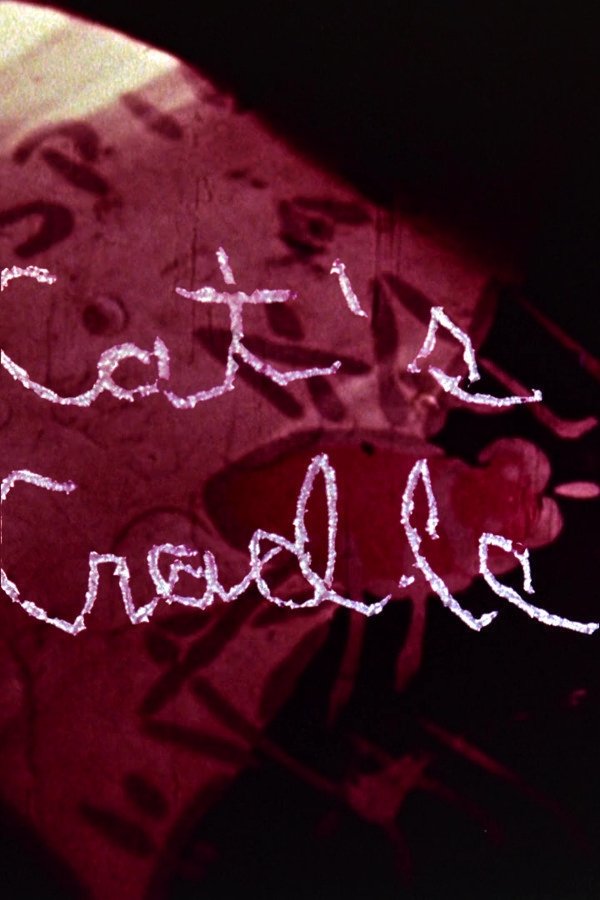
Cat's Cradle (1959) [Movie] TMDB IMDb WikiData
Cat's Cradle
director: Stan Brakhage actor: Jane Wodening / Stan Brakhage
Images of two women, two men, and a gray cat form a montage of rapid bits of movement. A woman is in a bedroom, another wears an apron: they work with their hands, occasionally looking up. A man enters a room, a woman smiles. He sits, another man sits and smokes. The cat stretches. There are close-ups of each. The light is dim; a filter accentuates red. A bare foot stands on a satin sheet. A woman disrobes. She pets the cat. Preserved by the Academy Film Archive in 2006.
The Wold-Shadow (1972) [Movie] TMDB IMDb WikiData
The Wold-Shadow
director: Stan Brakhage
other title: The Wold Shadow
A stand of birches. Sunlight brightens and dims, revealing more or less of the woods. A little grass is on the forest floor. Is there a shape in the shadows? Something green is out of focus. The light flashes, and the screen goes dark from time to time. We look up close at the bark of trees. Is the god of the forest to be seen?
The Stars Are Beautiful (1974) [Movie] TMDB IMDb
The Stars Are Beautiful
director: Stan Brakhage actor: Bearthm Brakhage / Jane Wodening
We move back and forth between scenes of a family at home and thoughts about the stars and creation. Children hold chickens while an adult clips their wings; we see a forest; a narrator talks about stars and light and eternity. A dog joins the hens and the family, while the narrator explains the heavens. We see a bee up close. The narrator suggests metaphors for heavenly bodies. Scenes fade into a black screen or dim purple; close-ups of family life may be blurry. The words about the heavens, such as "The stars are a flock of hummingbirds," contrast with images and sounds of real children.
Rage Net (1988) [Movie] TMDB IMDb
Rage Net
director: Stan Brakhage
Another of Brakhage’s works of “moving visual thinking,” Rage Net reminds one of the vibrant pioneering experiments of European animators of the 1920s.