
#TIL about James Wong Howe, Hollywood cinematographer, active 1917-1975
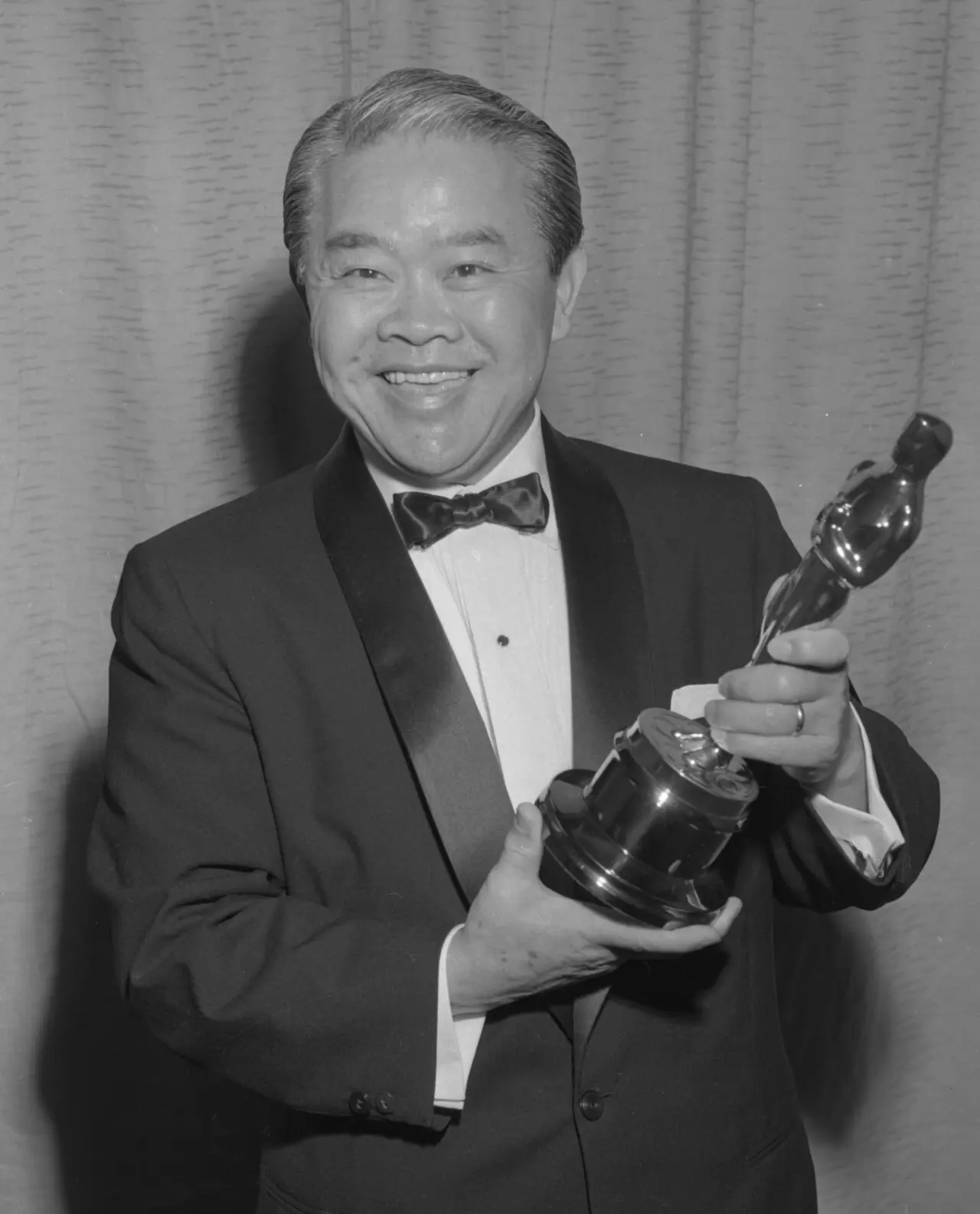
Rachel Thorn wrote a thread today about Chandu The Magician (1932) mentioning that Wong Howe was the cinematographer, and the #SundayFunnies watch party (hosted by LA Sooner) will (probably) show mystery-comedy classic The Thin Man (1934), on which Howe also worked, on 4th October.
(Most links here go to a person's or film's page on the Eggplant instance of NeoDB, Fediverse alternative to Letterboxd, Goodreads etc.)
Wong Howe started work in Hollywood by literally hopping the fence at Lasky Studios (later renamed Paramount) & talking his way into carrying camera equipment for Cecil B. DeMille in the 1910s, & his last film as DP was 1975's Funny Lady with Herbert Ross.
In between, he worked with directors like:
- John Frankenheimer (Seconds, The Horsemen)
- Sidney Lumet (Last of the Mobile Hot Shots)
- John Sturges (The Old Man and the Sea)
- John Cromwell (Algiers)
- Charles Vidor (A Farewell to Arms (1957))
- Samuel Fuller (The Baron of Arizona)
- Zoltán Korda (Counter-Attack)
- Michael Curtiz (Daughters Courageous, Four Wives, Yankee Doodle Dandy with James Cagney, a dear friend who wore an "I AM CHINESE" pin in solidarity with Wong Howe when many Chinese-Americans were facing extra bigotry during WWII on the assumption they were Japanese)
- Raoul Walsh (The Yellow Ticket, The Strawberry Blonde)
- Howard Hawks (The Criminal Code, Air Force) (Wong Howe & Hawks started on the same day at Lasky, & Hawks gave Wong Howe his first job on a sound movie, when he & many others were having trouble getting hired during the transition from silent film to talkies)
(Seconds was already on my wishlist, I'll probably add a bunch of these & other Wong Howe films, too.)
He, uhhh, even worked with the President of the United States: Ronald Reagan in Kings Row.
And Wong Howe was nominated 10 times for the Oscar for Best Cinematography, winning twice:
- The Rose Tattoo (1955, directed by Daniel Mann)
- Hud (1963 directed by Martin Ritt)
He was always innovating, for example when he wore roller skates in a boxing ring to shoot a boxing scene, to bring in a close-up feel & realism.
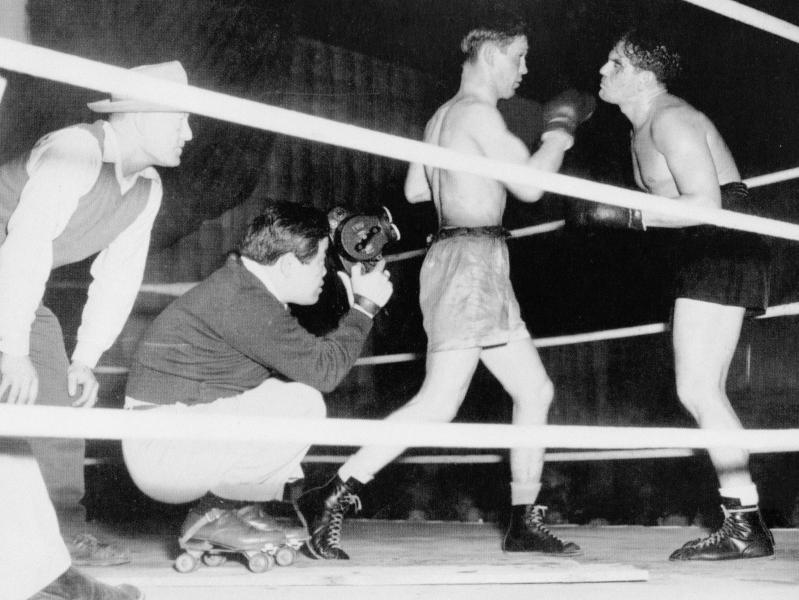 Filming Body and Soul. From TheASC.com - Wrap Shot: Body and Soul
He won the trust of actors—including major stars like Marlene Dietrich, Kim Novak, and Hedy Lamarr—because he knew how to capture their best features, and he earned a lot of his work this way. Criterion.com - James Wong Howe’s Way with Light
He built his Hollywood career all while being denied US citizenship simply because he'd been born in China, his marriage going unrecognized by the state of California because of his "race", and living apart from his wife, as "living in sin" would be a violation both of his values and the "morals clauses" then common in Hollywood contracts. (He was also "graylisted" in the 50s because his wife, novelist & poet Sanora Babb, was suspected of communist sympathies.)
Also #TIL NeoDB doesn't yet have a field for Cinematographer / Director of Photography (hopefully soon!), so I guess his entry here for now will only have the few films on which he was director, like
- Go, Man Go!, the story of the founder of the Harlem Globetrotters, Abe Saperstein, featuring a young Sidney Poitier
- Invisible Avenger, a film edited together from some pilots for a TV show about mystery hero The Shadow (I've been listening to Orson Welles as The Shadow via the Choice Classic Radio Detectives podcast.)
Some links re James Wong Howe:
- NeoDB/Eggplant - James Wong Howe
- Wikipedia - James Wong Howe
- Criterion.com - James Wong Howe’s Way with Light Great read!
- TheASC.com - Aces of the Camera: James Wong Howe, ASC - profile from a 1941 issue of American Cinematographer, the journal of the American Society of Cinematographers, with, uhhh, a lot of the white US attitude & focus on ethnicity prevalent then, but also with a lot of words from the man himself
- TheASC.com - The Surreal Images of Seconds - How Wong Howe helped birth "New Hollywood" even before Easy Rider when he shot Seconds (1966)
- TheASC.com - Wrap Shot: Body and Soul - Examining Wong Howe's work on the boxing film noir Body and Soul (1947)