The early years of an influential activist

Book · Review
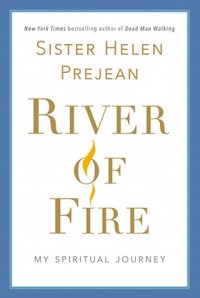
River of FireThis is a memoir of Sister Helen Préjean which covers the time from her upbringing all the way up to, but not overlapping with, her most famous work, the 1993 book Dead Man Walking. It tells us a lot about how growing up in Louisiana in a religious family led her to join a religious order of sisters right out of high school in the 1950s. She described the strictness of the novitiate with the Sisters of Saint Joseph of Medaille and the rules that governed them during that era. She takes special pains to fill in the historic background of her order beginning in seventeenth century France, suppression during the French Revolution, to be re-established in the early nineteenth century. She looks back at the way it lasted into the twentieth century from the point of view of someone who appreciates the devotion and service origins of her order, but also sees the way traditions had been set in concrete with restrictive rules of conduct and governance. As a naturally inquisitive girl, she ran up against the strictness of her order, at the same time she missed the aspects that brought her to the religious life in the first place. These included the stories found the gospels and of heroic saints through the ages, and a personal relationship with a loving God. She professed her vows and began the work of educating junior high school students. But not long after this, things began to change within the Catholic Church when Pope John XXIII called an Ecumenical Council to re-examine its very roots of the Catholic faith and its role within the world. Some within the church saw this as a breath of fresh air while others found it a betrayal of many centuries worth of tradition.
The Sisters of St. Joseph learned that things had to change in ways that felt radical at first. She describes in detail the confining habits adapted from sixteenth century widow's garb that had once been part of their identity, the restrictions about visitors to the mother house, and the subordinate role the order had assumed relative to the church's male hierarchy. These all changed along with the tradition of taking a new name after professing their vows. Vatican II encouraged and exhorted the entire church family to engage in discussion to how to best serve all the faithful and the outside world. At the same time the vast societal changes of the 1960s affected religious orders. The number of women interested in joining as sisters plummeted and the ones that did were no longer teens unaware of secular culture. Theologians came to new conclusions about the pastoral and historical basis of the church What was clear was that the only way the church could remain relevant was by serving the needs of the people in the modern world.
The author's keen mind was recognized by her fellow sisters, so she was selected to change the nature of her vocation by leaving the classroom so she could prepare herself to be in charge of the training of novices. For this leadership role she needed to learn the latest thinking from the leading experts in the Church, attending classes in Indiana and to Canada with other priests and nuns. She made friendships with sisters and one particular priest she met during this period. They knew the stories of the pitfalls that could come from an exclusive relationship between a religious woman and a priest both sworn to celibacy, which have led to people leaving their vows. In this section she doesn't pull her punches as describes the love and secrets that started to develop between herself and the priest and began to cause problems. This is the section of the book where the author comes across as most fully human to the reader as she worked hard to solve the dilemma once and for all.
Her studies over, she returned to Louisiana to begin her new responsibilities. But before long there were currents in her order of the plight of the poor and powerless like the Black underclass in their state of Louisiana, and she felt the call of another ministry set in the inner city, not in the safety of the convent. Growing up white in the post-war south, she became conscious just what kinds of privileges she had enjoyed up till that time, and how so many people of color had been deprived of these. She had known virtually no Black people as a child or teen and needed to learn how to conduct herself in ways that communicated respect and compassion in this new sort of ministry.
The biggest change was yet to come when by chance she heard about a death-row inmate in Louisiana asking to meet with someone who could help tend to his spiritual needs. This story is what turned into a social movement and the basis of Dead Man Walking. Once again, her life would change as someone in the public eye. Here is where we can understand how her experiences of the preceding three decades had prepared her inwardly for the challenges of being a celebrity calling for social justice. In the appendix to this book she talks about how in the 2010s she discovers how she could become a person who could change the Catholic Church and even society as a whole.
I found the author's voice in this book unmistakable and admirable. This is a person who tried to do what was right using her own mind and what she learned and finally achieved respect and renown for it. I've got to believe that this lovingly detailed account of the first early decades of her formation informs what we should think of her as what she has become. I believe that her life's work will be one that will be remembered as one of the most remarkable of this time.