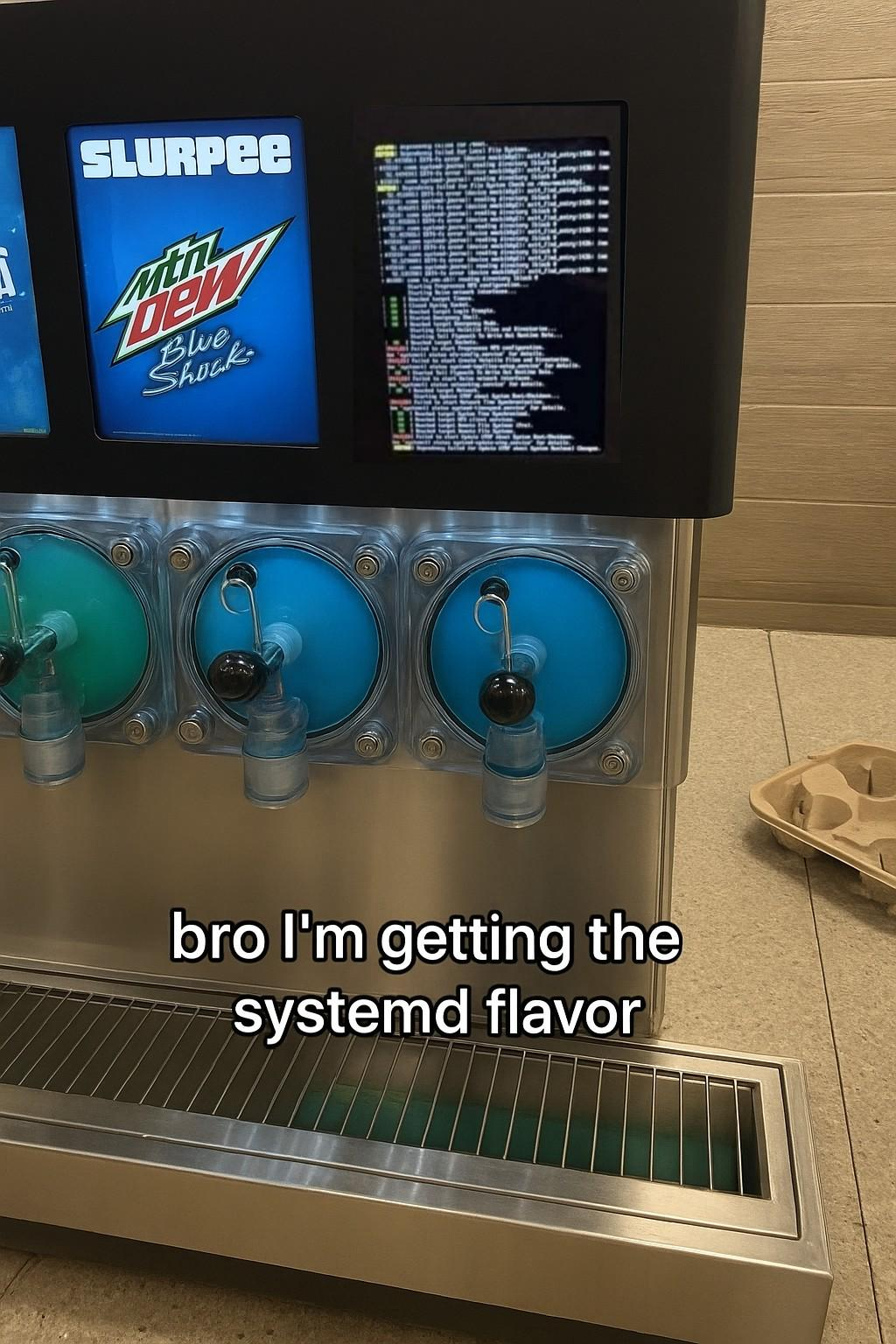
systemd
3️⃣ Here's the 3rd post highlighting key new features of the upcoming v259 release of systemd. #systemd259 #systemd
This one is quick and closely related to what I discussed in the previous installment:
There's now a new verb "dlopen-metadata" in systemd-analyze that extracts the dlopen() metadata from an ELF file and displays it in tabular form.
It's that time again! The systemd v259 release is coming closer. Let's restart the "what's new" series of posts for this iteration! Hence:
1️⃣ Here's the 1st post highlighting key new features of the upcoming v259 release of systemd. #systemd259 #systemd
For many usecases it's quite useful if local services can register additional hostnames for local resolution. For example, container and VMMs might want to register the IPs of locally running containers or VMs via a hostname, so that you can…
RE: https://mastodon.social/@daandemeyer/115565105032166177
4️⃣ Here's the 4th post highlighting key new features of the upcoming v259 release of systemd. #systemd259 #systemd
For this one I am simply going to top-post @daandemeyer's story about run0's new --empower switch, which gives your process capability + polkit privileges, without changing your user ID. Very powerful stuff.
2️⃣ Here's the 2nd post highlighting key new features of the upcoming v259 release of systemd. #systemd259 #systemd
If you have systemd v259 on your system, and you run "ldd /usr/lib/systemd/systemd" (i.e. query the shared library deps of the systemd service manager binary), then you get the following output:
📼 "systemd-ifying postmarketOS, our immutable future, and why Alpine is cooler than you thought"
Because people at @mediacccde are absolutely amazing, the talk is already up!
8️⃣ Here's the 8th post highlighting key new features of the upcoming v259 release of systemd. #systemd259 #systemd
systemd-modules-load.sevice is an early-boot service that loads a list of kernel modules into the kernel that is configured via /etc/modules-load.d/ (and similar dirs under /usr/ + /run/ as usual). It's half a legacy feature, because nowadays kernel modules are generally auto-loaded based on "modalias" information they expose, which binds them to certain hardware vendor/product …
6️⃣ Here's the 6th post highlighting key new features of the upcoming v259 release of systemd. #systemd259 #systemd
Here's a short one: systemd v259 will compile fine with musl libc, out of the box.
Sounds great? Well, it's not as great as it might sound to some. musl has quite some limitations compared to glibc: the primary one is that there's no Name Service Switch (NSS) support. That's the subsystem that allows systemd to make domain names, user names, groups names resolvable via…
7️⃣ Here's the 7th post highlighting key new features of the upcoming v259 release of systemd. #systemd259 #systemd
systemd-repart is systemd's dynamic, elastic image generation and repartitioning tool. It can either run "online" during early boot to create/encrypt root file systems or other partitions on the running system, or it can run "offline" to prepare images that can later be booted.
With systemd v259 it gained one new trick:
5️⃣ Here's the 5th post highlighting key new features of the upcoming v259 release of systemd. #systemd259 #systemd
One really fun feature of systemd-nspawn is the --bind-user= switch. If used it will make the specified user from the host (i.e. user record + $HOME) available inside the container. It's a really simple way to quickly get shared access to your home dir from host and container.
With v259 the same option is now available for systemd-vmspawn too. Or in other words, …
9️⃣ Here's the 9th post highlighting key new features of the upcoming v259 release of systemd. #systemd259 #systemd
Over the past months and years, systemd as acquired a number of features in the verified boot/TPM area. Verified boot means basically that in cooperation with a TPM a secure log is kept of what happens during runtime and in particular during boot, specifically that every component takes a hash value of the next component it starts (this is called "measuring").
#FOSS is all about options:
- I chose not to use #RedHat systems 28 years ago.
- I chose not te use #GNOME 15 years ago
- I chose not to use #SystemD 6 years ago.
- I choose to accelerate the migration of all the #Linux based systems I can to #BSD systems because:
- I choose to keep up with the #UNIX way
- I choose to use stable systems which don't change for the sake of change
- I choose to be part of healthier communities, that don't promote monoculture or fall so easily into arrogance