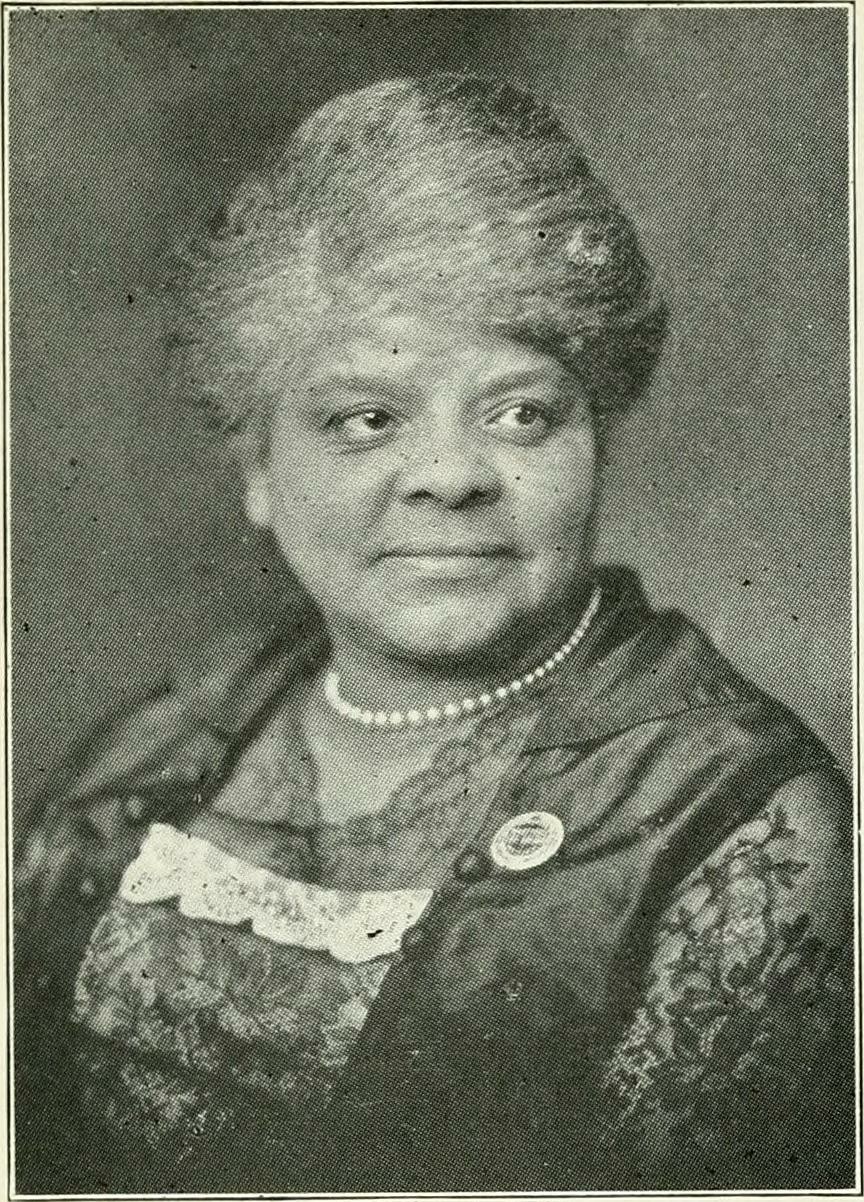
<p><a href="/tags/onthisday/" rel="tag">#OnThisDay</a>, 30 Jan 1913, Ida B Wells forms the Alpha Suffrage Club in Chicago, Illinois, to give a voice to Black women who had been excluded by national suffrage organisations because of their race. </p><p>In March 1913, the club headed to Washington DC to take part in the national Women’s Suffrage Procession. They were told to march at the back, in a segregated section, so as not to upset white southern women.</p><p><a href="/tags/womeninhistory/" rel="tag">#WomenInHistory</a> <a href="/tags/otd/" rel="tag">#OTD</a> <a href="/tags/history/" rel="tag">#History</a> <a href="/tags/womenshistory/" rel="tag">#WomensHistory</a> <a href="/tags/americanhistory/" rel="tag">#AmericanHistory</a> <a href="/tags/histodons/" rel="tag">#Histodons</a></p><p>1/2</p>
otd

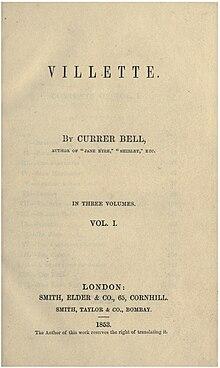
<p><a href="/tags/otd/" rel="tag">#OTD</a> in 1853.</p><p>Charlotte Brontë's novel, Villette, appears, its publication having been delayed in order to allow Ruth, by her friend Elizabeth Gaskell, to be given a head start in the press.</p><p>Villette was Charlotte Brontë's third & last novel published during her life. It was preceded in writing by The Professor (her posthumously published 1st novel, of which Villette is a reworking, though still not very similar), Jane Eyre, & Shirley.</p><p><a href="https://en.wikipedia.org/wiki/Villette_(novel)" rel="nofollow" class="ellipsis" title="en.wikipedia.org/wiki/Villette_(novel)"><span class="invisible">https://</span><span class="ellipsis">en.wikipedia.org/wiki/Villette</span><span class="invisible">_(novel)</span></a></p><p><a href="https://gutenberg.org/ebooks/9182" rel="nofollow"><span class="invisible">https://</span>gutenberg.org/ebooks/9182</a></p><p><a href="/tags/books/" rel="tag">#books</a></p>
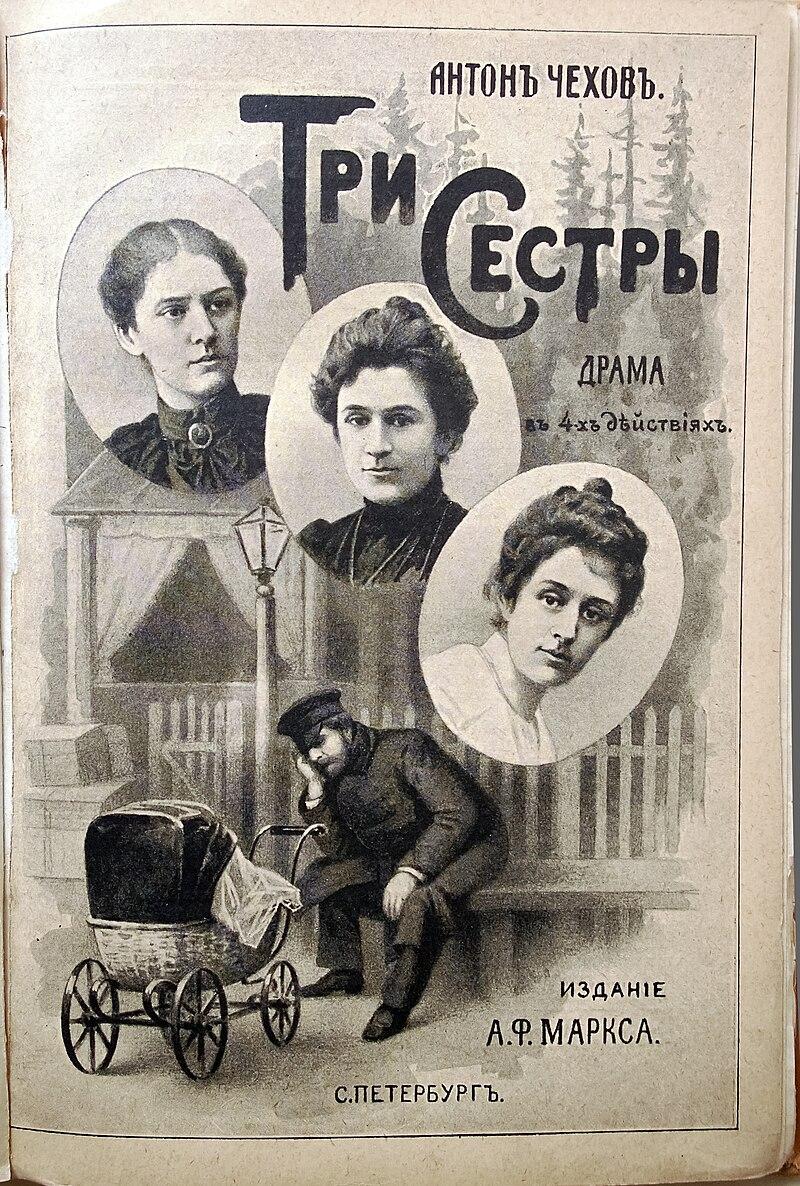
<p>"What seems to us serious, significant and important will, in future times, be forgotten or won’t seem important at all."</p><p><a href="/tags/otd/" rel="tag">#OTD</a> in 1901.</p><p>Anton Chekhov's Three Sisters premieres at Moscow Art Theatre in Russia under the direction of Konstantin Stanislavski and Vladimir Nemirovich-Danchenko.</p><p><a href="https://en.wikipedia.org/wiki/Three_Sisters_(play)" rel="nofollow" class="ellipsis" title="en.wikipedia.org/wiki/Three_Sisters_(play)"><span class="invisible">https://</span><span class="ellipsis">en.wikipedia.org/wiki/Three_Si</span><span class="invisible">sters_(play)</span></a></p><p>Three Sisters at PG:<br><a href="https://www.gutenberg.org/ebooks/7986" rel="nofollow"><span class="invisible">https://</span>www.gutenberg.org/ebooks/7986</a></p><p><a href="/tags/books/" rel="tag">#books</a> <a href="/tags/literature/" rel="tag">#literature</a> <a href="/tags/theatre/" rel="tag">#theatre</a></p>
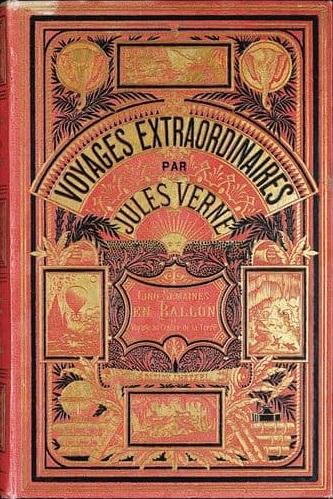
<p><a href="/tags/otd/" rel="tag">#OTD</a> in 1863.</p><p>Jules Verne's novel Five Weeks in a Balloon, or, Journeys and Discoveries in Africa by Three Englishmen (Cinq semaines en ballon) is published in Paris. It will be the first of Verne's Voyages Extraordinaires. This was Verne's first novel to be published by Pierre-Jules Hetzel, following the rejection of Voyage en Angleterre et en Écosse.</p><p><a href="https://en.wikipedia.org/wiki/Five_Weeks_in_a_Balloon" rel="nofollow" class="ellipsis" title="en.wikipedia.org/wiki/Five_Weeks_in_a_Balloon"><span class="invisible">https://</span><span class="ellipsis">en.wikipedia.org/wiki/Five_Wee</span><span class="invisible">ks_in_a_Balloon</span></a></p><p>Five Weeks in a Balloon at PG:<br><a href="https://gutenberg.org/ebooks/3526" rel="nofollow"><span class="invisible">https://</span>gutenberg.org/ebooks/3526</a><br><a href="https://gutenberg.org/ebooks/4548" rel="nofollow"><span class="invisible">https://</span>gutenberg.org/ebooks/4548</a></p><p><a href="/tags/books/" rel="tag">#books</a> <a href="/tags/literature/" rel="tag">#literature</a></p>
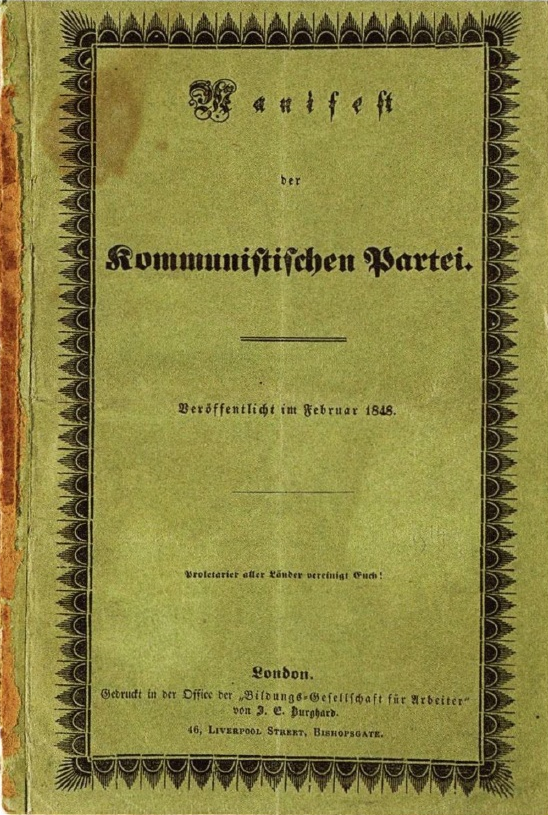
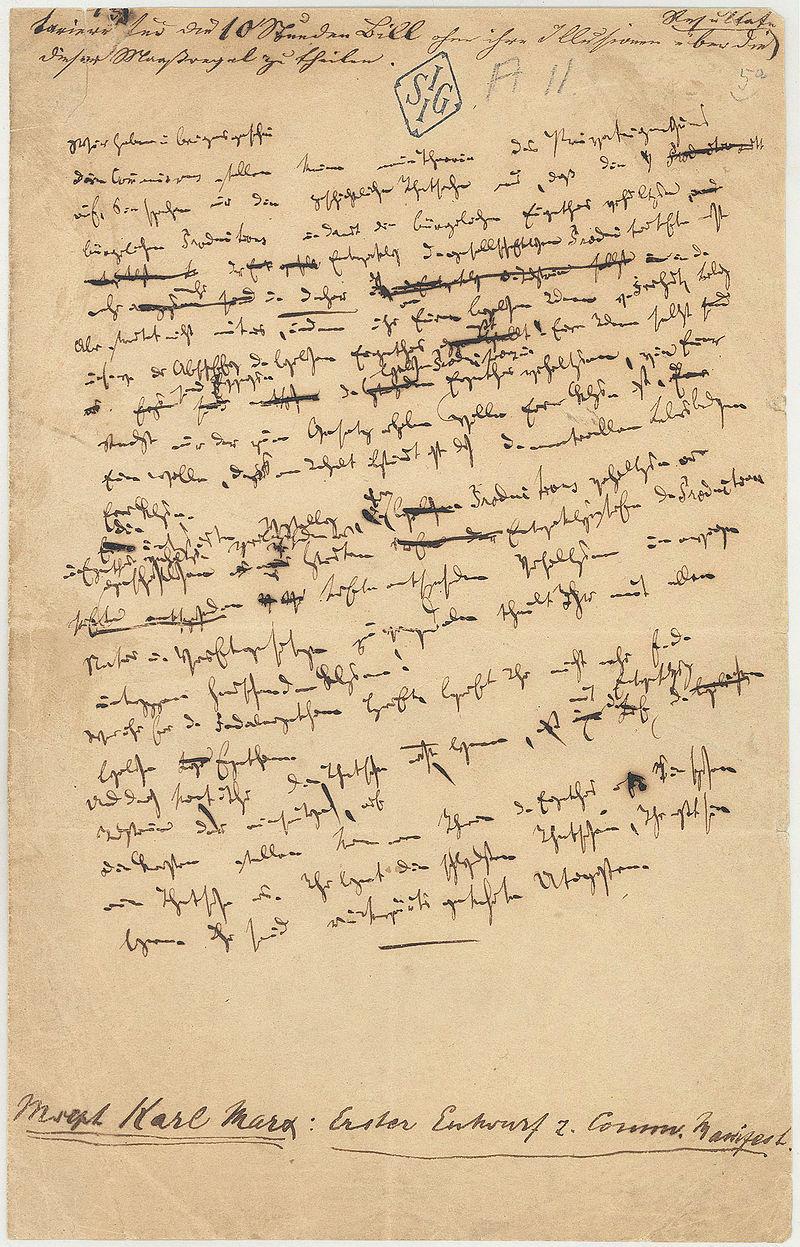
<p><a href="/tags/otd/" rel="tag">#OTD</a> in 1848.</p><p>Karl Marx and Friedrich Engels publish The Communist Manifesto (Manifest der Kommunistischen Partei) in London.</p><p>Published amid the Revolutions of 1848 in Europe, the manifesto remains one of the world's most influential political documents.</p><p><a href="https://en.wikipedia.org/wiki/The_Communist_Manifesto" rel="nofollow" class="ellipsis" title="en.wikipedia.org/wiki/The_Communist_Manifesto"><span class="invisible">https://</span><span class="ellipsis">en.wikipedia.org/wiki/The_Comm</span><span class="invisible">unist_Manifesto</span></a></p><p>At PG.<br><a href="https://gutenberg.org/ebooks/61" rel="nofollow"><span class="invisible">https://</span>gutenberg.org/ebooks/61</a></p><p><a href="/tags/books/" rel="tag">#books</a> <a href="/tags/literature/" rel="tag">#literature</a></p>
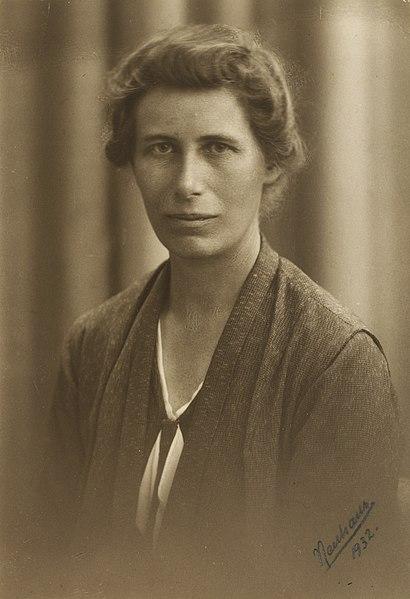
<p>Danish seismologist and geophysicist Inge Lehmann died <a href="/tags/otd/" rel="tag">#OTD</a> in 1993.</p><p>She is best known for her discovery in 1936 of the solid inner core that exists within the molten outer core of the Earth. The seismic discontinuity in the speed of seismic waves at depths between 190 and 250 km is named the Lehmann discontinuity after her. Lehmann is considered to be a pioneer among women and scientists in seismology research.</p><p><a href="https://en.wikipedia.org/wiki/Inge_Lehmann" rel="nofollow" class="ellipsis" title="en.wikipedia.org/wiki/Inge_Lehmann"><span class="invisible">https://</span><span class="ellipsis">en.wikipedia.org/wiki/Inge_Leh</span><span class="invisible">mann</span></a></p><p><a href="/tags/seismology/" rel="tag">#seismology</a> <a href="/tags/geophysics/" rel="tag">#geophysics</a> <a href="/tags/womeninstem/" rel="tag">#womeninStem</a></p>
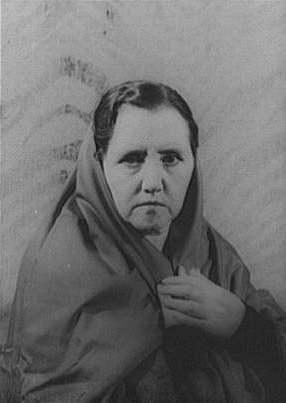
<p><a href="/tags/otd/" rel="tag">#OTD</a> in 1904.</p><p>J. M. Synge's tragedy Riders to the Sea is first performed at Molesworth Hall, Dublin, by the Irish National Theatre Society, with Helen Laird playing Maurya. </p><p>Synge's use of phrasing from the Irish language is part of the Irish Literary Revival, a period when Irish literature looked to encourage pride and nationalism in Ireland.</p><p><a href="https://en.wikipedia.org/wiki/Riders_to_the_Sea" rel="nofollow" class="ellipsis" title="en.wikipedia.org/wiki/Riders_to_the_Sea"><span class="invisible">https://</span><span class="ellipsis">en.wikipedia.org/wiki/Riders_t</span><span class="invisible">o_the_Sea</span></a></p><p>Riders to the Sea at PG:<br><a href="https://www.gutenberg.org/ebooks/994" rel="nofollow"><span class="invisible">https://</span>www.gutenberg.org/ebooks/994</a></p><p><a href="/tags/books/" rel="tag">#books</a> <a href="/tags/literature/" rel="tag">#literature</a> <a href="/tags/theatre/" rel="tag">#theatre</a></p>
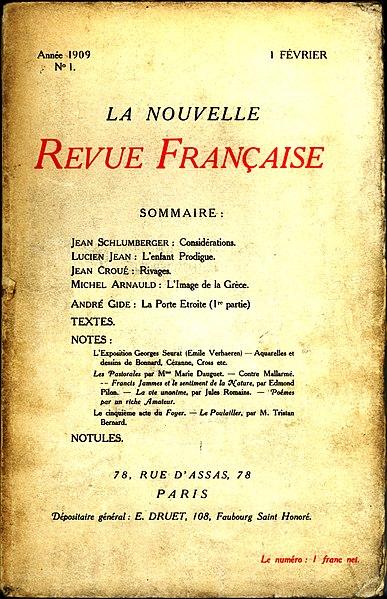
<p><a href="/tags/otd/" rel="tag">#OTD</a> in 1909.</p><p>The first issue appears of La Nouvelle Revue Française, a literary magazine founded in Paris by André Gide, Jacques Copeau, Jean Schlumberger, Gaston Gallimard, and others.</p><p>Established writers such as Paul Bourget and Anatole France contributed to the magazine from its early days. The first published works by André Malraux and Jean-Paul Sartre were in the pages of the Revue.</p><p><a href="https://en.wikipedia.org/wiki/Nouvelle_Revue_Fran%C3%A7aise" rel="nofollow" class="ellipsis" title="en.wikipedia.org/wiki/Nouvelle_Revue_Fran%C3%A7aise"><span class="invisible">https://</span><span class="ellipsis">en.wikipedia.org/wiki/Nouvelle</span><span class="invisible">_Revue_Fran%C3%A7aise</span></a></p><p>Nouvelle Revue Française is available at UPenn:<br><a href="https://onlinebooks.library.upenn.edu/webbin/serial?id=nouvellerevfr" rel="nofollow" class="ellipsis" title="onlinebooks.library.upenn.edu/webbin/serial?id=nouvellerevfr"><span class="invisible">https://</span><span class="ellipsis">onlinebooks.library.upenn.edu/</span><span class="invisible">webbin/serial?id=nouvellerevfr</span></a></p><p><a href="/tags/books/" rel="tag">#books</a></p>
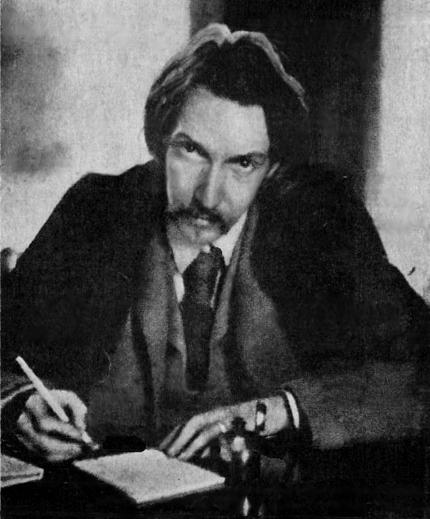
<p><a href="/tags/otd/" rel="tag">#OTD</a> (to March 17) in 1877</p><p>Robert Louis Stevenson's first published work of fiction, the novella "An Old Song", appears anonymously in four episodes in the magazine London. It is first attributed to Stevenson in 1980.</p><p>Books by Robert Louis Stevenson at PG:<br><a href="https://www.gutenberg.org/ebooks/author/35" rel="nofollow" class="ellipsis" title="www.gutenberg.org/ebooks/author/35"><span class="invisible">https://</span><span class="ellipsis">www.gutenberg.org/ebooks/autho</span><span class="invisible">r/35</span></a></p><p><a href="/tags/books/" rel="tag">#books</a> <a href="/tags/literature/" rel="tag">#literature</a></p>
<p>"Hvad skal manden være? Sig selv, det er mit korte svar."<br>"What ought a man to be? Well, my short answer is ‘himself’."<br>Act IV</p><p><a href="/tags/otd/" rel="tag">#OTD</a> in 1876.</p><p>The stage première of the verse-play Peer Gynt by Henrik Ibsen (published 1867) with incidental music by Edvard Grieg, takes place in Christiania, Norway.</p><p><a href="https://en.wikipedia.org/wiki/Peer_Gynt" rel="nofollow" class="ellipsis" title="en.wikipedia.org/wiki/Peer_Gynt"><span class="invisible">https://</span><span class="ellipsis">en.wikipedia.org/wiki/Peer_Gyn</span><span class="invisible">t</span></a></p><p>Peer Gynt at PG:<br><a href="https://www.gutenberg.org/ebooks/66239" rel="nofollow"><span class="invisible">https://</span>www.gutenberg.org/ebooks/66239</a></p><p>In Norwegian at <span class="h-card"><a href="['https://bsky.brid.gy/r/https://bsky.app/profile/runeberg-org.bsky.social', 'https://runeberg.org/']" class="u-url mention" rel="nofollow noopener noreferrer" target="_blank">@<span>runeberg-org.bsky.social</span></a></span> <br><a href="https://runeberg.org/peergynt/" rel="nofollow"><span class="invisible">https://</span>runeberg.org/peergynt/</a></p><p><a href="/tags/books/" rel="tag">#books</a> <a href="/tags/literature/" rel="tag">#literature</a> <a href="/tags/theatre/" rel="tag">#theatre</a></p>
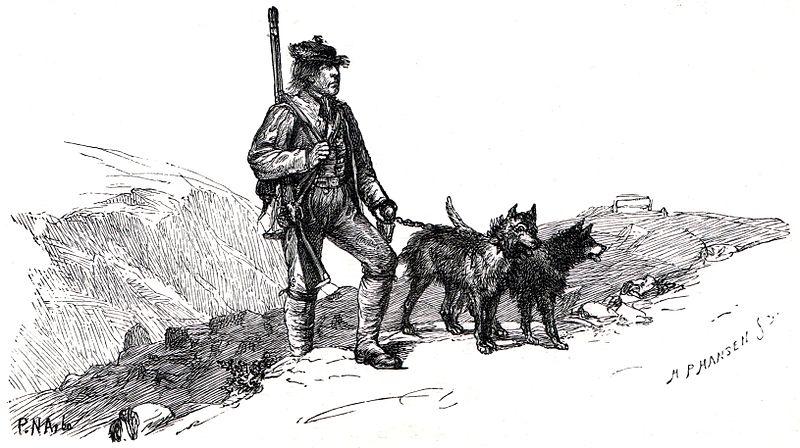
Edited 1y ago

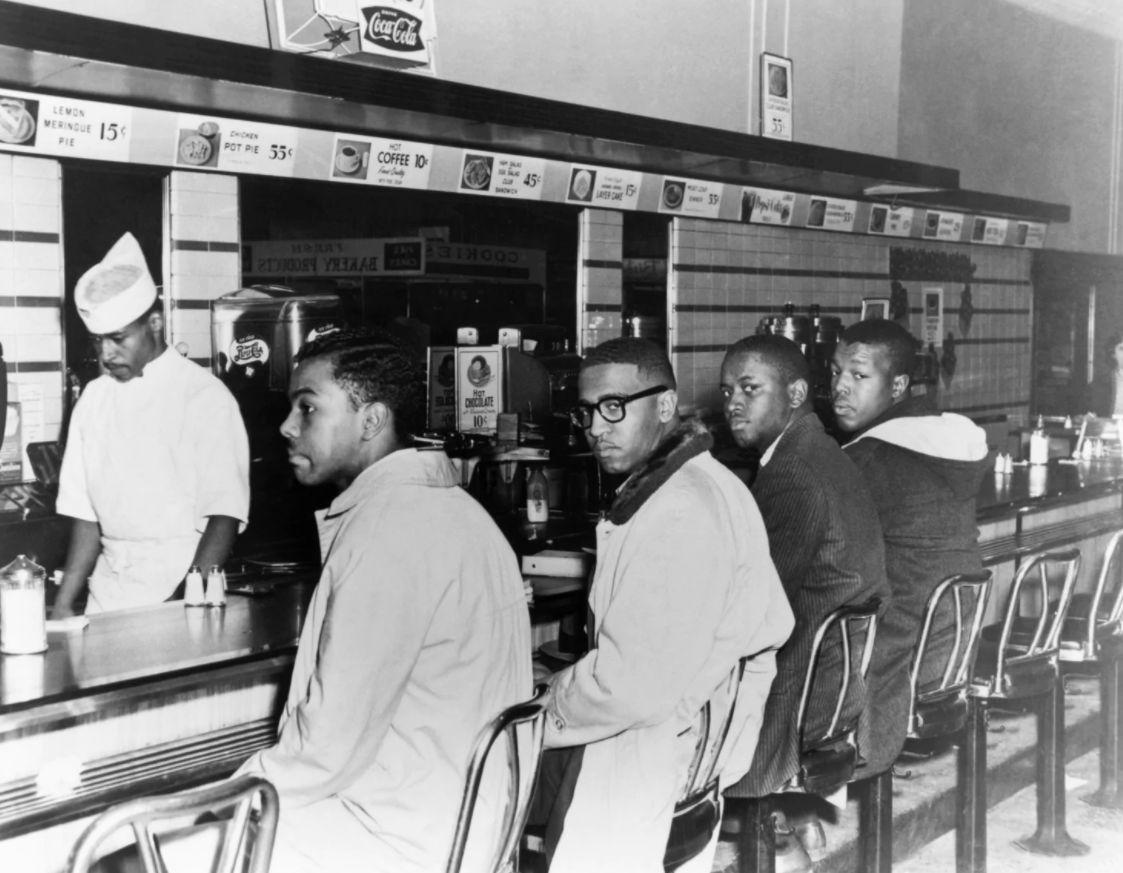
<p>Today is the start of <a href="/tags/blackhistorymonth/" rel="tag">#BlackHistoryMonth</a> in the US. It is also the anniversary of <a href="/tags/otd/" rel="tag">#OtD</a> 1 Feb 1960 in Greensboro, NC, when four Black college students refused to move from a Woolworth's lunch counter after they were denied service <a href="https://stories.workingclasshistory.com/article/10962/greensboro-civil-rights-sit-ins" rel="nofollow" class="ellipsis" title="stories.workingclasshistory.com/article/10962/greensboro-civil-rights-sit-ins"><span class="invisible">https://</span><span class="ellipsis">stories.workingclasshistory.co</span><span class="invisible">m/article/10962/greensboro-civil-rights-sit-ins</span></a></p>
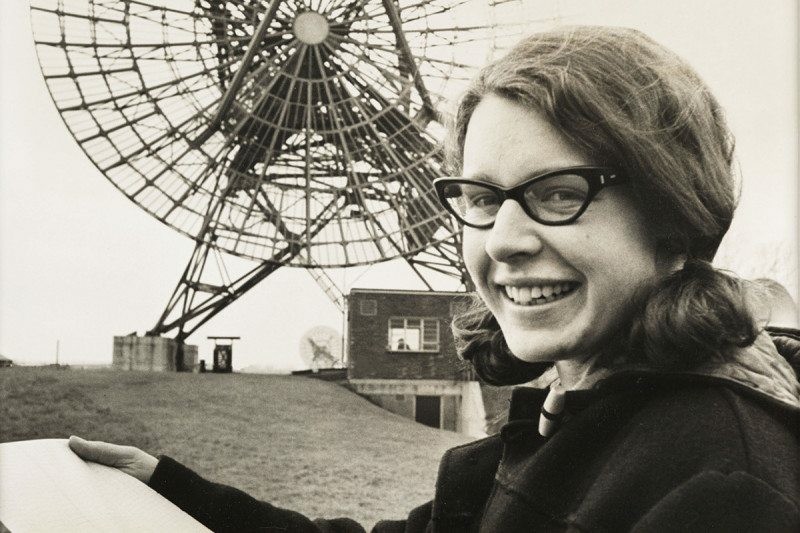
<p><a href="/tags/onthisday/" rel="tag">#OnThisDay</a>, 24 Feb 1968, Jocelyn Bell Burnell - along with her male supervisor and three other men - published a paper confirming the discovery of pulsars. She had built the array, picked up the signal and argued it was not an anomaly. Hewish received the Nobel prize for it in 1974: Bell Burnell did not.</p><p>In 2018 Bell Burnell received a £3m prize for her work. She's used it to set up a foundation to improve the diversity in STEM.</p><p><a href="/tags/womeninhistory/" rel="tag">#WomenInHistory</a> <a href="/tags/otd/" rel="tag">#OTD</a> <a href="/tags/history/" rel="tag">#History</a> <a href="/tags/womenshistory/" rel="tag">#WomensHistory</a> <a href="/tags/histodons/" rel="tag">#Histodons</a></p>
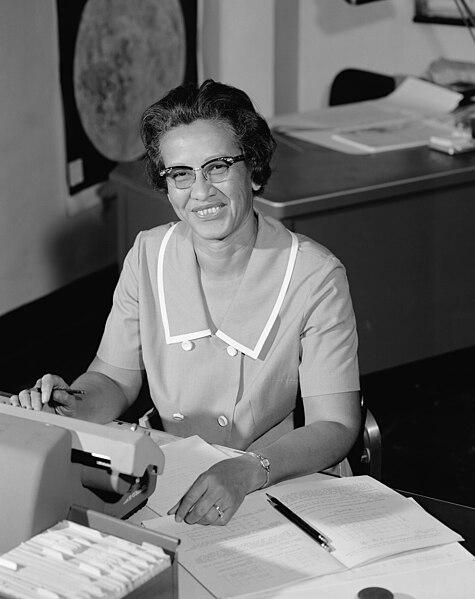
<p>Katherine Johnson died <a href="/tags/otd/" rel="tag">#OTD</a> in 2020.</p><p>Her work included calculating trajectories, launch windows, and emergency return paths for Project Mercury spaceflights, including those for astronauts Alan Shepard and John Glenn, and rendezvous paths for the Apollo Lunar Module and command module on flights to the Moon. Her calculations were also essential to the beginning of the Space Shuttle program, and she worked on plans for a mission to Mars.</p><p><a href="https://en.wikipedia.org/wiki/Katherine_Johnson" rel="nofollow" class="ellipsis" title="en.wikipedia.org/wiki/Katherine_Johnson"><span class="invisible">https://</span><span class="ellipsis">en.wikipedia.org/wiki/Katherin</span><span class="invisible">e_Johnson</span></a></p><p><a href="/tags/mathematics/" rel="tag">#mathematics</a> <a href="/tags/womeninstem/" rel="tag">#womeninStem</a></p>
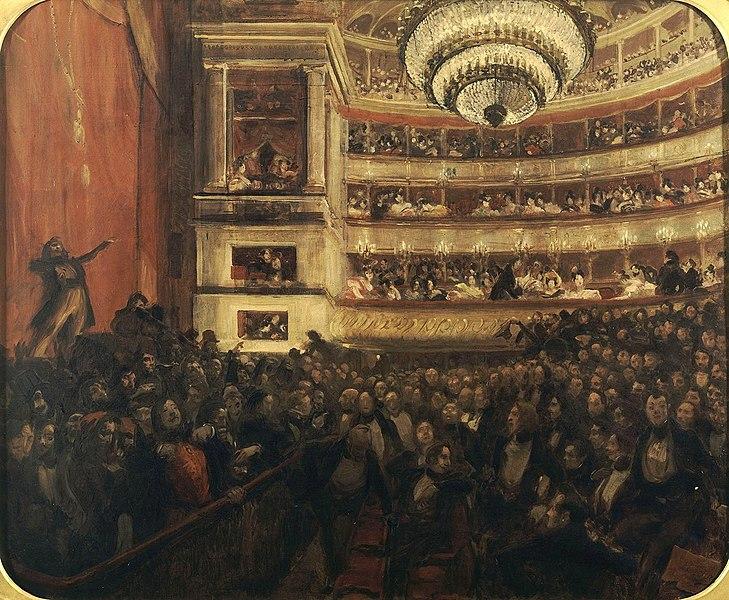
<p><a href="/tags/otd/" rel="tag">#OTD</a> in 1830.</p><p>The première of Victor Hugo's play Hernani in Paris elicits protests from an audience seeing it as an attack on Classicism.</p><p>Hugo had enlisted the support of fellow Romanticists such as Hector Berlioz and Théophile Gautier to combat the opposition of Classicists who recognised the play as a direct attack on their values.</p><p><a href="https://en.wikipedia.org/wiki/Hernani_(drama)" rel="nofollow" class="ellipsis" title="en.wikipedia.org/wiki/Hernani_(drama)"><span class="invisible">https://</span><span class="ellipsis">en.wikipedia.org/wiki/Hernani_</span><span class="invisible">(drama)</span></a></p><p>Hernani at PG:<br><a href="https://www.gutenberg.org/ebooks/9976" rel="nofollow"><span class="invisible">https://</span>www.gutenberg.org/ebooks/9976</a></p><p><a href="/tags/books/" rel="tag">#books</a> <a href="/tags/literature/" rel="tag">#literature</a> <a href="/tags/drama/" rel="tag">#drama</a></p>
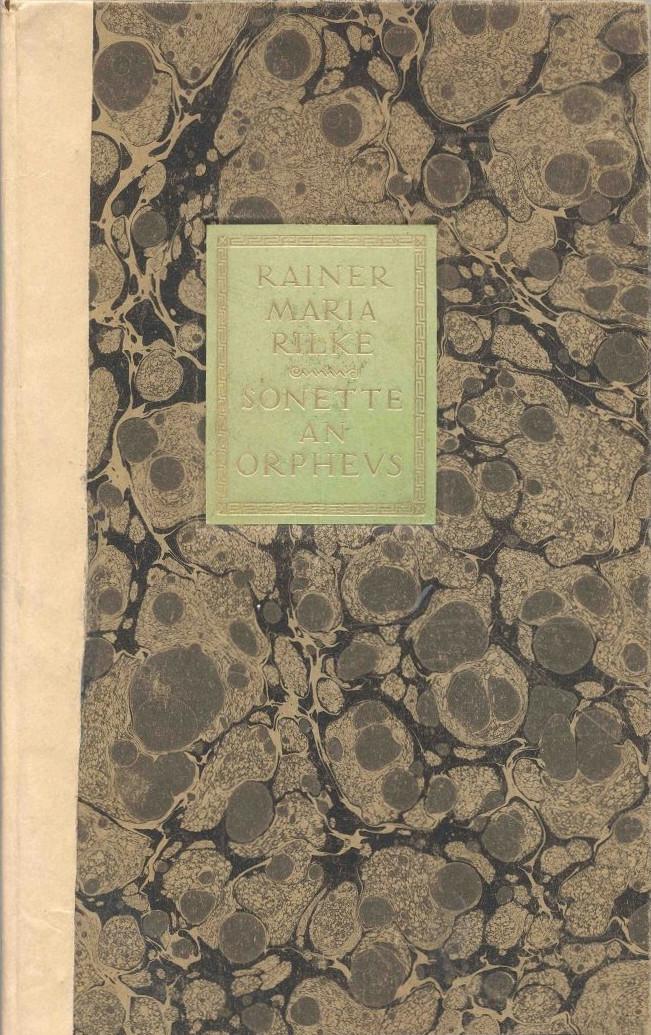
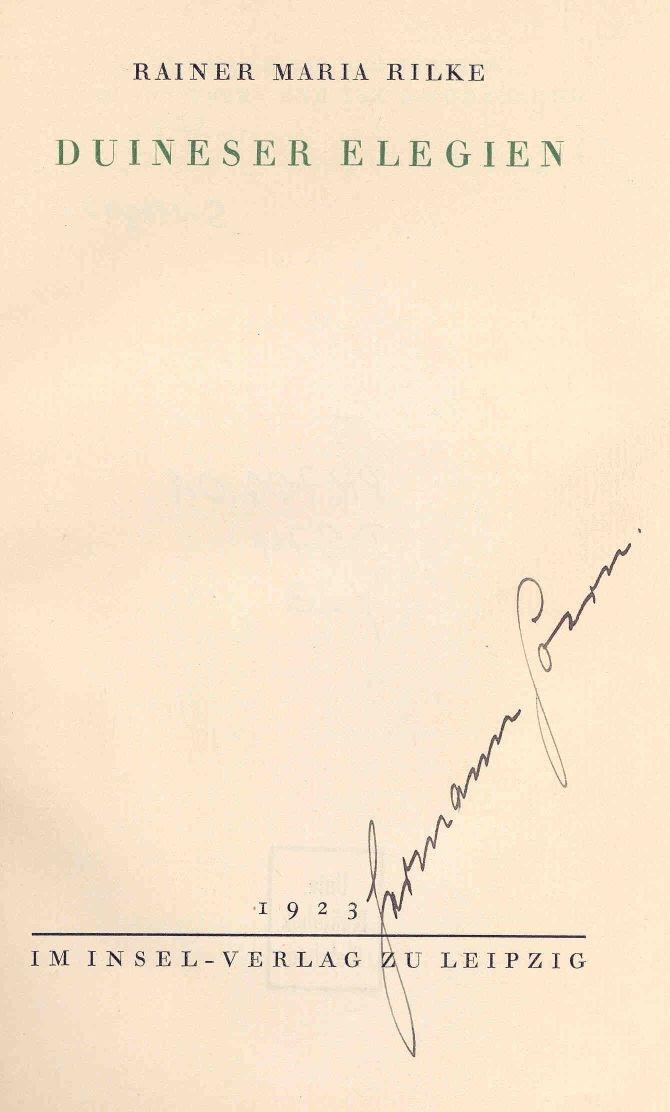
<p><a href="/tags/otd/" rel="tag">#OTD</a> in 1922.</p><p>In a "savage creative storm" of less than three weeks beginning today at Château de Muzot in Switzerland, Rainer Maria Rilke writes his Sonnets to Orpheus (Die Sonette an Orpheus) and completes his Duino Elegies (Duineser Elegien).</p><p><a href="https://en.wikipedia.org/wiki/Sonnets_to_Orpheus" rel="nofollow" class="ellipsis" title="en.wikipedia.org/wiki/Sonnets_to_Orpheus"><span class="invisible">https://</span><span class="ellipsis">en.wikipedia.org/wiki/Sonnets_</span><span class="invisible">to_Orpheus</span></a></p><p><a href="https://en.wikipedia.org/wiki/Duino_Elegies" rel="nofollow" class="ellipsis" title="en.wikipedia.org/wiki/Duino_Elegies"><span class="invisible">https://</span><span class="ellipsis">en.wikipedia.org/wiki/Duino_El</span><span class="invisible">egies</span></a></p><p>Books by Rainer Maria Rilke at PG:<br><a href="https://www.gutenberg.org/ebooks/author/846" rel="nofollow" class="ellipsis" title="www.gutenberg.org/ebooks/author/846"><span class="invisible">https://</span><span class="ellipsis">www.gutenberg.org/ebooks/autho</span><span class="invisible">r/846</span></a></p><p><a href="/tags/books/" rel="tag">#books</a> <a href="/tags/literature/" rel="tag">#literature</a> <a href="/tags/poetry/" rel="tag">#poetry</a></p>
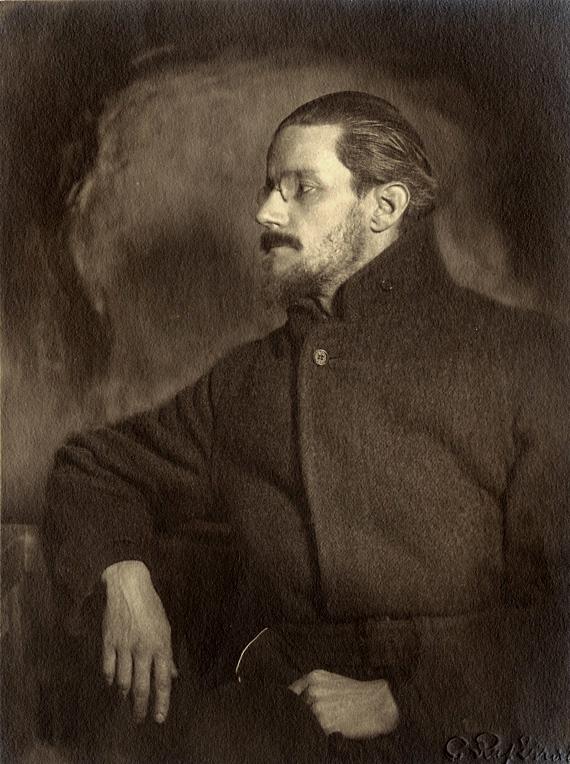
<p>"There is not past, no future; everything flows in an eternal present."</p><p>James Joyce was born <a href="/tags/otd/" rel="tag">#OTD</a> in 1882.</p><p>Together with Virginia Woolf and Dorothy Richardson, he is credited with the development of the stream of consciousness technique in which the same weight is given to both the internal world of the mind and the external world of events and circumstances as factors shaping the actions and views of fictional characters.</p><p>James Joyce at PG:<br><a href="https://gutenberg.org/ebooks/author/1039" rel="nofollow" class="ellipsis" title="gutenberg.org/ebooks/author/1039"><span class="invisible">https://</span><span class="ellipsis">gutenberg.org/ebooks/author/10</span><span class="invisible">39</span></a></p><p><a href="/tags/books/" rel="tag">#books</a> <a href="/tags/literature/" rel="tag">#literature</a></p>
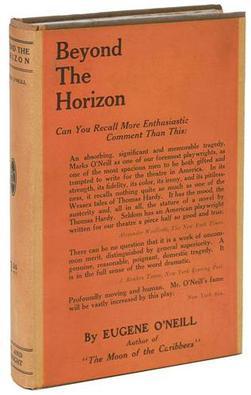
<p><a href="/tags/otd/" rel="tag">#OTD</a> in 1920.</p><p>Beyond the Horizon, Eugene O'Neill's second full-length play, opens with a Morosco Theatre matinée in New York City, partly as a producer's experiment and partly to quiet the actor Richard Bennett, who sought to play the lead. Reviewers hail the play and O'Neill gains fame. It won the 1920 Pulitzer Prize for Drama.</p><p><a href="https://en.wikipedia.org/wiki/Beyond_the_Horizon_(play)" rel="nofollow" class="ellipsis" title="en.wikipedia.org/wiki/Beyond_the_Horizon_(play)"><span class="invisible">https://</span><span class="ellipsis">en.wikipedia.org/wiki/Beyond_t</span><span class="invisible">he_Horizon_(play)</span></a></p><p>Beyond the Horizon at PG:<br><a href="https://www.gutenberg.org/ebooks/58569" rel="nofollow"><span class="invisible">https://</span>www.gutenberg.org/ebooks/58569</a></p><p><a href="/tags/books/" rel="tag">#books</a> <a href="/tags/literature/" rel="tag">#literature</a> <a href="/tags/theatre/" rel="tag">#theatre</a></p>
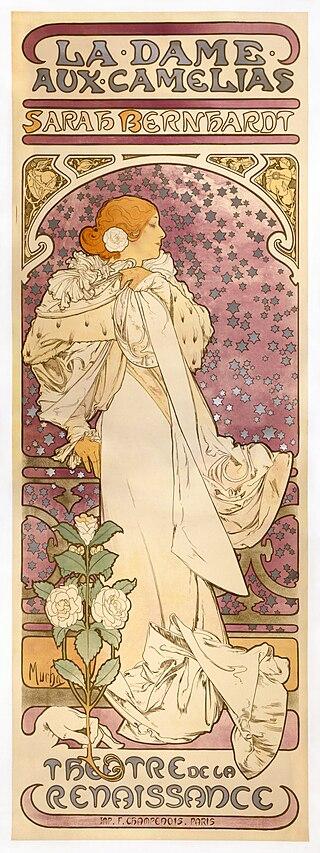
<p><a href="/tags/otd/" rel="tag">#OTD</a> in 1852.</p><p>Alexandre Dumas, fils's stage adaptation of his 1848 novel La Dame aux caméllias is premièred at the Théâtre du Vaudeville in Paris.</p><p>Shortly thereafter, Italian composer Giuseppe Verdi set about putting the story to music in the 1853 opera La traviata, with female protagonist Marguerite Gautier renamed Violetta Valéry.</p><p><a href="https://en.wikipedia.org/wiki/The_Lady_of_the_Camellias" rel="nofollow" class="ellipsis" title="en.wikipedia.org/wiki/The_Lady_of_the_Camellias"><span class="invisible">https://</span><span class="ellipsis">en.wikipedia.org/wiki/The_Lady</span><span class="invisible">_of_the_Camellias</span></a></p><p>La dame aux camélias at PG:<br><a href="https://www.gutenberg.org/ebooks/2419" rel="nofollow"><span class="invisible">https://</span>www.gutenberg.org/ebooks/2419</a><br><a href="https://www.gutenberg.org/ebooks/1608" rel="nofollow"><span class="invisible">https://</span>www.gutenberg.org/ebooks/1608</a></p><p><a href="/tags/books/" rel="tag">#books</a> <a href="/tags/literature/" rel="tag">#literature</a></p>
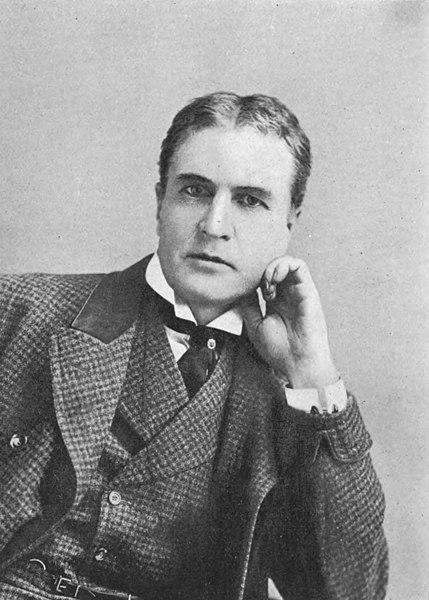
<p><a href="/tags/otd/" rel="tag">#OTD</a> in 1886.</p><p>The first performance of William Gillette's American Civil War drama Held by the Enemy is held at the Criterion Theater, Brooklyn, New York.</p><p>The play was a major step toward modern theater, in that it abandoned many of the crude devices of 19th-century melodrama and introduced realism into the sets, costumes, props, and sound effects. </p><p><a href="https://en.wikipedia.org/wiki/William_Gillette" rel="nofollow" class="ellipsis" title="en.wikipedia.org/wiki/William_Gillette"><span class="invisible">https://</span><span class="ellipsis">en.wikipedia.org/wiki/William_</span><span class="invisible">Gillette</span></a></p><p>William Gillette at PG:<br><a href="https://www.gutenberg.org/ebooks/author/38243" rel="nofollow" class="ellipsis" title="www.gutenberg.org/ebooks/author/38243"><span class="invisible">https://</span><span class="ellipsis">www.gutenberg.org/ebooks/autho</span><span class="invisible">r/38243</span></a></p><p><a href="/tags/books/" rel="tag">#books</a> <a href="/tags/literature/" rel="tag">#literature</a> <a href="/tags/theatre/" rel="tag">#theatre</a></p>

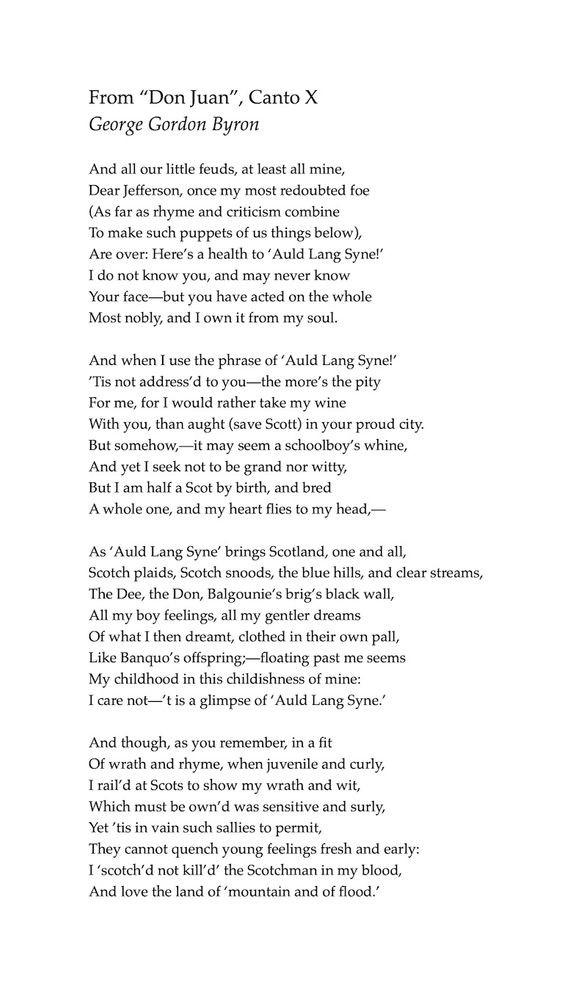
<p>But I am half a Scot by birth, and bred<br>A whole one, and my heart flies to my head,—</p><p>—from “Don Juan”, Canto X, by George Gordon, Lord Byron</p><p>The great Romantic poet George Gordon Byron, 6th Baron Byron – Lord Byron – was born <a href="/tags/otd/" rel="tag">#OTD</a>, 22 Jan, 1788</p><p>A 🎂 🧵</p><p>1/5</p><p><a href="/tags/scottish/" rel="tag">#Scottish</a> <a href="/tags/literature/" rel="tag">#literature</a> <a href="/tags/poem/" rel="tag">#poem</a> <a href="/tags/poetry/" rel="tag">#poetry</a> <a href="/tags/byron/" rel="tag">#Byron</a> <a href="/tags/lordbyron/" rel="tag">#LordByron</a> <a href="/tags/romantic/" rel="tag">#romantic</a> <a href="/tags/romanticism/" rel="tag">#romanticism</a> <a href="/tags/18thcentury/" rel="tag">#18thcentury</a> <a href="/tags/19thcentury/" rel="tag">#19thcentury</a></p>
<p><a href="/tags/otd/" rel="tag">#OTD</a> in 1869.</p><p>Booth's Theatre opens on Manhattan with the owner, Edwin Booth, playing the male lead in Shakespeare's Romeo and Juliet.</p><p>Some reports said it was one of the most elaborate productions of Romeo and Juliet ever seen in America; it was certainly the most popular, running for over six weeks and earning over $60,000 (equivalent to $1,000,000 in 2023).</p><p><a href="https://en.wikipedia.org/wiki/Romeo_and_Juliet" rel="nofollow" class="ellipsis" title="en.wikipedia.org/wiki/Romeo_and_Juliet"><span class="invisible">https://</span><span class="ellipsis">en.wikipedia.org/wiki/Romeo_an</span><span class="invisible">d_Juliet</span></a></p><p>Romeo and Juliet at PG:<br><a href="https://gutenberg.org/ebooks/1513" rel="nofollow"><span class="invisible">https://</span>gutenberg.org/ebooks/1513</a></p><p><a href="/tags/books/" rel="tag">#books</a> <a href="/tags/literature/" rel="tag">#literature</a> <a href="/tags/theatre/" rel="tag">#theatre</a></p>
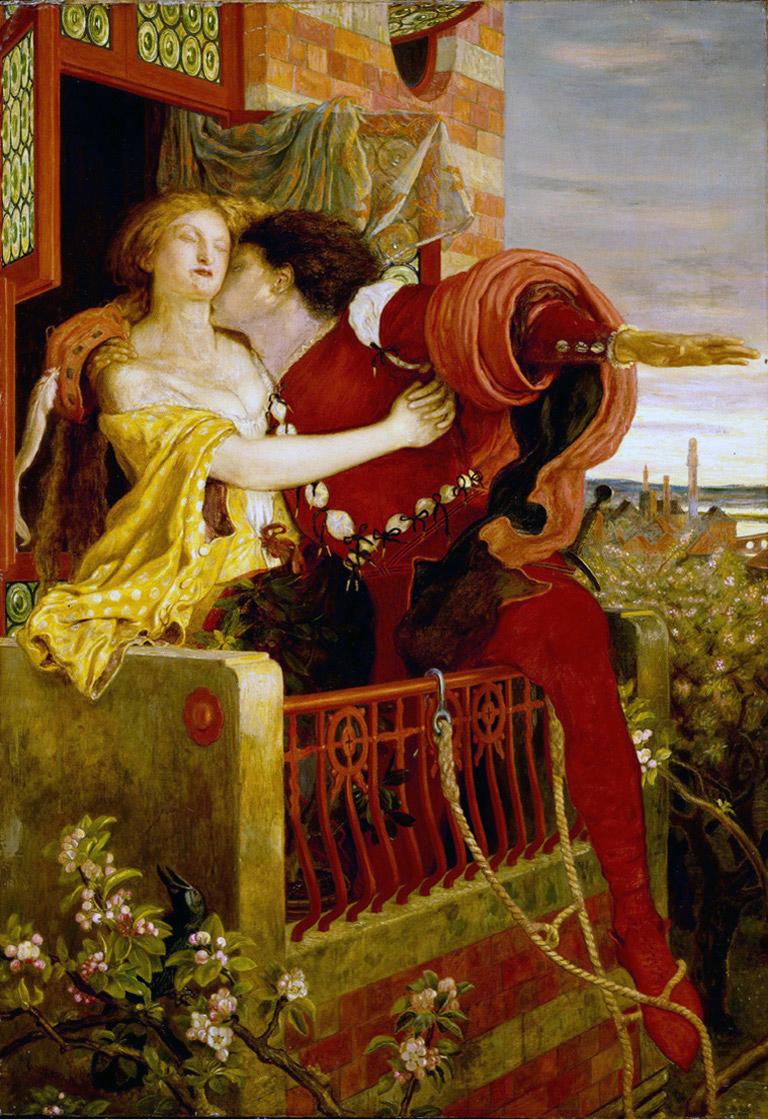
<p><a href="/tags/otd/" rel="tag">#OTD</a> in 1920.</p><p>Federico García Lorca's first play, The Butterfly's Evil Spell (El maleficio de la mariposa) is poorly received at its première in Madrid.</p><p>With only four performances, very poorly received by the public, including booing, it was a total failure for its author. The text, written in verse, is a parable about frustration, love and death; recurring themes in Lorca's work.</p><p><a href="https://en.wikipedia.org/wiki/The_Butterfly%27s_Evil_Spell" rel="nofollow" class="ellipsis" title="en.wikipedia.org/wiki/The_Butterfly%27s_Evil_Spell"><span class="invisible">https://</span><span class="ellipsis">en.wikipedia.org/wiki/The_Butt</span><span class="invisible">erfly%27s_Evil_Spell</span></a></p><p>Garcia Lorca at PG:<br><a href="https://www.gutenberg.org/ebooks/author/56772" rel="nofollow" class="ellipsis" title="www.gutenberg.org/ebooks/author/56772"><span class="invisible">https://</span><span class="ellipsis">www.gutenberg.org/ebooks/autho</span><span class="invisible">r/56772</span></a></p><p><a href="/tags/books/" rel="tag">#books</a> <a href="/tags/literature/" rel="tag">#literature</a> <a href="/tags/theatre/" rel="tag">#theatre</a></p>
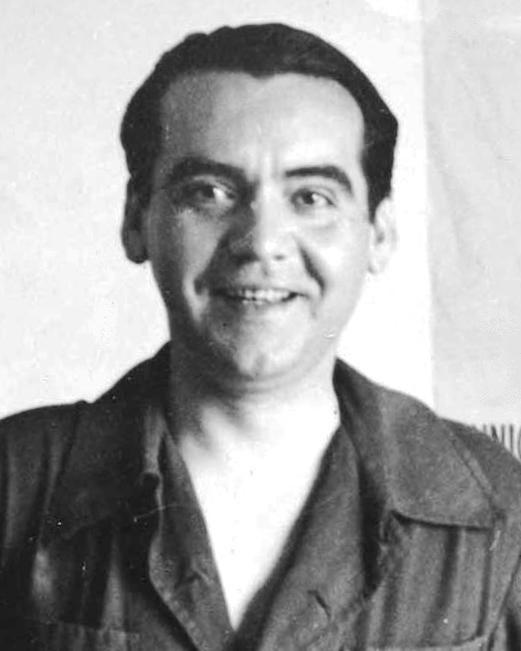
<p>One drops<br>in a bunker,<br>another on his doorstep,<br>Christmas morning, shovelling snow…</p><p>—Andrew Greig, “Norman’s Goodnight”<br>from This Life, This Life: New & Selected Poems 1976–2006 (Bloodaxe Books, 2006</p><p>Norman MacCaig (1910–1996) died <a href="/tags/otd/" rel="tag">#OTD</a>, 23 Jan</p><p><a href="https://poetryarchive.org/poem/normans-goodnight/" rel="nofollow" class="ellipsis" title="poetryarchive.org/poem/normans-goodnight/"><span class="invisible">https://</span><span class="ellipsis">poetryarchive.org/poem/normans</span><span class="invisible">-goodnight/</span></a></p><p><a href="/tags/scottish/" rel="tag">#Scottish</a> <a href="/tags/literature/" rel="tag">#literature</a> <a href="/tags/poem/" rel="tag">#poem</a> <a href="/tags/poetry/" rel="tag">#poetry</a> <a href="/tags/normanmaccaig/" rel="tag">#NormanMacCaig</a></p>
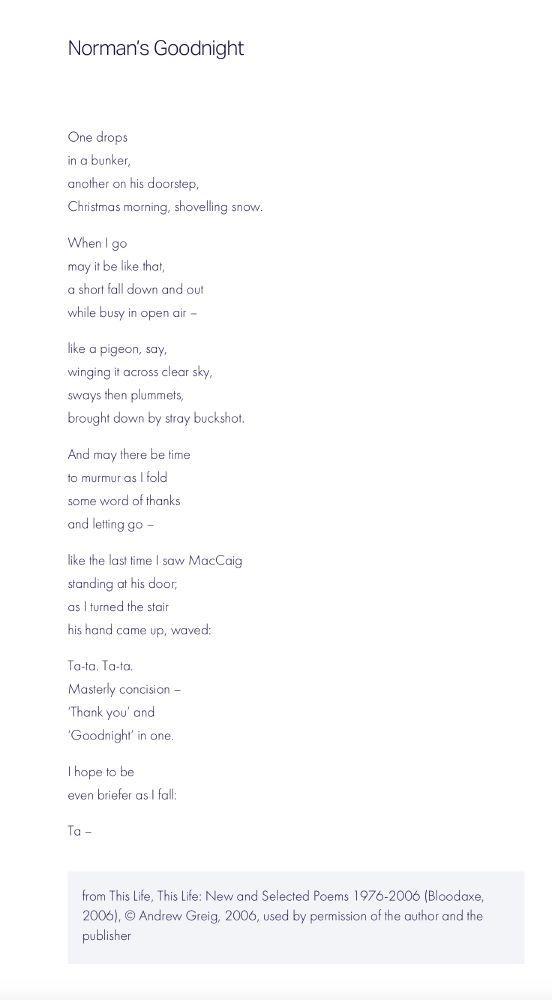
<p><a href="/tags/otd/" rel="tag">#OTD</a> in 1455.</p><p>Traditionally the date of publication of the Gutenberg Bible, the first Western book printed with movable type.</p><p>The Gutenberg Bible is an edition of the Latin Vulgate printed in the 1450s by Johannes Gutenberg in Mainz (Holy Roman Empire), in present-day Germany.</p><p><a href="https://en.wikipedia.org/wiki/Gutenberg_Bible" rel="nofollow" class="ellipsis" title="en.wikipedia.org/wiki/Gutenberg_Bible"><span class="invisible">https://</span><span class="ellipsis">en.wikipedia.org/wiki/Gutenber</span><span class="invisible">g_Bible</span></a></p><p><a href="/tags/gutenberg/" rel="tag">#gutenberg</a> <a href="/tags/movable_printing/" rel="tag">#movable_printing</a></p>
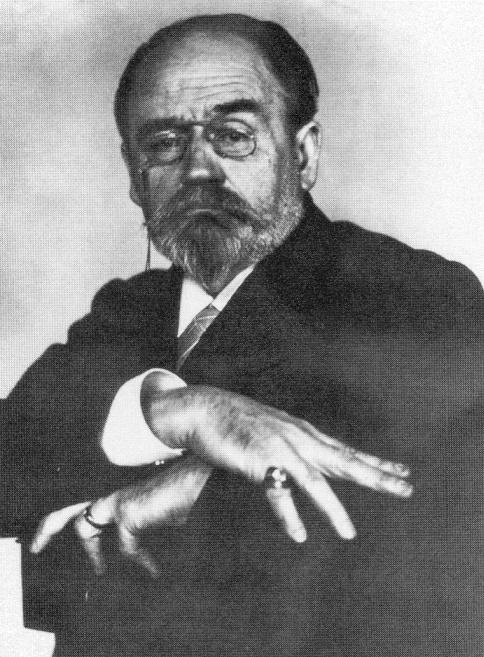
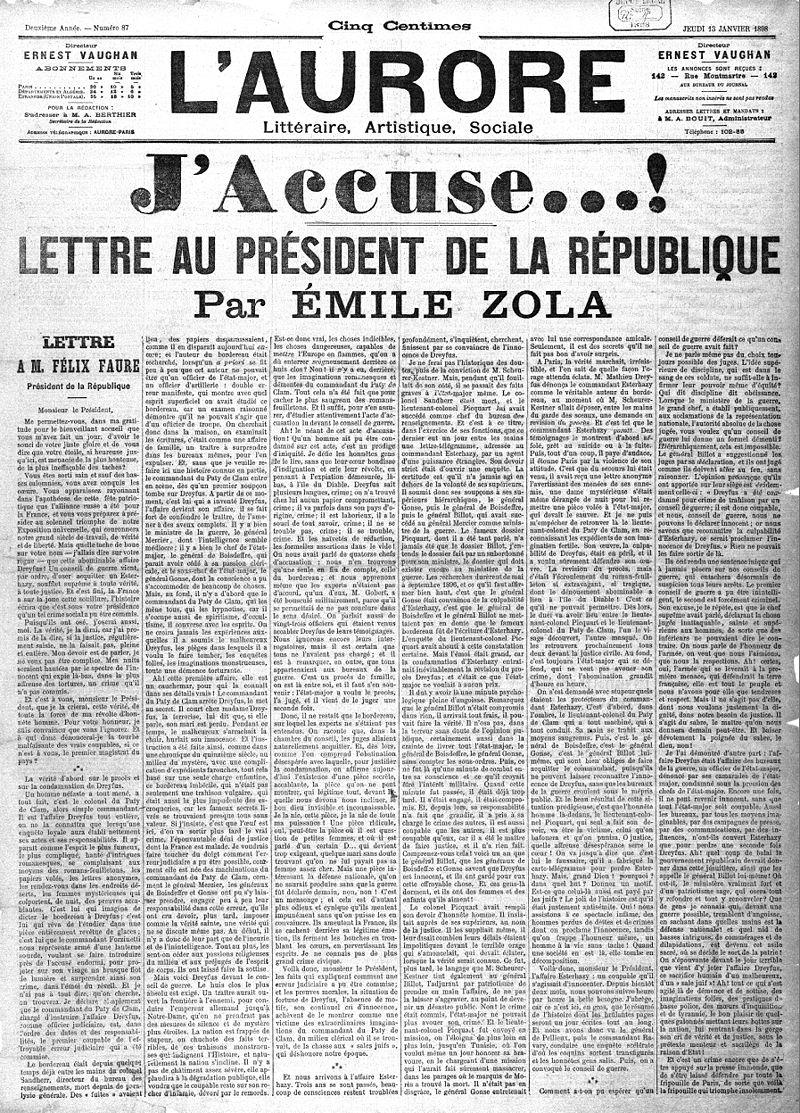
<p><a href="/tags/otd/" rel="tag">#OTD</a> in 1898.</p><p>Émile Zola is imprisoned in France after writing J'Accuse…!, a letter accusing the French government of antisemitism and wrongfully imprisoning Captain Alfred Dreyfus.</p><p>He was sentenced to jail and was removed from the Legion of Honour. To avoid jail time, Zola fled to England. He stayed there until the cabinet fell; he continued to defend Dreyfus.</p><p><a href="https://en.wikipedia.org/wiki/J%27Accuse" rel="nofollow" class="ellipsis" title="en.wikipedia.org/wiki/J%27Accuse"><span class="invisible">https://</span><span class="ellipsis">en.wikipedia.org/wiki/J%27Accu</span><span class="invisible">se</span></a>...!</p><p>J'Accuse at PG:<br><a href="https://www.gutenberg.org/ebooks/20974" rel="nofollow"><span class="invisible">https://</span>www.gutenberg.org/ebooks/20974</a></p><p><a href="/tags/books/" rel="tag">#books</a> <a href="/tags/literature/" rel="tag">#literature</a></p>