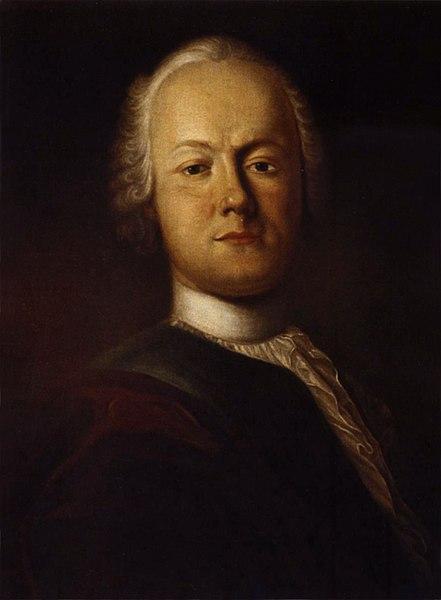
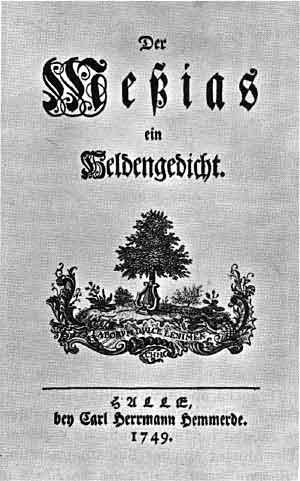
<p>German poet Friedrich Gottlieb Klopstock was born <a href="/tags/otd/" rel="tag">#OTD</a> in 1724.</p><p>He is best known for his epic poem "Der Messias" which was heavily influenced by John Milton's "Paradise Lost" but distinguished itself with its intense emotionality and religious fervor. Klopstock also wrote numerous odes and lyric poems that celebrated themes of friendship, patriotism, nature, and spirituality. Notable collections include "Odes" and "Poetische Werke".</p><p><a href="https://www.gutenberg.org/ebooks/author/6558" rel="nofollow" class="ellipsis" title="www.gutenberg.org/ebooks/author/6558"><span class="invisible">https://</span><span class="ellipsis">www.gutenberg.org/ebooks/autho</span><span class="invisible">r/6558</span></a></p><p><a href="/tags/books/" rel="tag">#books</a> <a href="/tags/literature/" rel="tag">#literature</a> <a href="/tags/poetry/" rel="tag">#poetry</a></p>
literature

<p>WRITERS!</p><p>Submissions invited to NEW WRITING SCOTLAND 44! We want poetry & prose in English, <a href="/tags/gaelic/" rel="tag">#Gaelic</a>, & <a href="/tags/scots/" rel="tag">#Scots</a> from writers who are Scottish by residence, birth, or inclination. All successful contributors are paid – deadline 31 Oct!</p><p>@writingcommunity </p><p>Submit free via Submittable 👇</p><p><a href="https://nws.submittable.com/submit" rel="nofollow"><span class="invisible">https://</span>nws.submittable.com/submit</a></p><p><a href="/tags/scottish/" rel="tag">#Scottish</a> <a href="/tags/literature/" rel="tag">#literature</a> <a href="/tags/writing/" rel="tag">#writing</a> <a href="/tags/writingcommunity/" rel="tag">#WritingCommunity</a> <a href="/tags/iamwriting/" rel="tag">#IAmWriting</a> <a href="/tags/poetry/" rel="tag">#poetry</a> <a href="/tags/shortfiction/" rel="tag">#shortfiction</a> <a href="/tags/shortstories/" rel="tag">#shortstories</a> <a href="/tags/scots/" rel="tag">#Scots</a> <a href="/tags/scotslanguage/" rel="tag">#Scotslanguage</a> <a href="/tags/gaelic/" rel="tag">#Gaelic</a> <a href="/tags/gaidhlig/" rel="tag">#Gaidhlig</a></p>
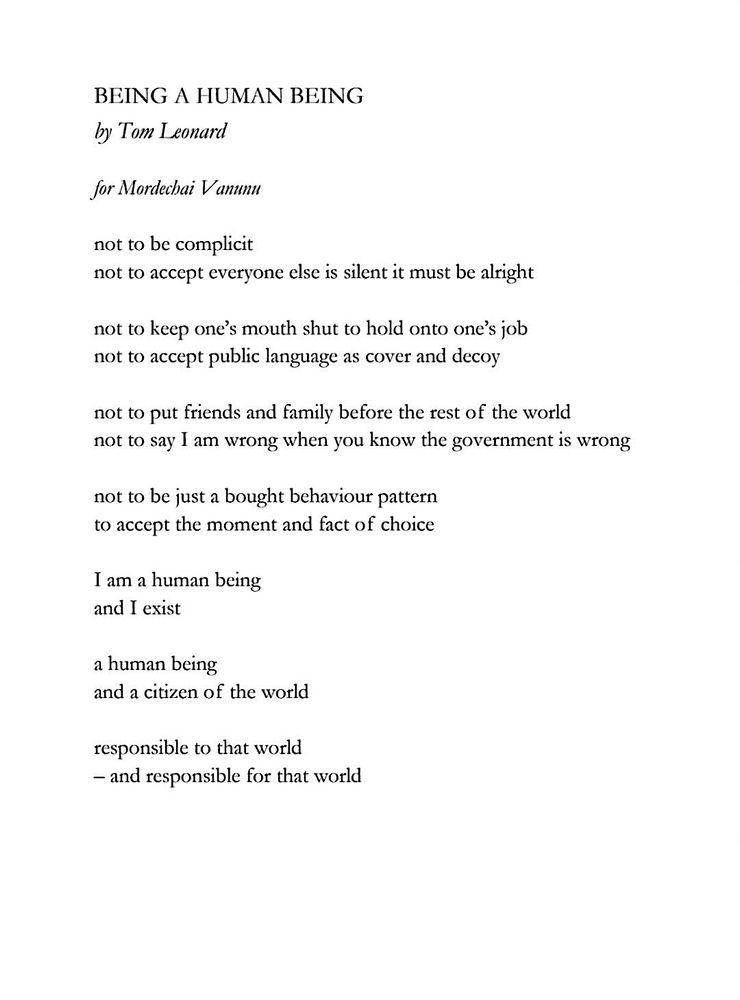
<p>I am a human being <br>and I exist</p><p>a human being<br>and a citizen of the world</p><p>responsible to that world<br>– and responsible for that world</p><p>—Tom Leonard, “Being a Human Being”<br>First published in PN Review 32 (2005)</p><p>Today, 10 December, is Human Rights Day </p><p><a href="https://www.un.org/en/observances/human-rights-day" rel="nofollow" class="ellipsis" title="www.un.org/en/observances/human-rights-day"><span class="invisible">https://</span><span class="ellipsis">www.un.org/en/observances/huma</span><span class="invisible">n-rights-day</span></a></p><p><a href="/tags/scottish/" rel="tag">#Scottish</a> <a href="/tags/literature/" rel="tag">#literature</a> <a href="/tags/poem/" rel="tag">#poem</a> <a href="/tags/poetry/" rel="tag">#poetry</a> <a href="/tags/humanrights/" rel="tag">#HumanRights</a> <a href="/tags/humanrightsday/" rel="tag">#HUmanRightsDay</a></p>
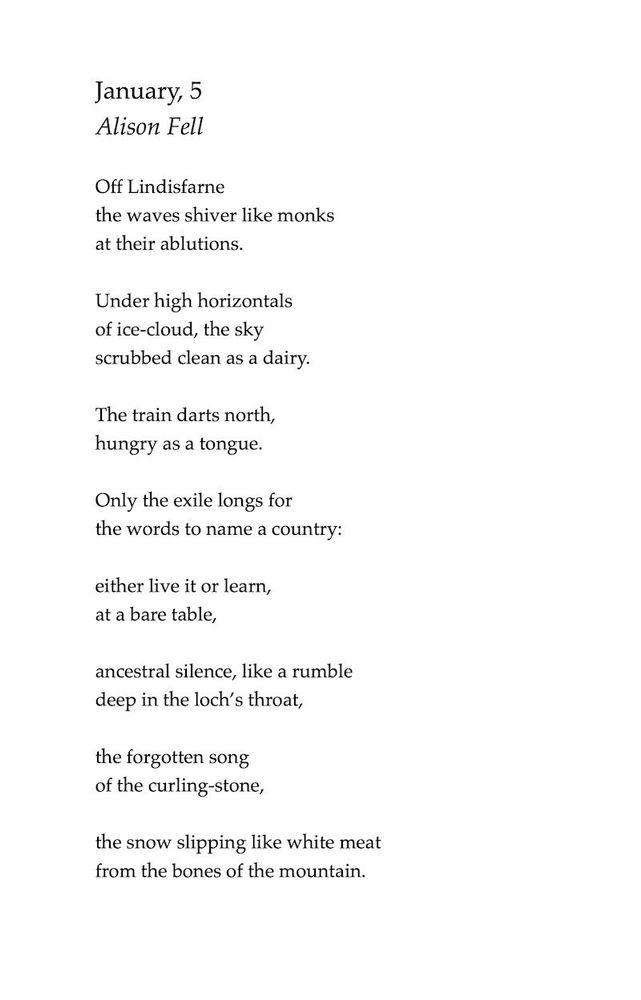
<p>Off Lindisfarne<br>the waves shiver like monks<br>at their ablutions.</p><p>Under high horizontals<br>of ice-cloud, the sky<br>scrubbed clean as a dairy.</p><p>The train darts north,<br>hungry as a tongue…</p><p>—Alison Fell, “January, 5”<br>published in LIGHTYEAR (Smokestack Books, 2005)</p><p><a href="https://www.scottishpoetrylibrary.org.uk/poem/january-5/" rel="nofollow" class="ellipsis" title="www.scottishpoetrylibrary.org.uk/poem/january-5/"><span class="invisible">https://</span><span class="ellipsis">www.scottishpoetrylibrary.org.</span><span class="invisible">uk/poem/january-5/</span></a></p><p><a href="/tags/scottish/" rel="tag">#Scottish</a> <a href="/tags/literature/" rel="tag">#literature</a> <a href="/tags/poem/" rel="tag">#poem</a> <a href="/tags/poetry/" rel="tag">#poetry</a> <a href="/tags/winter/" rel="tag">#winter</a></p>
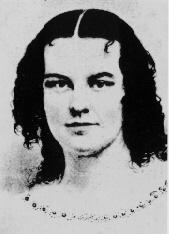
<p>American author and journalist Rebecca Harding Davis was born <a href="/tags/otd/" rel="tag">#OTD</a> in 1831.</p><p>"Life in the Iron Mills" (1861): Davis´s most famous work, originally published anonymously in the Atlantic Monthly, is considered one of the earliest examples of American realism. It depicts the harsh realities of life for industrial workers and is noted for its empathetic portrayal of the working class.</p><p>Books by Rebecca Harding Davis at PG:<br><a href="https://www.gutenberg.org/ebooks/author/186" rel="nofollow" class="ellipsis" title="www.gutenberg.org/ebooks/author/186"><span class="invisible">https://</span><span class="ellipsis">www.gutenberg.org/ebooks/autho</span><span class="invisible">r/186</span></a></p><p><a href="/tags/books/" rel="tag">#books</a> <a href="/tags/literature/" rel="tag">#literature</a></p>

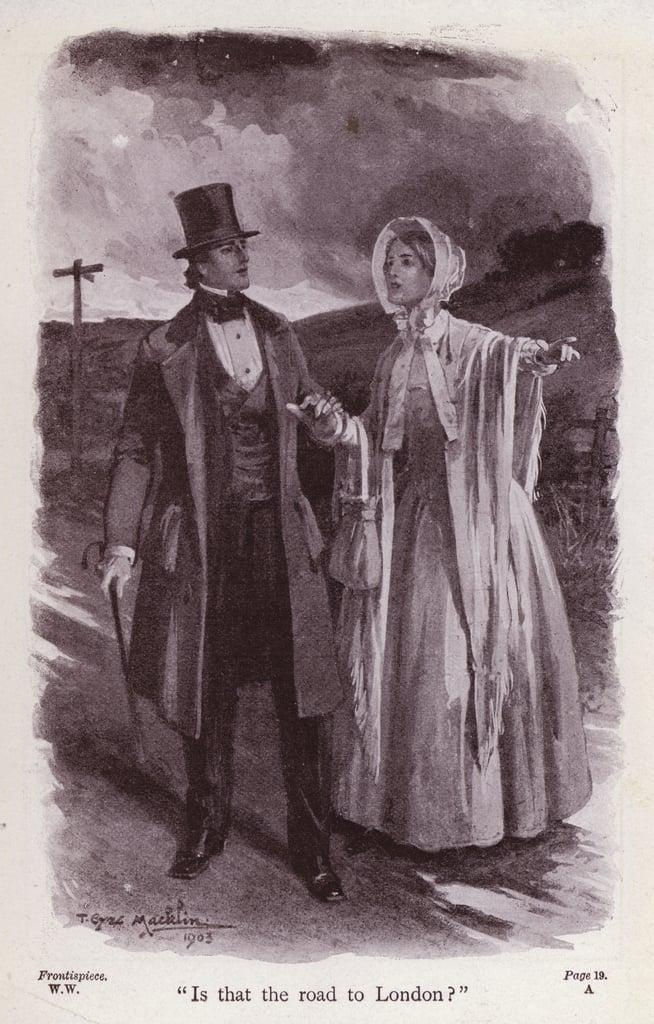
<p>Victorian Horror and the Search for Truth</p><p>by Emily Erwin</p><p><a href="https://www.wordonfire.org/articles/victorian-horror-and-the-search-for-truth/" rel="nofollow" class="ellipsis" title="www.wordonfire.org/articles/victorian-horror-and-the-search-for-truth/"><span class="invisible">https://</span><span class="ellipsis">www.wordonfire.org/articles/vi</span><span class="invisible">ctorian-horror-and-the-search-for-truth/</span></a></p><p>The Woman in White at PG:<br><a href="https://www.gutenberg.org/ebooks/583" rel="nofollow"><span class="invisible">https://</span>www.gutenberg.org/ebooks/583</a></p><p><a href="/tags/books/" rel="tag">#books</a> <a href="/tags/literature/" rel="tag">#literature</a></p>
<p>RE: <a href="https://mastodon.scot/@scotlit/115842616105911298" rel="nofollow" class="ellipsis" title="mastodon.scot/@scotlit/115842616105911298"><span class="invisible">https://</span><span class="ellipsis">mastodon.scot/@scotlit/1158426</span><span class="invisible">16105911298</span></a></p><p>“The killer is never assumed to be a local East Ender… He’s always judged to be a man out of place, flipping between high society by day & the dark & dirty streets of Whitechapel by night”</p><p>Lucy Worsley on how Robert Louis Stevenson’s JEKYLL & HYDE influenced the legend of Jack the Ripper</p><p><a href="https://www.salon.com/2014/10/18/jack_the_rippers_long_shadow_from_sherlock_holmes_to_jekyll_hyde/" rel="nofollow" class="ellipsis" title="www.salon.com/2014/10/18/jack_the_rippers_long_shadow_from_sherlock_holmes_to_jekyll_hyde/"><span class="invisible">https://</span><span class="ellipsis">www.salon.com/2014/10/18/jack_</span><span class="invisible">the_rippers_long_shadow_from_sherlock_holmes_to_jekyll_hyde/</span></a></p><p><a href="/tags/scottish/" rel="tag">#Scottish</a> <a href="/tags/literature/" rel="tag">#literature</a> <a href="/tags/19thcentury/" rel="tag">#19thcentury</a> <a href="/tags/victorian/" rel="tag">#Victorian</a> <a href="/tags/robertlouisstevenson/" rel="tag">#RobertLouisStevenson</a> <a href="/tags/jekyllandhyde/" rel="tag">#JekyllandHyde</a> <a href="/tags/horror/" rel="tag">#horror</a> <a href="/tags/gothic/" rel="tag">#gothic</a> <a href="/tags/jacktheripper/" rel="tag">#JacktheRipper</a></p>
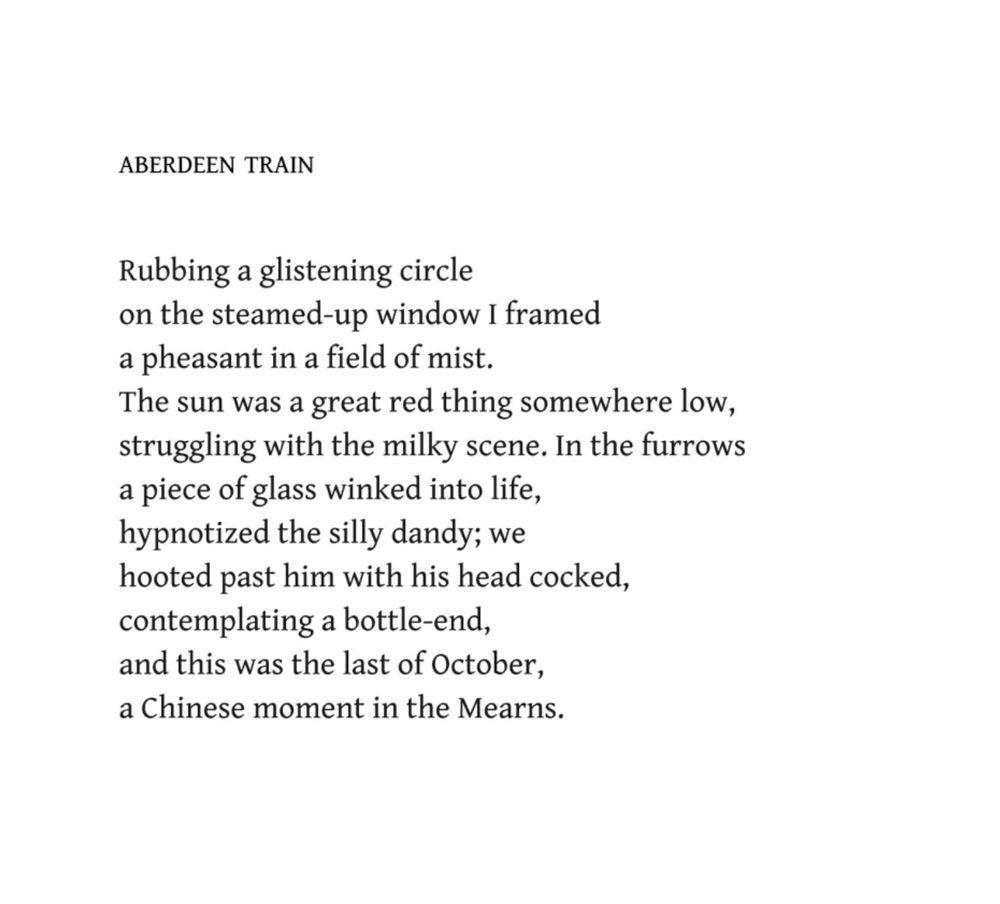
<p>Rubbing a glistening circle<br>on the steamed-up window I framed <br>a pheasant in a field of mist…</p><p>—Edwin Morgan, “Aberdeen Train”<br>published in CENTENARY SELECTED POEMS (Carcanet, 2020)</p><p><a href="https://www.carcanet.co.uk/cgi-bin/indexer?product=9781784109967" rel="nofollow" class="ellipsis" title="www.carcanet.co.uk/cgi-bin/indexer?product=9781784109967"><span class="invisible">https://</span><span class="ellipsis">www.carcanet.co.uk/cgi-bin/ind</span><span class="invisible">exer?product=9781784109967</span></a></p><p><a href="/tags/scottish/" rel="tag">#Scottish</a> <a href="/tags/literature/" rel="tag">#literature</a> <a href="/tags/poem/" rel="tag">#poem</a> <a href="/tags/poetry/" rel="tag">#poetry</a> <a href="/tags/chineseart/" rel="tag">#ChineseArt</a> <a href="/tags/edwinmorgan/" rel="tag">#EdwinMorgan</a> <a href="/tags/autumn/" rel="tag">#autumn</a> <a href="/tags/october/" rel="tag">#October</a></p>
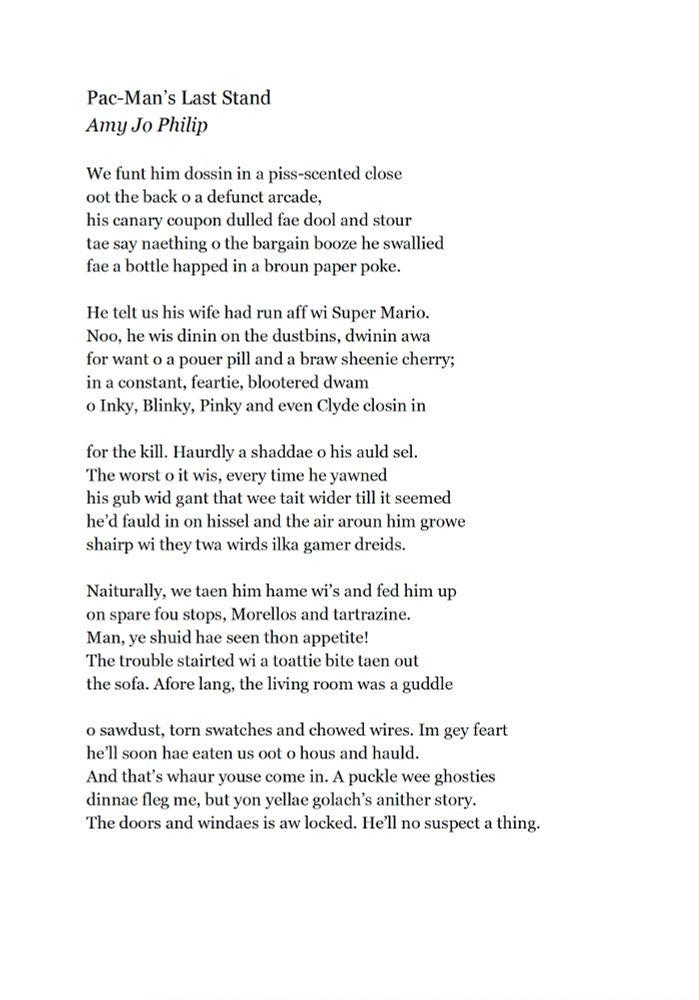
<p>He telt us his wife had run aff wi Super Mario.<br>Noo, he wis dinin on the dustbins, dwinin awa<br>for want o a pouer pill and a braw sheenie cherry…</p><p>—Amy Jo Philip, “Pac-Man’s Last Stand”<br>in DOUBLE BILL (Red Squirrel Press 2014)<br>🟡 🍒 👻 </p><p>Happy 45th birthday to Pac-Man!</p><p><a href="https://www.redsquirrelpress.com/product-page/double-bill-andy-jackson" rel="nofollow" class="ellipsis" title="www.redsquirrelpress.com/product-page/double-bill-andy-jackson"><span class="invisible">https://</span><span class="ellipsis">www.redsquirrelpress.com/produ</span><span class="invisible">ct-page/double-bill-andy-jackson</span></a></p><p><a href="/tags/scottish/" rel="tag">#Scottish</a> <a href="/tags/literature/" rel="tag">#literature</a> <a href="/tags/pacman/" rel="tag">#PacMan</a> <a href="/tags/poem/" rel="tag">#poem</a> <a href="/tags/poetry/" rel="tag">#poetry</a> <a href="/tags/scots/" rel="tag">#Scots</a> <a href="/tags/scotslanguage/" rel="tag">#Scotslanguage</a> <a href="/tags/gaming/" rel="tag">#gaming</a> <a href="/tags/retrogaming/" rel="tag">#retrogaming</a> <a href="/tags/googledoodle/" rel="tag">#GoogleDoodle</a></p>
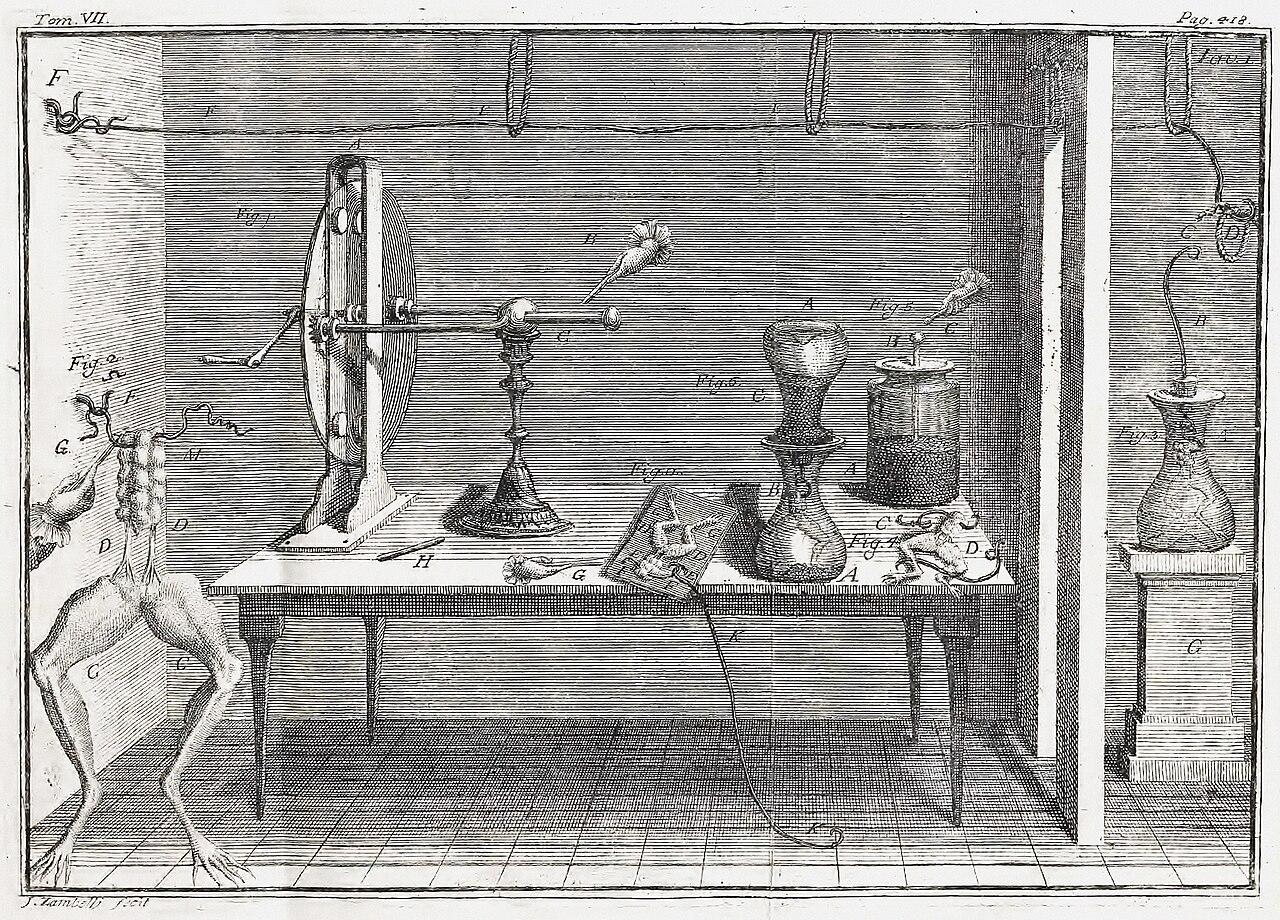
<p>Meet the Real Dr. Frankenstein</p><p>The Italian scientist who sparked an electric revolution that led to the beloved horror story—and the battery</p><p>By Molly Glick</p><p><a href="https://nautil.us/meet-the-real-dr-frankenstein-1245010/" rel="nofollow" class="ellipsis" title="nautil.us/meet-the-real-dr-frankenstein-1245010/"><span class="invisible">https://</span><span class="ellipsis">nautil.us/meet-the-real-dr-fra</span><span class="invisible">nkenstein-1245010/</span></a></p><p>Galvani and Frankenstein at PG:<br><a href="https://www.gutenberg.org/ebooks/subject/27281" rel="nofollow" class="ellipsis" title="www.gutenberg.org/ebooks/subject/27281"><span class="invisible">https://</span><span class="ellipsis">www.gutenberg.org/ebooks/subje</span><span class="invisible">ct/27281</span></a><br><a href="https://www.gutenberg.org/ebooks/84" rel="nofollow"><span class="invisible">https://</span>www.gutenberg.org/ebooks/84</a></p><p><a href="/tags/books/" rel="tag">#books</a> <a href="/tags/literature/" rel="tag">#literature</a> <a href="/tags/science/" rel="tag">#science</a></p>
<p>R.B. & Gabriela Cunninghame Graham: International Travel, Domestic Reality<br>28 November, University of Glasgow – free</p><p>A symposium exploring the cultural & political significance of Robert Bontine Cunninghame Graham’s travels & travel-writing; the question of his wife Gabriela’s identity & his collusion in the deception at its heart; his writing about women & the equality of the sexes.</p><p><a href="https://wegottickets.com/event/677550" rel="nofollow"><span class="invisible">https://</span>wegottickets.com/event/677550</a></p><p><a href="/tags/scottish/" rel="tag">#Scottish</a> <a href="/tags/literature/" rel="tag">#literature</a> <a href="/tags/19thcentury/" rel="tag">#19thcentury</a> <a href="/tags/victorian/" rel="tag">#Victorian</a> <a href="/tags/travel/" rel="tag">#travel</a> <a href="/tags/travelwriting/" rel="tag">#travelwriting</a> <a href="/tags/equality/" rel="tag">#equality</a></p>
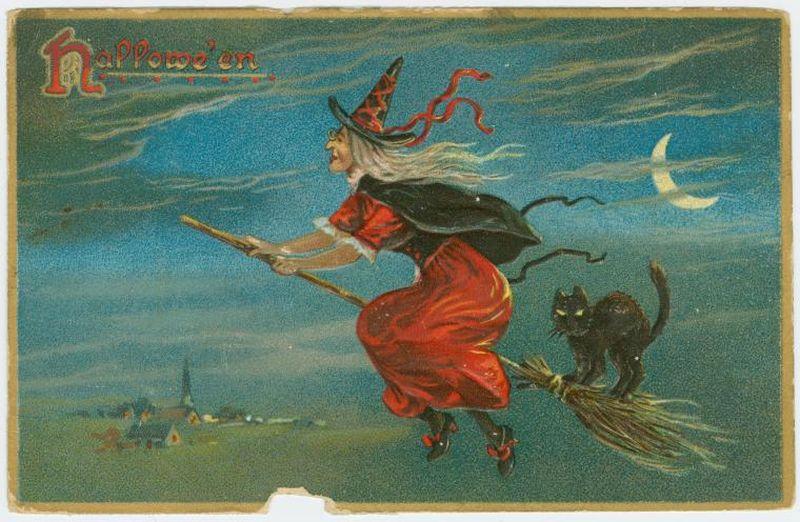
<p>“That’s Why We Become Witches”: Sylvia Townsend Warner’s Lolly Willowes (1926)</p><p>"A novel about a woman who throws off the yoke of patriarchy to become a witch."</p><p><a href="https://publicdomainreview.org/collection/lolly-willowes/" rel="nofollow" class="ellipsis" title="publicdomainreview.org/collection/lolly-willowes/"><span class="invisible">https://</span><span class="ellipsis">publicdomainreview.org/collect</span><span class="invisible">ion/lolly-willowes/</span></a></p><p>The book at PG:</p><p><a href="https://www.gutenberg.org/ebooks/72223" rel="nofollow"><span class="invisible">https://</span>www.gutenberg.org/ebooks/72223</a></p><p><a href="/tags/witches/" rel="tag">#witches</a> <a href="/tags/supernatural/" rel="tag">#supernatural</a> <a href="/tags/books/" rel="tag">#books</a> <a href="/tags/literature/" rel="tag">#literature</a></p>
Edited 159d ago
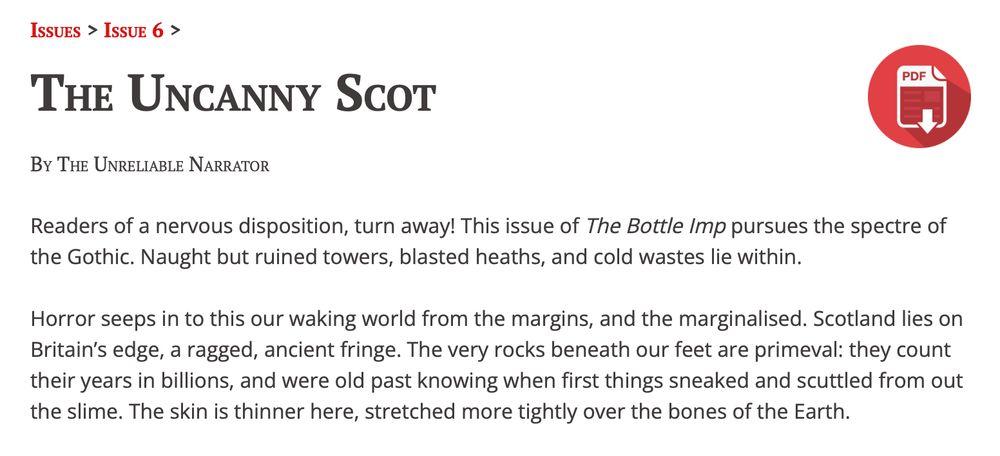
<p>The Uncanny Scot</p><p>To get you in the mood for Halloween, this back issue of The Bottle Imp pursues the spectre of the Scottish Gothic – including HP Lovecraft’s favourite Scots word …</p><p>From ghoulies and ghosties<br>And long-leggity beasties<br>And things that go bump in the night,<br>Good Lord, deliver us!</p><p>🎃 <br>(the absence of a neep emoji is cultural imperialism at its worst)</p><p><a href="https://www.thebottleimp.org.uk/2009/11/editorial-the-uncanny-scot-scottish-gothic/" rel="nofollow" class="ellipsis" title="www.thebottleimp.org.uk/2009/11/editorial-the-uncanny-scot-scottish-gothic/"><span class="invisible">https://</span><span class="ellipsis">www.thebottleimp.org.uk/2009/1</span><span class="invisible">1/editorial-the-uncanny-scot-scottish-gothic/</span></a></p><p><a href="/tags/scottish/" rel="tag">#Scottish</a> <a href="/tags/literature/" rel="tag">#literature</a> <a href="/tags/horror/" rel="tag">#horror</a> <a href="/tags/gothic/" rel="tag">#gothic</a> <a href="/tags/halloween/" rel="tag">#halloween</a> <a href="/tags/lovecraft/" rel="tag">#Lovecraft</a> <a href="/tags/hplovecraft/" rel="tag">#HPLovecraft</a></p>
<p>George MacDonald (1824–1905) was born <a href="/tags/otd/" rel="tag">#OTD</a>, 10 Dec. One of the earliest theorists of the fantastic, & grandfather of modern fantasy literature, he was read & admired by CS Lewis, JRR Tolkien & Madeleine L’Engle, among others </p><p>@litstudies </p><p>🎨 : Cecilia Harrison (1863–1941)</p><p>🧵 1/5</p><p><a href="https://www.nationalgalleries.org/art-and-artists/3082" rel="nofollow" class="ellipsis" title="www.nationalgalleries.org/art-and-artists/3082"><span class="invisible">https://</span><span class="ellipsis">www.nationalgalleries.org/art-</span><span class="invisible">and-artists/3082</span></a></p><p><a href="/tags/scottish/" rel="tag">#Scottish</a> <a href="/tags/literature/" rel="tag">#literature</a> <a href="/tags/victorian/" rel="tag">#Victorian</a> <a href="/tags/19thcentury/" rel="tag">#19thCentury</a> <a href="/tags/fantasty/" rel="tag">#fantasty</a> <a href="/tags/childrenslit/" rel="tag">#childrenslit</a> <a href="/tags/cslewis/" rel="tag">#CSLewis</a> <a href="/tags/tolkien/" rel="tag">#Tolkien</a></p>
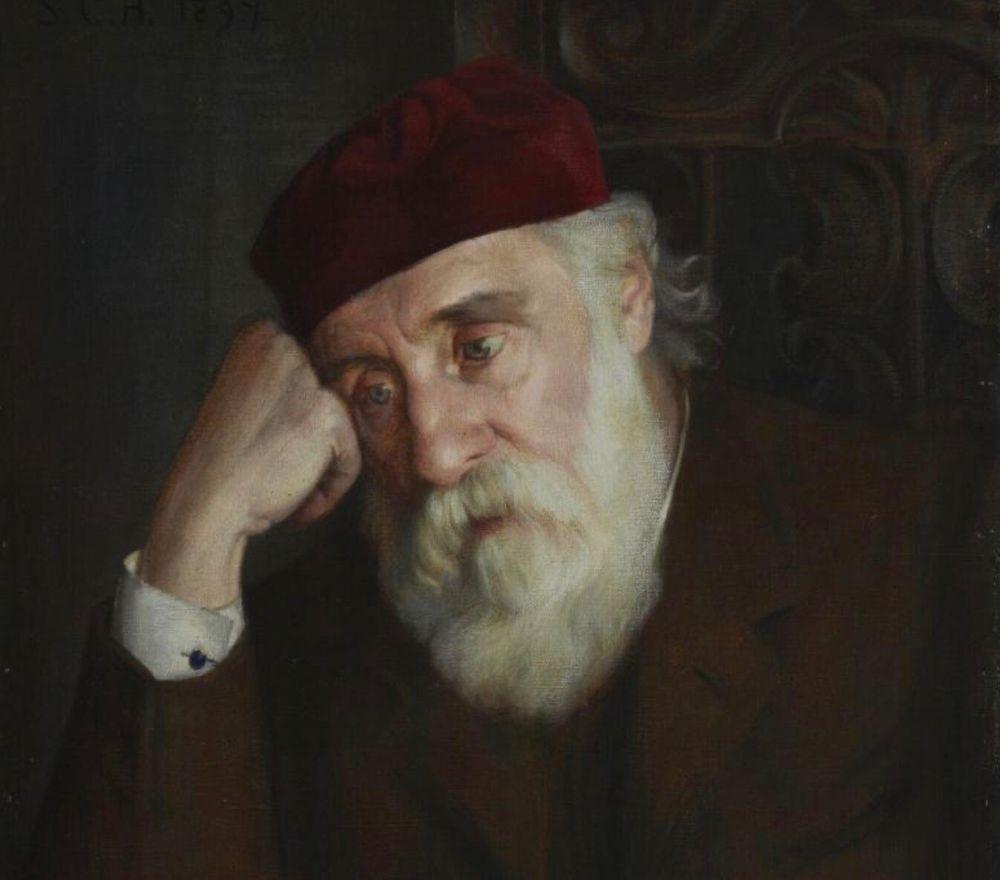
<p><a href="/tags/otd/" rel="tag">#OTD</a> in 1905, O. Henry’s short story “The Gift of the Magi” is first published in The New York Sunday World. </p><p>The story at PG:</p><p><a href="https://www.gutenberg.org/ebooks/7256" rel="nofollow"><span class="invisible">https://</span>www.gutenberg.org/ebooks/7256</a></p><p><a href="/tags/books/" rel="tag">#books</a> <a href="/tags/literature/" rel="tag">#literature</a></p>
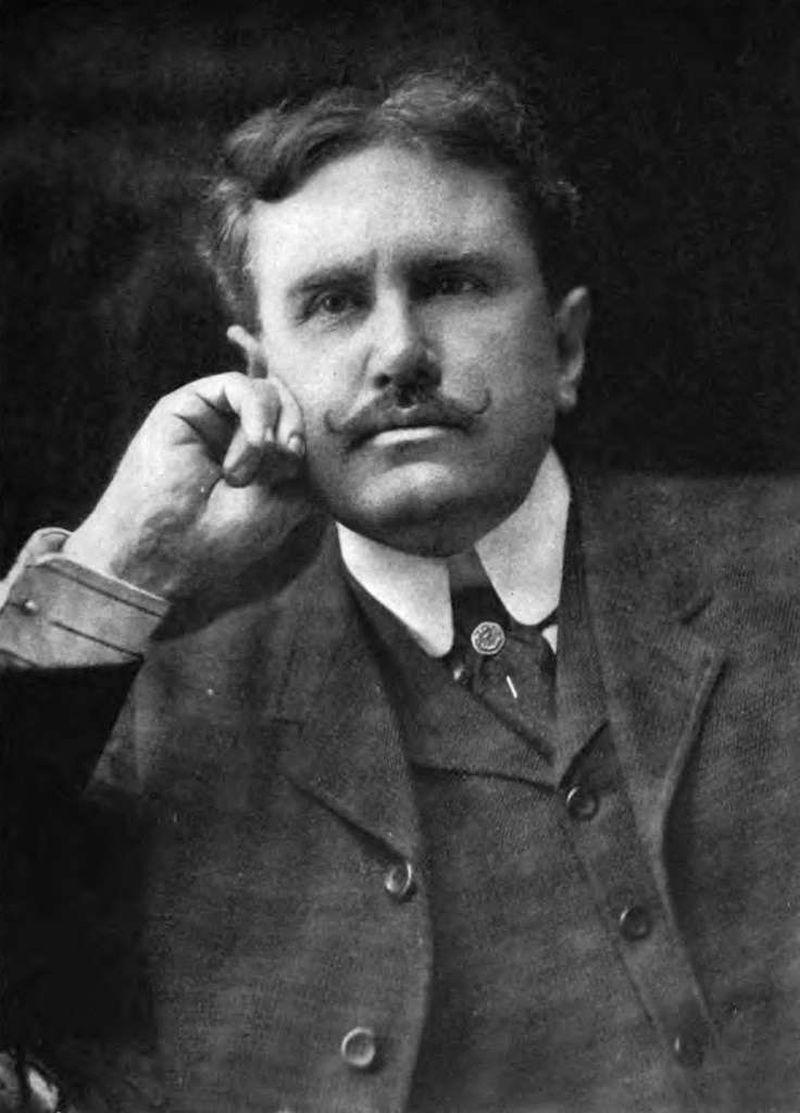
<p>Wordsworth Revolutionized Poetry But His Life Was Equally Interesting</p><p>"Who was William Wordsworth, and what made his poetry so revolutionary? Read about the life and works of this major Romantic poet."</p><p><a href="https://www.thecollector.com/william-wordsworth/" rel="nofollow" class="ellipsis" title="www.thecollector.com/william-wordsworth/"><span class="invisible">https://</span><span class="ellipsis">www.thecollector.com/william-w</span><span class="invisible">ordsworth/</span></a></p><p>Books by Wordsworth at PG:</p><p><a href="https://www.gutenberg.org/ebooks/author/2879" rel="nofollow" class="ellipsis" title="www.gutenberg.org/ebooks/author/2879"><span class="invisible">https://</span><span class="ellipsis">www.gutenberg.org/ebooks/autho</span><span class="invisible">r/2879</span></a></p><p><a href="/tags/books/" rel="tag">#books</a> <a href="/tags/literature/" rel="tag">#literature</a> <a href="/tags/poetry/" rel="tag">#poetry</a></p>
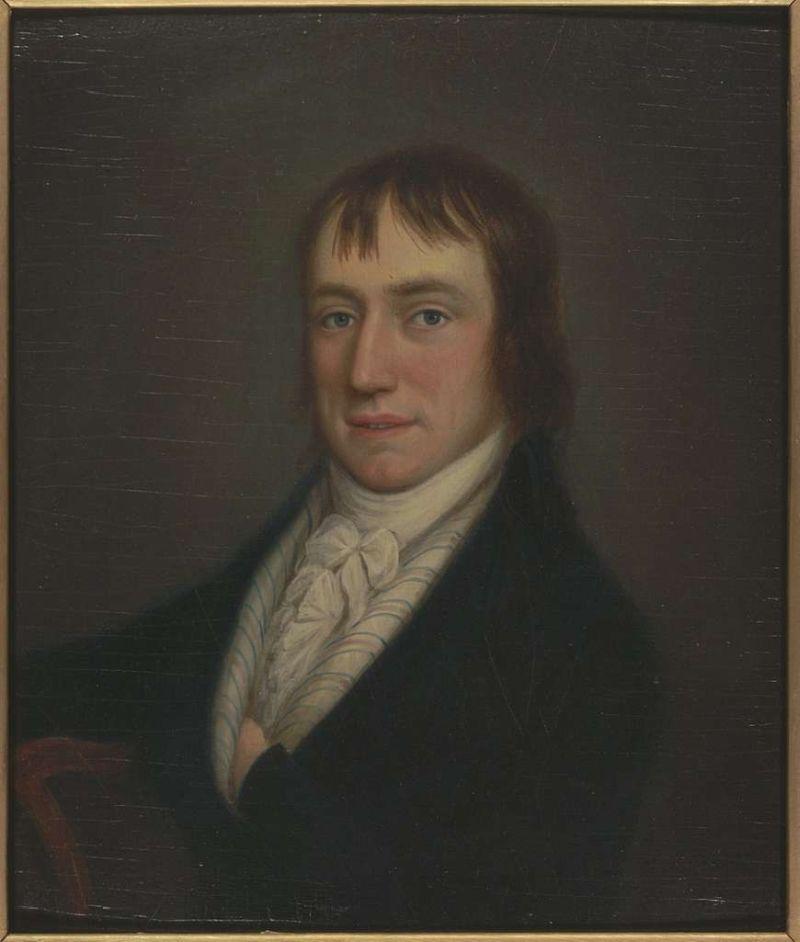
<p>The Distributed Proofreaders' blog this month is about another Edgar Allan Poe book at PG: "The Poems of Edgar Allan Poe."</p><p><a href="https://blog.pgdp.net/2025/11/01/nevermore/" rel="nofollow" class="ellipsis" title="blog.pgdp.net/2025/11/01/nevermore/"><span class="invisible">https://</span><span class="ellipsis">blog.pgdp.net/2025/11/01/never</span><span class="invisible">more/</span></a></p><p><a href="/tags/books/" rel="tag">#books</a> <a href="/tags/literature/" rel="tag">#literature</a> <a href="/tags/poetry/" rel="tag">#poetry</a></p>
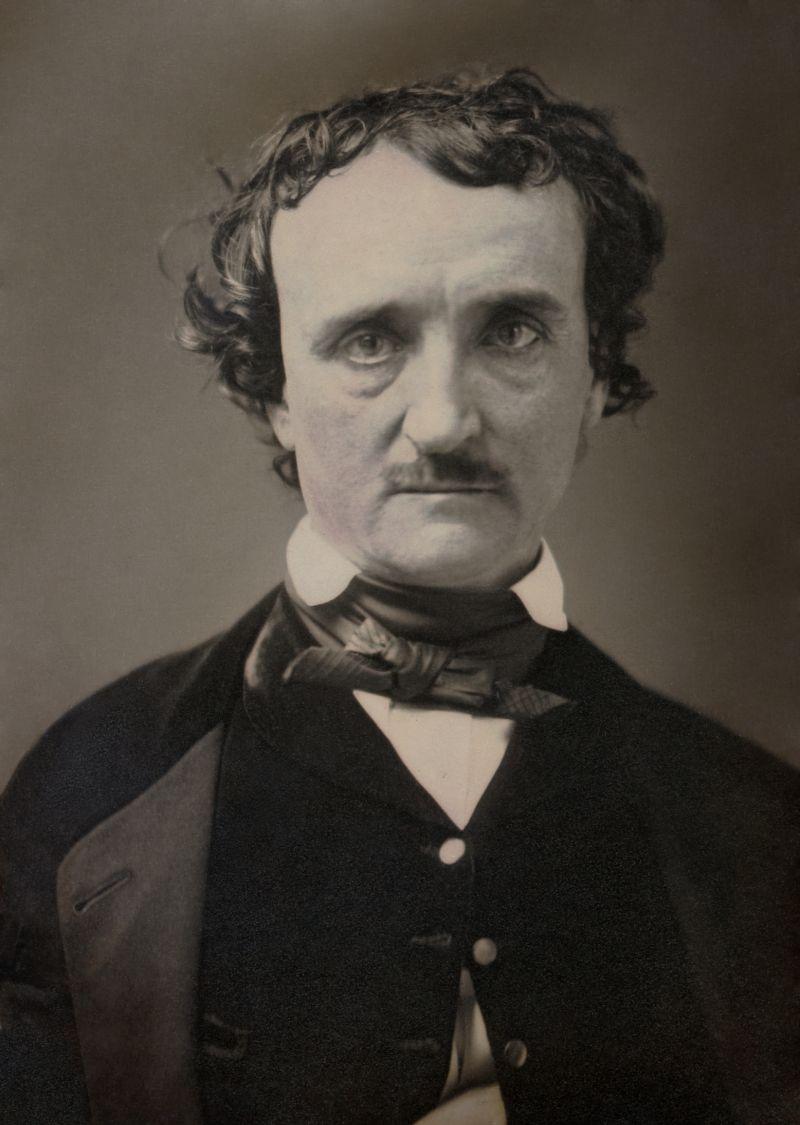
<p>Naomi Mitchison (née Haldane, 1897–1999) was born <a href="/tags/otd/" rel="tag">#OTD</a>, 1 Nov, & saw almost every day of the <a href="/tags/20thcentury/" rel="tag">#20thcentury</a>. A hugely influential writer, with 80+ books—poetry, politics, historical novels, <a href="/tags/sciencefiction/" rel="tag">#ScienceFiction</a>, <a href="/tags/fantasy/" rel="tag">#Fantasy</a>, <a href="/tags/childrensliterature/" rel="tag">#ChildrensLiterature</a> & more—to her credit</p><p>A 🎂🧵 </p><p>“She liked to challenge, she liked to shock, she liked to deliver the unexpected, she liked to experiment”</p><p>—Jenni Calder looks at Mitchison’s life & work</p><p>@litstudies <br>1/9</p><p><a href="https://dangerouswomenproject.org/2016/09/25/naomi-mitchison/" rel="nofollow" class="ellipsis" title="dangerouswomenproject.org/2016/09/25/naomi-mitchison/"><span class="invisible">https://</span><span class="ellipsis">dangerouswomenproject.org/2016</span><span class="invisible">/09/25/naomi-mitchison/</span></a></p><p><a href="/tags/scottish/" rel="tag">#Scottish</a> <a href="/tags/literature/" rel="tag">#literature</a> <a href="/tags/womenwriters/" rel="tag">#womenwriters</a></p>
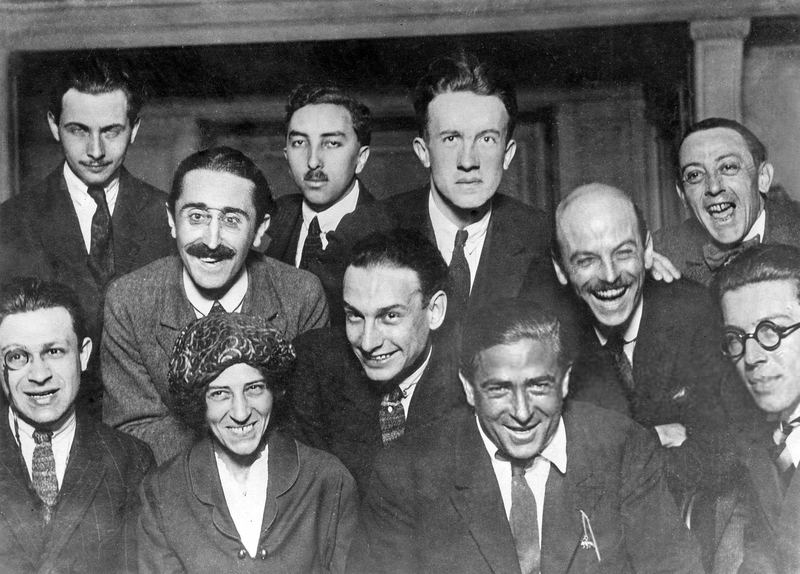
<p><a href="/tags/otd/" rel="tag">#OTD</a> in 1923.</p><p>A riot breaks out at the re-staging of Tristan Tzara's Dadaist play The Gas Heart at the Théâtre Michel, Paris, between those aligned with André Breton and those aligned with Tzara. The conflict leads to a permanent split in the Dada movement and the founding of Surrealism as an alternative.</p><p>Francis Picabia at PG:<br><a href="https://www.gutenberg.org/ebooks/author/49071" rel="nofollow" class="ellipsis" title="www.gutenberg.org/ebooks/author/49071"><span class="invisible">https://</span><span class="ellipsis">www.gutenberg.org/ebooks/autho</span><span class="invisible">r/49071</span></a></p><p>Tristan Tzara at PG:<br><a href="https://www.gutenberg.org/ebooks/author/48499" rel="nofollow" class="ellipsis" title="www.gutenberg.org/ebooks/author/48499"><span class="invisible">https://</span><span class="ellipsis">www.gutenberg.org/ebooks/autho</span><span class="invisible">r/48499</span></a></p><p>André Breton at PG:<br><a href="https://www.gutenberg.org/ebooks/search/?query=andr%C3%A9+breton&submit_search=Go%21" rel="nofollow" class="ellipsis" title="www.gutenberg.org/ebooks/search/?query=andr%C3%A9+breton&submit_search=Go%21"><span class="invisible">https://</span><span class="ellipsis">www.gutenberg.org/ebooks/searc</span><span class="invisible">h/?query=andr%C3%A9+breton&submit_search=Go%21</span></a></p><p><a href="/tags/books/" rel="tag">#books</a> <a href="/tags/literature/" rel="tag">#literature</a></p>
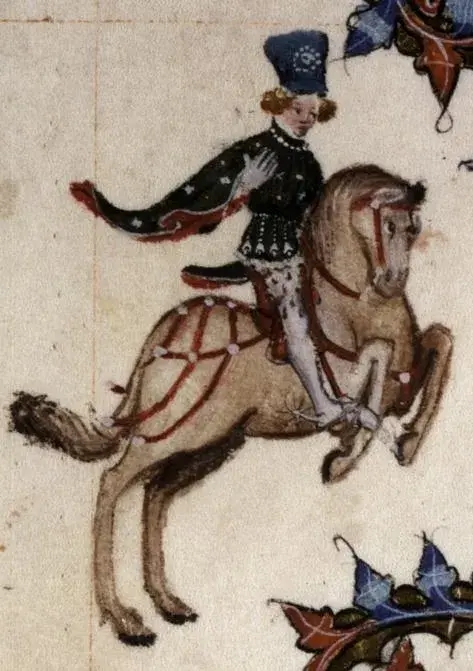
<p>Famous Medieval Words and Their Surprising Origins</p><p>Words like castles, Vikings, and even medieval itself instantly evoke the Middle Ages. Some of these terms were used by people of the time, while others were coined centuries later to describe their world. Each carries traces of history, revealing how language has preserved — and reimagined — the medieval past.</p><p><a href="https://www.medievalists.net/2025/10/medieval-words-origins/" rel="nofollow" class="ellipsis" title="www.medievalists.net/2025/10/medieval-words-origins/"><span class="invisible">https://</span><span class="ellipsis">www.medievalists.net/2025/10/m</span><span class="invisible">edieval-words-origins/</span></a></p><p>Medieval words at PG:<br><a href="https://www.gutenberg.org/ebooks/search/?query=medieval+words" rel="nofollow" class="ellipsis" title="www.gutenberg.org/ebooks/search/?query=medieval+words"><span class="invisible">https://</span><span class="ellipsis">www.gutenberg.org/ebooks/searc</span><span class="invisible">h/?query=medieval+words</span></a></p><p><a href="/tags/books/" rel="tag">#books</a> <a href="/tags/literature/" rel="tag">#literature</a></p>
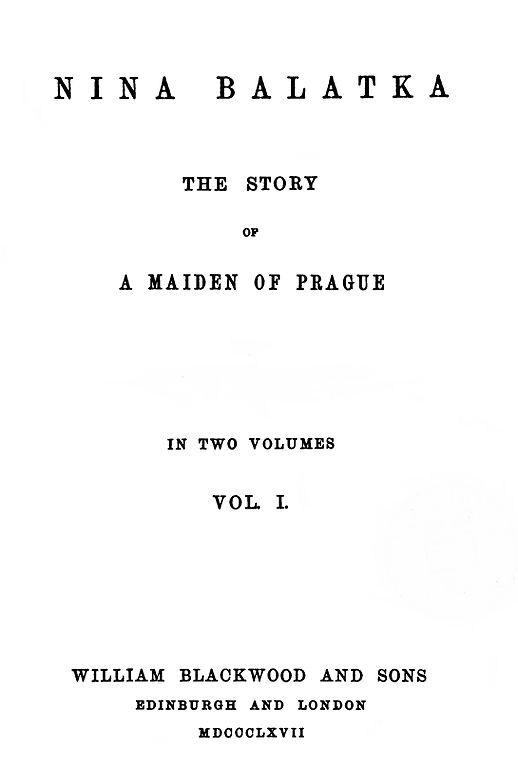
<p>In July 1866.</p><p> Anthony Trollope's novel Nina Balatka: The Story of a Maiden of Prague is initially published anonymously (serialisation in Blackwood's Magazine July 1866–January 1867). Trollope is interested in discovering whether his books sell on their own merits or as a consequence of the author's name and reputation.</p><p>Nina Balakta at PG:<br><a href="https://www.gutenberg.org/ebooks/8897" rel="nofollow"><span class="invisible">https://</span>www.gutenberg.org/ebooks/8897</a></p><p><a href="/tags/books/" rel="tag">#books</a> <a href="/tags/literature/" rel="tag">#literature</a></p>
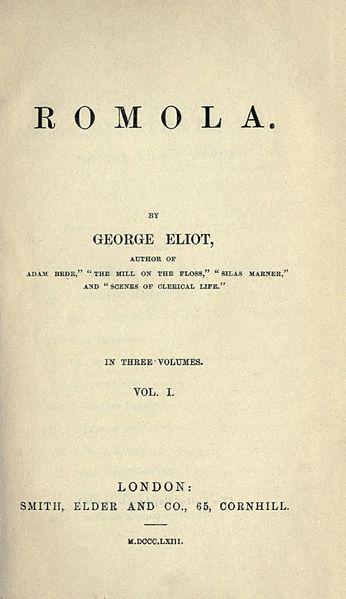
<p>"Our deeds are like children that are born to us; they live and act apart from our own will."</p><p>In July 1862.</p><p>George Eliot's historical novel Romola begins serialization in Cornhill Magazine, the first time she has published a full-length book in this format. George Murray Smith of the publishers Smith, Elder & Co. has agreed a £7,000 advance for it. It was first published as a book, in three volumes, by Smith, Elder & Co. in 1863.</p><p>Romola at PG:<br><a href="https://gutenberg.org/ebooks/24020" rel="nofollow"><span class="invisible">https://</span>gutenberg.org/ebooks/24020</a></p><p><a href="/tags/books/" rel="tag">#books</a> <a href="/tags/literature/" rel="tag">#literature</a></p>
<p>Rising in November in these days of dusk<br>I am one life older, watching now as the walls<br>green over, the stones break into bud;<br>if this is ebb-tide turned to flood it means that<br>nightfall might begin again at dawn.<br>And so it does…</p><p>—Robin Robertson, “Crossing the Archipelago”<br>published in SAILING THE FOREST (Picador, 2014)</p><p><a href="https://www.panmacmillan.com/authors/robin-robertson/sailing-the-forest/9781447231554" rel="nofollow" class="ellipsis" title="www.panmacmillan.com/authors/robin-robertson/sailing-the-forest/9781447231554"><span class="invisible">https://</span><span class="ellipsis">www.panmacmillan.com/authors/r</span><span class="invisible">obin-robertson/sailing-the-forest/9781447231554</span></a></p><p><a href="/tags/scottish/" rel="tag">#Scottish</a> <a href="/tags/literature/" rel="tag">#literature</a> <a href="/tags/poem/" rel="tag">#poem</a> <a href="/tags/poetry/" rel="tag">#poetry</a> <a href="/tags/november/" rel="tag">#November</a></p>
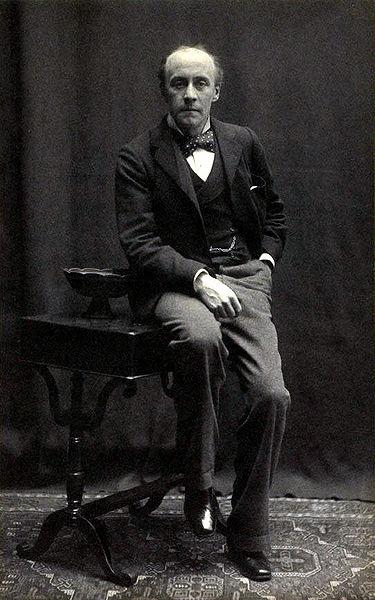
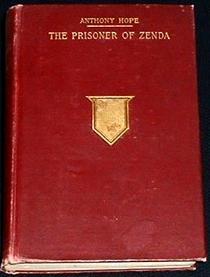
<p>"Unless one is a genius, it is best to aim at being intelligible."<br>The Dolly Dialogues</p><p>British novelist and playwright Anthony Hope died <a href="/tags/otd/" rel="tag">#OTD</a> in 1933.</p><p>Hope wrote numerous other novels and plays, though none achieved the same level of acclaim as "The Prisoner of Zenda." Notable works include "The Dolly Dialogues", a collection of witty sketches, and "The Chronicles of Count Antonio", an adventure novel set in Renaissance Italy.</p><p>Anthony Hope at PG:<br><a href="https://www.gutenberg.org/ebooks/author/63" rel="nofollow" class="ellipsis" title="www.gutenberg.org/ebooks/author/63"><span class="invisible">https://</span><span class="ellipsis">www.gutenberg.org/ebooks/autho</span><span class="invisible">r/63</span></a></p><p><a href="/tags/books/" rel="tag">#books</a> <a href="/tags/literature/" rel="tag">#literature</a></p>

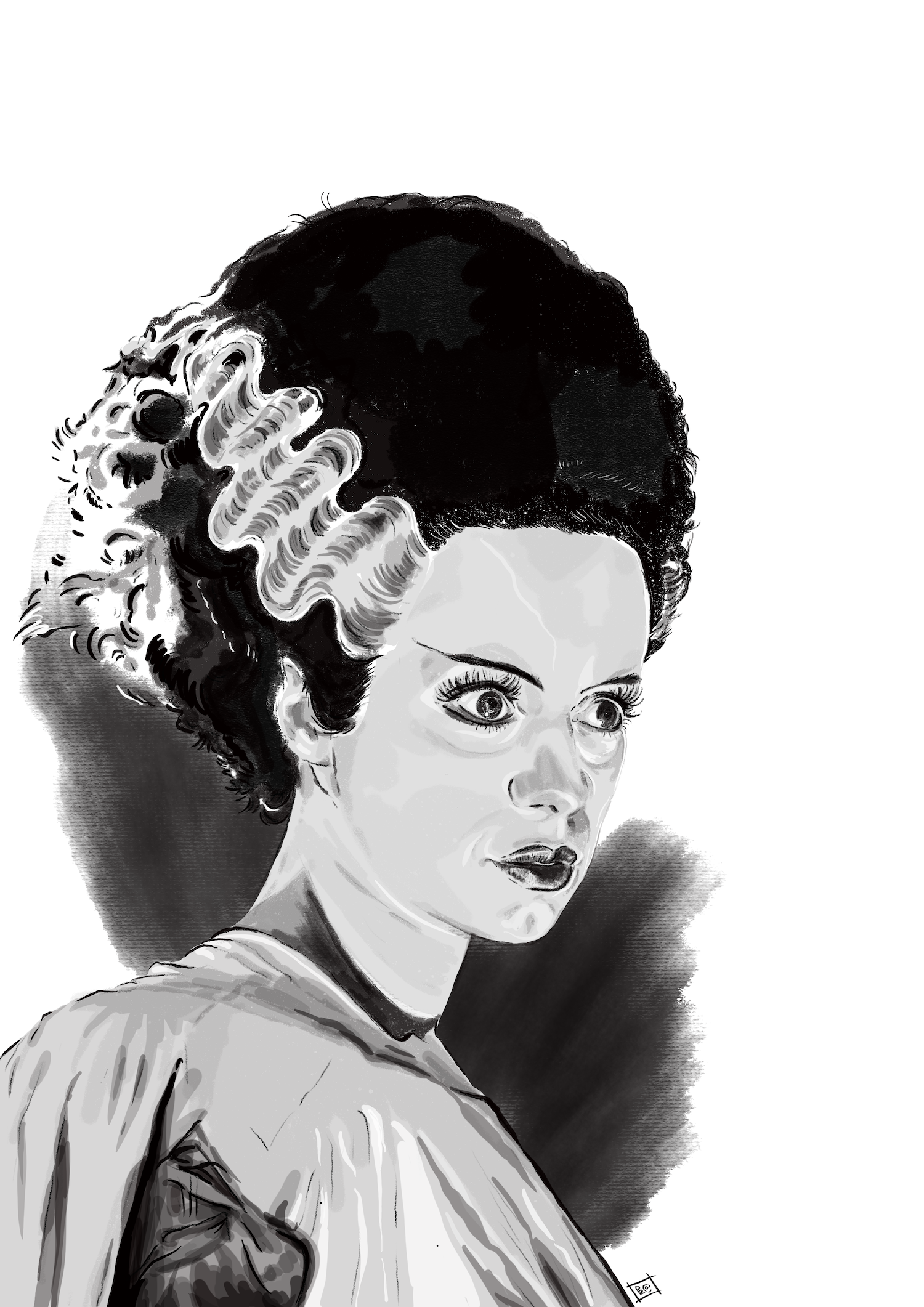
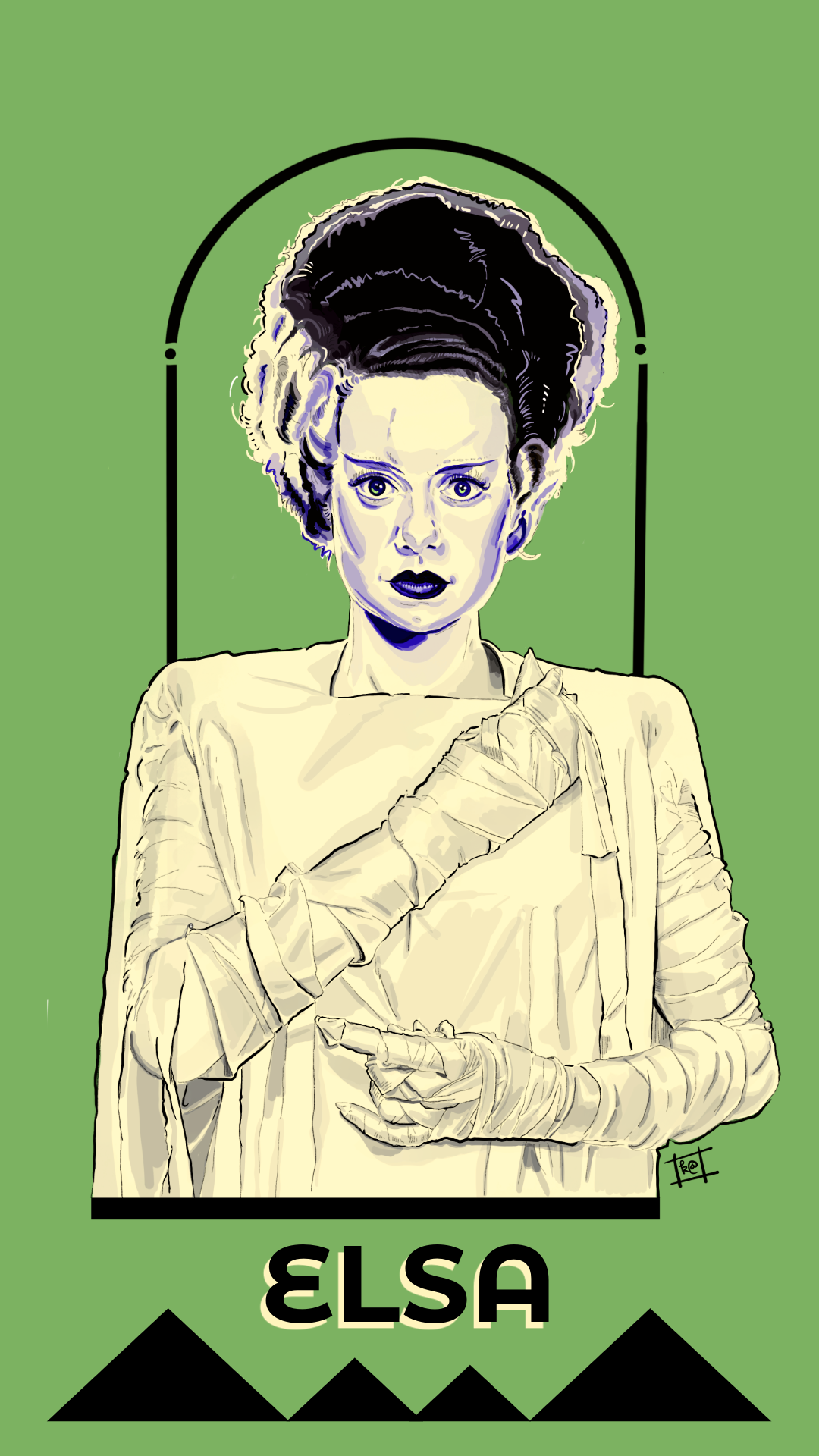
<p><a href="/tags/art/" rel="tag">#art</a> <a href="/tags/history/" rel="tag">#history</a>: every 28th october, i use elsa lanchester (born <a href="/tags/otd/" rel="tag">#otd</a> in 1902) as an excuse to pay homage to mary wollstonecraft shelley's masterpiece, 'frankenstein'. mind you, elsa was pretty cool, herself. difficult not to be when you're the daughter of a suffragette who was also secretary to eleanor marx. <br>i've got more to say about elsa in the response posts below, so read or ignore as you wish. <br><a href="/tags/wip/" rel="tag">#wip</a> <a href="/tags/illustration/" rel="tag">#illustration</a> <a href="/tags/cinema/" rel="tag">#cinema</a> <a href="/tags/literature/" rel="tag">#literature</a> <a href="/tags/frankenstein/" rel="tag">#frankenstein</a> <a href="/tags/maryshelley/" rel="tag">#maryShelley</a> <a href="/tags/elsalanchester/" rel="tag">#elsaLanchester</a></p>
Edited 161d ago