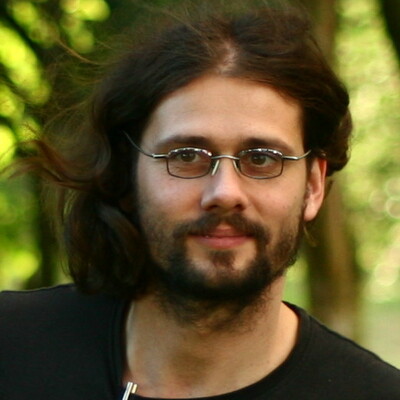
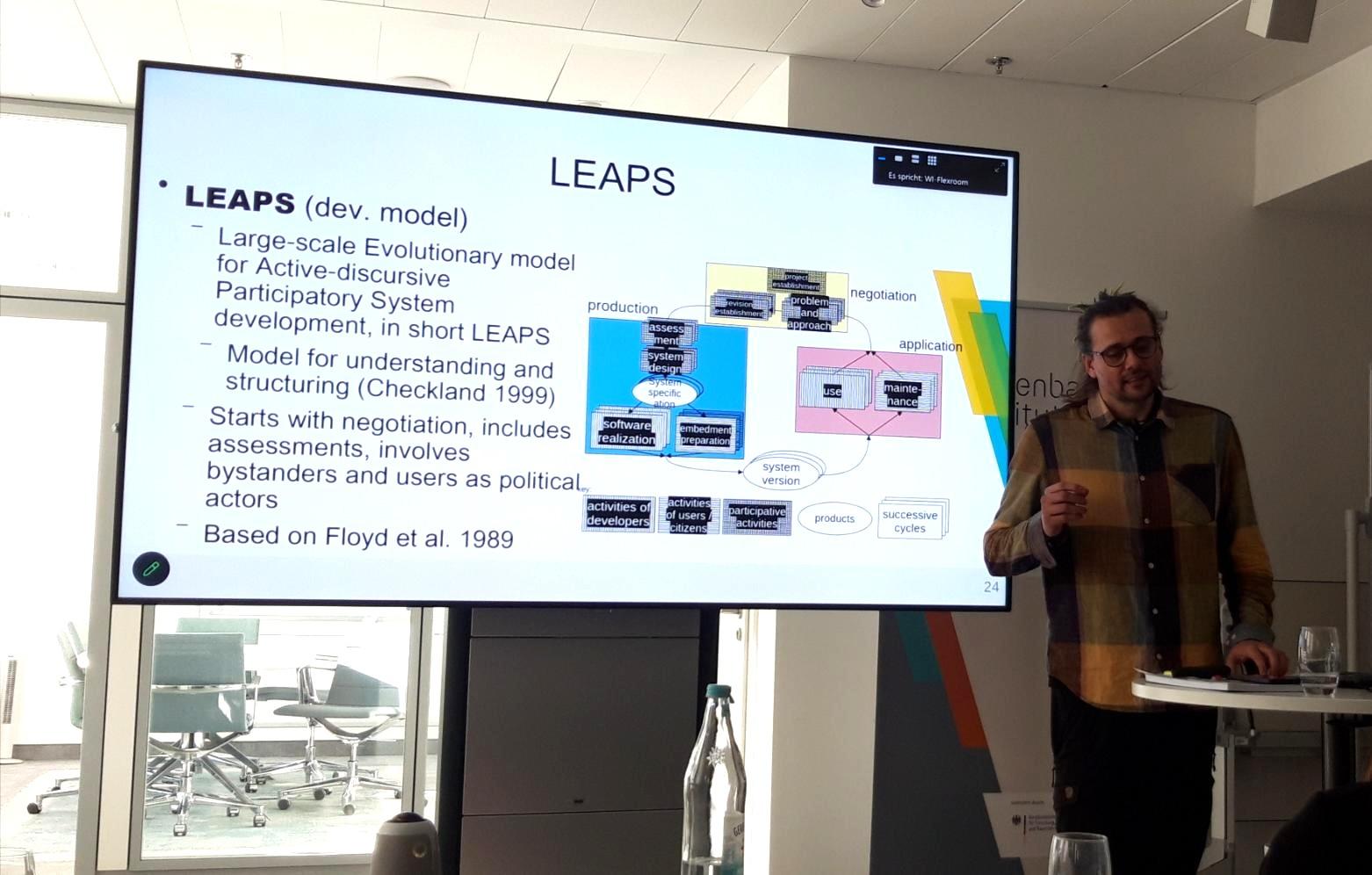
<p>FWIW and for sharing the joy: I have just successfully defended my <a href="/tags/dissertation/" rel="tag">#dissertation</a>. 🥰 It is titled:</p><p>”Societal IT systems development. Towards a discursive process-oriented multi-perspective approach to co-designing, -operating, -assessing, and -regulating societally relevant IT systems” 😅</p><p>So many wonderful people were supporting me all along the way, it's always teamwork, thank you so much. 🙏</p><p>The <a href="/tags/summary/" rel="tag">#summary</a> can be found here: <a href="https://rainer-rehak.eu/files/dissertation-summary/" rel="nofollow" class="ellipsis" title="rainer-rehak.eu/files/dissertation-summary/"><span class="invisible">https://</span><span class="ellipsis">rainer-rehak.eu/files/disserta</span><span class="invisible">tion-summary/</span></a> and after some revisions, corrections, editing etc. it will of course be freely available. <a href="/tags/ccby/" rel="tag">#CCBY</a> <a href="/tags/oa/" rel="tag">#OA</a> <a href="/tags/computerscience/" rel="tag">#computerscience</a> <span class="h-card"><a href="https://wisskomm.social/@tuberlin" class="u-url mention" rel="nofollow noopener noreferrer" target="_blank">@<span>tuberlin</span></a></span> <span class="h-card"><a href="https://social.bund.de/@Weizenbaum_Institut" class="u-url mention" rel="nofollow noopener noreferrer" target="_blank">@<span>Weizenbaum_Institut</span></a></span></p>
Edited 118d ago
For reasons that aren't even clear to me, I'm about 1/3rd into Barry Jay's Reflective Programs in Tree Calculus and about 1/10th into Frank Waaldijk's Natural Topology, which I've been reading side-by-side. Smashing these two into each other is pretty fascinating, even as I'm not sure what to make of the mixture yet.<br><br>Having sat with the notion for about six months now, I think Jay's critique of the Church-Turing thesis has legs. I don't see clearly yet exactly where and how the limits of computation manifest in his own system(s), which of course they must. But I think he's correct that this thesis as it's colloquially presented (and taught to students, including me!) is misleading at best and false in a certain important sense. Apparently he is regularly called a crackpot for forwarding this critique even though it's straightforwardly demonstrated.<br><br>Waaldijk's book is more of a constructive mathematics exploration. In this it is closely related to computer science, but it's focused on traditionally mathematical notions like topological space. The latter is usually quite complicated, but Waaldijk shows that the core concept of compact space can be represented with finitely-branching trees, making these spaces amenable to computation. Since we imagine physics taking place in spaces that are topological (among other things) there's potentially an interesting bidirectional flow of ideas between computer science and physics.<br><br>Jay calls his central notion "natural trees". Waaldijk calls his central notion "natural spaces". In both cases I think the intended sense is "with minimal artifice".<br><br><a href="/tags/computerscience/" rel="tag">#ComputerScience</a> <a href="/tags/computation/" rel="tag">#computation</a> <a href="/tags/math/" rel="tag">#math</a> <a href="/tags/mathematics/" rel="tag">#mathematics</a> <a href="/tags/topology/" rel="tag">#topology</a><br>
<p>In Math, Rigor Is Vital. But Are Digitized Proofs Taking It Too Far?</p><p>The quest to make mathematics rigorous has a long and spotty history — one mathematicians can learn from as they push to formalize everything in the computer program Lean.</p><p>By Leila Sloman</p><p><a href="https://www.quantamagazine.org/in-math-rigor-is-vital-but-are-digitized-proofs-taking-it-too-far-20260325/" rel="nofollow" class="ellipsis" title="www.quantamagazine.org/in-math-rigor-is-vital-but-are-digitized-proofs-taking-it-too-far-20260325/"><span class="invisible">https://</span><span class="ellipsis">www.quantamagazine.org/in-math</span><span class="invisible">-rigor-is-vital-but-are-digitized-proofs-taking-it-too-far-20260325/</span></a></p><p><a href="/tags/books/" rel="tag">#books</a> <a href="/tags/mathematics/" rel="tag">#mathematics</a> <a href="/tags/computerscience/" rel="tag">#computerscience</a></p>
I just had an interaction on LinkedIn in which the person claimed we don't code anymore, we "manipulate data". When I pushed back, they gave a PHP regular expression as an example. Apparently what they meant by "manipulate data" is "modify highly-structured strings according to a syntax", an activity they don't seem to recognize as coding. 🤦♂<br><br>Do instructors just not teach the code-data duality anymore? Data is code is data is now a mystery?<br><br><a href="/tags/computerscience/" rel="tag">#ComputerScience</a> <a href="/tags/tech/" rel="tag">#tech</a> <a href="/tags/dev/" rel="tag">#dev</a> <a href="/tags/coding/" rel="tag">#coding</a> <a href="/tags/software/" rel="tag">#software</a> <a href="/tags/softwaredevelopment/" rel="tag">#SoftwareDevelopment</a> <a href="/tags/literalism/" rel="tag">#literalism</a> <a href="/tags/linkedin/" rel="tag">#LinkedIn</a><br>
Edited 79d ago
Self-abnegating software---software that performs its function well, but in such a way that you ultimately stop using the software forever---seems underexplored.<br><br><a href="/tags/tech/" rel="tag">#tech</a> <a href="/tags/dev/" rel="tag">#dev</a> <a href="/tags/software/" rel="tag">#software</a> <a href="/tags/softwaredevelopment/" rel="tag">#SoftwareDevelopment</a> <a href="/tags/computerscience/" rel="tag">#ComputerScience</a><br>
My tongue-in-cheek thread about self-abnegating software revealed to me that software is a parasite in ways I didn't appreciate before. I'm not sure I'll be able to unthink that.<br><br>To be more precise, whoever controls the software attempts to establish a parasitical relationship with a host ("user") using the software as attachment mechanism. One successful class of parasite leads its hosts into believing they are benefiting from the arrangement even as they are being led into a burrow to have eggs implanted in their carapaces. Some parasites recruit potential hosts in active construction of parts necessary to create novel attachment mechanisms.<br><br><a href="/tags/tech/" rel="tag">#tech</a> <a href="/tags/dev/" rel="tag">#dev</a> <a href="/tags/software/" rel="tag">#software</a> <a href="/tags/computerscience/" rel="tag">#ComputerScience</a><br>
Edited 19d ago
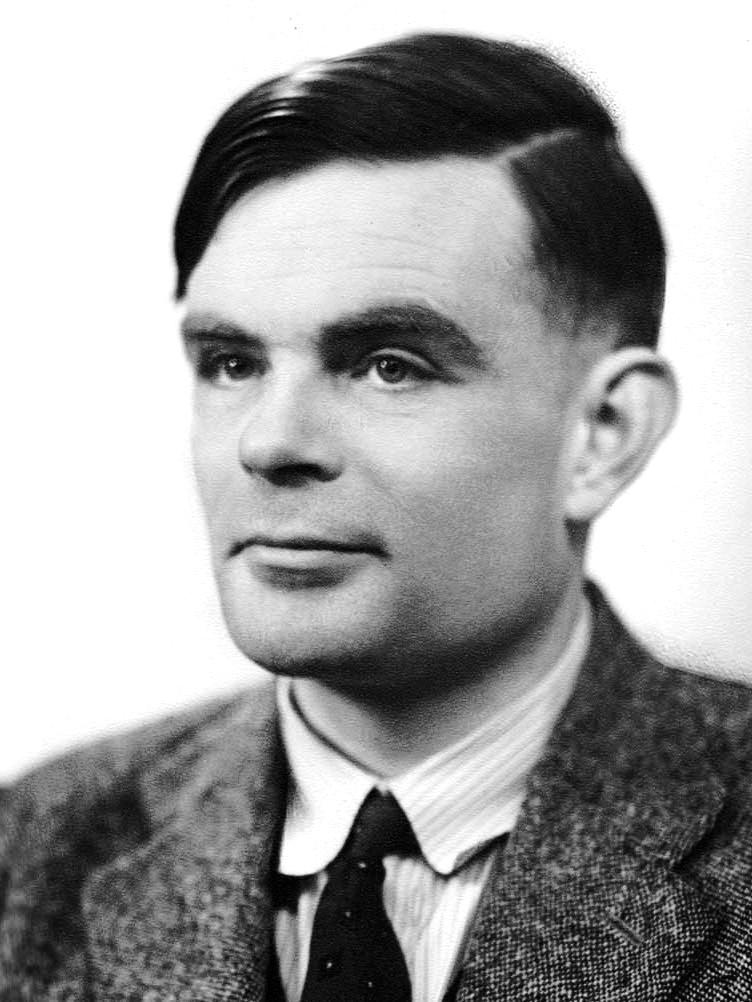
<p><a href="/tags/alanturing/" rel="tag">#AlanTuring</a> <a href="/tags/lgbtqhistory/" rel="tag">#LGBTQHistory</a> <a href="/tags/pridemonth/" rel="tag">#PrideMonth</a> <a href="/tags/history/" rel="tag">#History</a> <a href="/tags/computerscience/" rel="tag">#ComputerScience</a> <a href="/tags/pride/" rel="tag">#Pride</a> <a href="/tags/lgbtq/" rel="tag">#LGBTQ</a> <a href="/tags/lgbtqia/" rel="tag">#LGBTQIA</a> <a href="/tags/antifa/" rel="tag">#Antifa</a></p>
Thinking about computational thinking has led some to think computers can computationally think about non-computational things, the exemplar non-computational thought computational thinking enabled us to think. I think you won't understand the technical dimensions of the present moment if you cannot parse the circularity.<br><br><a href="/tags/computerscience/" rel="tag">#ComputerScience</a> <a href="/tags/ai/" rel="tag">#AI</a> <a href="/tags/thought/" rel="tag">#thought</a><br>
Re: <a href="https://social.wildeboer.net/users/jwildeboer/statuses/116860157329810170" rel="nofollow" class="ellipsis" title="social.wildeboer.net/users/jwildeboer/statuses/116860157329810170"><span class="invisible">https://</span><span class="ellipsis">social.wildeboer.net/users/jwi</span><span class="invisible">ldeboer/statuses/116860157329810170</span></a><br><br>I realize this is beside the point, but personally I view the fact that code review is not considered interesting as a serious failure of computer science education. I'm invested in the latter, so it stands out for me.<br><br>On the whole writers tend to love to read. I think they love it in part because their education led them to realize that learning to read well is both a good in itself and helps you become a better writer. Programming languages were designed to be human readable so that humans could read them. Yet we have a couple generations of people writing code most of whom were never explicitly taught how to read it, let alone learn to love reading it.<br><br><a href="/tags/tech/" rel="tag">#tech</a> <a href="/tags/dev/" rel="tag">#dev</a> <a href="/tags/software/" rel="tag">#software</a> <a href="/tags/softwaredevelopment/" rel="tag">#SoftwareDevelopment</a> <a href="/tags/computerprogramming/" rel="tag">#ComputerProgramming</a> <a href="/tags/computerscience/" rel="tag">#ComputerScience</a> <a href="/tags/computerscienceeducation/" rel="tag">#ComputerScienceEducation</a><br>
Edited 12d ago