<p>See How Ovid’s ‘Metamorphoses’ Inspired Centuries of Artists—From Caravaggio to René Magritte</p><p>A show at the Rijksmuseum brings together paintings, sculptures, film and other artworks that reinterpret the ancient Roman poet’s tales of transformation</p><p>by Christian Thorsberg</p><p><a href="https://www.smithsonianmag.com/smart-news/see-how-ovids-metamorphoses-inspired-centuries-of-artists-from-caravaggio-to-rene-magritte-180988224/?utm_source=smithsoniandaily&utm_medium=email&utm_campaign=editorial&lctg=93133550" rel="nofollow" class="ellipsis" title="www.smithsonianmag.com/smart-news/see-how-ovids-metamorphoses-inspired-centuries-of-artists-from-caravaggio-to-rene-magritte-180988224/?utm_source=smithsoniandaily&utm_medium=email&utm_campaign=editorial&lctg=93133550"><span class="invisible">https://</span><span class="ellipsis">www.smithsonianmag.com/smart-n</span><span class="invisible">ews/see-how-ovids-metamorphoses-inspired-centuries-of-artists-from-caravaggio-to-rene-magritte-180988224/?utm_source=smithsoniandaily&utm_medium=email&utm_campaign=editorial&lctg=93133550</span></a></p><p>Metamorphoses at PG:<br><a href="https://www.gutenberg.org/ebooks/21765" rel="nofollow"><span class="invisible">https://</span>www.gutenberg.org/ebooks/21765</a></p><p><a href="/tags/books/" rel="tag">#books</a> <a href="/tags/literature/" rel="tag">#literature</a></p>
books
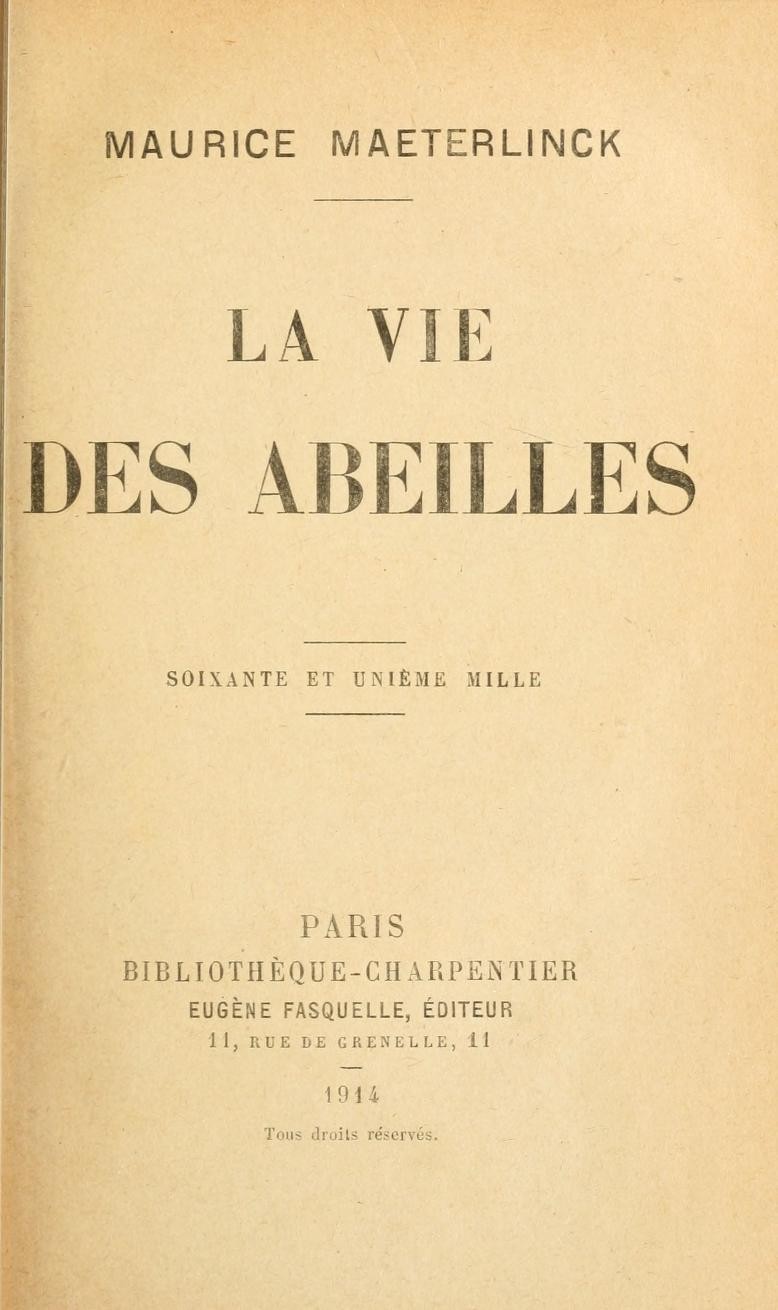
<p><a href="/tags/otd/" rel="tag">#OTD</a> in 1901.</p><p>Publication of Maurice Maeterlinck's The Life of the Bee in Belgium.</p><p>He infuses his observations of bees with reflections on human society, mortality, and the universe, using the hive as a metaphor for human society. The book discusses various aspects of bee life, including the architecture of the hive, the life cycle of the bees, their social organization, and their production of honey. </p><p><a href="https://www.gutenberg.org/ebooks/38527" rel="nofollow"><span class="invisible">https://</span>www.gutenberg.org/ebooks/38527</a></p><p><a href="https://www.gutenberg.org/ebooks/4511" rel="nofollow"><span class="invisible">https://</span>www.gutenberg.org/ebooks/4511</a></p><p><a href="/tags/books/" rel="tag">#books</a> <a href="/tags/literature/" rel="tag">#literature</a></p>
<p><a href="/tags/otd/" rel="tag">#OTD</a> in 1915.</p><p>The rondeau "In Flanders Fields" by the Canadian poet John McCrae is written; it is first published on December 8 in the London magazine Punch. He was inspired to write it, after presiding over the funeral of friend and fellow soldier Lieutenant Alexis Helmer, who died in the Second Battle of Ypres. According to legend, fellow soldiers retrieved the poem after McCrae, initially dissatisfied with his work, discarded it.</p><p>In Flanders Fields at PG:<br><a href="https://www.gutenberg.org/ebooks/353" rel="nofollow"><span class="invisible">https://</span>www.gutenberg.org/ebooks/353</a></p><p><a href="/tags/books/" rel="tag">#books</a></p>
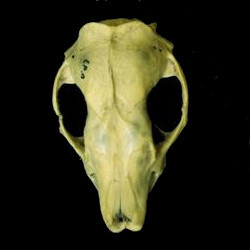
<p>📚 An Immense World by: Ed Yong</p><p>The Earth teems with sights and textures, sounds and vibrations, smells and tastes, electric and magnetic fields. But every kind of animal, including humans, is enclosed within its own unique sensory bubble, perceiving but a tiny sliver of our immense world.</p><p>In An Immense World, Ed Yong coaxes us...</p><p><a href="https://bookblabla.com/book/an-immense-world" rel="nofollow" class="ellipsis" title="bookblabla.com/book/an-immense-world"><span class="invisible">https://</span><span class="ellipsis">bookblabla.com/book/an-immense</span><span class="invisible">-world</span></a></p><p><span class="h-card"><a href="https://fedigroups.social/@bookstodon" class="u-url mention" rel="nofollow noopener noreferrer" target="_blank">@<span>bookstodon</span></a></span></p><p><a href="/tags/books/" rel="tag">#books</a> <a href="/tags/reading/" rel="tag">#reading</a> <a href="/tags/libraries/" rel="tag">#libraries</a> <a href="/tags/nature/" rel="tag">#nature</a> <a href="/tags/animals/" rel="tag">#animals</a> <a href="/tags/generalscience/" rel="tag">#generalscience</a> <a href="/tags/lifesciences/" rel="tag">#lifesciences</a> <a href="/tags/zoology/" rel="tag">#zoology</a></p>
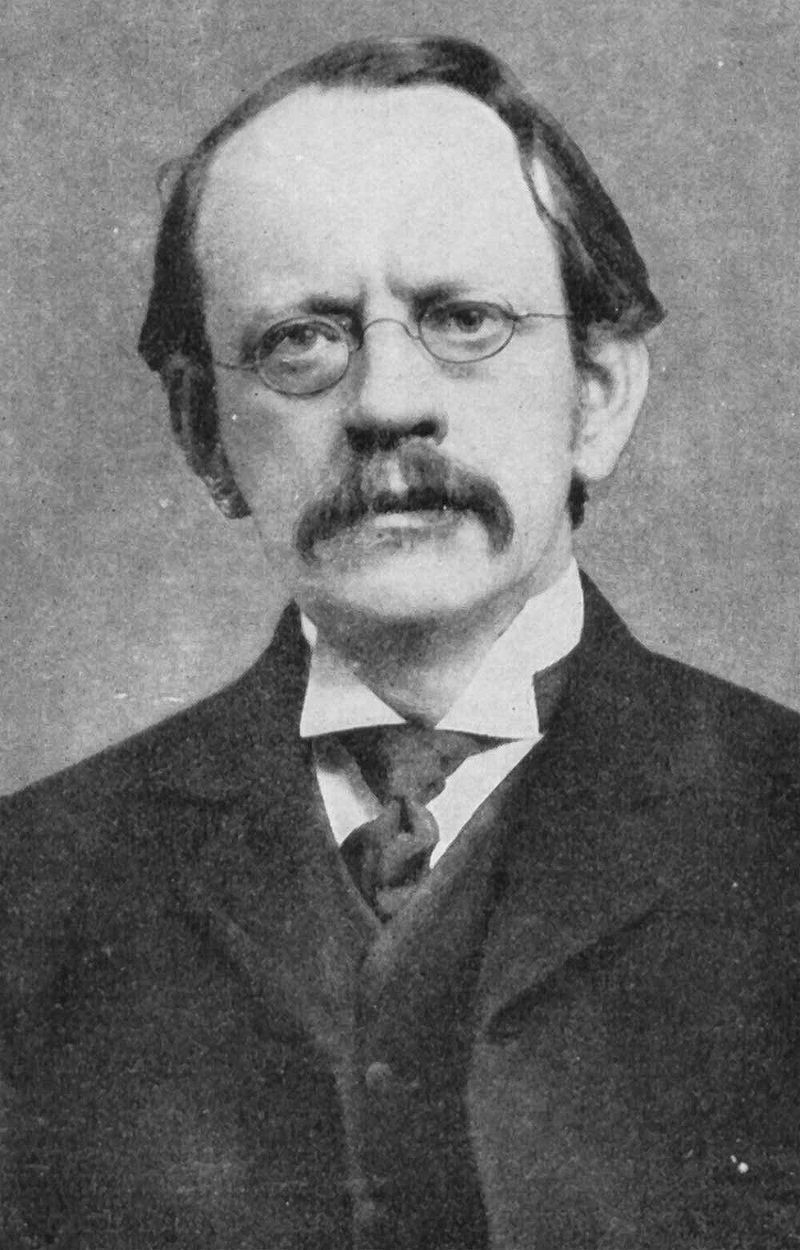
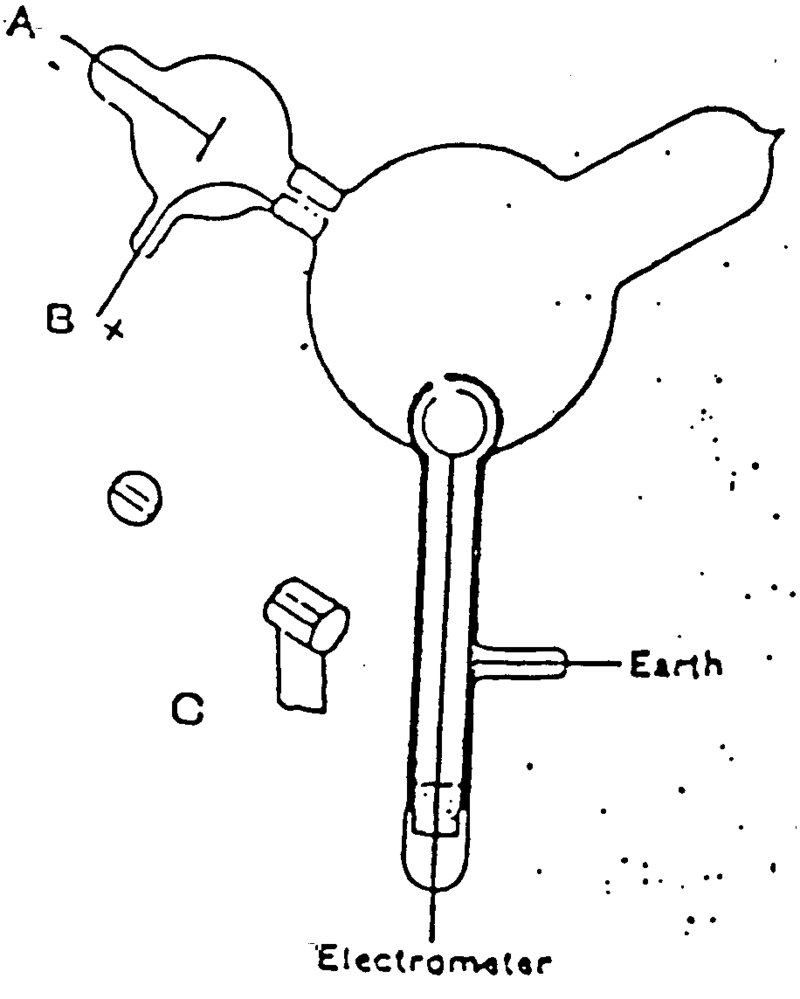
<p><a href="/tags/otd/" rel="tag">#OTD</a> in 1897.</p><p>J. J. Thomson of the Cavendish Laboratory announces his discovery of the electron as a subatomic particle, over 1,800 times smaller than a proton (in the atomic nucleus), at a lecture at the Royal Institution in London.</p><p>Thomson showed that cathode rays were composed of previously unknown negatively charged particles (now called electrons), which he calculated must have bodies much smaller than atoms and a very large charge-to-mass ratio.</p><p><a href="https://www.gutenberg.org/ebooks/author/38322" rel="nofollow" class="ellipsis" title="www.gutenberg.org/ebooks/author/38322"><span class="invisible">https://</span><span class="ellipsis">www.gutenberg.org/ebooks/autho</span><span class="invisible">r/38322</span></a></p><p><a href="/tags/books/" rel="tag">#books</a> <a href="/tags/physics/" rel="tag">#physics</a></p>
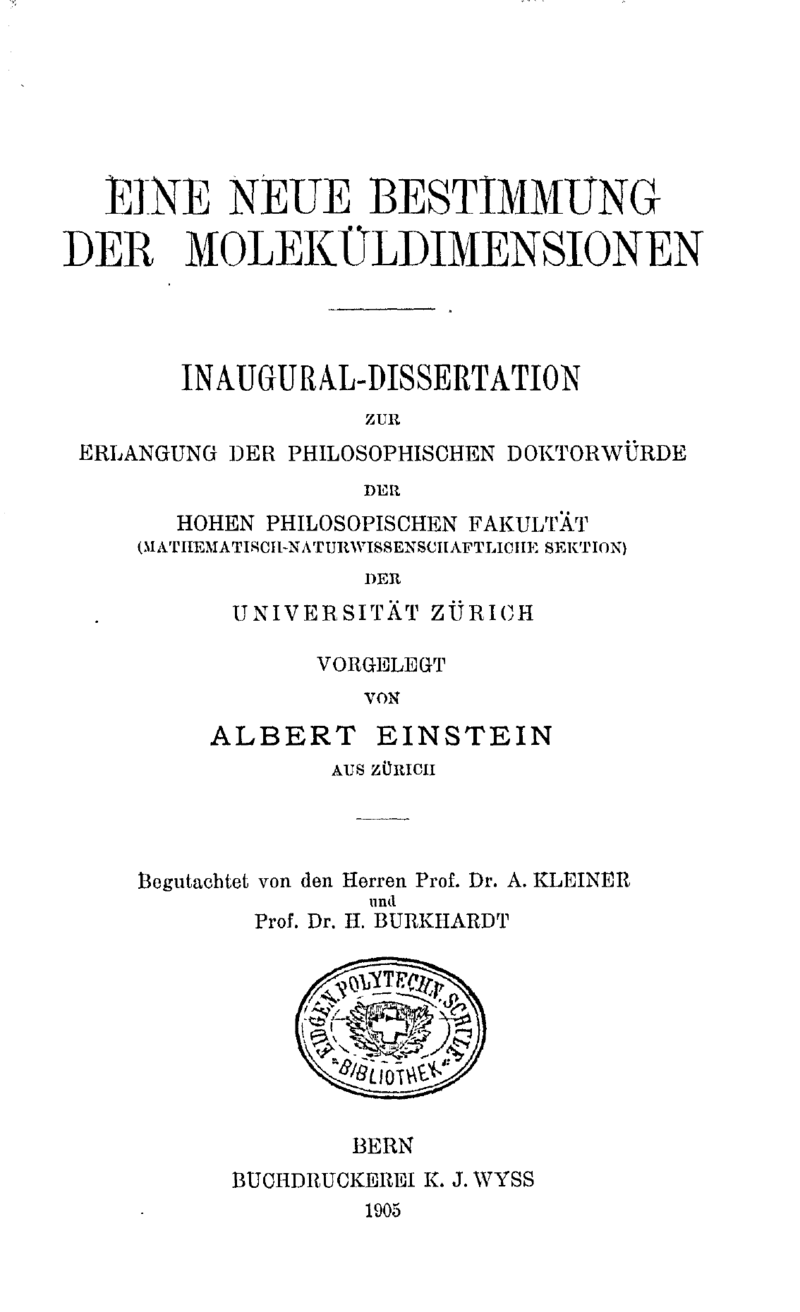
<p><a href="/tags/otd/" rel="tag">#OTD</a> in 1905. Albert Einstein completes his doctoral thesis at the University of Zurich.</p><p>Titled "Eine neue Bestimmung der Moleküldimensionen", he calculated the size of sugar molecules in solution and from this a value for the Avogadro constant. It is related to his work on Brownian motion, published in the same year, and supported the atomic hypothesis, which was still controversial among leading physicists at the time. </p><p>Books by Albert Einstein at PG:<br><a href="https://www.gutenberg.org/ebooks/author/1630" rel="nofollow" class="ellipsis" title="www.gutenberg.org/ebooks/author/1630"><span class="invisible">https://</span><span class="ellipsis">www.gutenberg.org/ebooks/autho</span><span class="invisible">r/1630</span></a></p><p><a href="/tags/books/" rel="tag">#books</a> <a href="/tags/physics/" rel="tag">#physics</a></p>
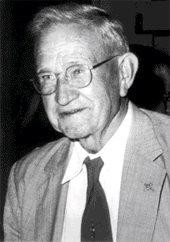
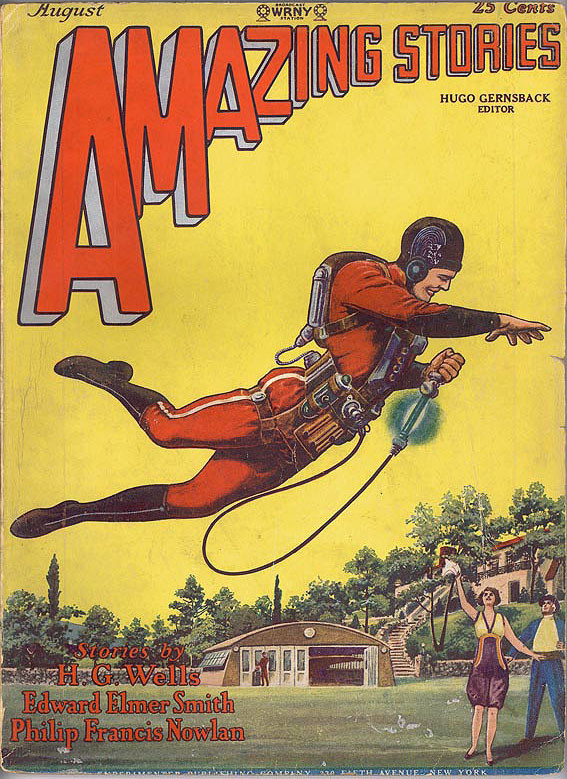
<p>American author E. E. Smith was born <a href="/tags/otd/" rel="tag">#OTD</a> in 1890.</p><p>E. E. "Doc" Smith is considered a major figure in the history of science fiction literature, particularly for his development of the space opera genre. His first major work, "The Skylark of Space" (1928), is often considered one of the first space operas. Perhaps his most famous work, the Lensman series, began with "Triplanetary" in 1934.</p><p>Books by E. E. Smith at PG:<br><a href="https://www.gutenberg.org/ebooks/author/9515" rel="nofollow" class="ellipsis" title="www.gutenberg.org/ebooks/author/9515"><span class="invisible">https://</span><span class="ellipsis">www.gutenberg.org/ebooks/autho</span><span class="invisible">r/9515</span></a></p><p><a href="/tags/books/" rel="tag">#books</a> <a href="/tags/literature/" rel="tag">#literature</a></p>
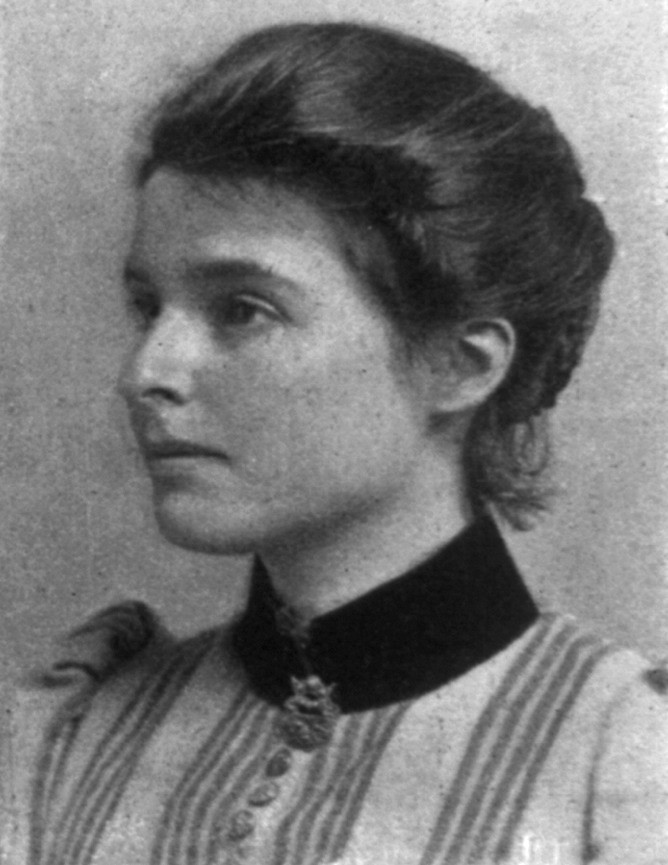
<p>English sociologist, economist, feminist and social reformer Beatrice Webb died <a href="/tags/otd/" rel="tag">#OTD</a> in 1943.</p><p>Some of her key works, often co-authored with her husband, include The History of Trade Unionism (1894) and Industrial Democracy (1897). One of her most significant research endeavors was her study of the British poor, which resulted in the seminal work The Poor Law Report of 1909. </p><p>Books by Beatrice Webb at PG:<br><a href="https://www.gutenberg.org/ebooks/author/42231" rel="nofollow" class="ellipsis" title="www.gutenberg.org/ebooks/author/42231"><span class="invisible">https://</span><span class="ellipsis">www.gutenberg.org/ebooks/autho</span><span class="invisible">r/42231</span></a></p><p><a href="/tags/books/" rel="tag">#books</a> <a href="/tags/literature/" rel="tag">#literature</a></p>
<p>"The burning soul, the burden'd mind,<br>In books alone companions find."</p><p>American writer and editor Sarah Josepha Hale died <a href="/tags/otd/" rel="tag">#OTD</a> in 1879.</p><p>She initially gained recognition with the publication of her novel "Northwood: Life North and South" (1827), which addressed the issue of slavery in America. Under her leadership, the magazine "Godey's Lady's Book" became one of the most influential women's magazines in America.</p><p>Books by Sarah Josepha Hale at PG:<br><a href="https://www.gutenberg.org/ebooks/author/43680" rel="nofollow" class="ellipsis" title="www.gutenberg.org/ebooks/author/43680"><span class="invisible">https://</span><span class="ellipsis">www.gutenberg.org/ebooks/autho</span><span class="invisible">r/43680</span></a></p><p><a href="/tags/books/" rel="tag">#books</a> <a href="/tags/literature/" rel="tag">#literature</a></p>
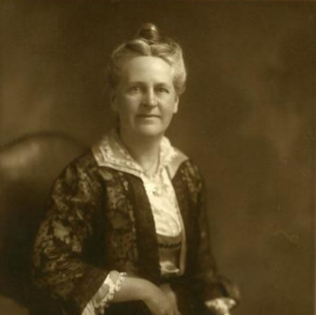
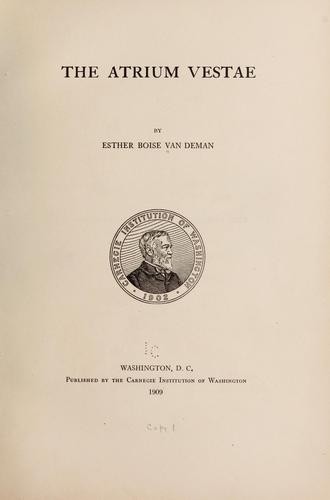
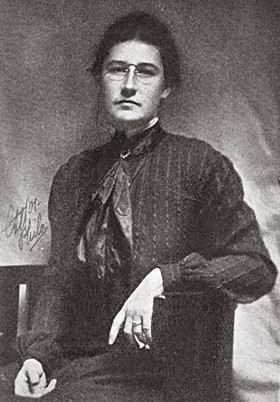
<p>American archeologist Esther Boise Van Deman died <a href="/tags/otd/" rel="tag">#OTD</a> in 1937.</p><p>She utilized detailed measurements and meticulous documentation of building materials and techniques, which enabled a more precise understanding of the chronological development of Roman construction practices. One of her most notable contributions was her work on the Roman concrete construction technique known as "opus caementicium."</p><p><a href="/tags/books/" rel="tag">#books</a> <a href="/tags/archeology/" rel="tag">#archeology</a> <a href="/tags/womeninsciene/" rel="tag">#womeninsciene</a></p>
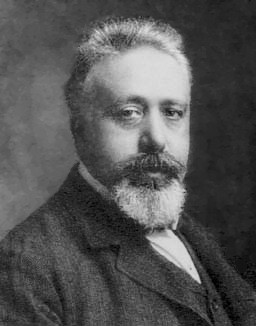
<p>Danish novelist, poet, and scientist Jens Peter Jacobsen died <a href="/tags/otd/" rel="tag">#OTD</a> in 1885.</p><p>His literary career is highlighted by his two major novels: "Niels Lyhne" (1880) and "Fru Marie Grubbe" (1876). "Niels Lyhne" is an autobiographical novel that follows the life of its eponymous hero, who struggles with faith and existential doubt in a seemingly indifferent world.</p><p>Books by Jens Peter Jacobsen at PG:<br><a href="https://www.gutenberg.org/ebooks/author/2193" rel="nofollow" class="ellipsis" title="www.gutenberg.org/ebooks/author/2193"><span class="invisible">https://</span><span class="ellipsis">www.gutenberg.org/ebooks/autho</span><span class="invisible">r/2193</span></a></p><p><a href="/tags/books/" rel="tag">#books</a> <a href="/tags/literature/" rel="tag">#literature</a></p>
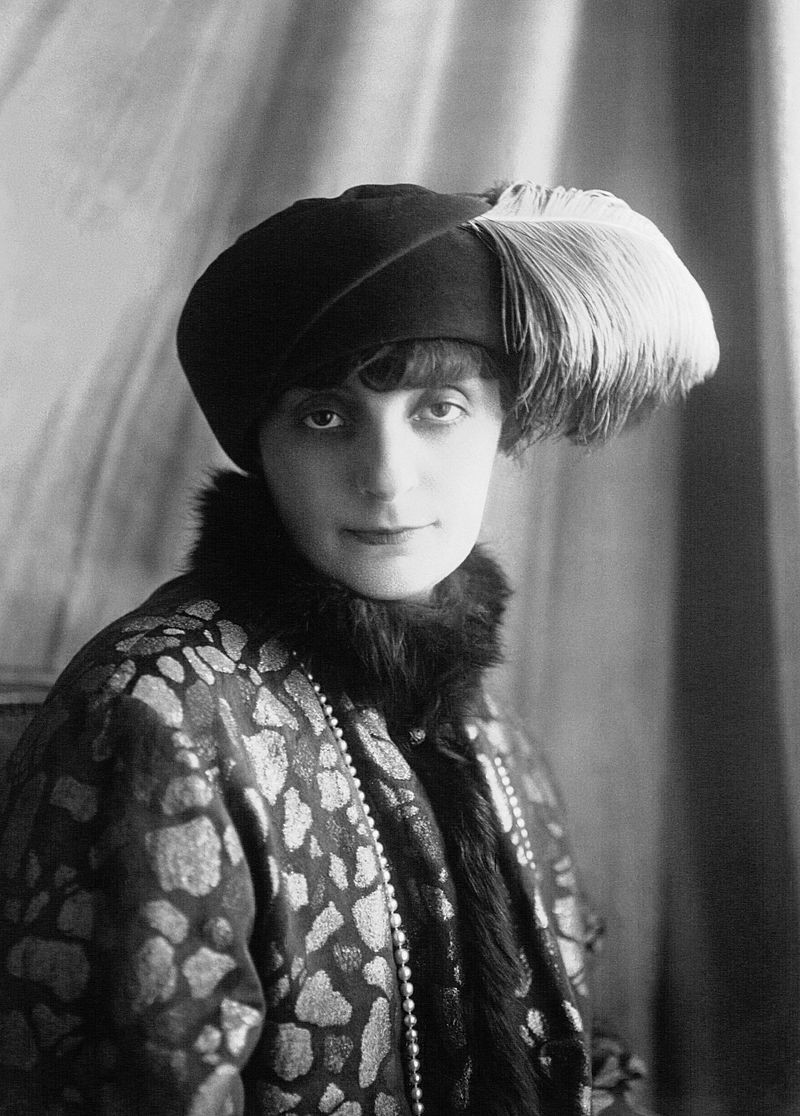
<p>French writer Anna de Noailles died <a href="/tags/otd/" rel="tag">#OTD</a> in 1933.</p><p>Some of her notable poetic works include "Le Cœur innombrable" (The Uncountable Heart, 1901), "L'Ombre des jours" (The Shadow of Days, 1902), and "Les Éblouissements" (The Dazzlements, 1907). Her salon in Paris was a gathering place for many of the leading intellectual and artistic figures of her time, including Marcel Proust, Colette, and Jean Cocteau, among others. </p><p>Books by Anna de Noailles at PG:<br><a href="https://www.gutenberg.org/ebooks/author/25065" rel="nofollow" class="ellipsis" title="www.gutenberg.org/ebooks/author/25065"><span class="invisible">https://</span><span class="ellipsis">www.gutenberg.org/ebooks/autho</span><span class="invisible">r/25065</span></a></p><p><a href="/tags/books/" rel="tag">#books</a> <a href="/tags/literature/" rel="tag">#literature</a></p>
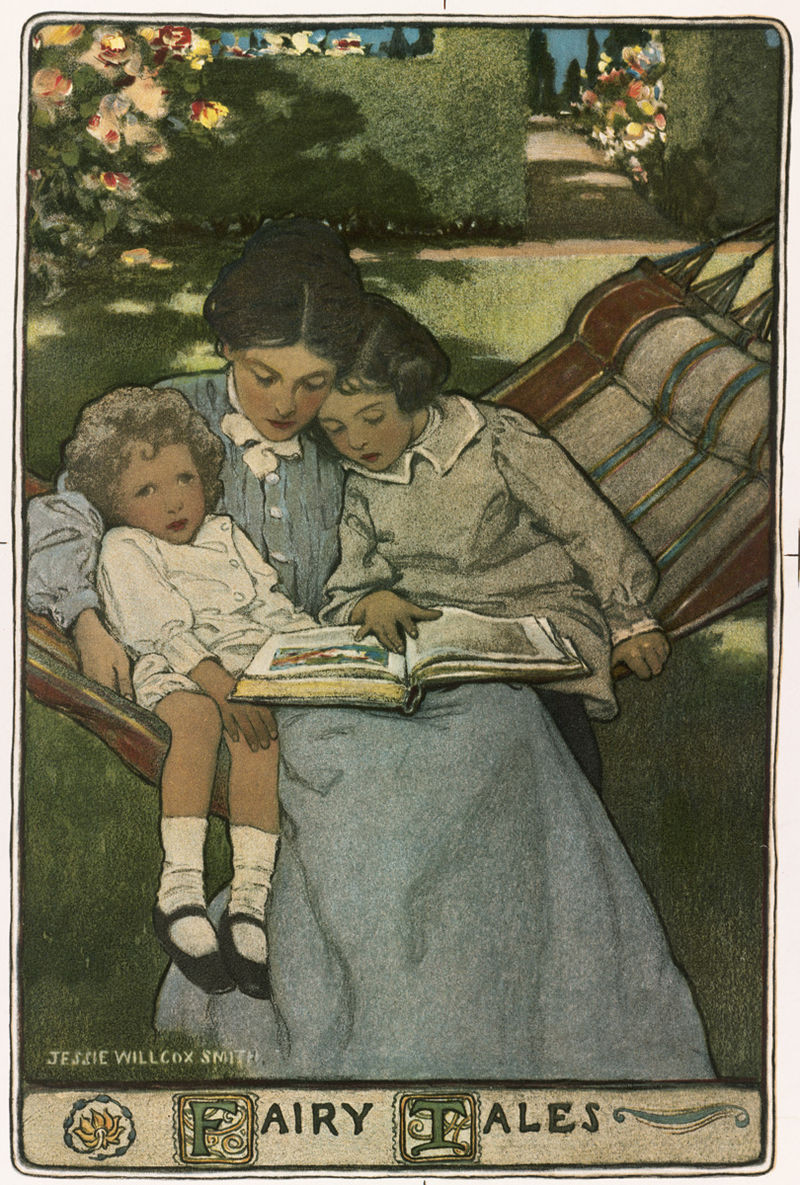
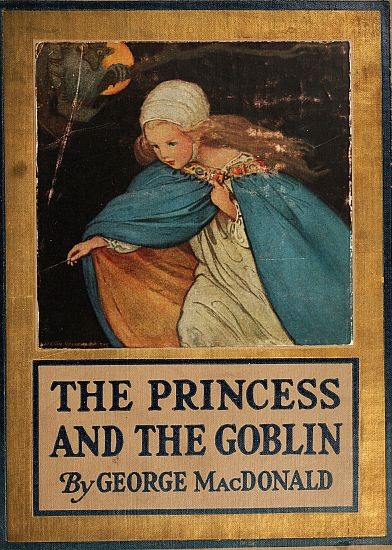
<p>American illustrator Jessie Willcox Smith died <a href="/tags/otd/" rel="tag">#OTD</a> in 1935.</p><p>Smith’s career took off when she began working for the Ladies' Home Journal, for which she created many covers and interior illustrations. She illustrated over 60 books throughout her career, including classics such as Charles Kingsley's The Water-Babies, Robert Louis Stevenson’s A Child’s Garden of Verses, and Clement Moore’s The Night Before Christmas.</p><p>Jessie Willcox Smith at PG:<br><a href="https://www.gutenberg.org/ebooks/author/7158" rel="nofollow" class="ellipsis" title="www.gutenberg.org/ebooks/author/7158"><span class="invisible">https://</span><span class="ellipsis">www.gutenberg.org/ebooks/autho</span><span class="invisible">r/7158</span></a></p><p><a href="/tags/books/" rel="tag">#books</a> <a href="/tags/art/" rel="tag">#art</a> <a href="/tags/literature/" rel="tag">#literature</a></p>
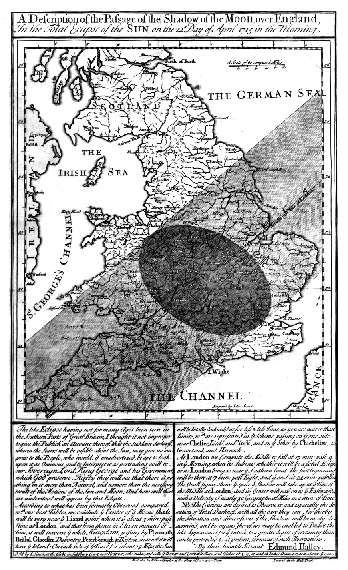
<p><a href="/tags/otd/" rel="tag">#OTD</a> in 1715.</p><p>A total solar eclipse is visible across northern Europe and northern Asia, as predicted by Edmond Halley to within four minutes accuracy. He also drew a predictive map showing the path of totality across Great Britain. The original map was about 20 miles off the observed eclipse path, mainly due to his use of inaccurate lunar ephemeris. After the eclipse, he corrected the eclipse path, and added the path and description of the 1724 total solar eclipse.</p><p><a href="/tags/books/" rel="tag">#books</a> <a href="/tags/science/" rel="tag">#science</a> <a href="/tags/astronomy/" rel="tag">#astronomy</a></p>
<p>Classic Books I Would Reread: <a href="https://lydiaschoch.com/wednesday-weekly-blogging-challenge-classic-books-i-would-reread/" rel="nofollow" class="ellipsis" title="lydiaschoch.com/wednesday-weekly-blogging-challenge-classic-books-i-would-reread/"><span class="invisible">https://</span><span class="ellipsis">lydiaschoch.com/wednesday-week</span><span class="invisible">ly-blogging-challenge-classic-books-i-would-reread/</span></a></p><p><a href="/tags/wednesdayweeklybloggingchallenge/" rel="tag">#WednesdayWeeklyBloggingChallenge</a> <a href="/tags/books/" rel="tag">#Books</a> <a href="/tags/classic/" rel="tag">#Classic</a></p><p><span class="h-card"><a href="https://fedigroups.social/@bookstodon" class="u-url mention" rel="nofollow noopener noreferrer" target="_blank">@<span>bookstodon</span></a></span></p>
<p>Italian polymath Leonardo da Vinci died <a href="/tags/otd/" rel="tag">#OTD</a> in 1519.</p><p>He was active as a painter, draughtsman, engineer, scientist, theorist, sculptor, and architect. While his fame initially rested on his achievements as a painter, he has also become known for his notebooks, in which he made drawings and notes on a variety of subjects, including anatomy, astronomy, botany, cartography, painting, and paleontology.</p><p>Books by Leonardo Da Vinci at PG<br><a href="https://www.gutenberg.org/ebooks/author/1629" rel="nofollow" class="ellipsis" title="www.gutenberg.org/ebooks/author/1629"><span class="invisible">https://</span><span class="ellipsis">www.gutenberg.org/ebooks/autho</span><span class="invisible">r/1629</span></a></p><p><a href="/tags/books/" rel="tag">#books</a> <a href="/tags/art/" rel="tag">#art</a> <a href="/tags/literature/" rel="tag">#literature</a></p>
<p>Polish Physicist Albert A. Michelson died <a href="/tags/otd/" rel="tag">#OTD</a> in 1931</p><p>His most famous experiment - Michelson-Morley experiment, was conducted in 1887 in collaboration with Edward Morley. Their experiment for the expected motion of the Earth relative to the æther, the hypothetical medium in which light was supposed to travel, resulted in a null result. Their results leaded H. Lorentz to devise his Lorentz contraction equations as a means of explaining the null result.</p><p><a href="https://www.gutenberg.org/ebooks/author/4093" rel="nofollow" class="ellipsis" title="www.gutenberg.org/ebooks/author/4093"><span class="invisible">https://</span><span class="ellipsis">www.gutenberg.org/ebooks/autho</span><span class="invisible">r/4093</span></a></p><p><a href="/tags/books/" rel="tag">#books</a> <a href="/tags/science/" rel="tag">#science</a></p>
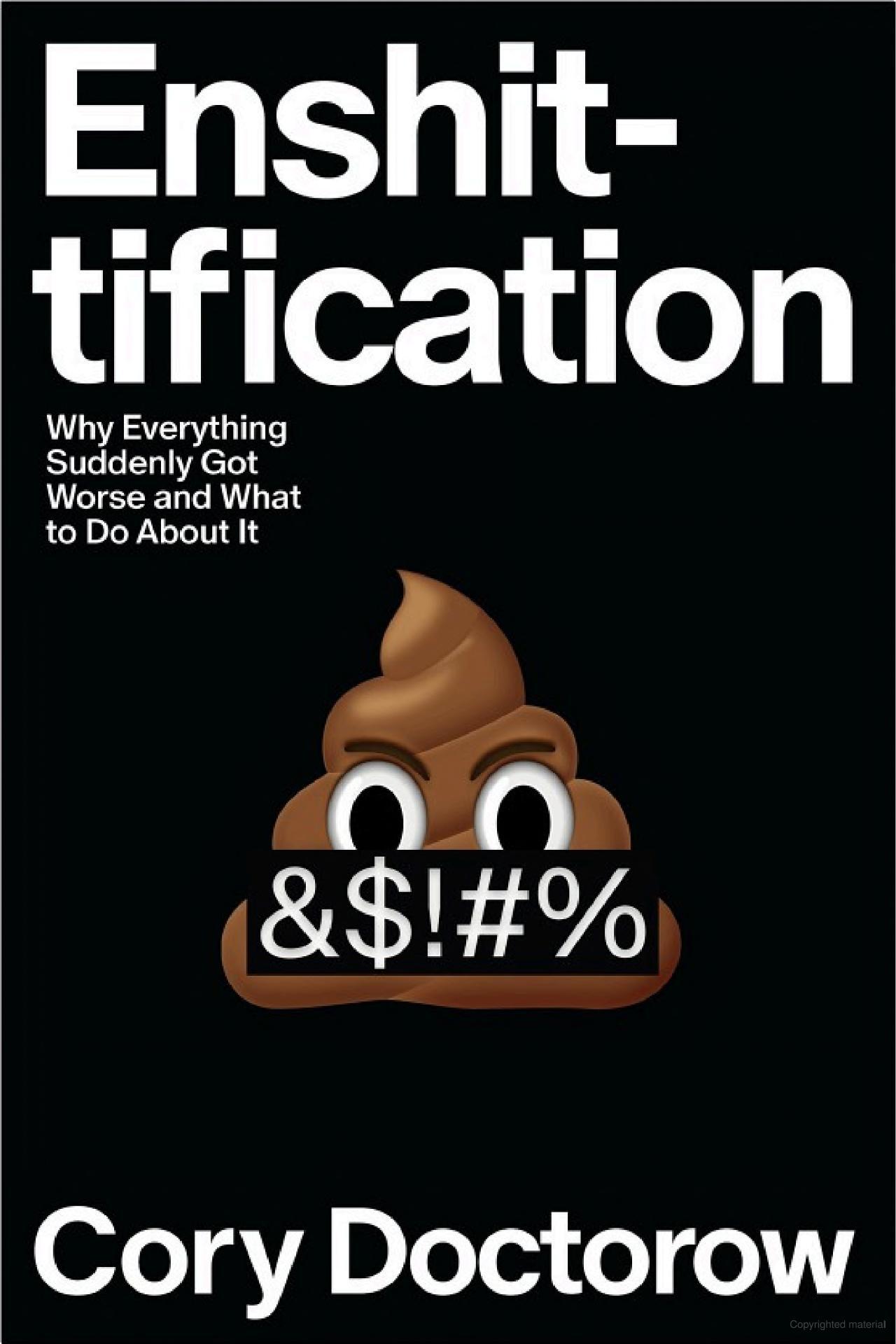
<p>📚 Enshittification by: Cory Doctorow</p><p>Enshittification: it’s not just you—the internet sucks now. Here’s why, and here’s how we can disenshittify it.</p><p>We’re living through the Enshittocene, the Great Enshittening, a time in which the services that matter to us, that we rely on, are turning into giant piles of shit. It’s frustra...</p><p><a href="https://bookblabla.com/book/enshittification" rel="nofollow" class="ellipsis" title="bookblabla.com/book/enshittification"><span class="invisible">https://</span><span class="ellipsis">bookblabla.com/book/enshittifi</span><span class="invisible">cation</span></a></p><p><span class="h-card"><a href="https://fedigroups.social/@bookstodon" class="u-url mention" rel="nofollow noopener noreferrer" target="_blank">@<span>bookstodon</span></a></span></p><p><a href="/tags/books/" rel="tag">#books</a> <a href="/tags/reading/" rel="tag">#reading</a> <a href="/tags/libraries/" rel="tag">#libraries</a> <a href="/tags/businesseconomics/" rel="tag">#businesseconomics</a> <a href="/tags/internet/" rel="tag">#internet</a> <a href="/tags/popularculture/" rel="tag">#popularculture</a></p>
Caliban and the Witch: Women, The Body And Primitive Accumulation - Silvia Federici (AK Press)
Edited 315d ago
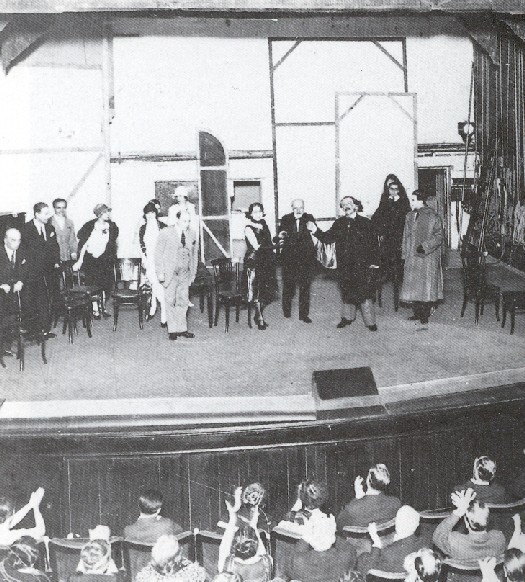
<p><a href="/tags/otd/" rel="tag">#OTD</a> in 1921.</p><p>The première of Luigi Pirandello's Sei personaggi in cerca d'autore at the Teatro Valle in Rome divides the audience.</p><p>An absurdist metatheatric play about the relationship among authors, their characters, and theatre practitioners, it premiered at the Teatro Valle in Rome to a mixed reception, with shouts from the audience of "Manicomio!" and "Incommensurabile!", a reaction to the play's illogical progression.</p><p><a href="https://www.gutenberg.org/ebooks/18457" rel="nofollow"><span class="invisible">https://</span>www.gutenberg.org/ebooks/18457</a></p><p><a href="/tags/books/" rel="tag">#books</a> <a href="/tags/literature/" rel="tag">#literature</a> <a href="/tags/theatre/" rel="tag">#theatre</a></p>