#media studies

13 books  

Book

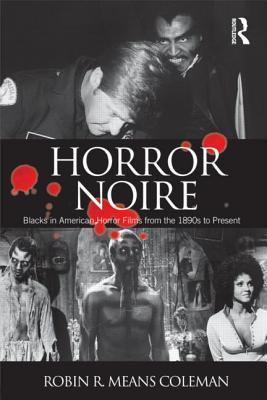
Horror Noire: Blacks in American Horror Films from the 1890s to Present
Goodreads
Robin R. Means Coleman publishing house: Routledge 2011 - 6
From King Kong to Candyman , the boundary-pushing genre of the horror film has always been a site for provocative explorations of race in American popular culture. In Horror Blacks in American Horror Films from 1890's to Present , Robin R. Means Coleman traces the history of notable characterizations of blackness in horror cinema, and examines key levels of black participation on screen and behind the camera. She argues that horror offers a representational space for black people to challenge the more negative, or racist, images seen in other media outlets, and to portray greater diversity within the concept of blackness itself. Horror Noire presents a unique social history of blacks in America through changing images in horror films. Throughout the text, the reader is encouraged to unpack the genre’s racialized imagery, as well as the narratives that make up popular culture’s commentary on race. Offering a comprehensive chronological survey of the genre, this book addresses a full range of black horror films, including mainstream Hollywood fare, as well as art-house films, Blaxploitation films, direct-to-DVD films, and the emerging U.S./hip-hop culture-inspired Nigerian "Nollywood" Black horror films. Horror Noire is, thus, essential reading for anyone seeking to understand how fears and anxieties about race and race relations are made manifest, and often challenged, on the silver screen.

Book

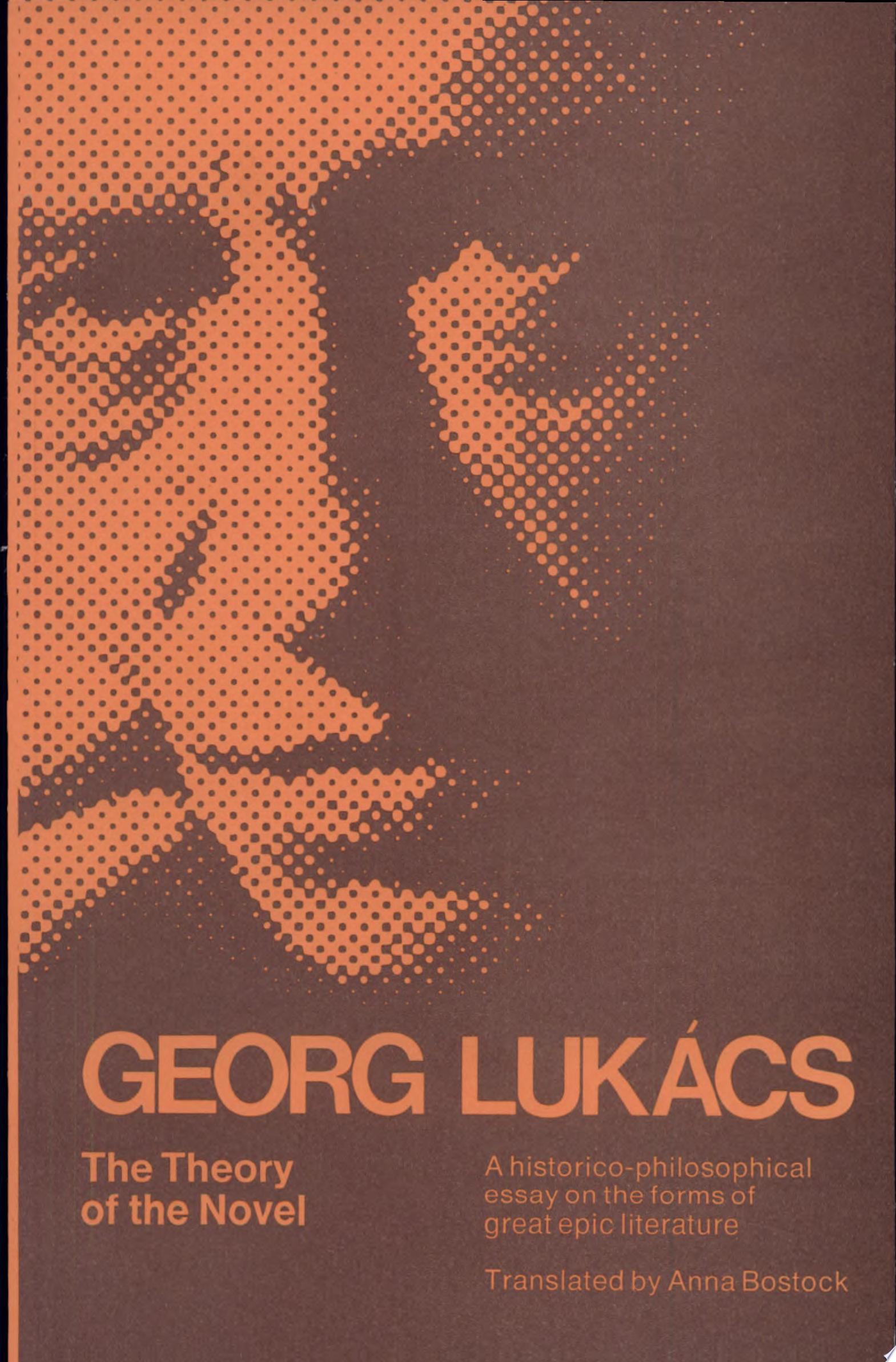
The Theory of the Novel
Google Books
Georg Lukacs publishing house: MIT Press 1974 - 01
Georg Lukács wrote The Theory of the Novel in 1914-1915, a period that also saw the conception of Rosa Luxemburg's Spartacus Letters, Lenin's Imperialism: The Highest Stage of Capitalism, Spengler's Decline of the West, and Ernst Bloch's Spirit of Utopia. Like many of Lukács's early essays, it is a radical critique of bourgeois culture and stems from a specific Central European philosophy of life and tradition of dialectical idealism whose originators include Kant, Hegel, Novalis, Marx, Kierkegaard, Simmel, Weber, and Husserl.The Theory of the Novel marks the transition of the Hungarian philosopher from Kant to Hegel and was Lukács's last great work before he turned to Marxism-Leninism.

Book

El arte nuevo de hacer libros
Goodreads
Ulises Carrión publishing house: Tumbona Ediciones 2012
El arte nuevo de hacer libros recoge por primera vez en español (y en la edición más completa de cualquier idioma) sus escritos y conferencias sobre una nueva forma de entender la hechura y práctica del libro como un todo, en la que cada libro crea sus condiciones particulares de lectura. Al descreer de los libros comunes ―al presentir su obsolescencia―, Carrión juzgó necesario terminar con ellos de una vez por todas, pero, como él mismo apuntó, "en bien de la coherencia, esto tenía que hacerse por medio de libros".

Book

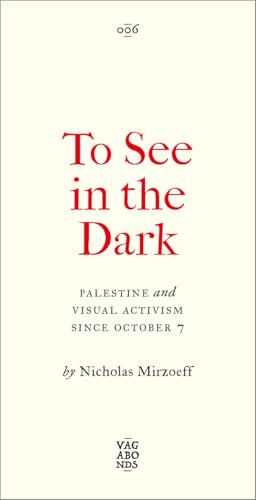
To See In the Dark: Palestine and Visual Activism Since October 7
Goodreads
Nicholas Mirzoeff publishing house: Pluto Press 2025 - 1
"Timely and clearly written, To See In the Dark is a manifesto to solidarity"  Stephen Sheehi, co-author of  Psychoanalysis Under Occupation "Mirzoeff sharply urges us to divest from a mere spectatorship to a genocide, and insists that we see in relation, in solidarity and as an anti-colonial collective" Simone Browne, author of  Dark Matters "Mirzoeff argues incisively for a return to ways of seeing that are grounded in solidarity and resistance" Candice Breitz, video and photography artist To see Palestine is to see the world. Since October 7th 2023, the forces of racial capitalism and settler colonialism have become all too visible in Israel's genocidal war on Gaza.  In  To See In the Dark , Nicholas Mirzoeff explores how images, and especially video, viewed outside Palestine enabled a dramatic switch in public opinion, leading to a global uprising against the genocide. In this groundbreaking analysis, he connects the personal and the political through his own anti-Zionist Jewishness and its histories of violence.  The result is a new collective and anti-colonial way of seeing, intersecting online and embodied experience. Nicholas Mirzoeff is a pioneering figure in the field of visual culture and has written extensively on Jewishness and Palestine. His books include  How To See The World , and  The Right to Look . He has written for the  Guardian  and  The Nation .

Book

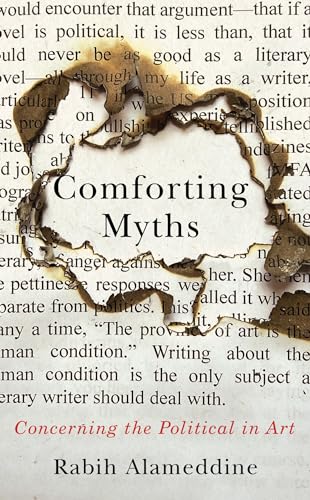
Comforting Myths
Goodreads
Rabih Alameddine publishing house: University of Virginia Press 2024 - 10 other title: Concerning the Political in Art
A timely and urgent inquiry by one of global literature's leading lights. In this concisely argued and illuminating book, the PEN/Faulkner Award–winning author Rabih Alameddine takes the subject of politics and art head-on, questioning the very premise of dividing these two pillars of culture into an either/or proposition. He reveals how a political dimension enlarges a work of art rather than making it less beautiful or reducing it to a polemic, as we are so often and carelessly taught. But he also ponders what makes art political to begin with: how essential is the artist’s conscious political intent, and what does the reader or viewer contribute to the work’s political capability or significance? In exploring these questions, Alameddine engages intensely with his role as an immigrant and a gay author writing inside a globally dominant, often oblivious culture, and invokes the work of numerous writers, from Tayeb Salih and Aleksandar Hemon to Teju Cole and Salman Rushdie, who also struggle to be heard as something more than an “other.” The book features throughout Alameddine’s brilliantly relatable voice—shrewd, humorous, challenging, and as honest about his own limitations as he is about his passions.

Book

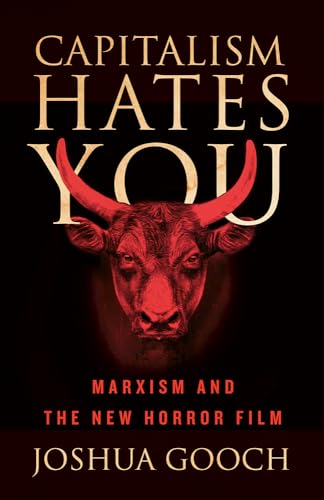
Capitalism Hates You: Marxism and the New Horror Film
Goodreads
Joshua Gooch publishing house: Univ Of Minnesota Press 2025 - 3
What contemporary horror films teach us about the cruelties of capitalist society Capitalism Hates You uses the horror film genre as a tool to diagnose and expose the hostile conditions of life under capitalism. Through incisive critical analyses of popular films such as Get Out, Drag Me to Hell, Hereditary, The Babadook, and many others, Joshua Gooch draws connections between Marxist theory and contemporary narratives of psychological unease. Gooch highlights the work of women, trans, and nonwhite filmmakers to show how the remarkable diversity of twenty-first-century horror cinema can provide an expansive catalog of capitalism’s varying forms of oppression. Studying films that interrogate such urgent topics as gentrification, climate change, and reproductive labor, he demonstrates how contemporary horror films give affective shape to the negative undercurrents of our present socioeconomic system. Capitalism Hates You argues that these films and their material conditions can deepen our understanding of essential concepts in contemporary Marxism, from the theory of value and changing forms of commodification to the labor of social reproduction, the abolition of the family, and the necessity of ecosocialism. Synthesizing various strands of Marxist thought, Gooch sheds light on the growing field of socially conscious horror films, examining how they pinpoint and exaggerate latent feelings of dread and discomfort to reflect the ills of society. Retail e-book files for this title are screen-reader friendly with images accompanied by short alt text and/or extended descriptions.

Book

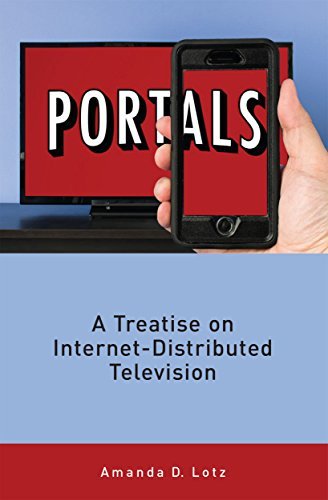
Portals: A Treatise on Internet-Distributed Television
Goodreads
Amanda D. Lotz publishing house: Michigan Publishing 2017 - 1
Is Netflix television? Television audiences and its industry alike have been confused by the emergence of new ways to watch television. On one hand, the programs seem every bit like the television we’ve long known, while the way we can watch, what we can watch, and the business models supporting them differ significantly. Portals: A Treatise on Internet-Distributed Television pushes understandings of the business of television to keep pace with the considerable technological change of the last decade. It explains why shows such as Orange is the New Black or Transparent are indeed television despite coming to screens over internet connection and in exchange for a monthly fee. It explores how internet-distributed television is able to do new things – particularly, allow different people to watch different shows chosen from a library of possibilities. This technological ability allows new audience behaviors and new norms in making television. Portals are the “channels” of internet-distributed television, and Portals identifies how the task of curating a library of shows differs from channels’ task of building a schedule. It explores the business model—subscriber funding—that supports many portals, and identifies the key differences from advertiser or direct purchase. Portals considers what we know about the future of television, even though we remain early in a process of transformative change.

Book

Television Studies
Goodreads
Jonathan Gray / Amanda D. Lotz publishing house: Polity 2011 - 11
Television Studies provides an overview of the origins, central ideas, and intellectual traditions of television studies. The book charts the establishment of the field, and examines its various approaches and objects of study.

Book

A Future for Public Service Television
Goodreads
Des Freedman (Editor) / Tess Alps … publishing house: Goldsmiths Press 2018 - 4
A guide to the nature, purpose, and place of public service television within a multi-platform, multichannel ecology. Television is on the verge of both decline and rebirth. Vast technological change has brought about financial uncertainty as well as new creative possibilities for producers, distributors, and viewers. This volume from Goldsmiths Press examines not only the unexpected resilience of TV as cultural pastime and aesthetic practice but also the prospects for public service television in a digital, multichannel ecology. The proliferation of platforms from Amazon and Netflix to YouTube and the vlogosphere means intense competition for audiences traditionally dominated by legacy broadcasters. Public service broadcasters—whether the BBC, the German ARD, or the Canadian Broadcasting Corporation—are particularly vulnerable to this volatility. Born in the more stable political and cultural conditions of the twentieth century, they face a range of pressures on their revenue, their remits, and indeed their very futures. This book reflects on the issues raised in Lord Puttnam's 2016 Public Service TV Inquiry Report, with contributions from leading broadcasters, academics, and regulators. With resonance for students, professionals, and consumers with a stake in British media, it serves both as historical record and as a look at the future of television in an on-demand age.

Book

After Mass Media
Goodreads
Amanda D. Lotz publishing house: NYU Press 2025 - 4
With significant evolutions in digital technologies and media distribution in the past two decades, the business of storytelling through screens has shifted dramatically. In the past, blockbuster movies and TV shows like Friends aimed first for domestic mass audiences, although the biggest hits circulated globally. Now, transnational distribution plays a primary role and imagined audiences are global. At the same time, the once-mass audience has significantly fragmented to enable an expansion in the range of commercially viable stories, as evident in series as varied as Atlanta, Better Things, and dozens of others that are not widely known, but deeply loved by their microaudiences. Delving into the changing landscape of commercial screen storytelling, After Mass Media explores how industrial shifts and technological advancements have remade the narrative landscape over the past two decades. Television and movies have long shaped society, whether by telling us about the worlds around us or far away. By examining the internationalization of screen businesses, the rise of streaming services with multi-territory reach, and the stories made for this environment, this book sheds light on the profound transformations in television and film production and circulation. With a keen focus on major changes in the types of screen stories being told, Amanda D. Lotz unravels the industrial roots that made these transformations possible, challenges some conventional distinctions of screen storytelling, and provides new conceptual tools to make sense of the abundance and range of screen stories on offer. Through its comprehensive analysis, After Mass Media exposes how contemporary industrial dynamics, particularly the erosion of traditional distribution models based on geography and mass audience reach, have far-reaching implications for our understanding of national video cultures.

Book

Techno-Orientalism
Goodreads
Betsy Huang (Editor) / Greta A. Niu (Editor) … publishing house: Rutgers University Press 2015 - 4
What will the future look like? To judge from many speculative fiction films and books, from Blade Runner to Cloud Atlas , the future will be full of cities that resemble Tokyo, Hong Kong, and Shanghai, and it will be populated mainly by cold, unfeeling citizens who act like robots. Techno-Orientalism investigates the phenomenon of imagining Asia and Asians in hypo- or hyper-technological terms in literary, cinematic, and new media representations, while critically examining the stereotype of Asians as both technologically advanced and intellectually primitive, in dire need of Western consciousness-raising.  The collection’s fourteen original essays trace the discourse of techno-orientalism across a wide array of media, from radio serials to cyberpunk novels, from Sax Rohmer’s Dr. Fu Manchu to Firefly .  Applying a variety of theoretical, historical, and interpretive approaches, the contributors consider techno-orientalism a truly global phenomenon. In part, they tackle the key question of how these stereotypes serve to both express and assuage Western anxieties about Asia’s growing cultural influence and economic dominance. Yet the book also examines artists who have appropriated techno-orientalist tropes in order to critique racist and imperialist attitudes.  Techno-Orientalism is the first collection to define and critically analyze a phenomenon that pervades both science fiction and real-world news coverage of Asia. With essays on subjects ranging from wartime rhetoric of race and technology to science fiction by contemporary Asian American writers to the cultural implications of Korean gamers, this volume offers innovative perspectives and broadens conventional discussions in Asian American Cultural studies.

Book

Play in Utopian and Dystopian Fiction
MATTHEW LEGGATT 2025
Play in Utopian and Dystopian Fiction is a wide-ranging and interdisciplinary study of the different forms of play to be found in depictions of radically better and radically worse societies across literary, filmic, and televisual texts. The book sets out to dismantle common myths about the role of play in such fiction by arguing that, far from being dull and static, utopias are primarily playful and dynamic. In contrast, in the twentieth and twenty-first centuries, dystopian fiction has been popularized by reader and audience expectations of spectacular and exciting action, but in this book such readings of dystopia are also challenged. Accompanying this is a discussion about labor and its role in relation to a future society that might privilege play over work. The book covers texts as diverse as Thomas More’s originary 1516 travel narrative, Utopia, and South Korean Netflix dystopian hit Squid Game (2021-25). It consists of chapters detailing the nature of play in utopian fiction; the connection between utopia and stasis; dystopian forms of violent and deadly play; boring dystopias; the absurd in utopian and dystopian fiction; and, finally, the future of play promised by new digital utopias and made possible by videogame technologies.

Book

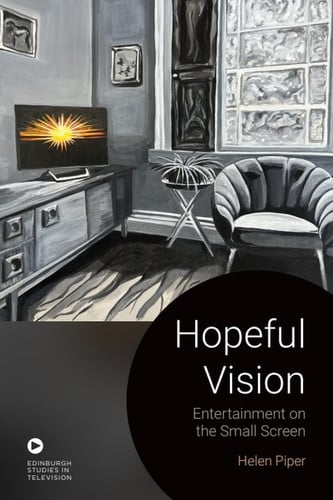
Hopeful Vision: Entertainment on the Small Screen
Helen Piper 2025
This monograph recuperates the concept of entertainment as a legitimate basis for ‘small screen’ criticism. It suggests that critical approaches to television might treat the text as an object of potential which actively engages and provides for aesthetic experience through entertainment. Aesthetic experience is characterised by emotion, and this study shows how the textual production of specifically forward feelings such as anticipation, aspiration, fear or dread may be mobilised and made sense of, shaping our sense of the future and its objects of hope. The argument is demonstrated by case studies arranged from ‘light’ to ‘dark’ in tone - as varied as Eurovision and Succession, The Repair Shop and The Leftovers – showing how these provide potentially significant, affecting encounters that are ‘hopeful’ in varying degrees and guises. Hope is adopted both as a theme of analysis and as a critical strategy of interpretation which privileges entertainment efficacy, and thus moves towards a more viewer-centric appreciation of cultural value.
Reply Quote Oct. 4, 2026