#matter in the wrong place

4 books  

bodies, horror.

"'bodily margins are thought to be specially invested with power and danger…because all margins are dangerous. If they are pulled this way or that the shape of fundamental experience is altered. Any structure of ideas is vulnerable at its margins.' What is inside can become taboo, polluted, abject when it crosses the boundary of the flesh, as in the case of my saliva in the glass of milk. Urine, blood, mucus, shit, pus are all abject once outside. This explains horror’s recurring fascination with a variety of abject substances, often viscous materials which violate clear solid/liquid boundaries—blood, gore, goo, slime, drool, guts, vomit, semen, menses. In horror, all of these are, in their various ways, matter in the wrong place."

  • Sleeping With the Lights On, Darryl Jones

Book

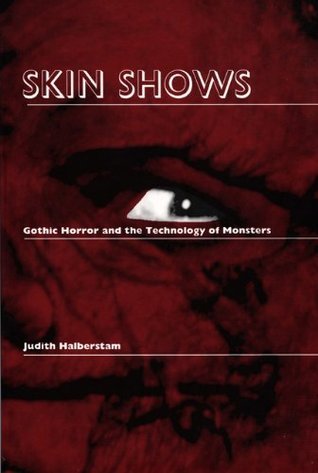
Skin Shows: Gothic Horror and the Technology of Monsters Goodreads
author: J. Jack Halberstam publishing house: Duke University Press Books 1995 - 8
In this examination of the monster as cultural object, J. Jack Halberstam offers a rereading of the monstrous that revises our view of the Gothic. Moving from the nineteenth century and the works of Shelley, Stevenson, Stoker, and Wilde to contemporary horror film exemplified by such movies as Silence of the Lambs , Texas Chainsaw Massacre , and Candyman , Skin Shows understands the Gothic as a versatile technology, a means of producing monsters that is constantly being rewritten by historically and culturally conditioned fears generated by a shared sense of otherness and difference.
Deploying feminist and queer approaches to the monstrous body, Halberstam views the Gothic as a broad-based cultural phenomenon that supports and sustains the economic, social, and sexual hierarchies of the time. She resists familiar psychoanalytic critiques and cautions against any interpretive attempt to reduce the affective power of the monstrous to a single factor. The nineteenth-century monster is shown, for example, as configuring otherness as an amalgam of race, class, gender, and sexuality. Invoking Foucault, Halberstam describes the history of monsters in terms of its shifting relation to the body and its representations. As a result, her readings of familiar texts are radically new. She locates psychoanalysis itself within the gothic tradition and sees sexuality as a beast created in nineteenth century literature. Excessive interpretability, Halberstam argues, whether in film, literature, or in the culture at large, is the actual hallmark of monstrosity.
Book

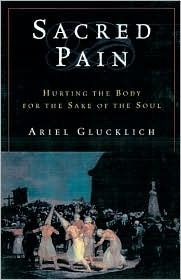
Sacred Pain Goodreads
author: Ariel Glucklich publishing house: Oxford University Press 2001 - 10
Why would anyone seek out the very experience the rest of us most wish to avoid? Why would religious worshipers flog or crucify themselves, sleep on spikes, hang suspended by their flesh, or walk for miles through scorching deserts with bare and bloodied feet?

In this insightful new book, Ariel Glucklich argues that the experience of ritual pain, far from being a form of a madness or superstition, contains a hidden rationality and can bring about a profound transformation of the consciousness and identity of the spiritual seeker. Steering a course between purely cultural and purely biological explanations, Glucklich approaches sacred pain from the perspective of the practitioner to fully examine the psychological and spiritual effects of self-hurting. He discusses the scientific understanding of pain, drawing on research in fields such as neuropsychology and neurology. He also ranges over a broad spectrum of historical and cultural contexts, showing the many ways mystics, saints, pilgrims, mourners, shamans, Taoists, Muslims, Hindus, Native Americans, and indeed members of virtually every religion have used pain to achieve a greater identification with God. He examines how pain has served as a punishment for sin, a cure for disease, a weapon against the body and its desires, or a means by which the ego may be transcended and spiritual sickness healed. "When pain transgresses the limits," the Muslim mystic Mizra Asadullah Ghalib is quoted as saying, "it becomes medicine."

Based on extensive research and written with both empathy and critical insight, Sacred Pain explores the uncharted inner terrain of self-hurting and reveals how meaningful suffering has been used to heal the human spirit.

Book

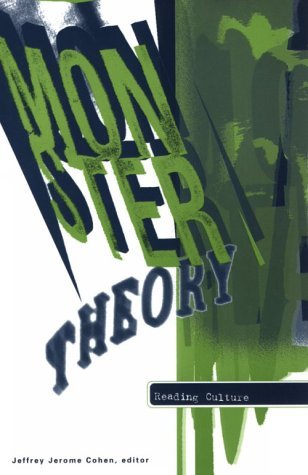
Monster Theory Douban NeoDB
author: Jeffrey Jerome Cohen publishing house: University of Minnesota Press 1996 - 11
We live in a time of monsters. Monsters provide a key to understanding the culture that spawned them. So argue the essays in this wide-ranging and fascinating collection that asks the question, What happens when critical theorists take the study of monsters seriously as a means of examining our culture?

In viewing the monstrous body as a metaphor for the cultural body, the contributors to Monster Theory consider beasts, demons, freaks, and fiends as symbolic expressions of cultural unease that pervade a society and shape its collective behavior. Through a historical sampling of monsters, these essays argue that our fascination for the monstrous testifies to our continued desire to explore difference and prohibition.

Book

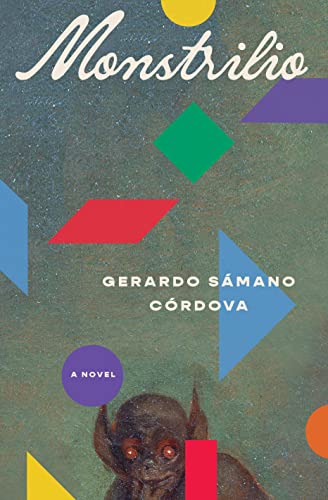
Monstrilio Goodreads Homelab Reviews
author: Gerardo Sámano Córdova publishing house: Zando 2023 - 3
A literary horror debut about a boy who transforms into a monster, a monster who tries to be a man, and the people who love him in every form he takes

Grieving mother Magos cuts out a piece of her deceased eleven-year-old son Santiago’s lung. Acting on fierce maternal instinct and the dubious logic of an old folktale, she nurtures the lung until it gains sentience, growing into the carnivorous little Monstrilio she keeps hidden within the walls of her family’s decaying Mexico City estate. Eventually, Monstrilio begins to resemble the Santiago he once was, but his innate impulses—though curbed by his biological and chosen family’s communal care—threaten to destroy this fragile second chance at life.

A thought-provoking meditation on grief, acceptance, and the monstrous sides of love and loyalty, Gerardo Sámano Córdova blends bold imagination and evocative prose with deep emotional rigor. Told in four acts that span the globe from Brooklyn to Berlin, Monstrilio offers, with uncanny clarity, a cathartic and precise portrait of being human.
Reply Quote Oct. 3, 2026